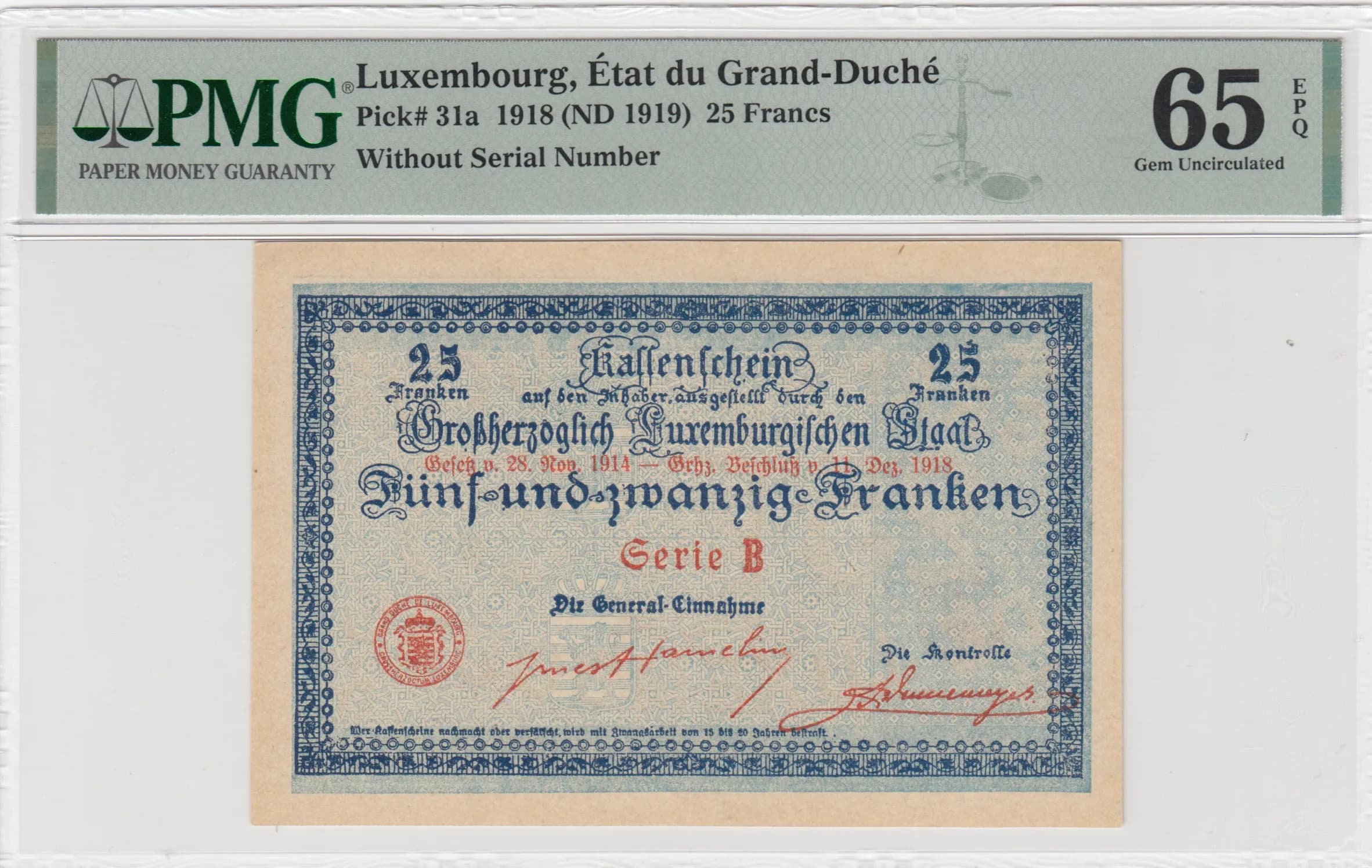
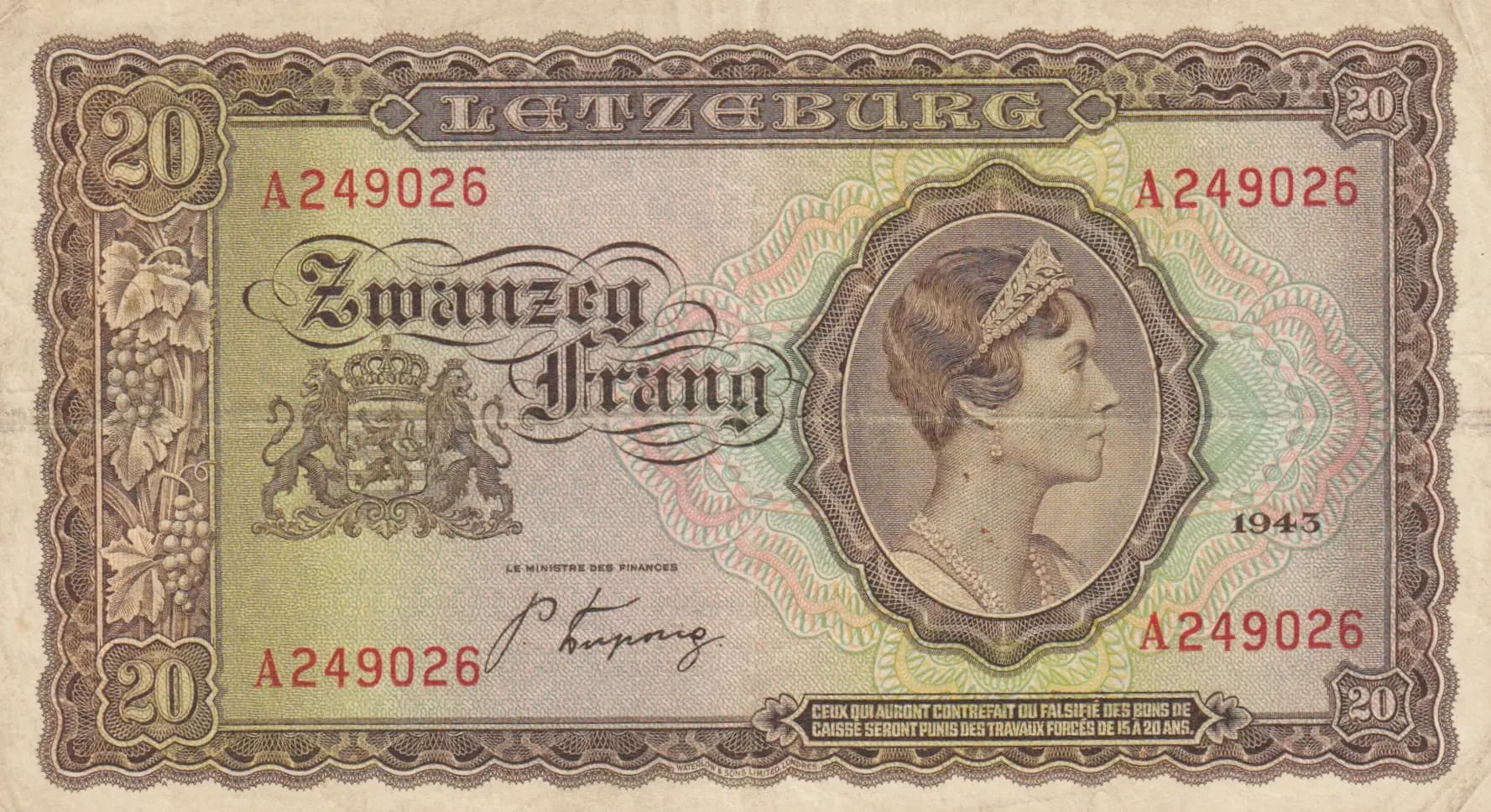
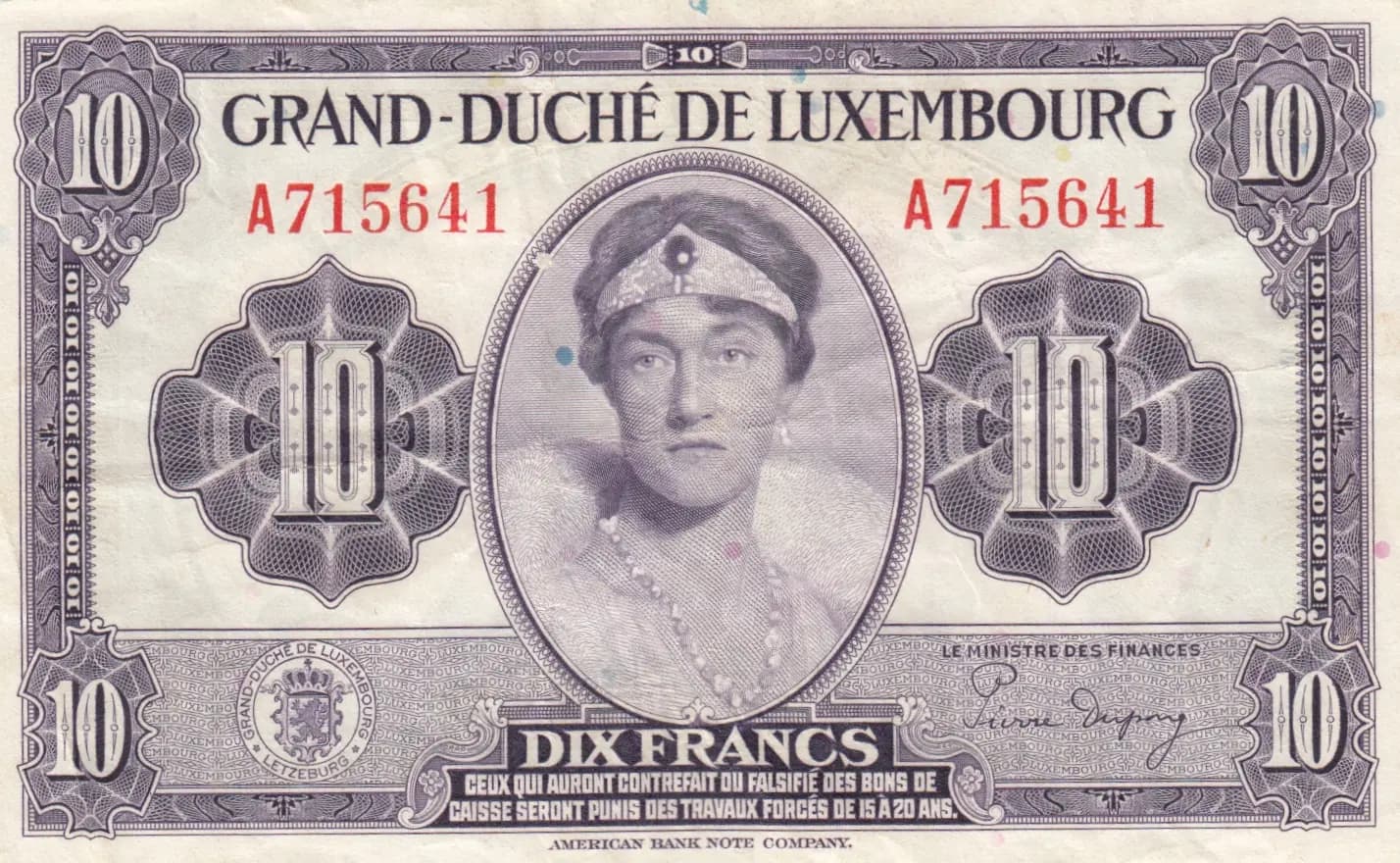
10 francs 1954
Market Prices
56 salesAbout This Note
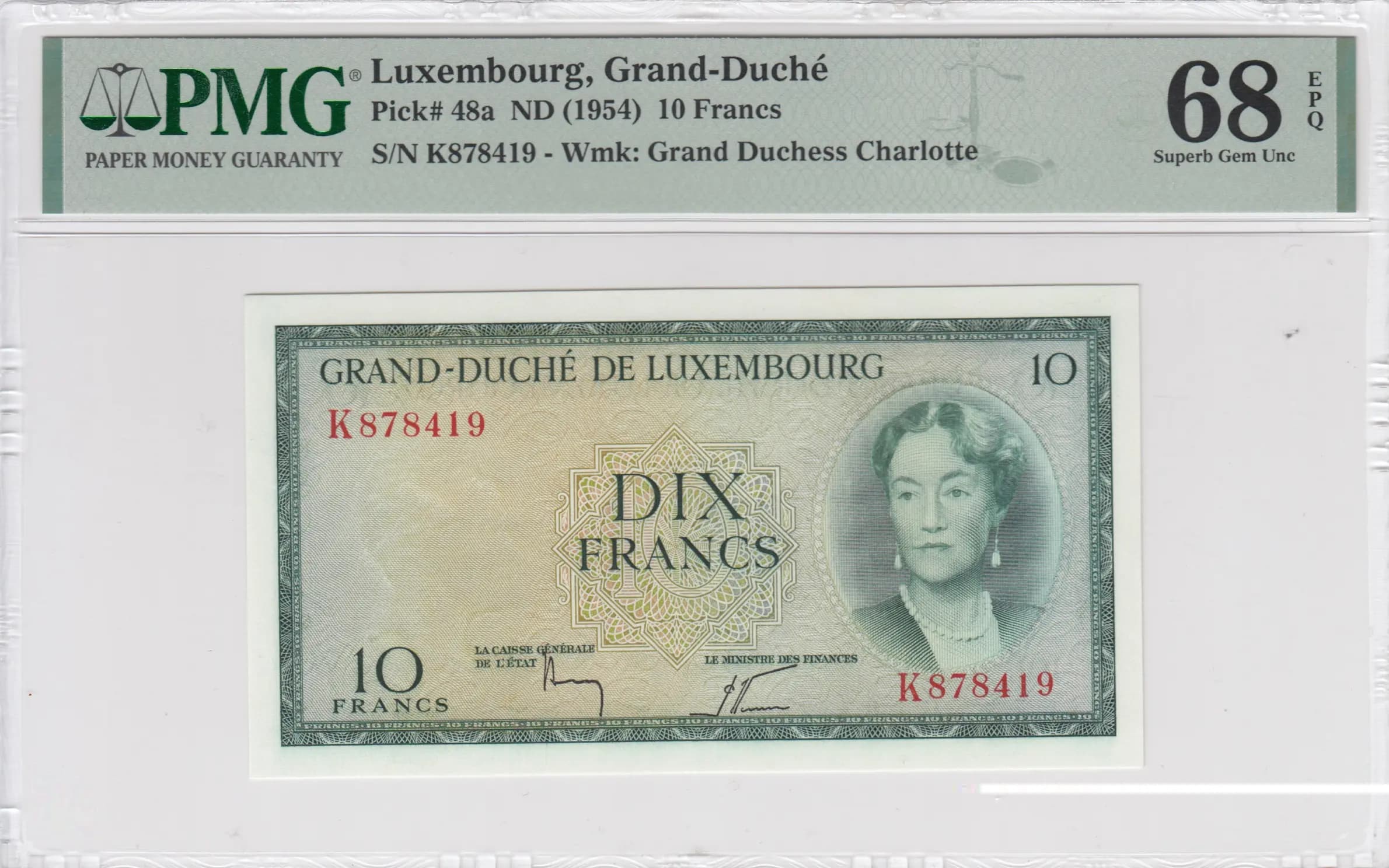
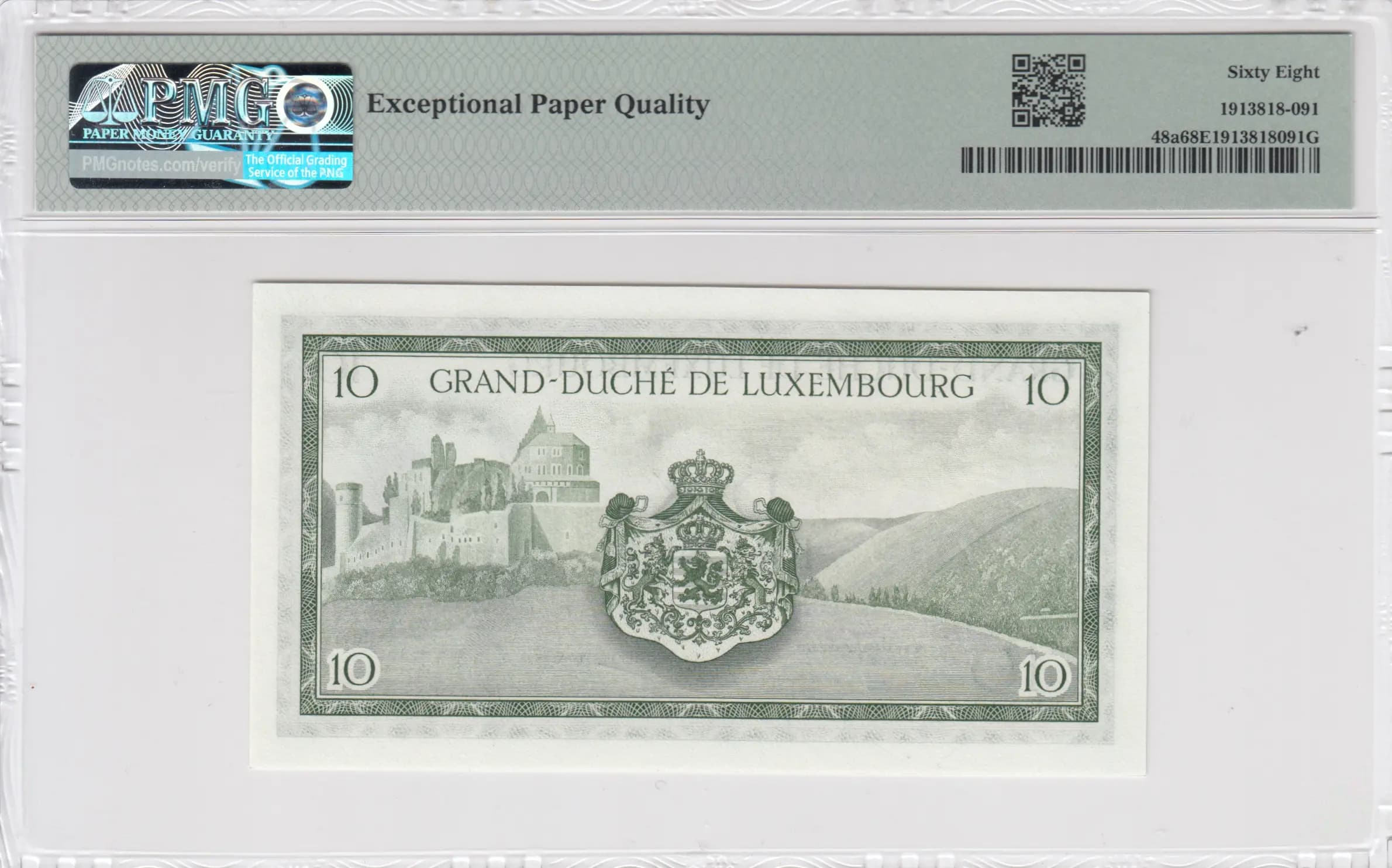
This is an exceptionally well-preserved example of the 1954 Luxembourg 10 Francs note (Pick P-48), graded PMG 67 EPQ, representing an uncirculated specimen with pristine paper quality and vibrant colors. The note features a striking portrait of Grand Duchess Charlotte on the obverse in green and multicolor tones, complemented by the reverse's detailed engraving of Vianden Castle set within the Luxembourg landscape. At this superior grade level, the note commands significant collector premium—this PMG 67 specimen represents the upper tier of availability for this denomination, making it a desirable acquisition for Luxembourg currency specialists.
Common. This note appears regularly in the numismatic market, with eBay sales data spanning over a decade showing consistent availability across multiple condition grades (F through UNC). While this specific PMG 67 EPQ example commands a premium (approximately $46-$51 based on historical sales records from 2019-2020), the underlying note type itself is not scarce—lower grades routinely sell for $1.50-$7.00, indicating substantial print runs and steady supply. The proliferation of PMG-graded examples across grades 63-67+ further confirms this is a common-to-moderately-collectable issue rather than a rarity.
Issued in 1954, just four years after Luxembourg's post-World War II currency stabilization, this banknote reflects the Grand-Duchy's reestablishment of monetary sovereignty under the reign of Grand Duchess Charlotte (1921-1985). The selection of Vianden Castle—one of Luxembourg's most iconic medieval fortifications overlooking the Our River valley—as the reverse centerpiece symbolized national heritage and territorial identity during the Cold War era. The formal inscriptions referencing 'La Caisse Générale de l'État' and the Minister of Finance underscore the restored institutional authority of the Luxembourg state during the early postwar recovery period.
The obverse presents a formal right-facing profile portrait of Grand Duchess Charlotte, rendered in classical intaglio style with fine detail work capturing her distinctive styled hair and period jewelry (earrings visible). The portrait is positioned at the right side of the note, framed by elaborate ornamental baroque-style geometric designs and interlocking patterns that serve both decorative and security purposes. The denomination '10 FRANCS' is prominently displayed in the center with formal typography. The reverse showcases Vianden Castle, the late-medieval fortress situated dramatically on a hilltop overlooking the Our River valley, rendered in fine detail with visible fortification walls, towers, and crenellations. The Luxembourg coat of arms—featuring the crowned shield with heraldic lion design—is centered on the reverse, flanked by the detailed landscape engraving of the castle and surrounding mountainous terrain. The color scheme throughout combines dominant greens and beige underprints with black intaglio line work, creating strong visual contrast and counterfeit resistance.
OBVERSE: 'GRAND-DUCHÉ DE LUXEMBOURG' (Grand-Duchy of Luxembourg); 'DIX FRANCS' and '10 FRANCS' (Ten Francs—denomination); 'LA CAISSE GÉNÉRALE DE L'ÉTAT' (The General Treasury/State Treasury); 'LE MINISTRE DES FINANCES' (The Minister of Finance); Serial number 'K878419'. REVERSE: 'GRAND-DUCHÉ DE LUXEMBOURG' (Grand-Duchy of Luxembourg); '10' (denomination markers in all four corners).
Intaglio (steel engraving) on bank note paper with watermark security feature. The fine line work visible throughout both obverse and reverse, particularly in the portrait rendering, landscape details, and ornamental patterns, is characteristic of high-security intaglio printing standard for European central bank currency of the 1950s. The print quality and registration observed in this PMG 67 example indicates production by a premier security printer; Luxembourg's banknotes of this era were typically produced by Banque de Belgique or De La Rue, though specific attribution for P-48 variants requires cross-reference with printer mark documentation.
The Pick catalog identifies three variants for the base P-48 number: P-48a, P-48cts (likely a counter-signed or treasury variant), and P-48s (likely a specimen issue). The observed specimen with serial number K878419 appears to be the standard P-48a circulation variety based on the absence of counter-signature marks, specimen perforations, or overprints. Signature varieties are noted in catalog references but require detailed examination of official and minister signatures to precisely identify the variant within the P-48 series; this example displays standard signatures consistent with the primary circulation variety. No date variation is present (ND 1954 designation applies uniformly).