5 dinars 1971 specimen
Market Prices
1 saleAbout This Note
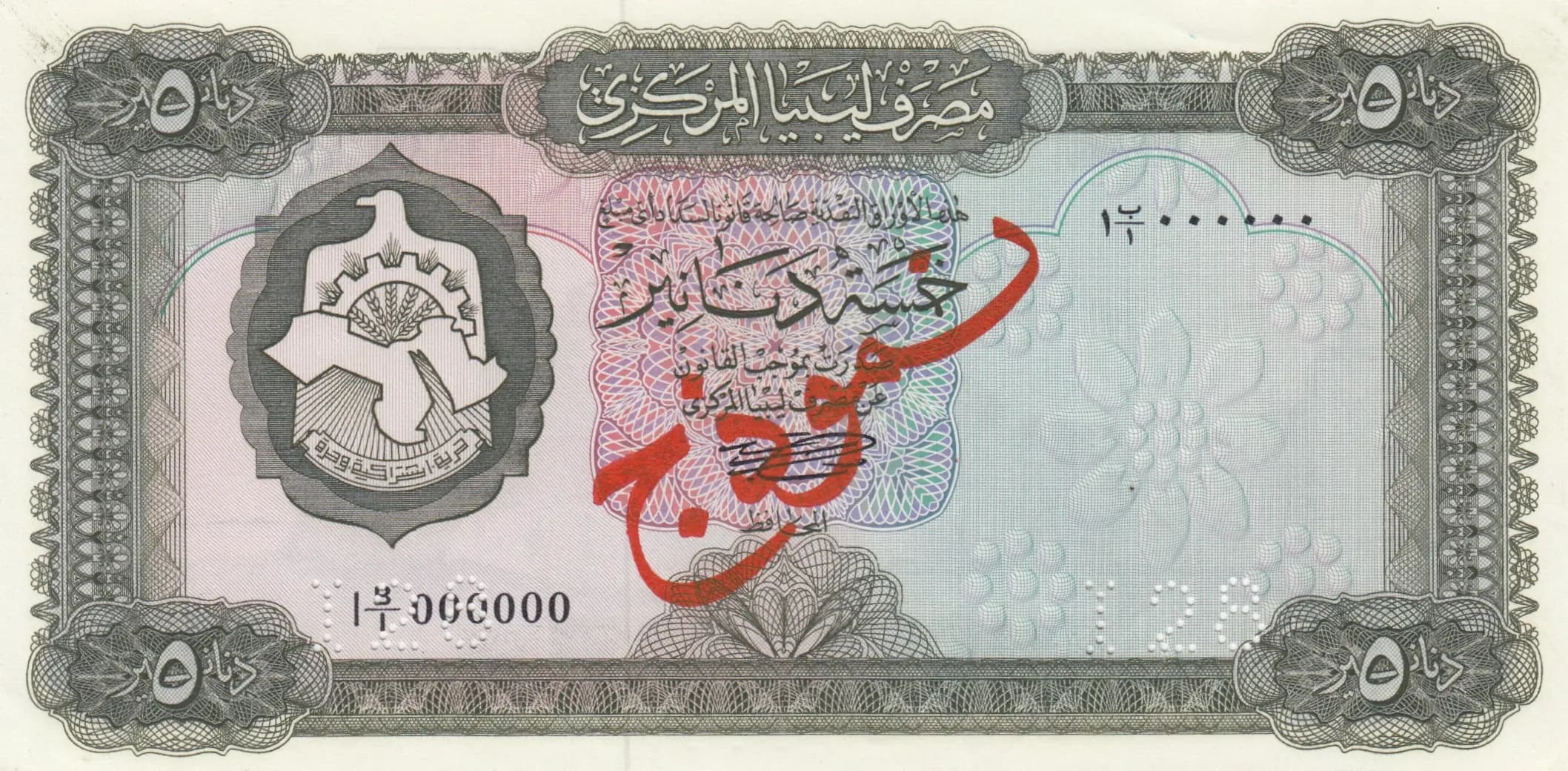
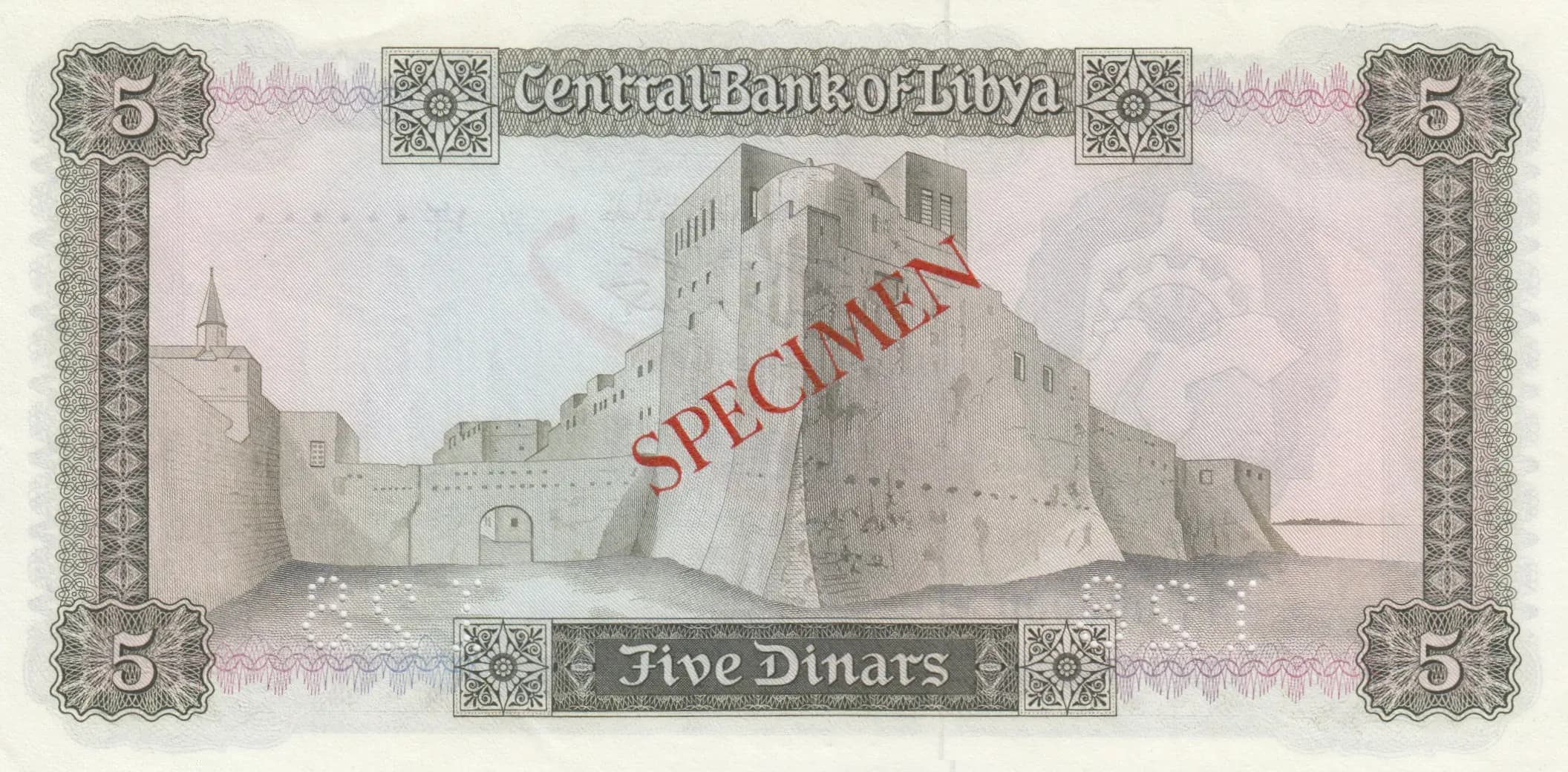
This is a 1971 Libyan 5 dinars specimen note (Pick P-36s) in uncirculated condition, featuring a striking design with a circular map of Libya on the obverse and a detailed fortress illustration on the reverse. The note exhibits excellent preservation with crisp, vibrant printing in multicolored tones (pink, green, gray, and cream), fine geometric Islamic patterns, and the characteristic red diagonal 'SPECIMEN' overprint marking it as a non-circulating issue. The intricate engraving and security printing throughout make this an attractive example of early post-independence Libyan currency design.
Uncommon to scarce. While specimen notes are generally less common in circulation than regular issue notes, this particular note is not exceptionally rare. The 2019 catalogue valuation of $750 UNC and eBay market comparables (AUNC sold for $305 in 2018) indicate collector interest but moderate availability. Specimen notes from the 1971 Libyan issue survive in reasonable quantities, as they were intentionally preserved by institutions and collectors. This note is more desirable than standard circulated examples due to its uncirculated condition and specimen designation, but it is not among the rarest Libyan banknotes.
Issued in 1971 by the newly established Central Bank of Libya following the 1969 Libyan Revolution, this note reflects the nation's assertion of sovereignty and cultural identity during a transformative political period. The fortress depicted on the reverse represents Tripoli's historical Spanish/Ottoman citadel, connecting the modern state to its Mediterranean heritage, while the circular map on the obverse symbolizes Libya's territorial unity. The specimen designation indicates this was part of the official presentation or distribution to banks and collectors, serving as a reference example of the Central Bank's currency design standards.
The obverse features a circular emblem centered on the left side containing a stylized map of Libya rendered in black and white within a decorative scalloped frame—a symbol of national identity and territorial integrity. The design is framed by intricate geometric Islamic patterns and ornamental borders in shades of pink, green, and gray on a cream background, with a prominent Arabic numeral '5' displayed center-right in red. The reverse presents a detailed engraved illustration of the Red Castle (Assaraya al-Hamra) or similar fortified structure in Tripolis, showing multi-story stone buildings with crenellations, towers, and battlements characteristic of Ottoman-era Levantine architecture; a mosque with minaret appears on the left of the fortress scene. All four corners display denomination markers with ornate geometric Islamic corner designs, and the entire reverse maintains the same refined color palette with a light pink/lavender background. The specimen overprint in red appears diagonally across both sides, officially marking this as a non-circulating presentation note.
Front: مصرف ليبيا المركزي (Central Bank of Libya) | خمسة (Five) | دنانير (Dinars) | ٥ (Arabic numeral 5) | Serial number: 1٤٢0600. Back: 'Central Bank of Libya' (English) | 'Five Dinars' (English) | '5' (Arabic numeral) | 'SPECIMEN' (red overprint, English) indicating non-circulating issue.
Intaglio (engraved) printing on multicolor underprints, evidenced by the fine detailed line work, precise geometric guilloche patterns, and the sophisticated rendering of the fortress architecture. The complex multi-color registration and fine security printing suggest production by a specialist security printer, likely De La Rue or similar European banknote printer commissioned by the Central Bank of Libya for this inaugural currency series. The scalloped borders, intricate corner ornaments, and fine engraved detail throughout are hallmarks of high-security intaglio currency production.
This is specifically the P-36s variety—the specimen note variant of the 5 dinars (1971). The PMG population report indicates three catalogued variants (P-36a, P-36b, and P-36s), with P-36s denoting the specimen overprint issue. The red diagonal 'SPECIMEN' overprint in English and the watermark featuring the heraldic arms (eagle) are definitive characteristics of this variety. Serial number and specific signature varieties would require direct examination, but the specimen designation and overprint clearly identify this within the P-36s classification.