10 piastres 1951
Market Prices
32 salesAbout This Note
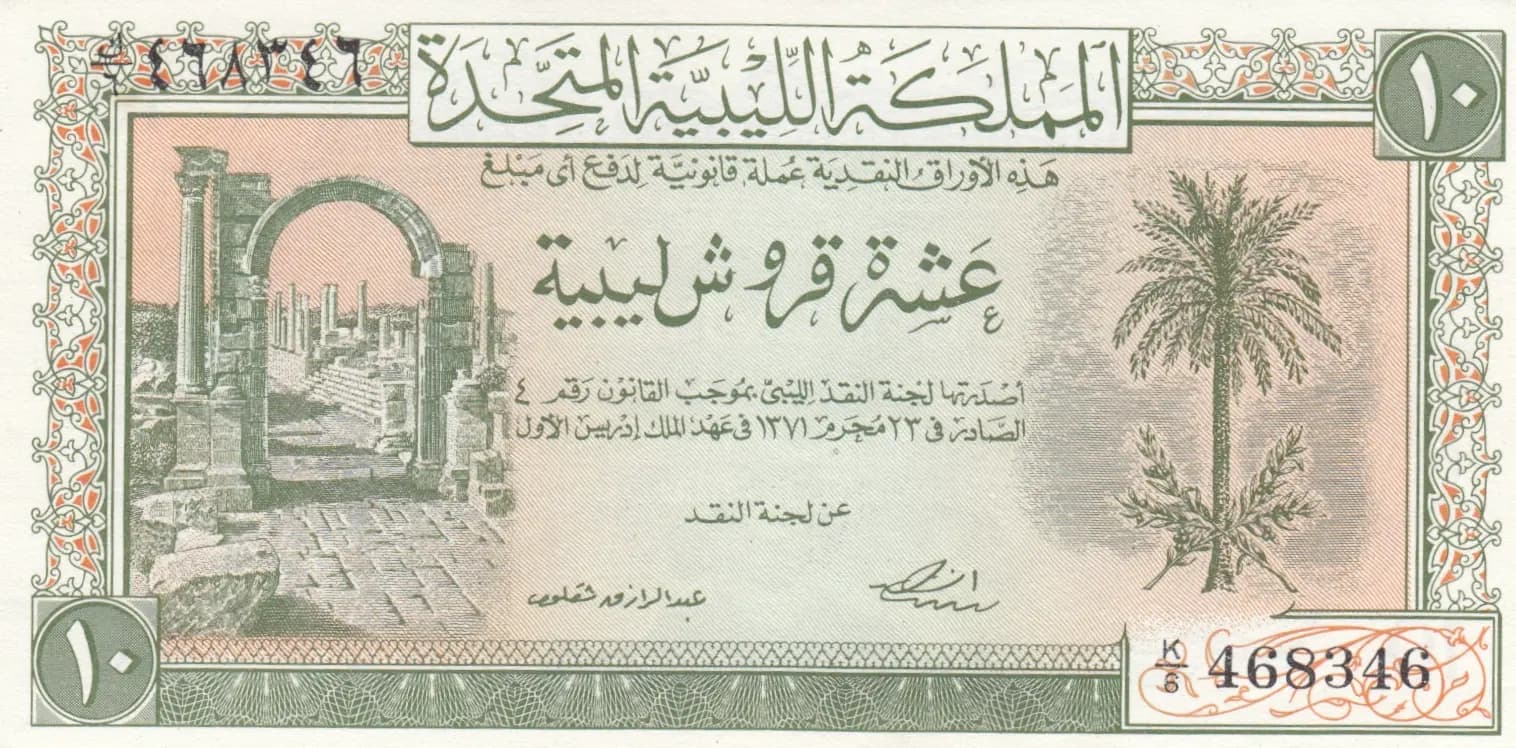
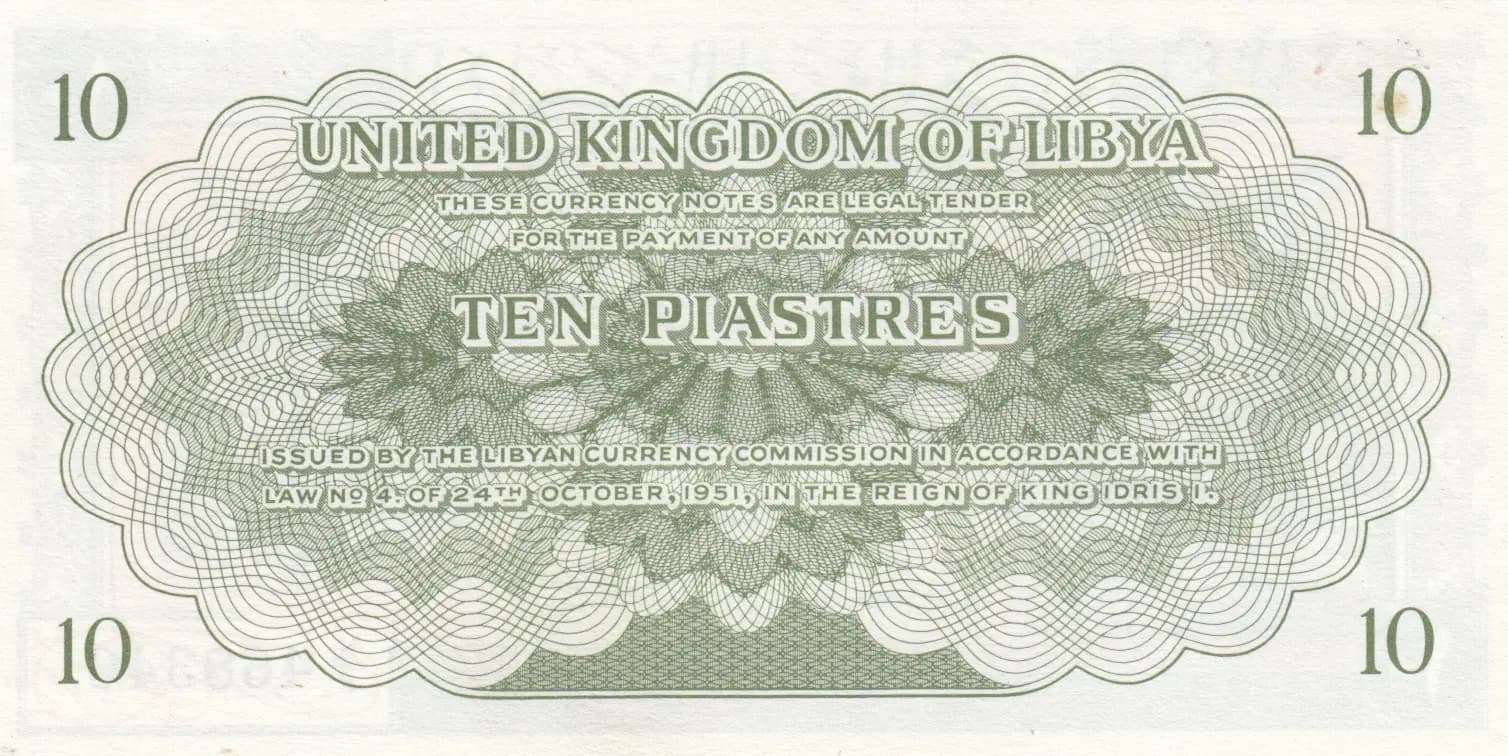
This is a Libya 10 Piastres banknote from 1951, issued during the reign of King Idris I under the newly established United Kingdom of Libya. The note features an architectural motif of Roman ruins (the Trajan Arch at Leptis Magna) on the obverse with a date palm tree, rendered in pink/rose and green with ornate geometric borders. The reverse displays an intricate mandala-like geometric pattern in green and white. While the visual analysis suggests light circulation wear inconsistent with the cataloged UNC grade, the note exhibits well-preserved printing and clear colors typical of early Libyan currency.
Common. eBay market data shows consistent sales ranging from $1.99 to $85 USD depending on condition grade, with most ungraded circulated examples (F-VF grades) selling between $4-$20. The note was part of the initial currency issue of 1951 and saw regular circulation. Catalog values (2016) list UNC at $50, which aligns with the upper range of observed sales prices. The availability of numerous examples across various grades and the consistent eBay trading history spanning over a decade indicate this is a commonly traded note among collectors of African currency. No evidence of restricted print runs or recalls exists.
This note commemorates Libya's independence and the formation of the United Kingdom of Libya in 1951 under King Idris I. The choice of the Trajan Arch at Leptis Magna reflects Libya's classical Roman heritage and the nation's connection to its archaeological treasures. The Libyan Currency Commission, which issued this note under Law No. 4 of October 24, 1951, represents the establishment of modern monetary authority for the newly sovereign nation, marking a significant departure from Italian colonial currency.
The obverse features the Trajan Arch (also known as the Arch of Septimius Severus) at Leptis Magna, one of Libya's most significant Roman archaeological sites, depicted with classical columns and architectural detail on the left side. A date palm tree appears on the right, symbolizing Libya's natural heritage and landscape. The note is framed with ornate decorative borders incorporating floral and geometric patterns typical of Islamic design aesthetics. Denomination medallions appear in opposing corners displaying '10'. The reverse abandons representational imagery in favor of a sophisticated geometric design—a large mandala-like concentric pattern in fine line work—which serves both aesthetic and security purposes. The color scheme of pink/rose and green on the obverse with green and cream on the reverse reflects the early Libyan currency aesthetic established under King Idris I.
FRONT (Arabic): المملكة الليبية الموحدة (United Kingdom of Libya); عشرة قروش ليبية (Ten Piastres Libyan); اصدرتها لجنة النقد التي بموجب القانون رقم الصادر في 23 مجزورة 1371 فعهد الملك إدريس الاول (Issued by the Currency Committee pursuant to Law No. issued on the 23rd in 1371 [Islamic calendar] during the reign of King Idris the First); عن لجنة النقد (For the Currency Committee); 468346 (Serial Number). BACK (English): UNITED KINGDOM OF LIBYA; THESE CURRENCY NOTES ARE LEGAL TENDER FOR THE PAYMENT OF ANY AMOUNT; TEN PIASTRES; ISSUED BY THE LIBYAN CURRENCY COMMISSION IN ACCORDANCE WITH LAW NO 4 OF 24TH OCTOBER 1951 IN THE REIGN OF KING IDRIS I.
Intaglio engraving, evidenced by the fine line work, detailed architectural rendering of the Trajan Arch, intricate decorative borders, and the complex mandala-like geometric pattern on the reverse. The precision of the engraved lines and the layered color application (green on light orange underprint per catalog reference) are characteristic of high-security banknote printing. This note was likely produced by a European security printer contracted by the Libyan Currency Commission, following standard practices for newly independent nations' inaugural currency issues.
The observed serial number is 468346. This appears to be a standard early issue from the 1951 Currency Commission printing. No overprints, prefix variations, or signature varieties are evident from the visual analysis. The Pick catalog lists P-6 as a single base number for the 10 Piastres denomination without notation of multiple significant varieties for this particular denomination, though later Libyan currency issues (such as dinars with watermark variations) show more variety. This note appears to represent the standard 1951 issue without documented rarity-affecting varieties.