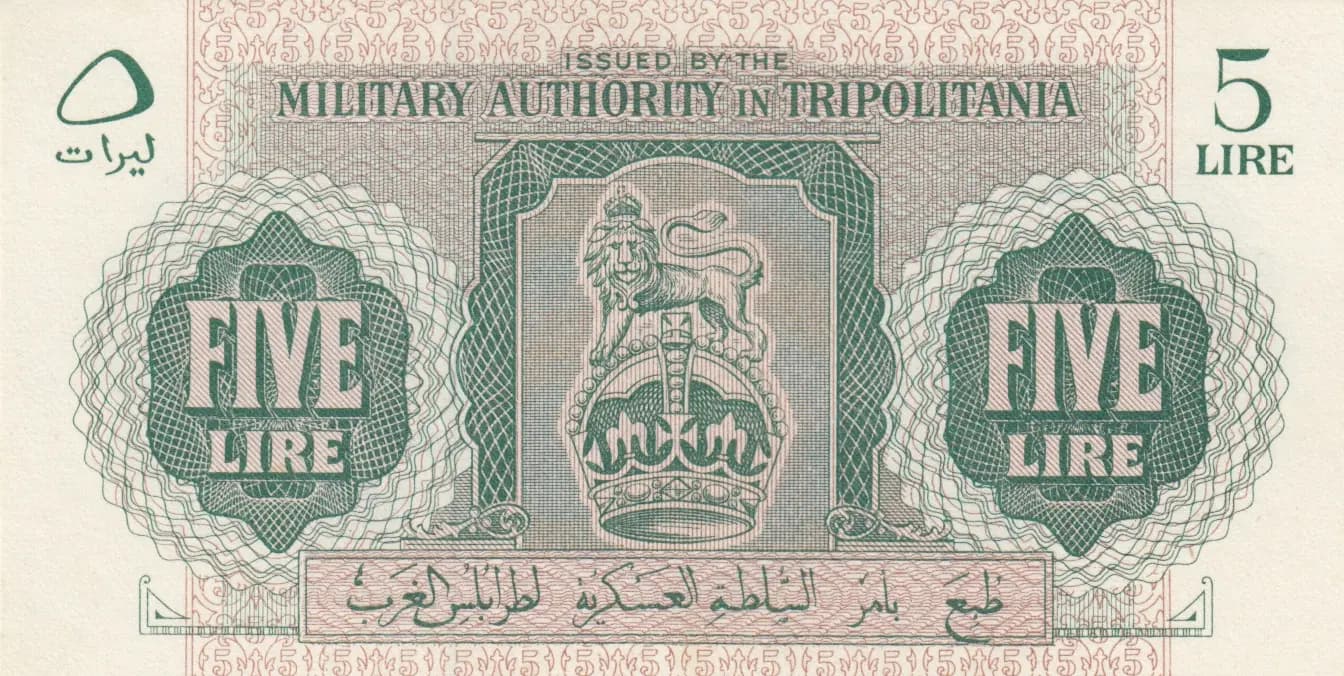
1/4 pound 1951
Market Prices
About This Note
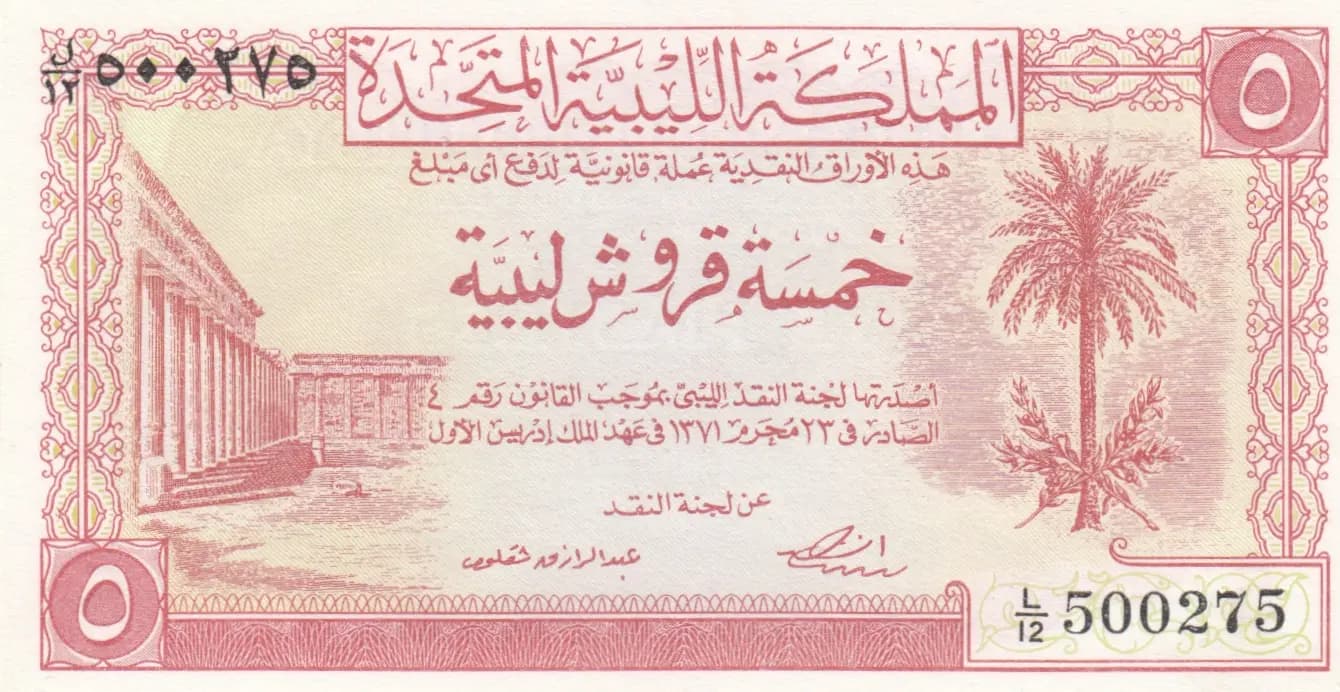
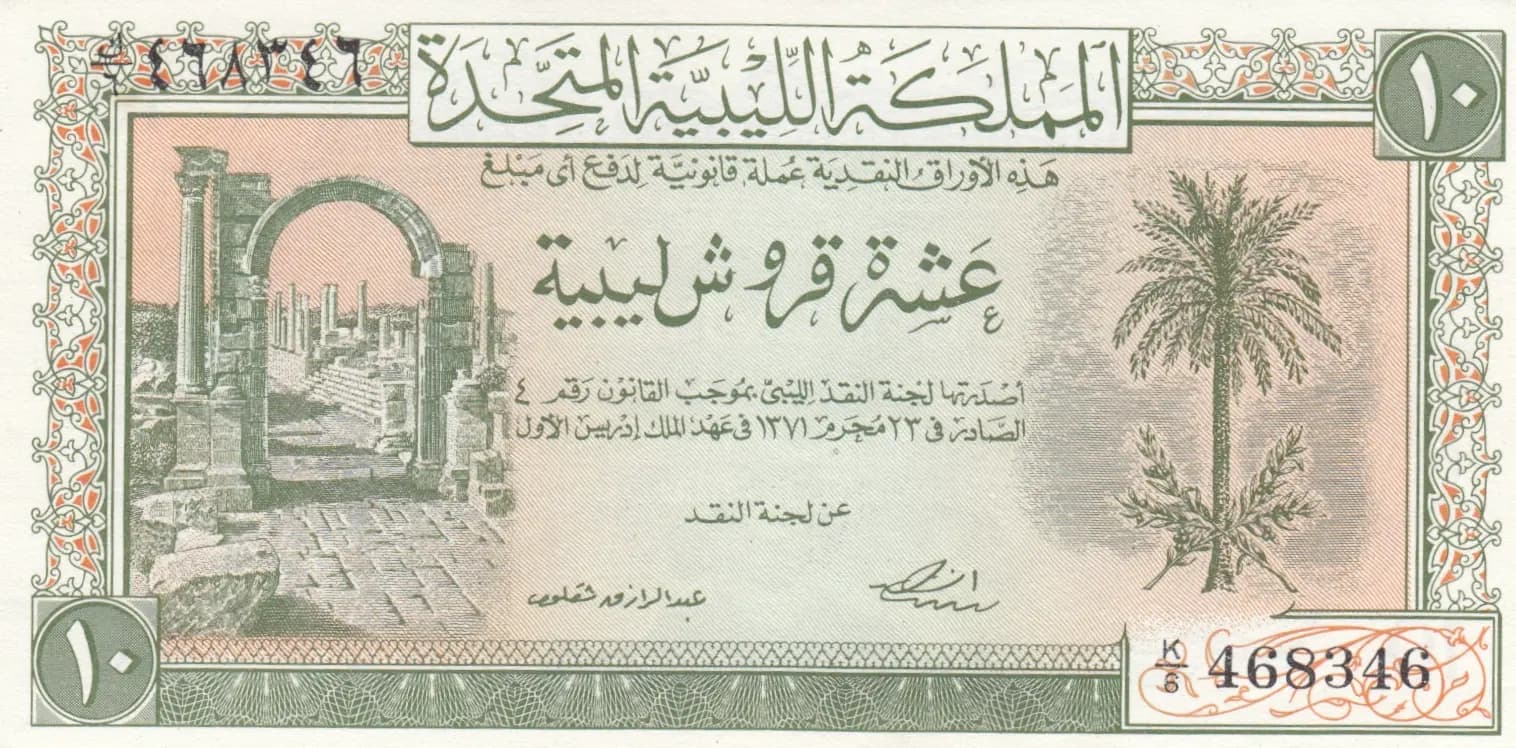
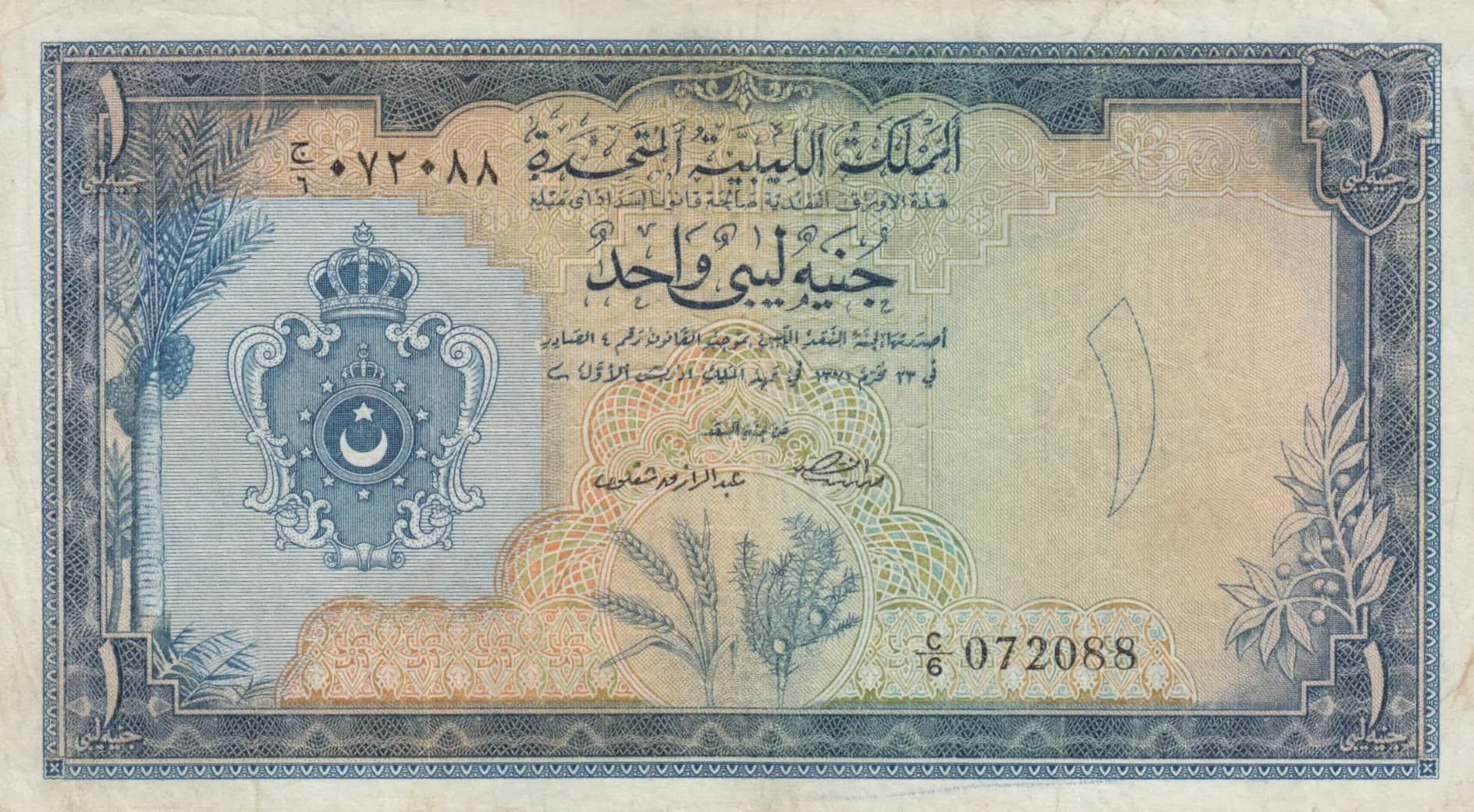
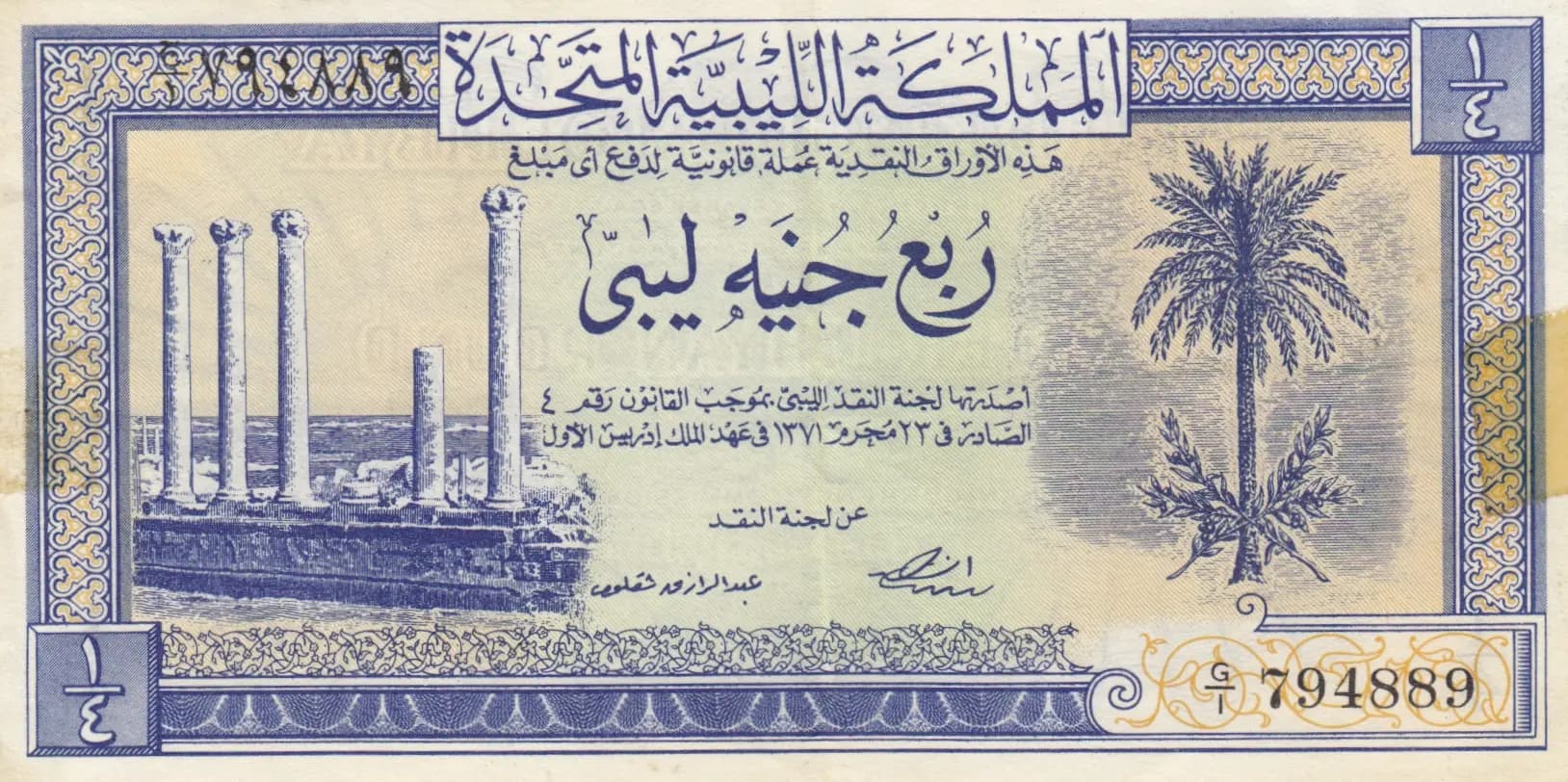
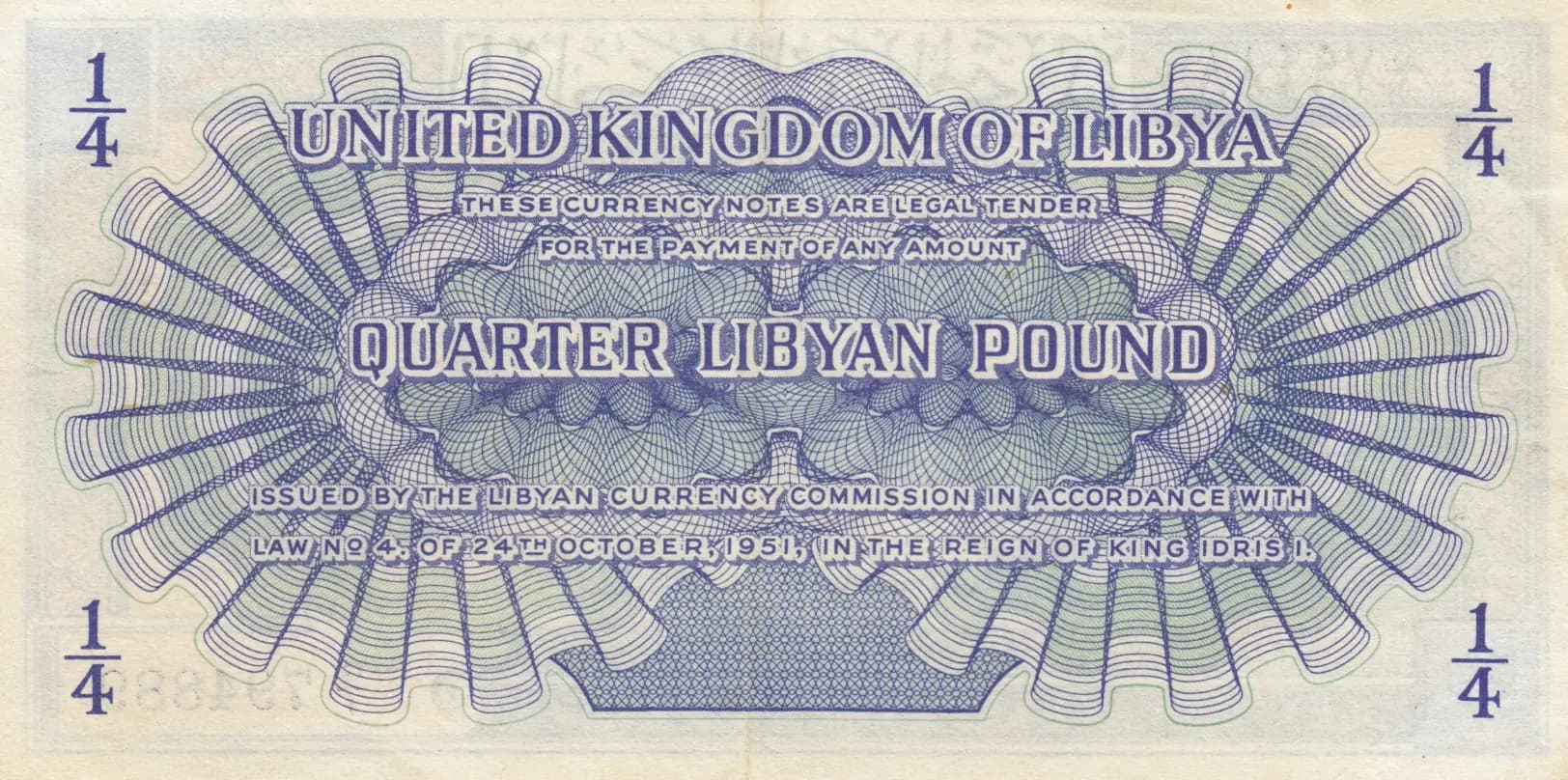
This is a high-quality example of Libya's first banknote issue under the United Kingdom of Libya in 1951. The 1/4 Libyan Pound note presents in EF condition with crisp, well-preserved engraving throughout. The front features evocative Roman ruins with five prominent columns (likely from Sabratha or Leptis Magna) alongside a palm tree, while the reverse displays an ornate shell-radiating pattern with bilingual English and Arabic legal tender declarations—a fascinating artifact of Libya's brief monarchical period under King Idris I.
common. Market data from realbanknotes.com shows consistent eBay sales ranging from $17.50 to $100.00 across various grades, with XF examples (matching the submitted note's EF grade) selling in the $29.95–$100.00 range. The 2016 catalogue values show VF at $120 and UNC at $250, but actual realized prices cluster significantly lower. This was a regular issue banknote with substantial print runs for a primary denomination of the early Libyan state. No evidence of short print runs, recalls, or scarcity factors exists in the numismatic literature.
Issued on 24 October 1951 following Libya's independence and establishment as the United Kingdom of Libya under King Idris I, this note represents the nation's inaugural currency under Law No. 4. The depicted Roman archaeological ruins—particularly the columns at left—commemorate Libya's rich Greco-Roman heritage from Cyrenaica and Tripolitania, serving as a symbol of national identity and historical continuity. The bilingual English-Arabic design reflects the transitional post-colonial administrative structure of the early Libyan state.
The obverse features a landscape-oriented composition with decorative geometric borders in blue and gold framing the design. At left is an expertly engraved image of ancient Roman ruins—specifically depicting five tall columns from what is likely the Temple by the Sea at Sabratha, one of Libya's most significant archaeological sites. A palm tree appears at right, symbolizing the North African landscape. The center field contains formal Arabic script and official designations. The reverse presents an elaborate ornamental design dominated by a large radiating shell or fan pattern composed of fine parallel lines creating a shell-burst effect. The entire reverse maintains the blue and cream color scheme with the fractional denomination appearing in all four corners. English legal tender declarations are centered against this ornamental background.
FRONT: Arabic text reading 'بنك ليبيا' (Bank of Libya) and 'ربع جنيه ليبى' (Quarter Libyan Pound). Full legal issuance text in Arabic: 'Issued by the Libyan Currency Committee in accordance with Law No. 4 issued on 22 Muharram 1371 [corresponding to 24 October 1951] during the reign of King Idris I.' Signature/authority line reads 'Abdel Razak Khalaf' with serial number 794889. BACK: English text stating 'UNITED KINGDOM OF LIBYA,' 'THESE CURRENCY NOTES ARE LEGAL TENDER FOR THE PAYMENT OF ANY AMOUNT,' and 'QUARTER LIBYAN POUND.' Issuing authority text: 'ISSUED BY THE LIBYAN CURRENCY COMMISSION IN ACCORDANCE WITH LAW NO 4 OF 24TH OCTOBER 1951, IN THE REIGN OF KING IDRIS II.' [Note: There is a discrepancy in the back inscription showing 'King Idris II' while the front correctly states 'King Idris I'].
Intaglio engraving (line engraving/steel plate engraving). The visual analysis confirms fine, crisp engraving throughout with intricate parallel line work particularly evident in the reverse's shell-radiating pattern and the precise delineation of the architectural columns on the obverse. This is characteristic of high-security currency printing of the 1950s era. The specific printer for the Libyan Currency Commission issues of this period is not definitively documented in standard references, though British security printers were commonly employed for Commonwealth-related currency work during this era.
This specific note carries serial number 794889 with signature authority 'Abdel Razak Khalaf.' The Pick catalog recognizes a specimen variety (P-7s) distinct from the standard circulation issue (P-7). The note's specific serial number range, date of issue (24 October 1951), and signature represent characteristics typical of the standard issue. No overprints or obvious multi-stage printing varieties are apparent from the visual analysis. Collectors should note the back inscription discrepancy mentioning 'King Idris II' when the reign was actually that of King Idris I—this appears to be a printing error on all examples of this denomination.