1 pound 1963
Market Prices
23 salesAbout This Note
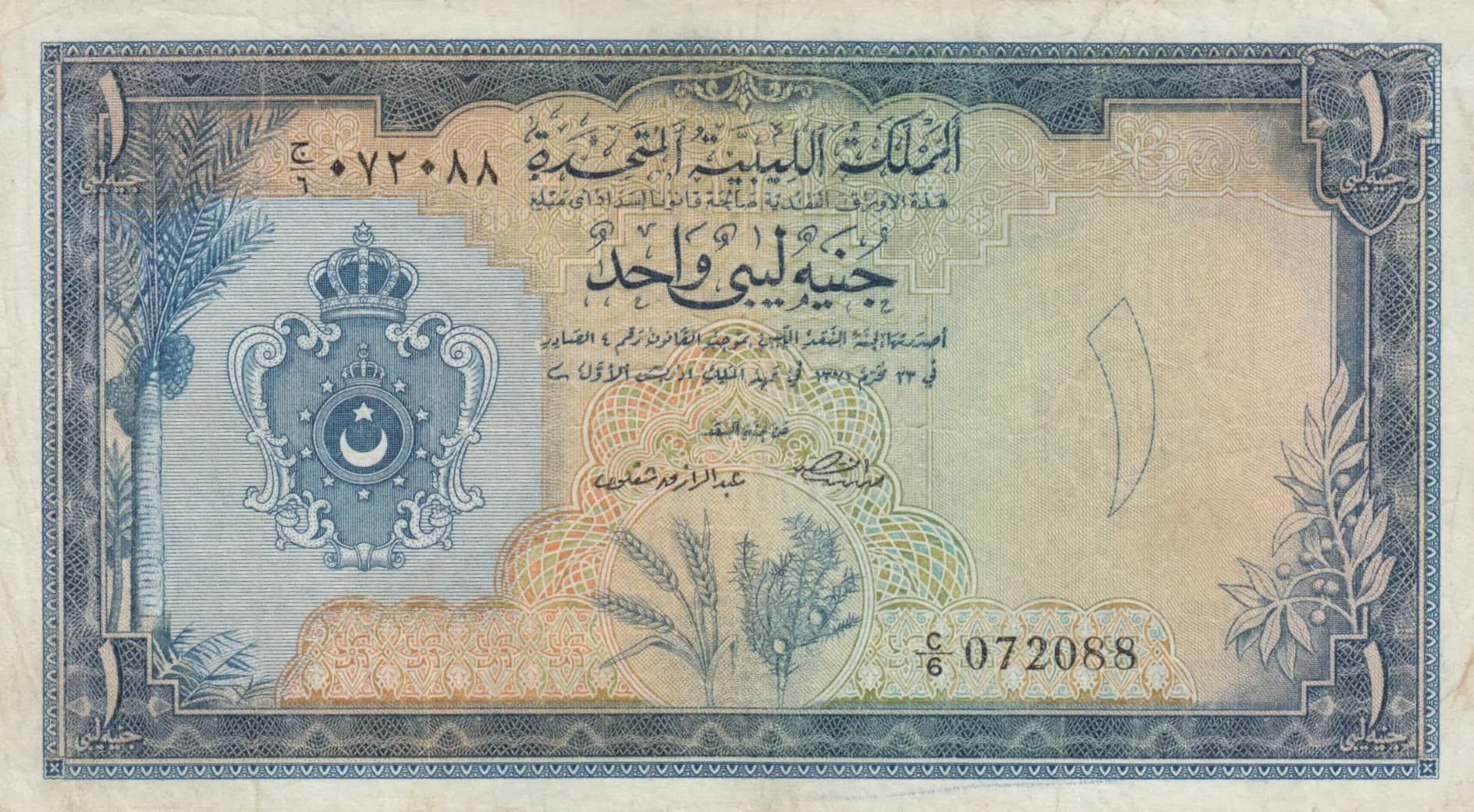
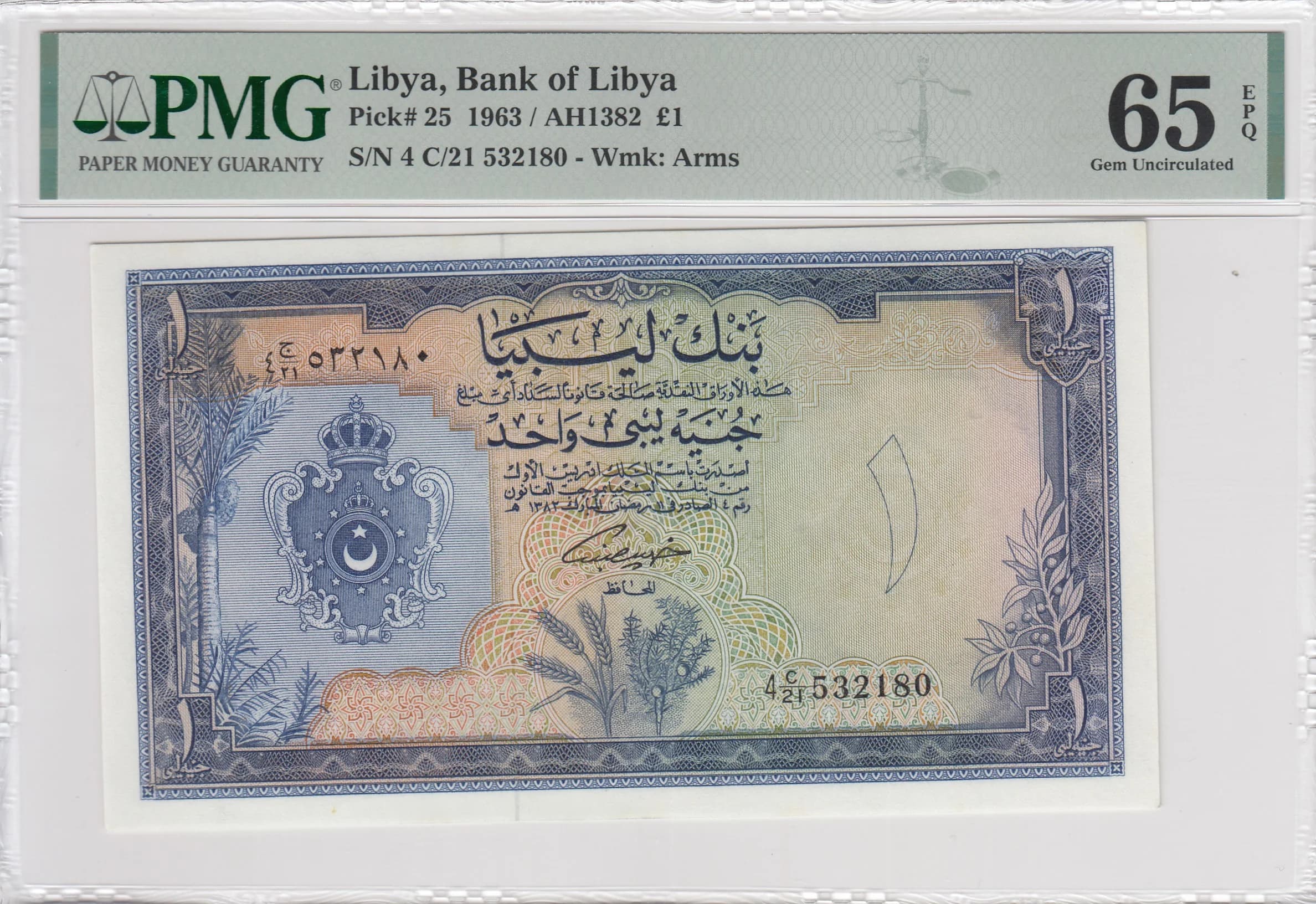
An exceptional example of Libya's first currency issue under King Idris I, this 1 Libyan Pound from 1963 displays the hallmark design elements of the Bank of Libya's inaugural series: a crowned arms emblem with crescent moon symbol prominently featured on the obverse, surrounded by ornate blue and beige decorative borders with intricate geometric and floral motifs. Graded PMG 65 EPQ (Gem Uncirculated), this note exhibits pristine paper quality, sharp engraving, and no signs of wear, making it an outstanding representative of this historically significant early issue.
Common. Despite being from the first currency issue of independent Libya, eBay market data shows consistent sales in the $7.50–$92 range over more than a decade, with most examples in Fine to Very Fine condition selling between $15–$35. The PMG 65 EPQ grade represents a premium condition specimen, but the note itself was issued in substantial quantities as regular circulation currency. Population reports indicate multiple variants exist (P-25, P-25cts, P-25s), suggesting adequate surviving examples across grades. The denomination (1 Pound) and face value ensured wider distribution than higher denominations. This specific note's value derives primarily from its exceptional condition grade rather than scarcity of the type.
Issued on February 8, 1963, under the authority of King Idris I and in accordance with Law No. 4, this banknote represents Libya's transition to independent monetary sovereignty following independence from Italian colonial rule. The crowned arms with crescent moon emblem reflects the symbolic identity of the Libyan monarchy during the Idrisid period, while the bilingual English-Arabic design accommodates both the colonial administrative legacy and the nation's Arab identity. This series preceded Libya's transition to a republic in 1969 and the subsequent redesign of its currency under the Gaddafi regime.
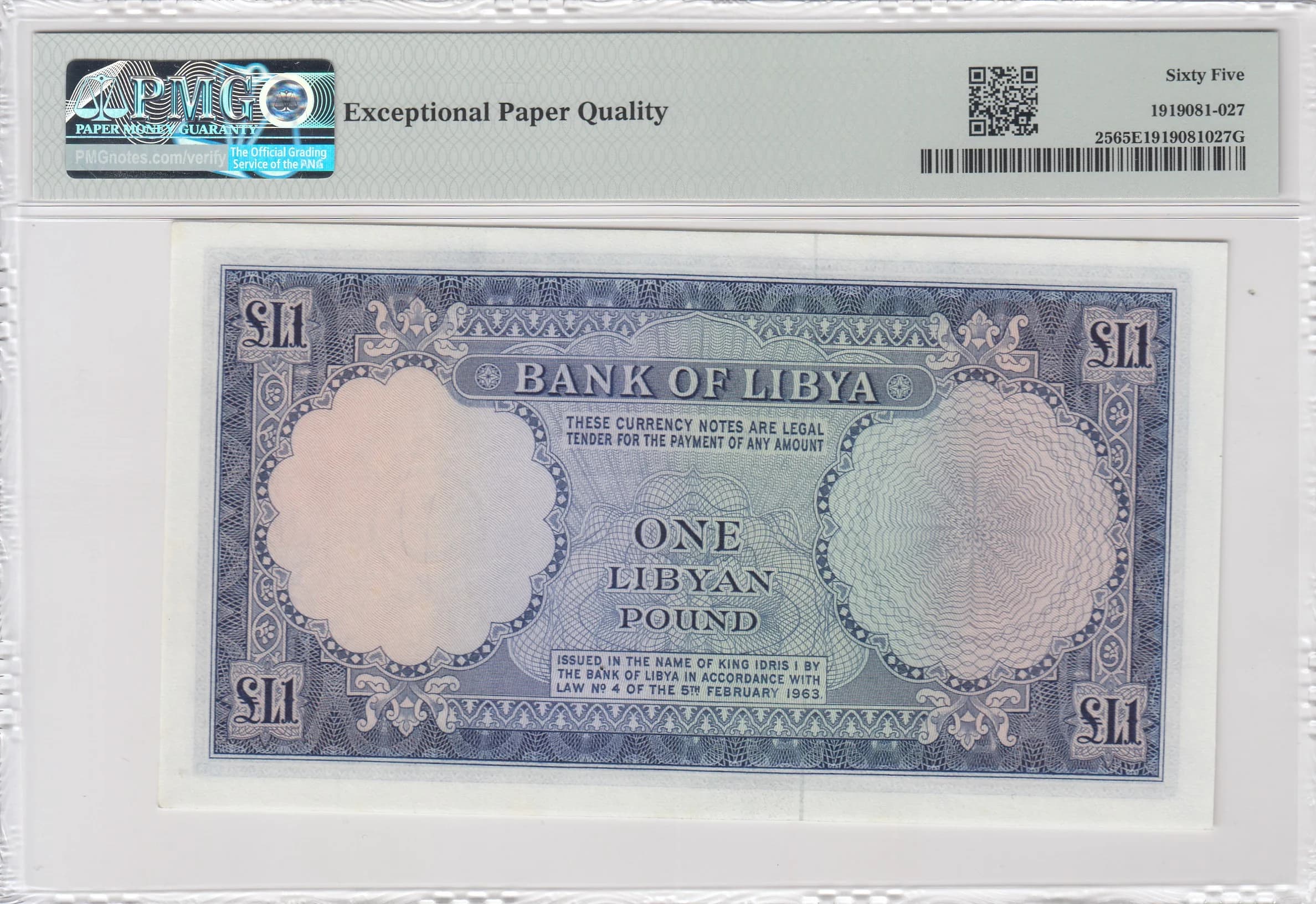
The obverse features a large crowned coat of arms positioned at the left side, incorporating a shield design with a crescent moon symbol—the latter being a traditional Islamic emblem central to Libya's national identity. The arms are surrounded by an ornate decorative frame with blue and beige coloration. The reverse displays a formal, symmetrical layout with the denomination prominently centered, flanked by decorative cartouche shapes (blank frames) that may have been intended for portraiture or additional security features in later iterations. The entire design employs a refined neoclassical aesthetic typical of early postcolonial African currency issues, with complex geometric and floral border patterns executed in fine line work. The dominant color palette—blue, beige, orange, and cream—creates a sophisticated, visually balanced composition characteristic of De La Rue or similar British security printers' work from this period.
FRONT SIDE: 'بنك ليبيا' (Bank of Libya) appears in Arabic at the top center; the serial number '4 C/21 532180' is printed in the lower right. BACK SIDE: 'BANK OF LIBYA' and 'ONE LIBYAN POUND' appear as the primary denomination text; the legal tender declaration reads 'THESE CURRENCY NOTES ARE LEGAL TENDER FOR THE PAYMENT OF ANY AMOUNT'; the issuing authority statement reads 'ISSUED IN THE NAME OF KING IDRIS I BY THE BANK OF LIBYA IN ACCORDANCE WITH LAW NO 4 OF THE 8TH FEBRUARY 1963'; the pound symbol '£1' is displayed prominently.
Intaglio engraving (recess printing), the standard security printing method for banknotes of this era. The note exhibits fine line work, intricate geometric patterns, and sharp detail typical of traditional banknote engraving. The watermark (arms) is integrated into the paper stock. This was almost certainly produced by a major British security printer such as De La Rue, who supplied many early postcolonial African currencies, though specific documentation for this issue's printer would require additional verification.
The PMG catalog recognizes three varieties of the 1 Libyan Pound (P-25): the base P-25, and two watermark variants designated P-25cts and P-25s, both with 'Arms' watermark. The serial number prefix '4 C/21' visible in the images may indicate a specific print batch or signature variety. The note examined does not appear to bear overprints or alterations. Detailed plate number or signature analysis would require enhanced imagery of specific cartouches, but the note appears to be from the standard first printing of the Law No. 4 series (1963 issue date).