1 dinar 1972
Market Prices
17 salesAbout This Note
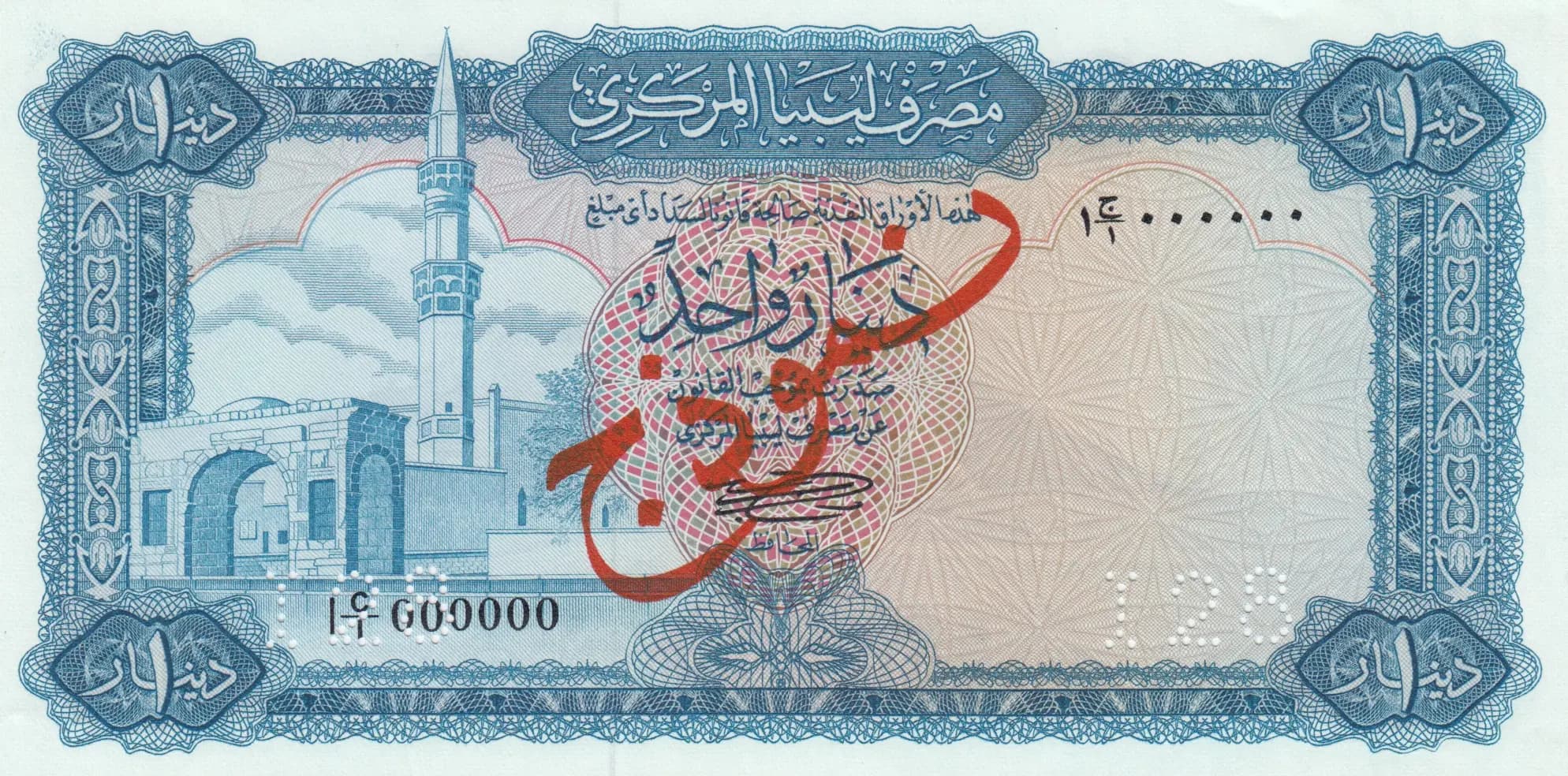
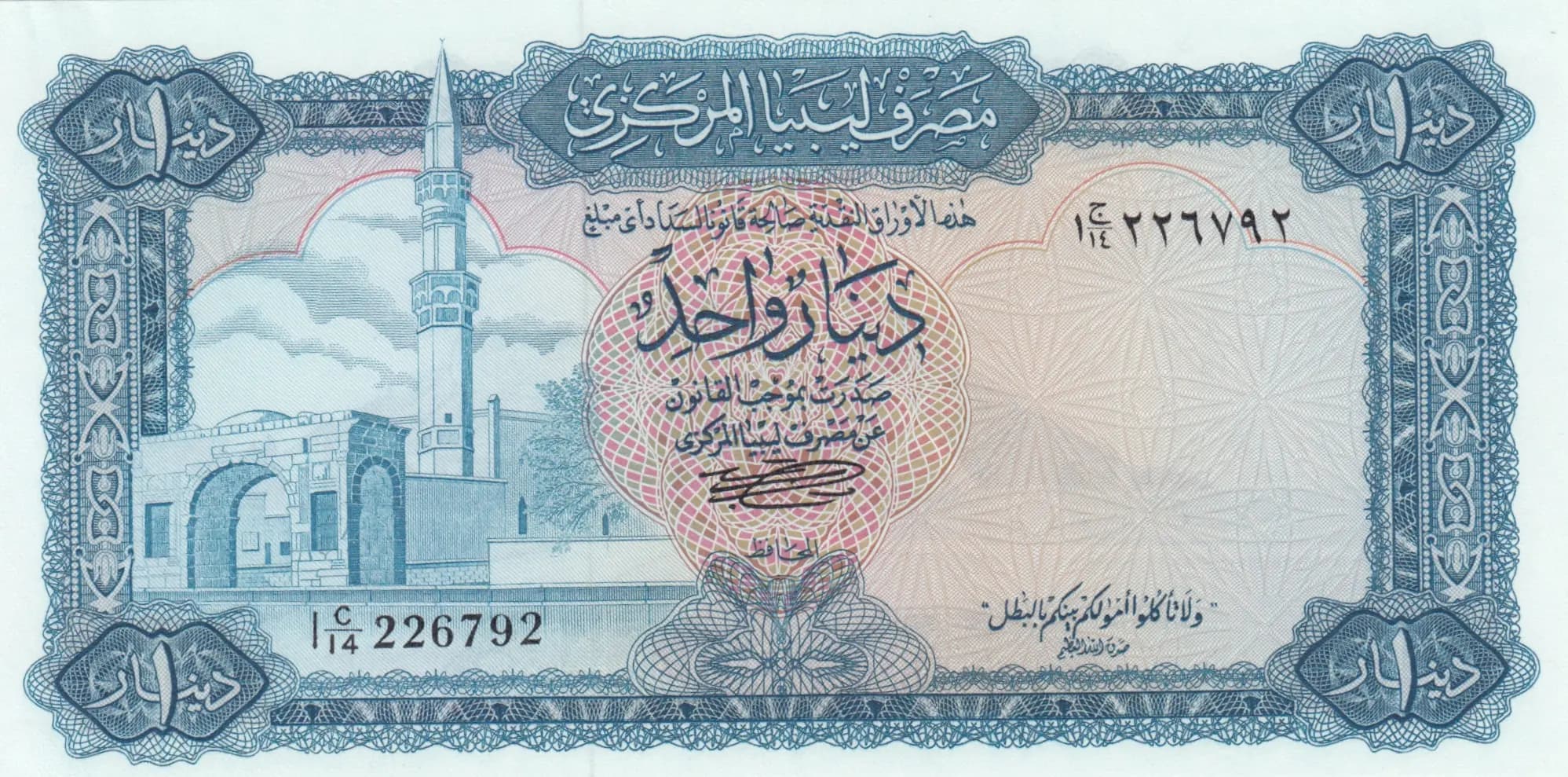
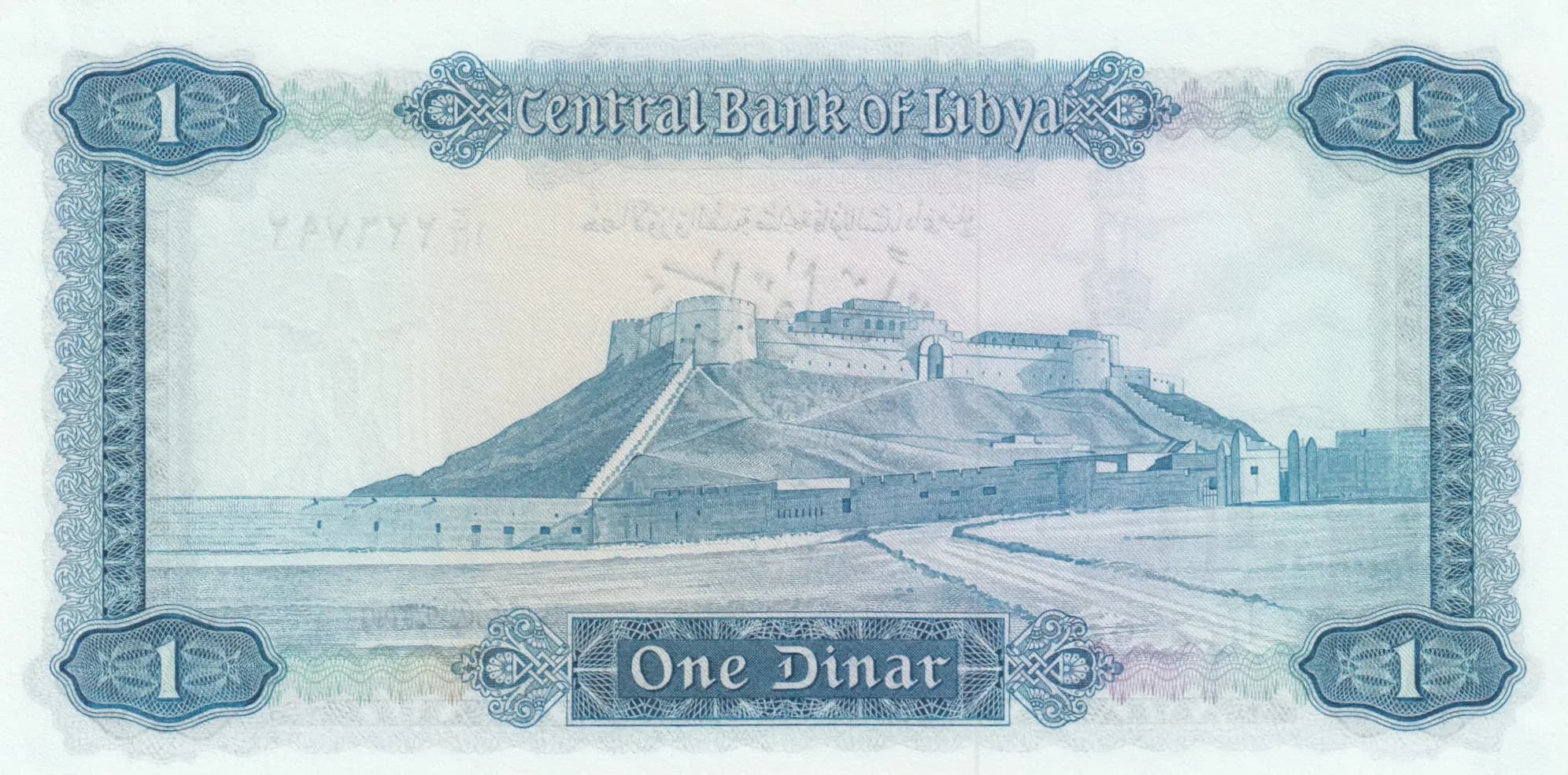
A striking Libyan 1 Dinar note from 1972 in uncirculated condition, featuring beautifully engraved architectural landmarks that reflect Libya's cultural heritage. The obverse showcases the Gurji mosque minaret and an arched gateway structure in blue-gray and multicolored inks, while the reverse depicts the iconic Sabha fortress on its commanding hilltop. This note is characterized by exceptional clarity and crispness with no signs of handling, making it an attractive example of early post-independence Libyan currency.
Common. This note is a regular issue from a major denomination with significant print runs during the 1970s. eBay market data shows consistent sales across multiple condition grades ranging from $0.99 to $81 (for professionally graded PMG 65 examples), with most circulated examples selling well below $25. The 2019 catalogue valuation of $100 for UNC specimens reflects collector demand but is consistent with common notes in premium condition. The large number of examples appearing in secondary markets over the past 15 years indicates substantial surviving quantities.
Issued in 1972 by the Central Bank of Libya during the early years of the Libyan Arab Republic, this note commemorates the nation's architectural and historical landmarks following independence. The depicted structures—the Gurji mosque minaret in Tripoli and the Sabha fortress—symbolize Libya's Islamic heritage and regional significance. The bilingual presentation (Arabic and English) reflects Libya's position during a period of nation-building and modernization under the Revolutionary Command Council.
The obverse features a central oval cartouche containing ornate Arabic calligraphy, flanked by a finely engraved scene depicting the Gurji Mosque with its distinctive tall minaret and an arched bridge or gateway structure characteristic of Tripoli's Ottoman-era architecture. Decorative star/rosette patterns adorn all four corners with an intricate geometric border frame throughout. The reverse displays an engraved landscape featuring the Sabha fortress (Sabrata or similar hilltop citadel), a fortified settlement perched on elevated terrain with defensive walls, ramparts, and multiple structures overlooking a coastal plain. The denomination appears in both numerical and textual form across both sides. Security features include fine-line engraving creating precise tonal shading and watermarked areas.
Front side: 'مصرف ليبيا المركزي' (Central Bank of Libya), 'ديناراً' (Dinar), '١٤' (Islamic year reference 14), '٢٢٦٧٩٢' (Serial number 226792), 'C' (Serial letter C). Back side: 'Central Bank of Libya' (English), 'One Dinar' (English), '١' (Numeral 1 in Arabic). The note incorporates both Arabic and English text reflecting the official bilingual policy of the period.
Intaglio printing (engraved), evidenced by the fine line patterns, visible depth variations, and detailed tonal shading observed throughout both sides. The note exhibits characteristics of high-security currency printing with elaborate decorative borders and architectural detail work typical of 1970s-era central bank production, likely produced by a specialized currency printer such as Thomas De La Rue or similar British security printer that serviced Middle Eastern central banks during this period.
This note is catalogued as Pick 35b, identified by the watermark of heraldic arms (eagle). The PMG population report indicates four recognized variants for the base Pick number 35: P-35b (primary catalogued variety with arms watermark), P-35cts (likely cancelled/specimen), P-35p (possibly proof variant), and P-35s (likely specimen). The observed serial number 226792 with letter C prefix and Arabic numeral denomination marker '١٤' (14 in Islamic calendar) suggests this is a standard circulation issue from the initial 1972 emission date.