1/4 libyan pound 1951
Market Prices
1 saleAbout This Note
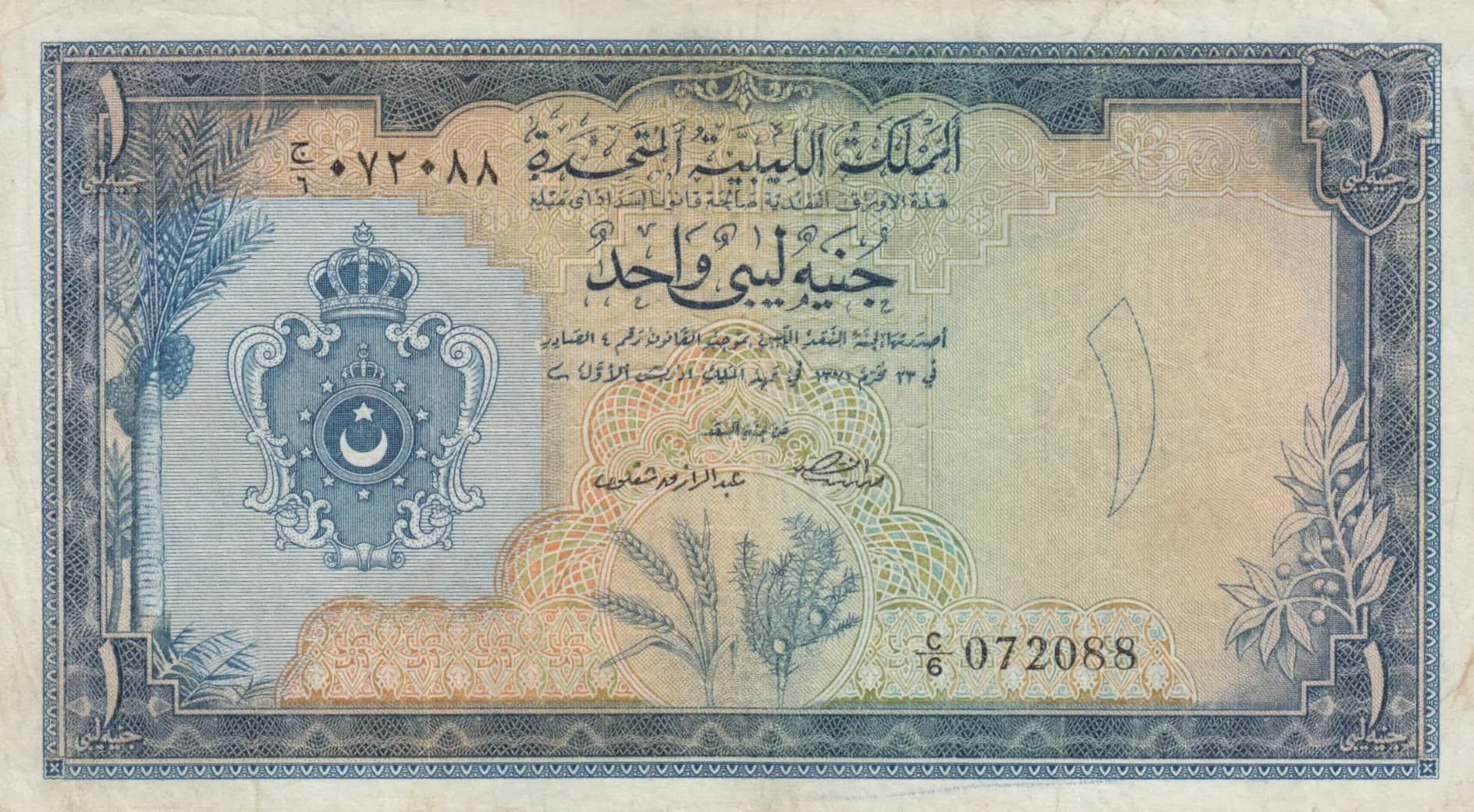
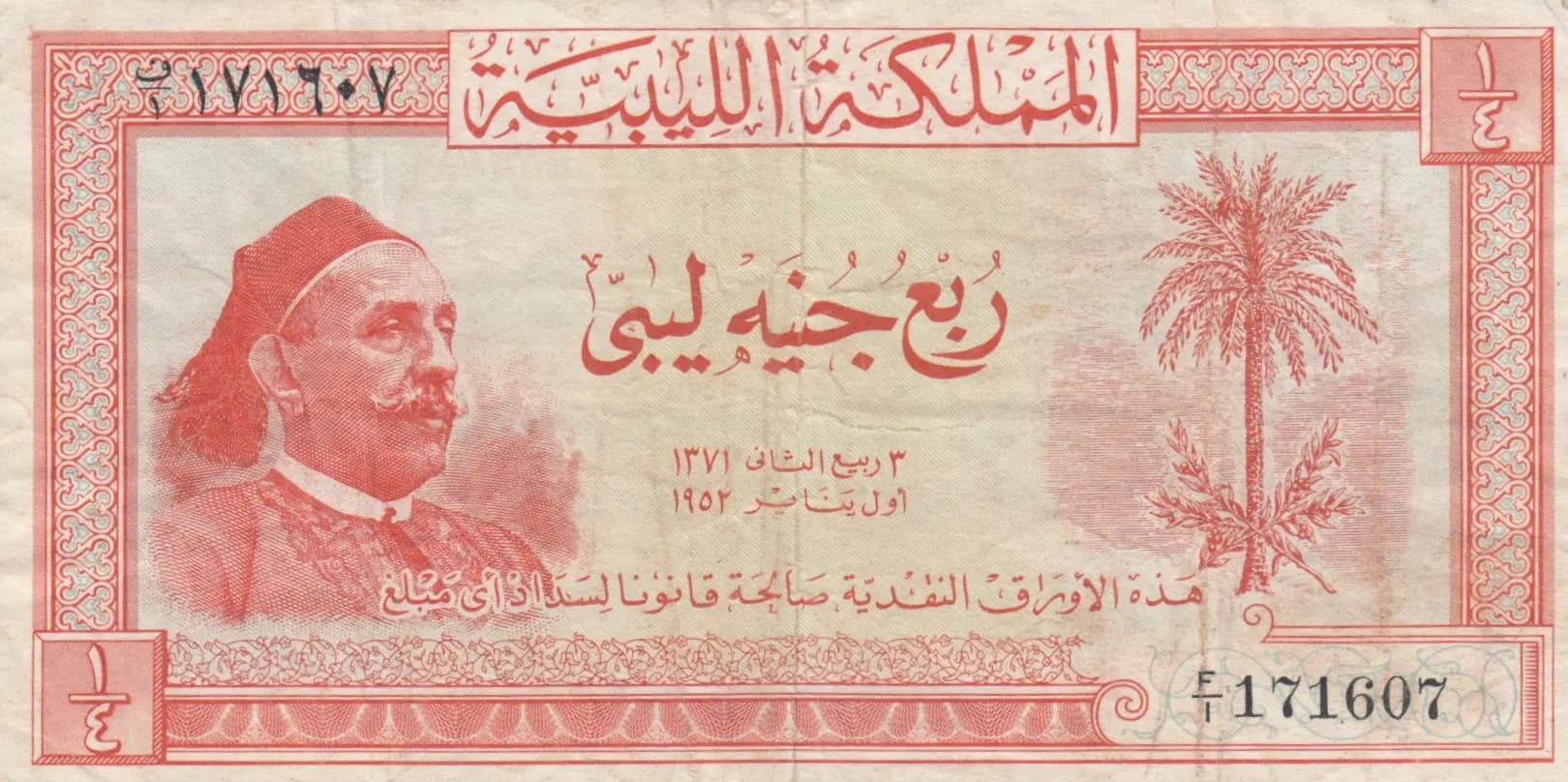
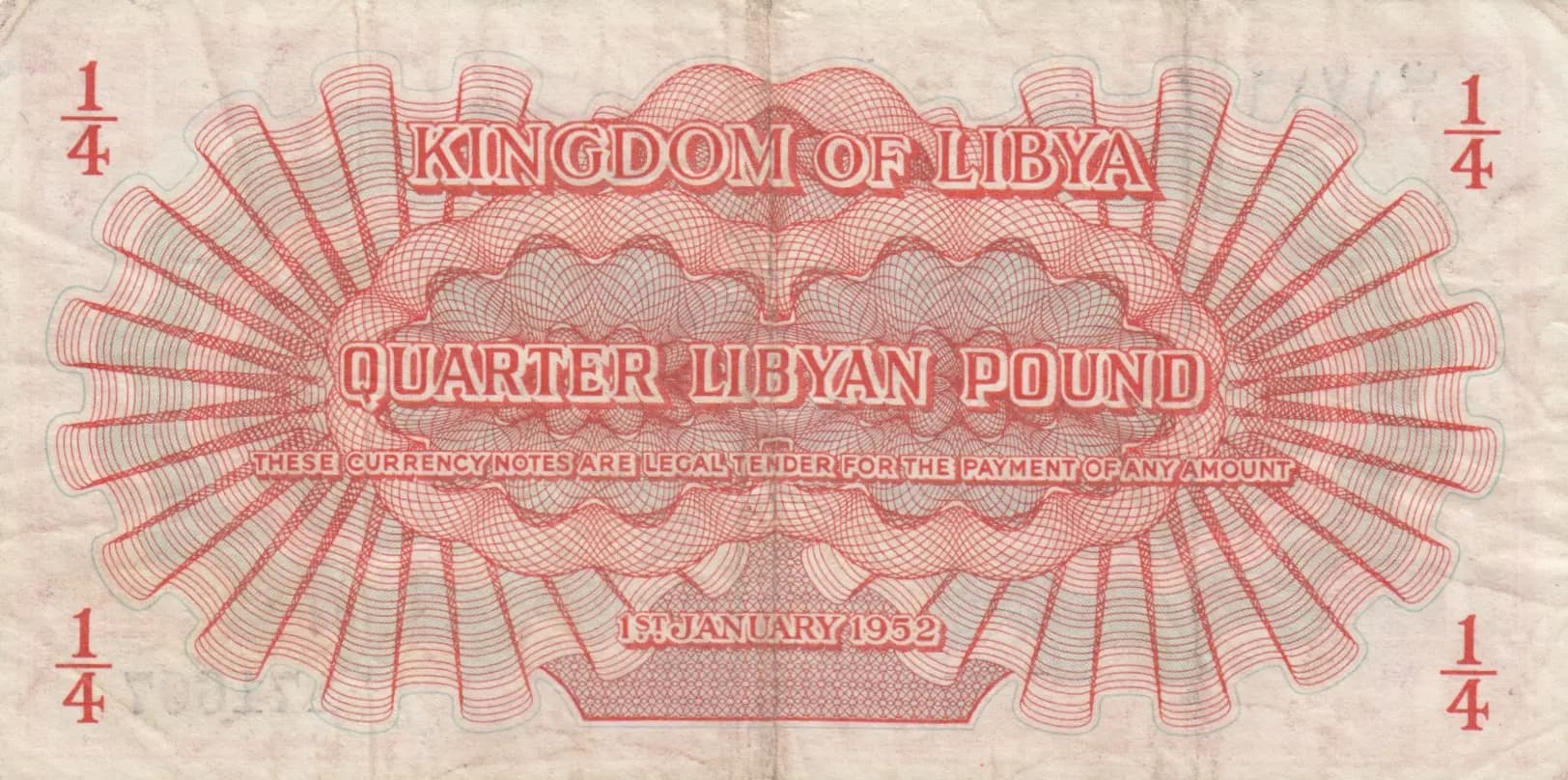
This Kingdom of Libya 1/4 Libyan Pound from 1952 (Pick P-14) displays the characteristic red/coral and cream color scheme typical of early Libyan currency. The obverse features a formal portrait of King Muhammad Idris I wearing a red fez and ceremonial dress, with a palm tree engraved on the right side, while the reverse showcases an elaborate radiating sunburst security pattern. In Fair condition, the note exhibits visible creasing, fold lines, and age-related foxing consistent with moderate circulation, making it a genuine artifact of Libya's early independence period.
Common. This is a regular issue banknote from the Kingdom of Libya's inaugural currency series. The eBay market data showing a VG example selling for $9.99 in 2012, combined with catalog values of only $7.50 (VG) to $600 (UNC), indicates this is a readily available note in circulated condition. While the Kingdom of Libya period (1951-1969) notes have collector interest, the substantial print runs of this 1/4 pound denomination mean examples in Fair to VG condition are frequently encountered in the market.
This note commemorates the establishment of the Kingdom of Libya on January 1, 1952, following the country's independence from Italian colonial rule and British/French administration. King Muhammad Idris al-Sanussi, depicted in formal regalia on the obverse, was the nation's first and only king, ruling from 1951 to 1969. The palm tree symbol and bilingual Arabic-English inscriptions reflect Libya's transition to sovereignty while maintaining ties to Western monetary systems, using the pound sterling equivalent as its currency standard during this early royal period.
The obverse features King Muhammad Idris I al-Sanussi positioned at the left in a three-quarter portrait view, wearing a formal dark suit with a white collar and a distinctive red fez hat, rendered in fine engraved detail. A date palm tree (Phoenix dactylifera), symbolizing Libya's cultural and economic heritage, is engraved on the right side. The entire design is framed by an ornate geometric border with arabesque and floral motifs typical of Islamic monetary design. The reverse employs a large radiating sunburst or shell-like pattern as its central security feature, surrounded by an intricate mesh of fine lines creating a complex geometric lattice pattern. Both sides maintain the red/coral and cream color scheme with bilingual labeling reflecting the nation's dual cultural orientation.
FRONT SIDE: Arabic inscriptions include 'المملكة الليبية' (Kingdom of Libya), 'ربع جنيه ليبى' (Quarter Libyan Pound), '2 ربيع الثانى 1371' (2 Rabi al-Thani 1371 Islamic calendar), 'اول يناير 1952' (1st January 1952), and 'هذه الاوراق النقدية صادرة قانونا لسداد اى مبلغ' (These currency notes are legally issued for payment of any amount). The serial number 'F1711607' and marking 'SYAITY' appear in the lower right. BACK SIDE: English text includes 'KINGDOM OF LIBYA', 'QUARTER LIBYAN POUND', 'THESE CURRENCY NOTES ARE LEGAL TENDER FOR THE PAYMENT OF ANY AMOUNT', and '1ST JANUARY 1952'. The denomination fraction '1/4' appears in all four corners.
The note exhibits characteristics of fine line intaglio engraving (recess printing), evidenced by the crisp geometric border patterns, detailed portraiture with fine facial features, and the elaborate mesh security pattern on the reverse. The precision of the sunburst design and the consistent line work throughout indicate professional security printing standards. Based on catalog records for early Kingdom of Libya issues, this was likely produced by Thomas De La Rue & Company or a similar specialist security printer, though specific printer attribution requires additional documentation.
This note exhibits serial number prefix 'F' with the number 1711607. The Pick catalog recognizes at least two variants: P-14 and P-14s (specimen). Based on the visual analysis showing a standard circulation note with serial number and signatures, this is the regular P-14 variety rather than a specimen or overprinted variant. The signature marking 'SYAITY' visible on the obverse is consistent with official Kingdom of Libya authorization. No evidence of overprints or unusual variety characteristics is observed in the provided images.