1/4 dinar 1972
Market Prices
16 salesAbout This Note
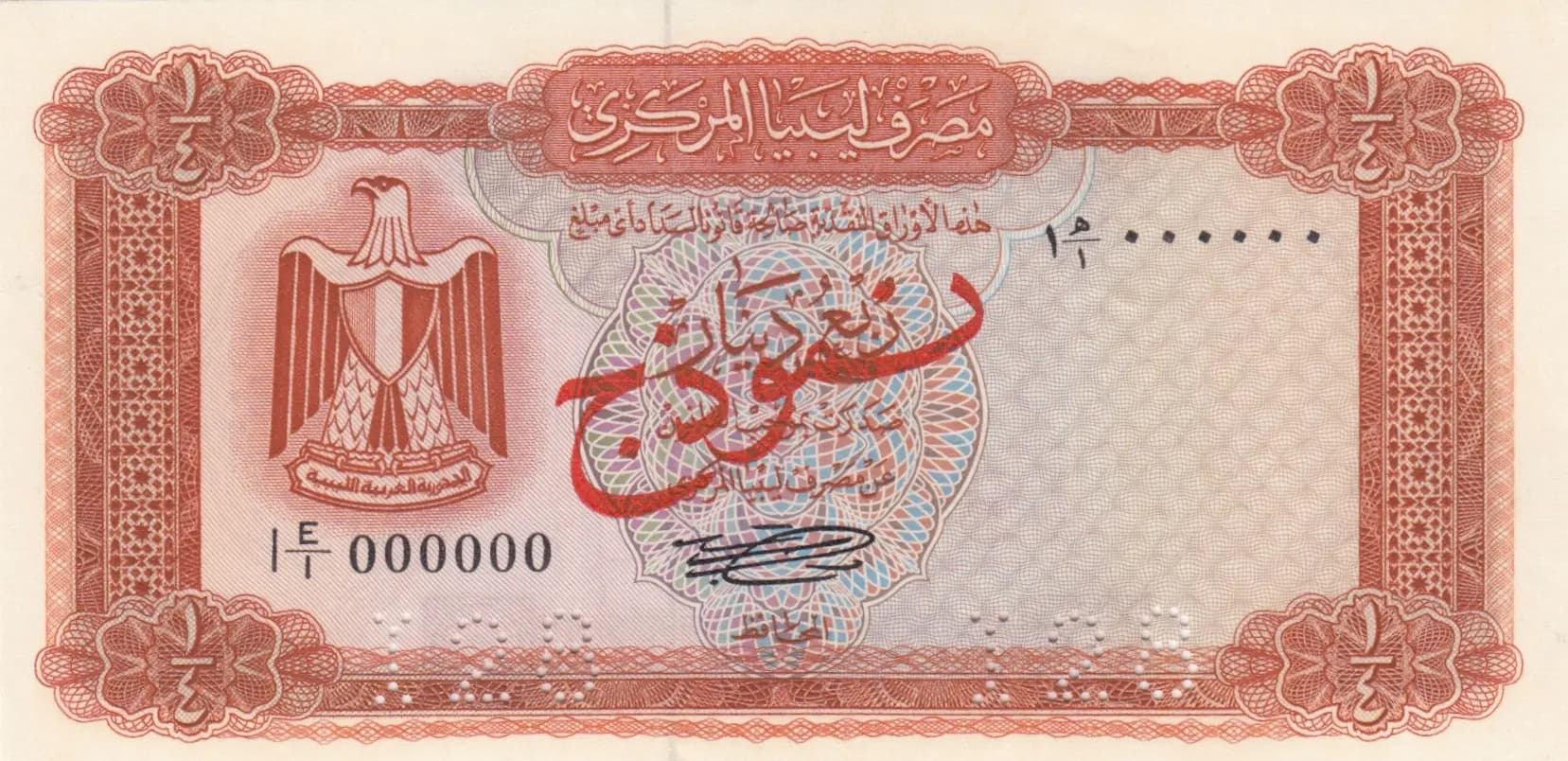
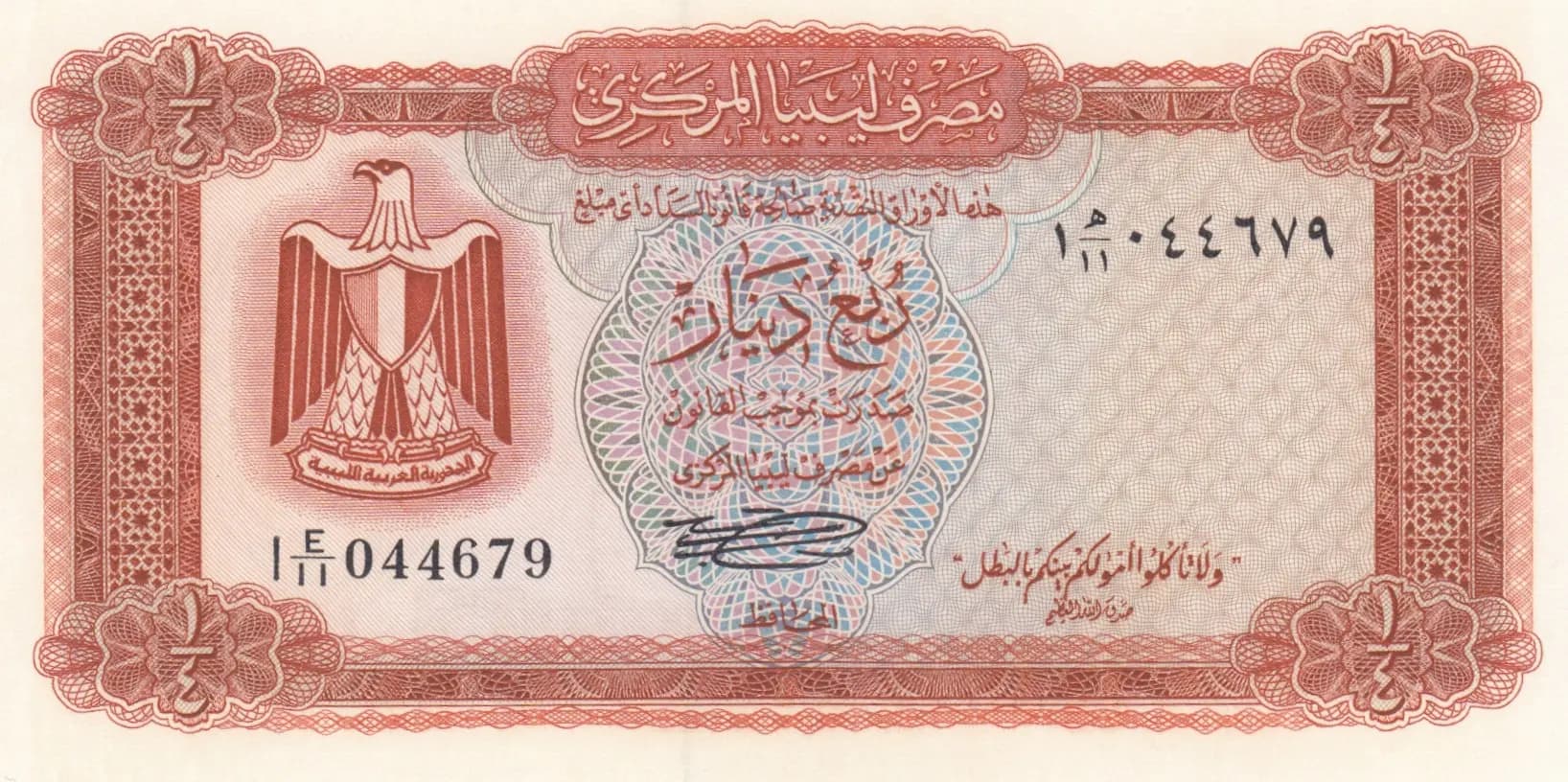
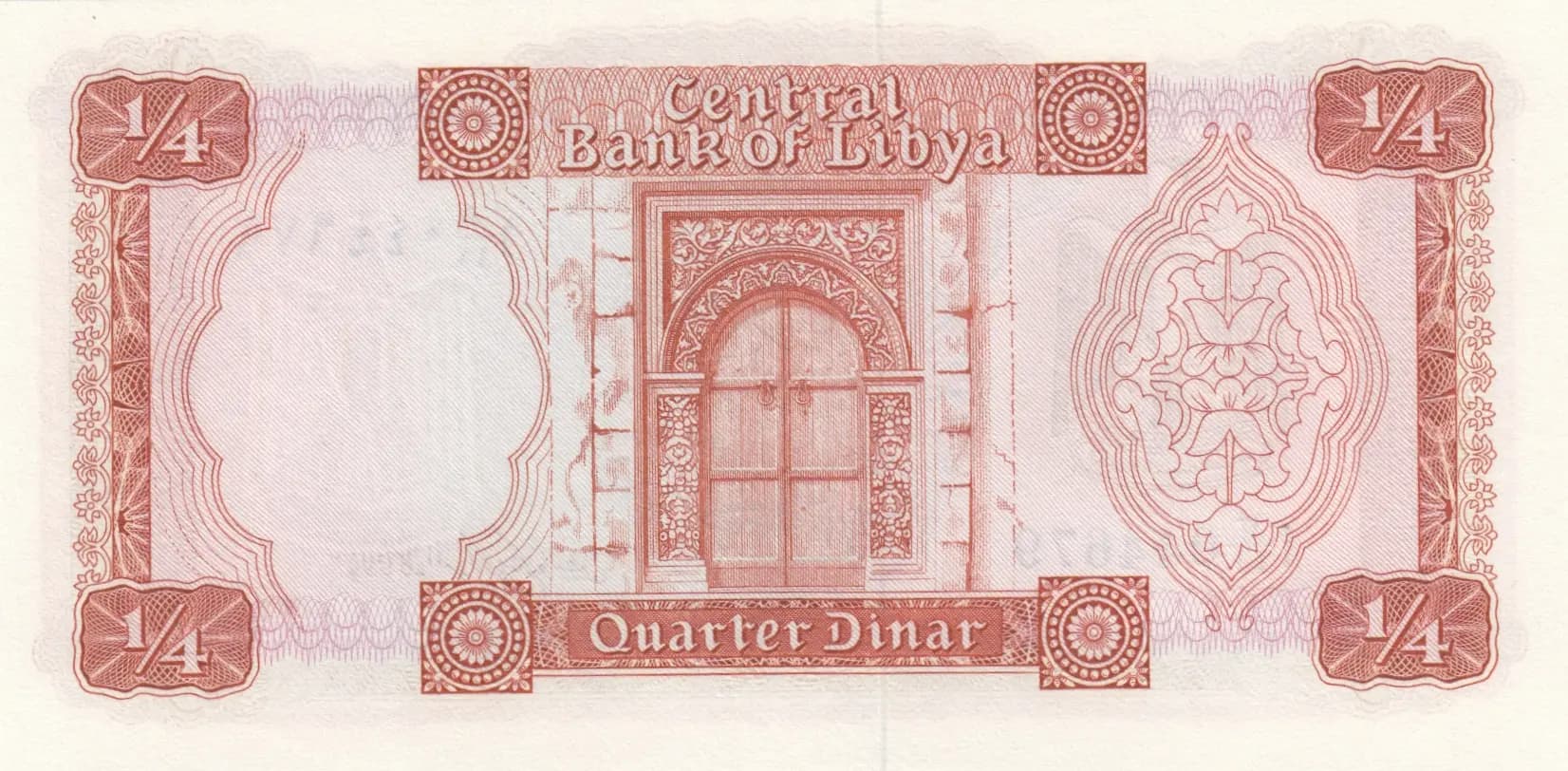
This is an uncirculated 1972 Libyan 1/4 Dinar (Pick 33b) featuring the heraldic eagle national emblem on the obverse and an ornate Islamic architectural doorway on the reverse. The note displays exceptional preservation with no visible wear, creases, or damage, and showcases the intricate geometric and fine-line printing characteristic of 1970s Libyan currency. With recent UNC examples commanding $35-90 on the secondary market, this represents a desirable example of early post-revolutionary Libyan numismatic artistry.
Common. This is a regular issue from 1972 with substantial circulation figures typical of a fractional denomination (1/4 Dinar) in regular use. eBay market data shows consistent sales activity across multiple condition grades from 2013-2025, with UNC examples averaging $35-90 and lower grades routinely selling for $1-15. The presence of multiple PMG-graded variants (P-33a, P-33b, P-33cts, P-33s) indicates reasonable population numbers across grading services. Current catalog values ($35 UNC, $10 VF) reflect steady but modest collector demand typical of common fractional denominations.
This note was issued during the early years of the Libyan Arab Socialist People's Jamahiriya (established 1977 but this note predates and reflects the revolutionary period following Gaddafi's 1969 coup). The heraldic eagle emblem and the inscription referencing the state's socialist Arab identity reflect Libya's political orientation during this era. The architectural doorway motif on the reverse represents traditional Islamic and North African cultural heritage, common in Libyan banknote designs of this period.
The obverse features the Libyan national coat of arms—a heraldic eagle with spread wings—positioned on the left side of the note. The central design incorporates a stylized portrait rendered in decorative geometric patterns with fine cross-hatching, typical of Islamic numismatic art. The entire note is bordered with ornamental rosette designs in all four corners and intricate geometric and floral patterns throughout, reflecting Islamic architectural and decorative traditions. The reverse showcases a traditional Islamic doorway or palace window with an ornate arch and detailed geometric lattice patterns, framed by matching rosette designs and ornamental borders. The color scheme throughout employs reddish-brown on a cream/beige underprint with subtle blue and green accents, creating a warm, sophisticated palette appropriate for a fractional denomination.
OBVERSE: مصرف ليبيا المركزي (Masraf Libya al-Markazi) = 'Central Bank of Libya'; حالة الاتحادية الليبية الاشتراكية العربية الشعبية (Halet al-Ittihadiyya al-Libiyya al-Ishtirakia al-Arabiyya al-Sha'biyya) = 'State of the Libyan Arab Socialist People's Jamahiriya'; وزارة المالية والتخطيط (Wizarat al-Maliya wa-al-Takhtit) = 'Ministry of Finance and Planning'; E044679 = Serial number (Latin characters). REVERSE: '1/4' = Denomination indicator; 'Central Bank of Libya' = Issuing authority (English); 'Quarter Dinar' = Denomination name (English).
Intaglio (engraved) printing on banknote paper, evidenced by the fine-line geometric patterns, detailed cross-hatching in the portrait area, and the precise reproduction of intricate borders and architectural elements. The security features include fine-line patterning throughout and detailed architectural engraving with multiple layers of overlapping patterns. While the specific security printer is not confirmed from catalog data, Libyan notes of this period were typically produced by De La Rue or other major international security printers under Central Bank of Libya contracts.
This specimen is cataloged as Pick 33b with watermark arms (heraldic eagle). The Pick catalog recognizes four variants of the base 1/4 Dinar type: P-33a (arms watermark), P-33b (arms watermark), P-33cts (likely a color trial or specimen), and P-33s (likely a specimen). The observed serial number E044679 appears to be from a standard production run. No overprints, date variations, or signature varieties are apparent from the visual analysis. The ND (No Date) designation reflects the practice of omitting a specific date on the printed note face, though the 1972 date is assigned by catalog convention based on issuance records.