25 livres 1964 specimen
Market Prices
About This Note
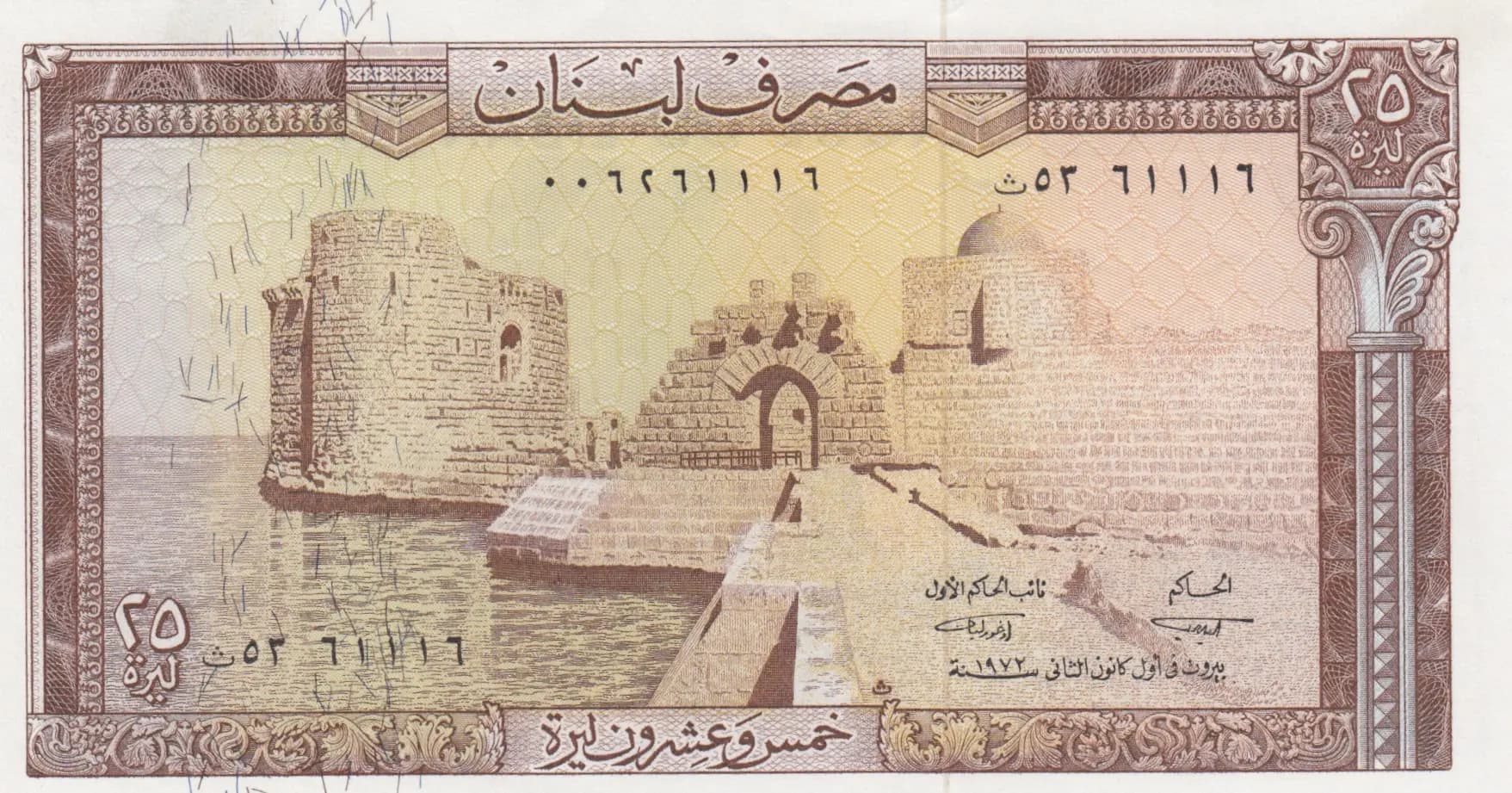
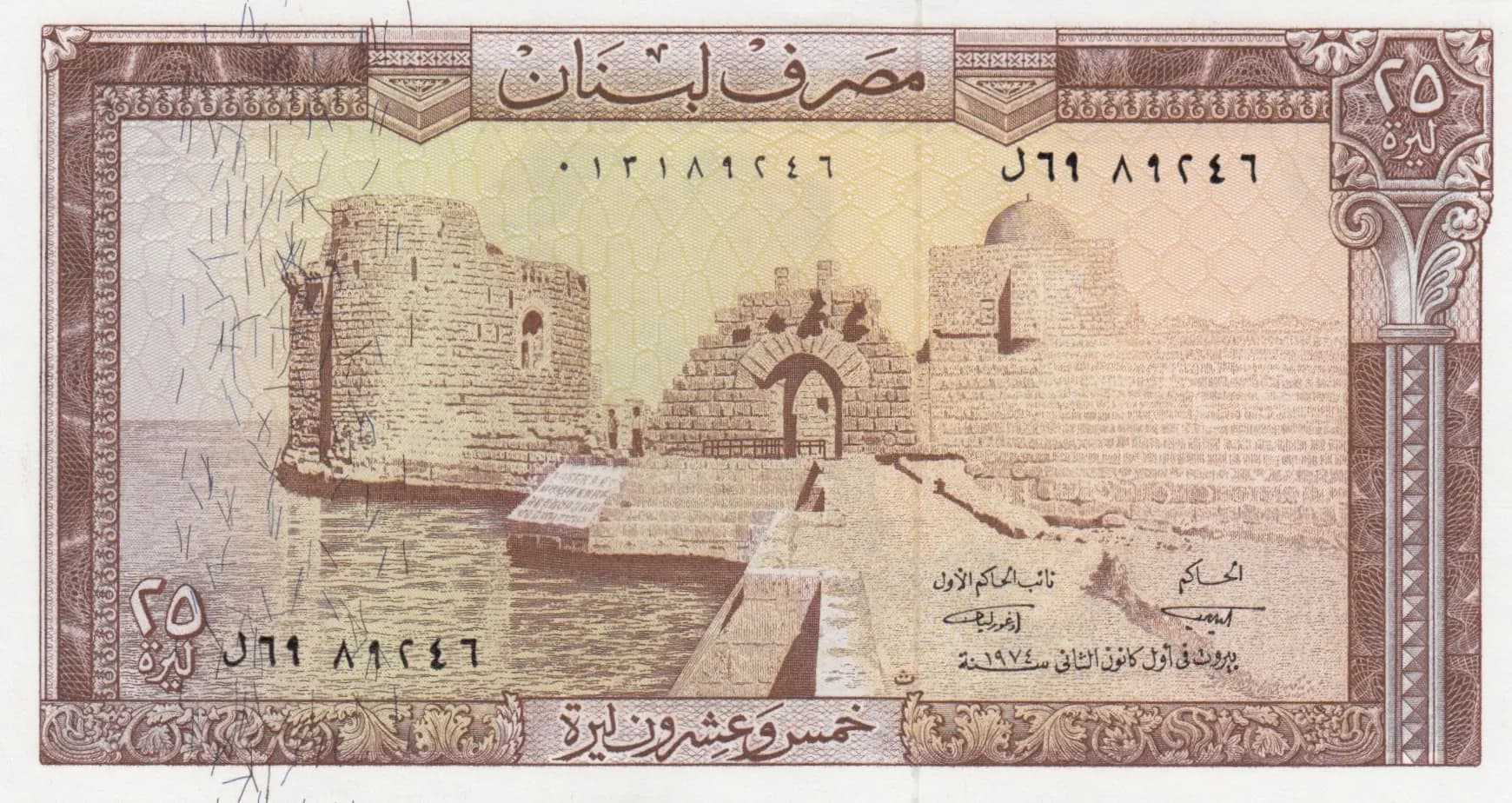
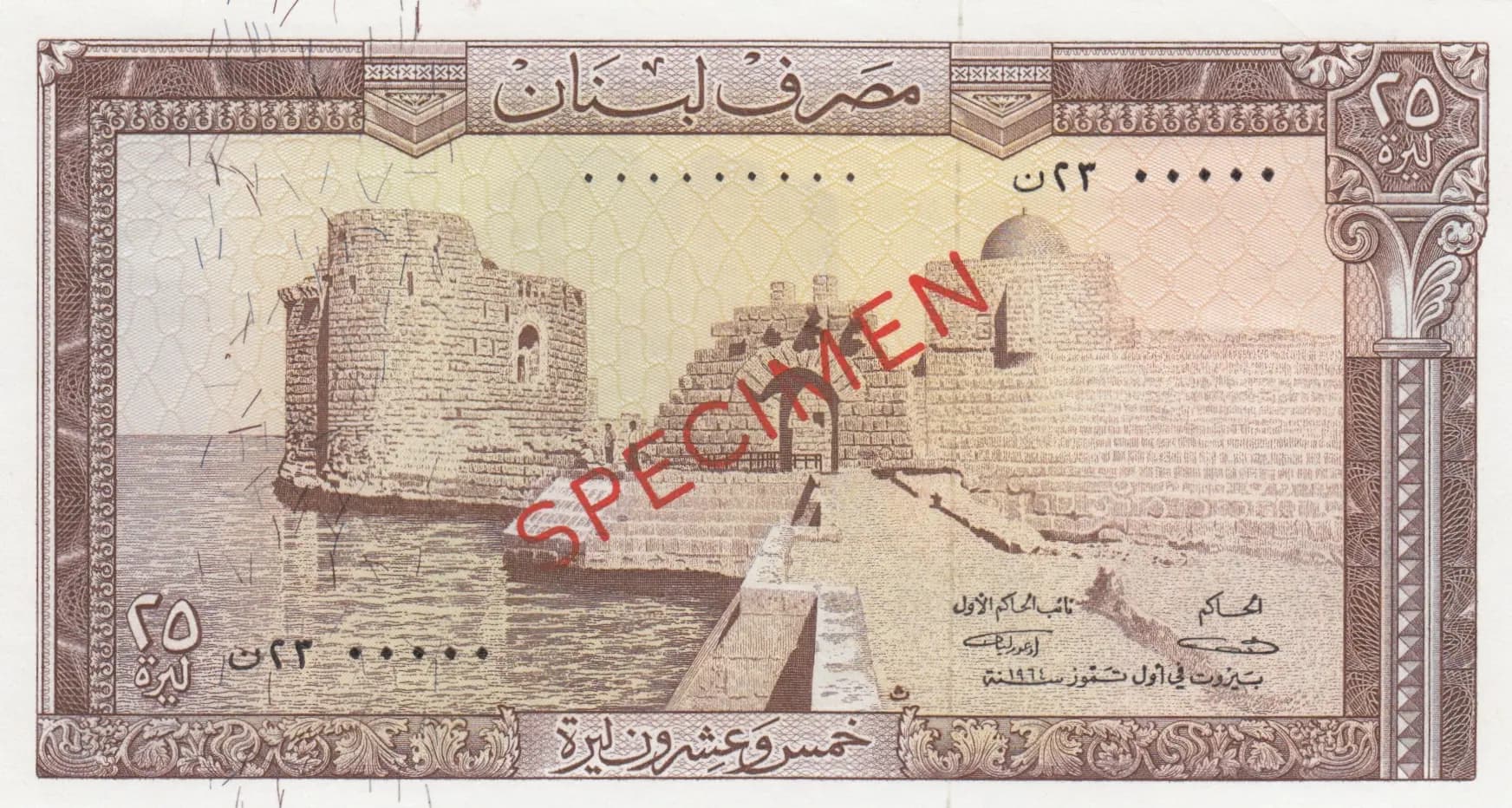
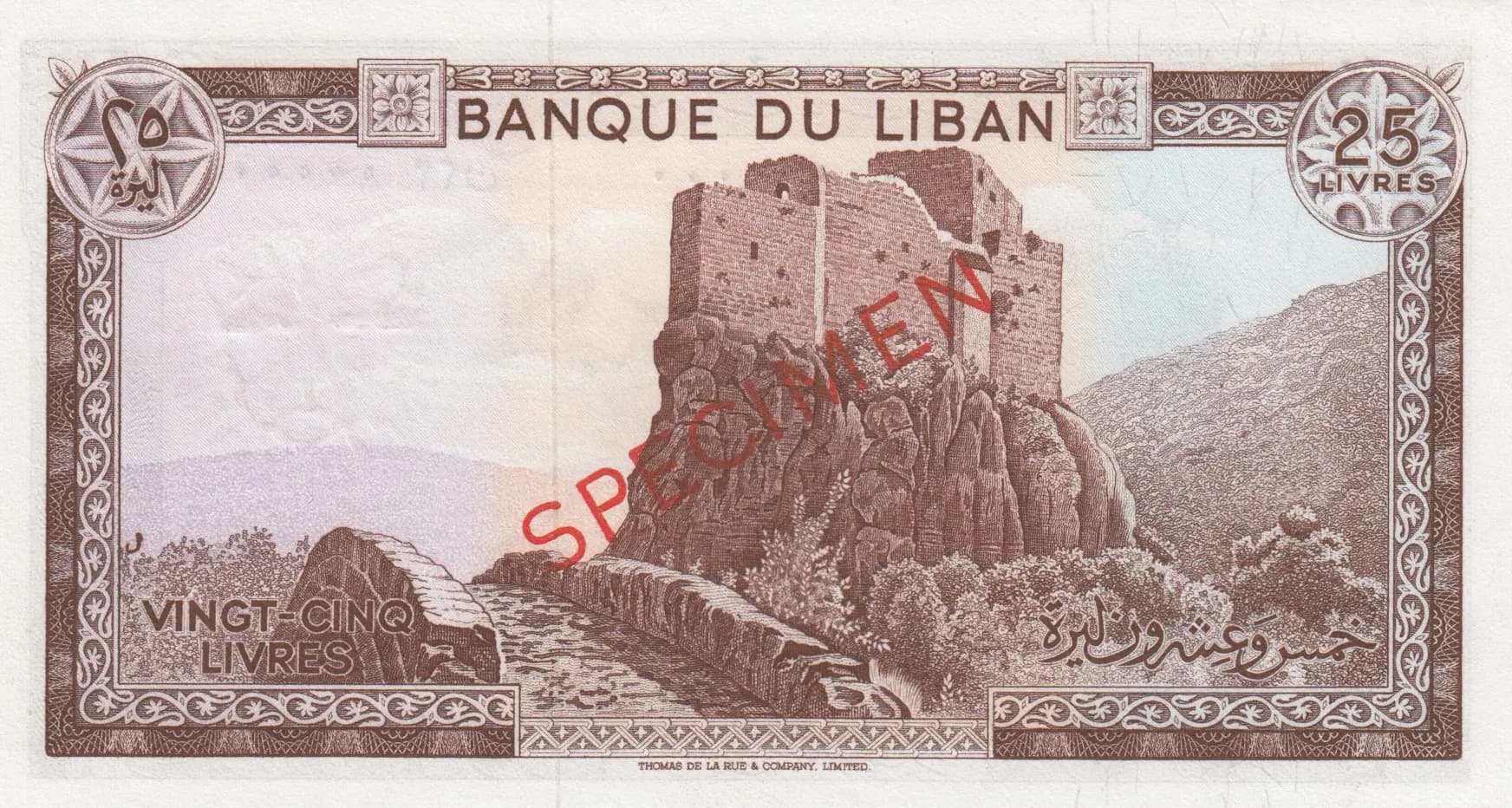
This is a Lebanese 25 Livres specimen banknote from 1964, issued by Banque du Liban and printed by Thomas de la Rue. The note displays exceptional uncirculated condition with minimal handling marks, featuring a striking brown and sepia color scheme with the iconic Crusader Castle of Saida on the obverse and mountainous castle ruins on the reverse. As a specimen note with prominent red diagonal SPECIMEN overprint, this is a non-circulating issue intended for distribution to banks and collectors, making it a distinctive piece of Lebanese numismatic history.
Common. The eBay market data shows specimen notes in this series trading at highly variable prices ($1.50 to $99.99 USD), with multiple UNC examples listed at low prices ($1.50-$6.79), indicating healthy supply. The 1964-1983 issue run was substantial, and specimen notes were produced in moderate quantities for institutional distribution. While specimen notes command modest premiums over circulation examples, they do not represent scarce material.
The 1964 Lebanese banknote series represents the post-independence monetary identity of Lebanon, with designs celebrating the nation's rich Crusader architectural heritage. The featured Crusader Castle at Saida (Sidon), a major coastal fortification visible from the water, and the fortified ruins depicted on the reverse exemplify Lebanon's strategic historical importance as a Mediterranean crossroads. This specimen issue documents the formal presentation of the new currency design to banking institutions during a period of relative stability in Lebanon's economic development.
The obverse features the Crusader Castle of Saida (Sidon), depicted as a substantial coastal fortification with distinctive stone towers, crenellated defensive walls, and a waterfront setting. The fortress is rendered in fine sepia tones with architectural detail showing the structure as viewed from the water, emphasizing its maritime strategic importance. The reverse displays fortified castle ruins positioned on a dramatic rocky mountain outcrop with natural landscape elements, rendered in brown and gray sepia tones. Both sides feature ornamental border designs with floral and geometric patterns, decorative corner medallions, and arabesque elements reflecting Lebanese artistic traditions. The multilingual text (Arabic, French, and English) reflects Lebanon's cosmopolitan character. Arabic numeral denominations appear in multiple corners, and the note includes fine line engraved patterns and hatching work characteristic of high-security banknote production.
OBVERSE: 'مصرف لبنان' (Banque du Liban / Bank of Lebanon in Arabic), '٢٥' (25 in Arabic numerals), 'SPECIMEN' (English overprint). REVERSE: 'BANQUE DU LIBAN' (Bank of Lebanon in French), '25 LIVRES' (25 Pounds in French/English), 'VINGT-CINQ LIVRES' (Twenty-Five Pounds in French), 'خمسة وعشرون ليرة' (Twenty-Five Pounds in Arabic), 'THOMAS DE LA RUE & COMPANY, LIMITED' (Printer identification in English), 'SPECIMEN' (English overprint).
Intaglio engraving and letterpress, executed by Thomas de la Rue & Company, Limited, London—the world's premier security printer of the era. The fine line work, detailed border engraving, complex architectural rendering, and precision corner medallions are hallmarks of intaglio production. The SPECIMEN overprint was applied via letterpress or offset methods post-production.
This is identified as Pick P-64s (specimen variant). The visual analysis confirms the standard obverse design (Crusader Castle at Saida) and reverse design (castle ruins on rocky terrain) for the 1964 issue. The red diagonal SPECIMEN overprint is the defining characteristic of specimen notes versus issued currency (P-64). PMG cataloging indicates a P-64c variant exists (likely a circulated or cancelled variant), but this specimen note with its prominent red overprint and uncirculated condition represents the standard specimen issue for this denomination.