100 latu 1923
Market Prices
About This Note
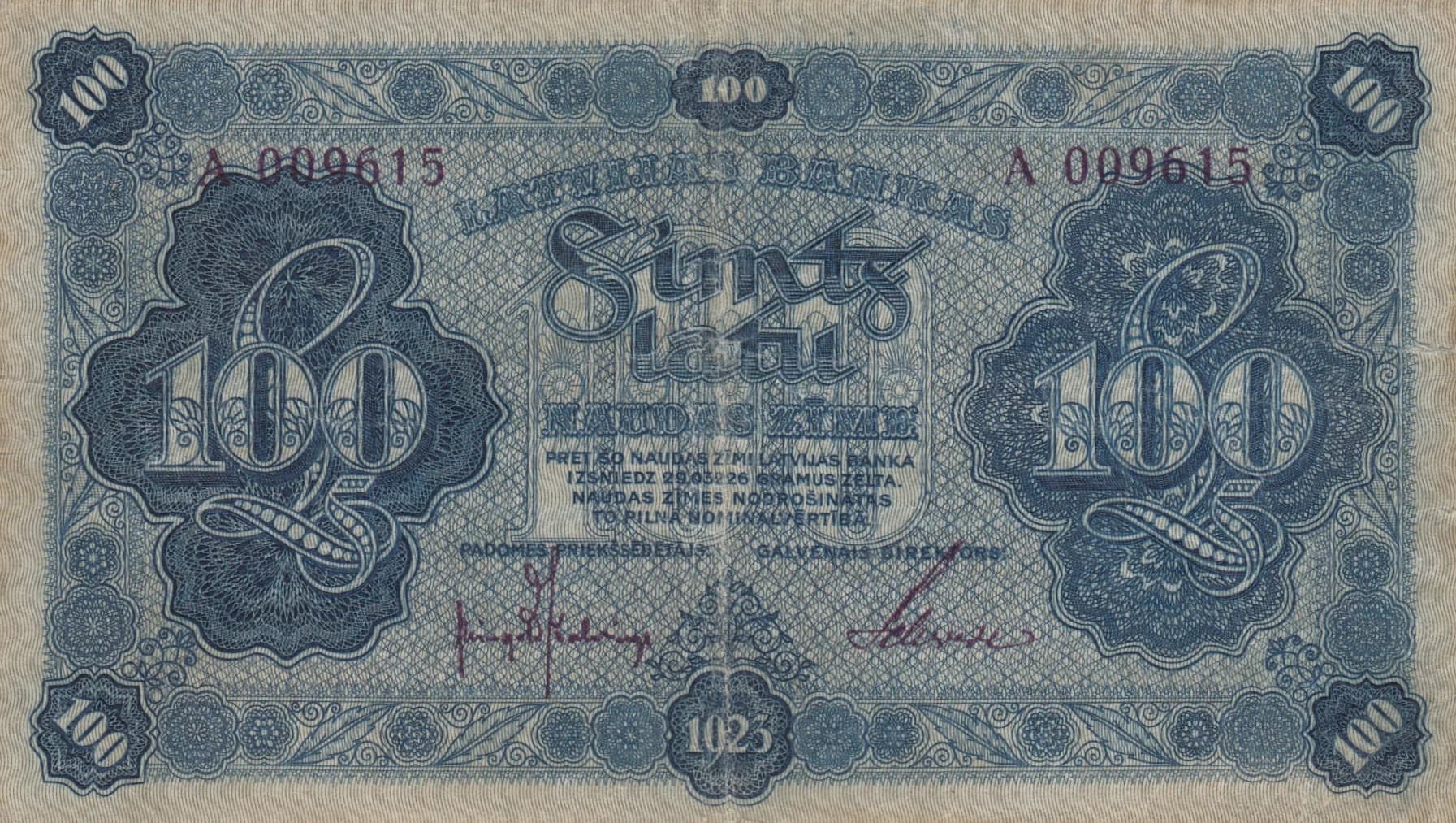
This 100 latu banknote from 1923 represents an important early emission from the newly independent Latvian state. The note exhibits the characteristic ornate Art Nouveau design aesthetic of the period, with intricate engraving work visible on both sides despite moderate circulation wear on the obverse. In VF condition, the reverse displays excellent preservation of the allegorical design and heraldic imagery, while the obverse shows expected aging with creasing and staining consistent with period circulation.
Common. The 100 latu denomination from the 1923 issue of Latvijas Banka was part of the standard circulation currency of the early Latvian state and was produced in substantial quantities. No specific evidence of limited print runs, recalls, or exceptional scarcity exists for Pick 14 in this condition grade. Early Latvian banknotes, while of historical interest, remain readily available to collectors in the market.
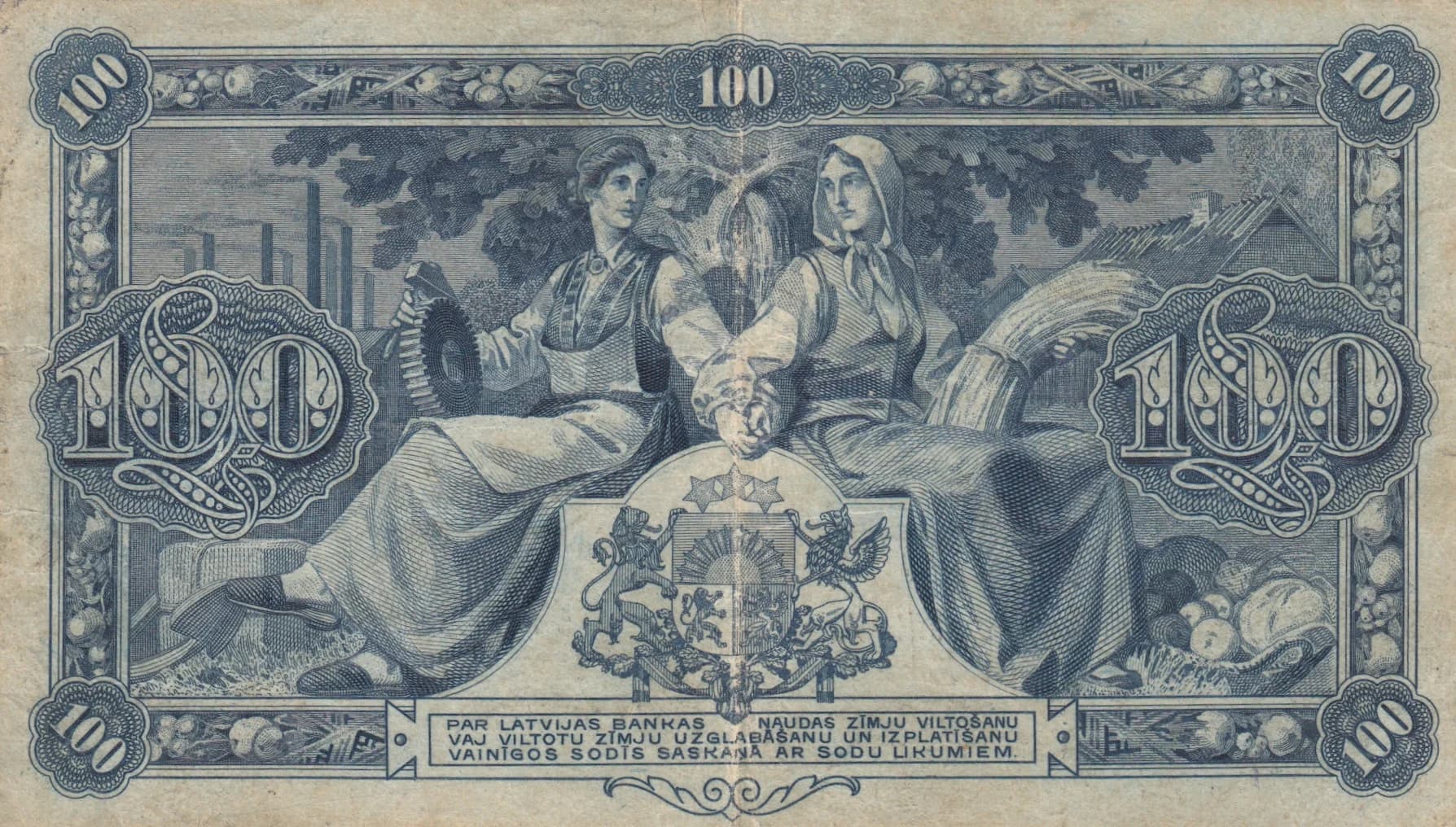
Issued by Latvijas Banka in 1923, this note commemorates Latvia's early years of independence following the 1918 declaration of sovereignty from the Russian Empire. The reverse features three allegorical female figures with a coat of arms bearing heraldic lions and a crown, representing the values and national identity of the fledgling Latvian state. The prominent warning inscription regarding counterfeiting reflects the serious economic concerns of newly independent nations establishing their monetary credibility during the interwar period.
The 100 latu note features a sophisticated two-sided design executed in the ornate Art Nouveau tradition characteristic of 1920s Baltic currency design. The obverse displays purely decorative architecture with symmetrical floral and geometric border patterns framing corner denomination cartouches, emphasizing the note's value and formal monetary authority. The reverse presents the allegorical centerpiece: three female figures in classical dress representing virtues or national qualities, with a standing figure on the left and two seated/reclining figures flanking a heraldic coat of arms in the center. The arms display the Lion of Livonia (the traditional heraldic lion of the Latvian lands) topped with a crown and flanked by stars, representing sovereignty and national heritage. Architectural or industrial elements visible in the background suggest Latvia's economic development and modernity. The entire composition is framed by ornate borders combining floral motifs with classical architectural elements, reinforcing the note's artistic and official character.
FRONT SIDE: '100' (denomination, appearing in all four corners); 'LATVIJAS BANKA' (Bank of Latvia); 'A 009615' (serial number); '1925' (year of issue, though catalog indicates 1923 issuance). Various Latvian text relating to bank authority and currency specifications appears in the center, partially legible due to wear. BACK SIDE: '100' (denomination in decorative frames); 'PAR LATVIJAS BANKAS NAUDAS ZIMJU VILTOSANU VAI VILTOTU ZIMJU UZGLABASANU UN IZPLATISANU VAINIGOS SODIS SASKANA AR SODU LIKUMIEM' (English translation: 'For counterfeiting of Latvian Bank currency or possession and distribution of counterfeit currency, offenders shall be punished according to laws concerning punishments').
Intaglio/engraving printing method, evidenced by the fine, detailed line work visible throughout both sides, the intricate patterns in decorative borders, the complex allegorical scene rendering, and the security patterns observable in the visual analysis. The quality and complexity of the engraved work is consistent with the leading European security printers of the 1920s. This note was likely produced by a prominent continental printer such as Waterlow & Sons or a similar establishment specializing in security printing for newly independent states.
Serial number observed: A 009615. The year marking visible as '1925' on the obverse may represent a reissue or subsequent print series, which could indicate a specific variety within Pick 14. The 'A' prefix on the serial number suggests a particular batch or series designation. Further research into Latvijas Banka printing chronology would be needed to definitively establish whether this represents a distinct variety, as the 1923 catalog date and 1925 date marking may reflect the typical lag between authorization and circulation of new banknote series.