10 dinars 1980
Market Prices
31 salesAbout This Note
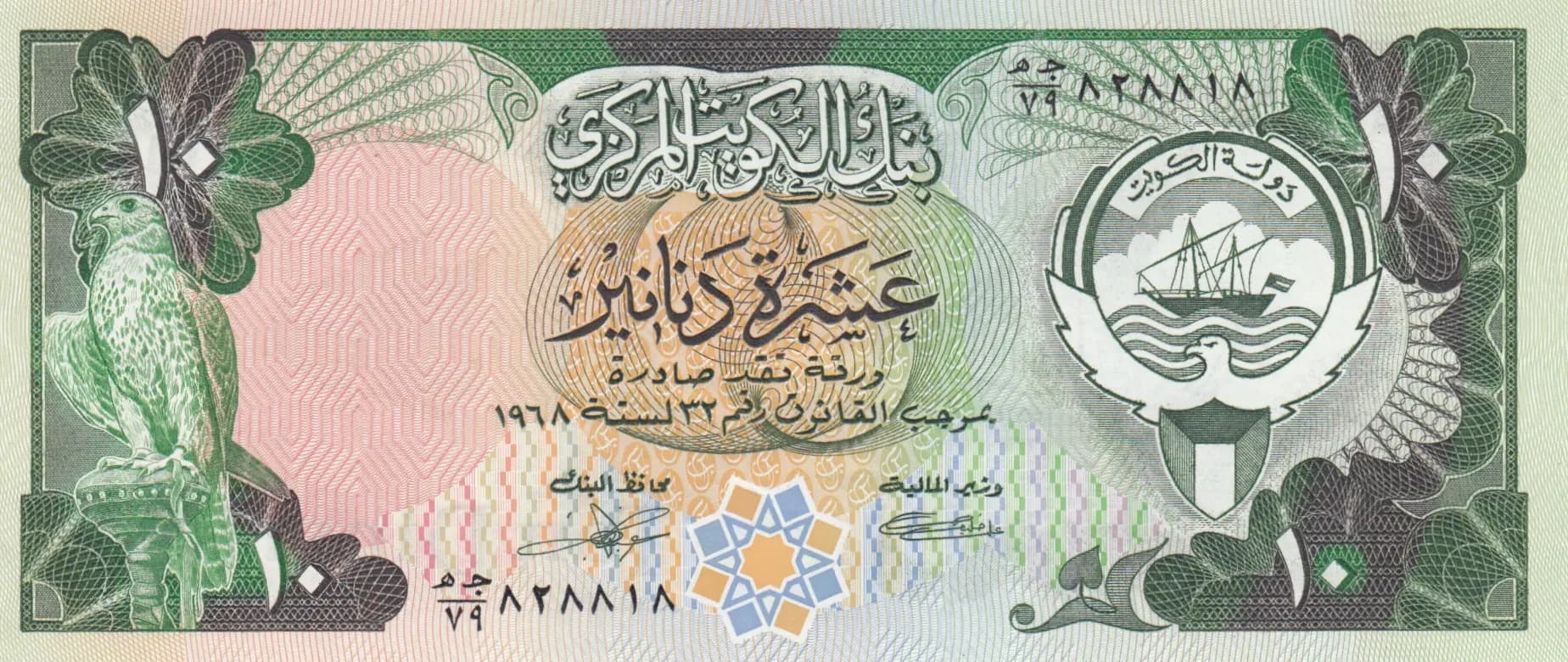
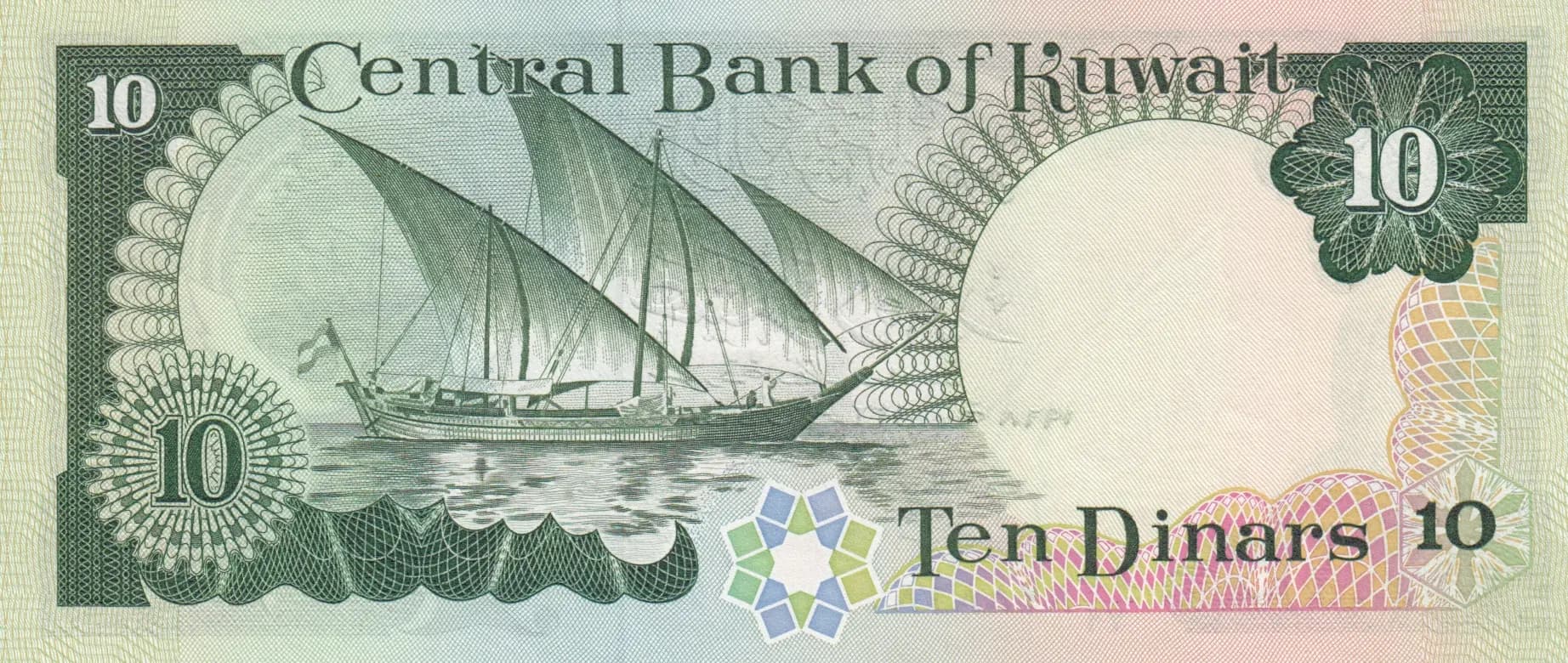
This is a pristine uncirculated example of Kuwait's 10 Dinars note from the 1980-1991 issue (P-15c), featuring the iconic national emblem with a dhow sailing vessel and ornamental peacock motifs in green and multicolor. The note displays exceptional sharpness with no signs of circulation, crisp paper stock, and finely detailed engraving throughout both obverse and reverse sides. As a standard circulation note from this series, it represents an important period of Kuwaiti currency history, though notes with serial prefixes 70-87 carry historical significance due to their theft during the 1990 Iraqi invasion.
Common. This is a standard circulation note from a long-running series (1980-1991) with no indication of a limited print run. The eBay price history shows typical market values ranging from $2-$15 USD for circulated and near-uncirculated examples, with even professionally graded UNC specimens selling in the $7.50-$40 range (catalog value UNC: $40). The abundance of recent sales data and consistent low-to-moderate pricing indicates this variety is widely available in the collector market. While notes with stolen serial prefixes (70-87) may command slight premiums, the specific variety shown here displays no such markings.
Issued under the Law of 1968, this banknote represents Kuwait's monetary authority during a transformative period in the Gulf nation's modern history. The prominent depiction of the traditional Arabian dhow—a vessel central to Kuwait's maritime heritage and pearl-diving economy—on both the obverse emblem and the entire reverse design reflects the country's cultural identity and historical maritime importance. This particular series gained historical notoriety when notes bearing serial number prefixes 70-87 were stolen by Iraqi Forces during the 1990 invasion, making certain serial ranges collectible artifacts of a geopolitical event.
The obverse features the State of Kuwait's national emblem prominently displayed on the right side: a circular badge encasing a traditional Arabian dhow (sailing vessel) with the crescent and star motif, symbolizing both maritime heritage and national identity. The left and right margins are adorned with intricate peacock bird illustrations with detailed feather patterns, representing elegance and cultural sophistication. Arabic calligraphy and inscriptions dominate the upper portion, with geometric star and snowflake patterns forming the central security background. The reverse showcases a large, masterfully engraved traditional dhow sailing vessel with multiple sails on water as the dominant design element, centered between decorative fan-like and botanical motifs (including pineapple designs) on both margins. The denomination appears in circular frames on both sides, with English text identifying the issuer. Throughout both sides, fine-line guilloche patterns and geometric security features provide anti-counterfeiting protection.
FRONT SIDE: 'دولة الكويت' (State of Kuwait) — 'البنك المركزي الكويتي' (Central Bank of Kuwait) — 'عشرة دنانير' (Ten Dinars) — 'رئيس مجلس الوزراء صادر' (Prime Minister Issue) — Islamic calendar date '١٢ ربيع الأول ١٣٨٨' (12 Rabi' al-Awwal 1388 H., corresponding to 1968 C.E.) — '1968' (Law date) — 'رقم المالية البنك' (Bank Serial Number) — Serial prefix '٧٩' (79) with serial number '٨٢٨٨١ أ'. REVERSE SIDE: 'Central Bank of Kuwait' (English) — '10' (denomination numeral, English) — 'Ten Dinars' (English).
Intaglio (engraved) printing on currency-grade paper with advanced security features. The note exhibits the characteristics of professional security printing typical of Central Bank of Kuwait issues from this period: fine parallel line patterns, intricate guilloche designs, and detailed background engraving visible in both the watermark area and margin designs. This production standard is consistent with the work of major international currency printers that produced Kuwait's banknotes during the 1968-1991 Law series.
This note is cataloged as P-15c, representing one of five identified variants for the 10 Dinars base Pick number (P-15a through P-15d, plus P-15x with dhow watermark). The visible serial number prefix '79' indicates this note falls outside the historically significant stolen serial ranges (70-87) and is therefore a standard collectible issue. The Islamic calendar date of 1388 H. (1968 C.E.) corresponds to the Law date, confirming this as part of the 1980-1991 circulation period.