50 won 1959
About This Note
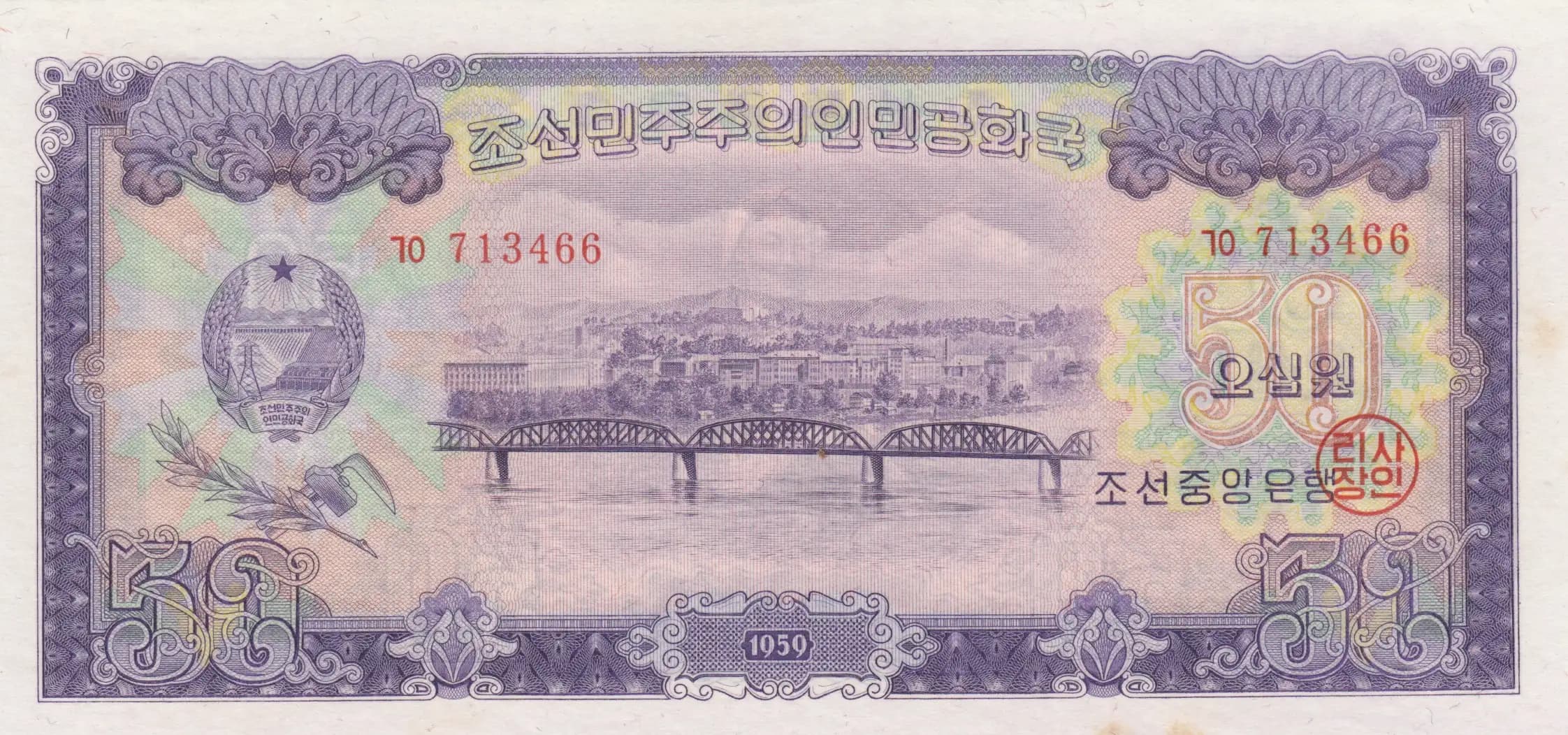
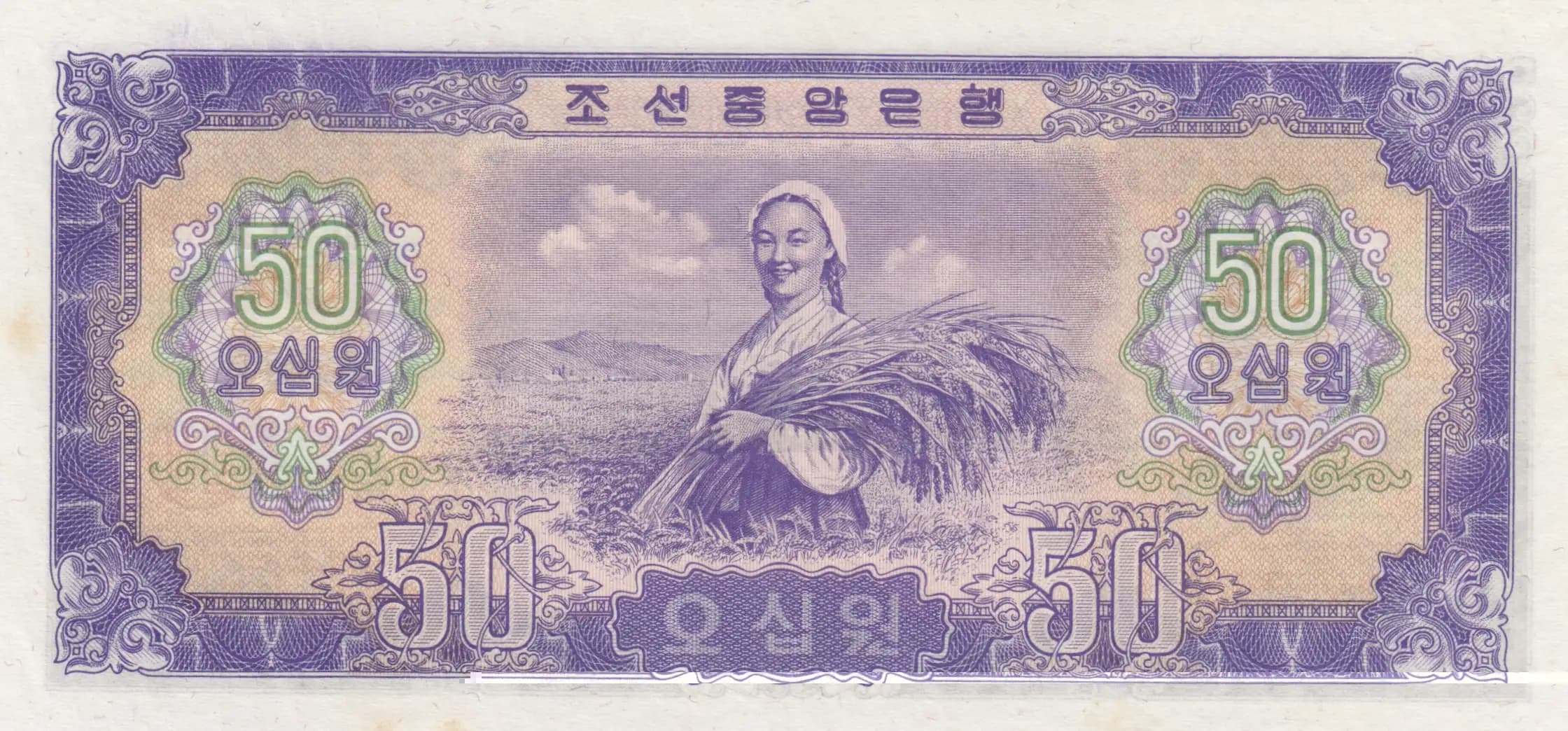
This is a North Korean 50 won note from 1959, issued by the Central Bank of Korea (조선중앙은행), graded UNC. The note features exceptional color printing in purple, green, and gold with ornate decorative borders and intricate engraving throughout. The front depicts a significant architectural landmark—a long bridge spanning water with riverside cityscape and industrial structures—while the reverse showcases a woman in traditional Korean hanbok holding grain, symbolizing agricultural prosperity during the early DPRK period.
Common. North Korean 50 won notes from 1959 (Pick P-16) were produced in substantial quantities for domestic circulation during the early DPRK period. While early North Korean banknotes are less frequently encountered in Western collections compared to contemporary issues from other countries, this particular denomination and year do not show the characteristics of rarity—no documented restricted print run, no known recall, and standard issuance by the central authority. Specimens in UNC condition are more difficult to locate than circulated examples, but the base note type itself remains readily available in the numismatic market.
Issued during the early years of the Democratic People's Republic of Korea, this 1959 note reflects the post-war reconstruction period and the regime's emphasis on industrial and agricultural development. The bridge depicted on the front likely represents an important infrastructure project of the era, while the agricultural imagery on the reverse emphasizes the collectivized farming system being established. The prominent state emblem with industrial/architectural design underscores the socialist emphasis on modernization and national self-reliance during this formative period of North Korean statehood.
The obverse features an architectural landmark dominating the center—a substantial bridge spanning a waterway with a developed riverside cityscape including multiple buildings and industrial structures, set against hills or mountains. The left side displays the state emblem (a building with agricultural elements—wheat or grain stalks), symbolizing the fusion of industrial and agricultural sectors. Ornate decorative borders in purple and gold frame the entire note with elaborate scrollwork and flourishes. The reverse presents an allegorical female figure in traditional Korean dress (hanbok with head covering) holding sheaves of grain or wheat, posed against a rural landscape with hills, representing agricultural abundance and the idealized peasant worker. Both sides employ large denomination numerals in corners with intricate corner designs.
FRONT: Top—'조선민주주의인민공화국' (Democratic People's Republic of Korea); Denomination—'50' (Arabic numerals) and '오십원' (Fifty won in Korean); Bottom—'조선중앙은행' (Central Bank of Korea); Serial number—'10 713466'; Additional marking—'1050'. BACK: Denomination—'50' (Arabic numerals) and '오십원' (Fifty won in Korean); Issuer—'조선중앙은행' (Central Bank of Korea).
Intaglio engraving (line engraving) combined with multi-color letterpress printing. The sharp, clear print quality throughout, intricate fine line work in borders and portraits, and the precision of the engraved decorative patterns are characteristic of high-quality intaglio security printing used for currency during this period. The multiple color application (purple, green, gold, beige) suggests simultaneous or sequential multi-plate printing typical of central bank note production. For North Korean notes of this era, the State Security Printing Bureau (조선 국가보안인쇄국) or similar national printing facility would have been responsible.
The visual analysis reveals serial number format '10 713466' in red printing, consistent with Korean-style serial numbering for this Pick catalog number. The catalog reference notes that P-16 exists with Korean-style serials versus P-16A with Japanese-style serials, indicating this specimen represents the Korean-style variant. No overprints, signatures, or date variants are evident in the observed images. The '1050' marking visible on the front may represent a printer's identification code or internal document reference rather than a date or year designation separate from the stated 1959 issuance year.