50 chon 1947
About This Note
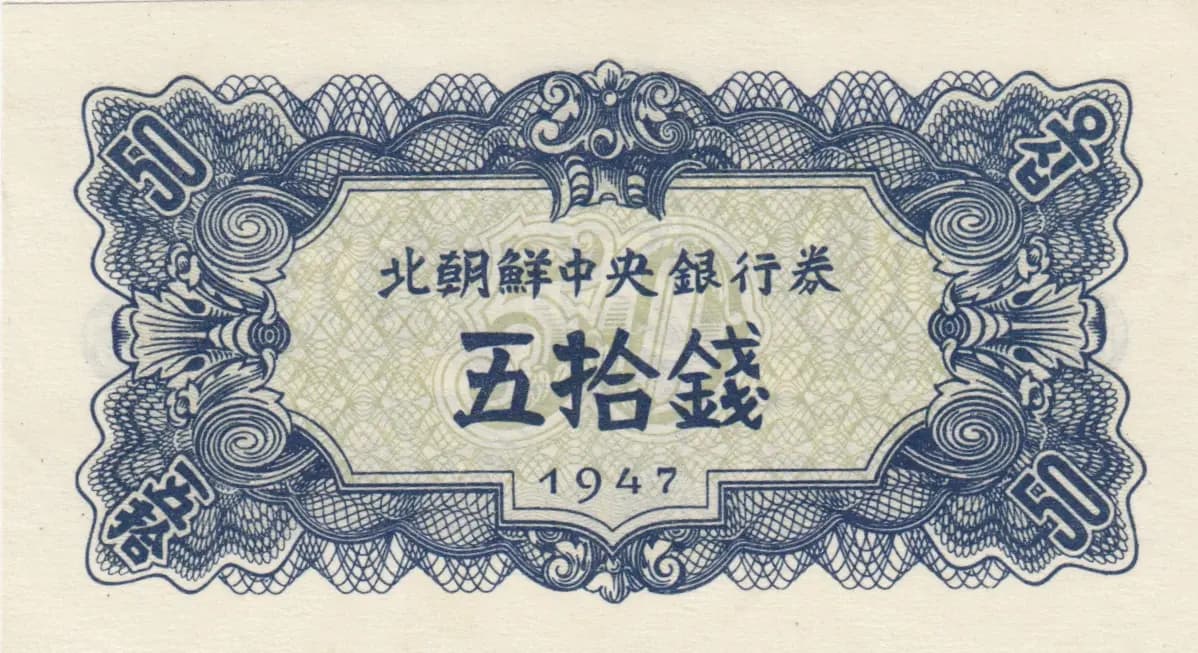
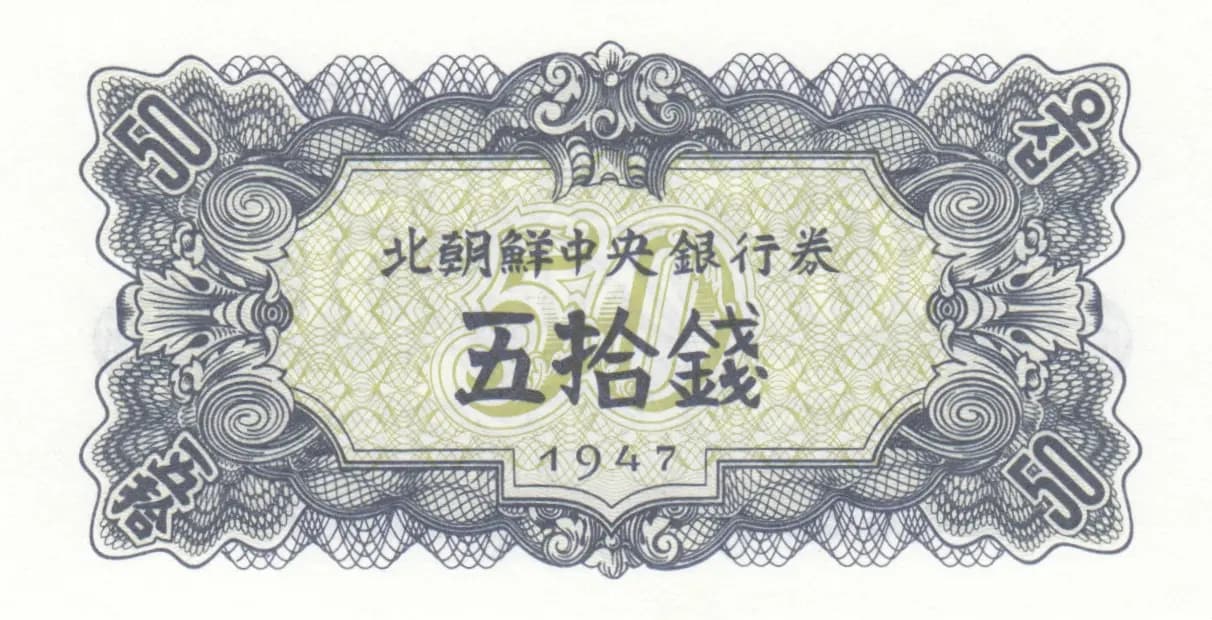
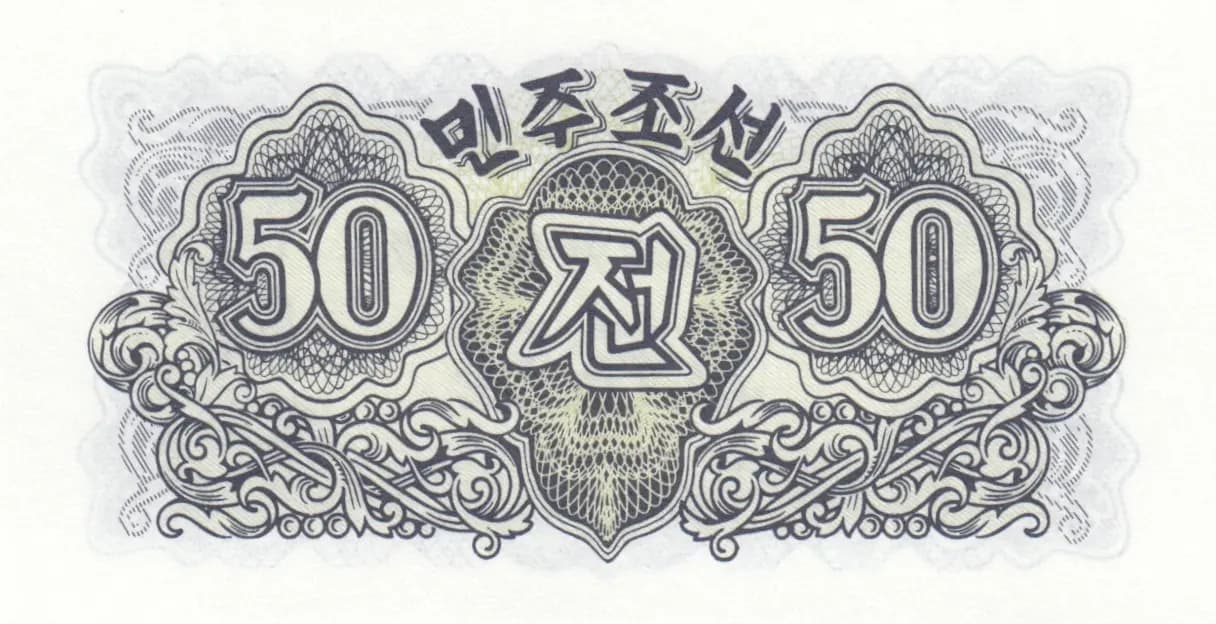
This is a 50 Chon banknote from North Korea's 1947 issue, graded UNC, representing an early and historically significant piece of Korean monetary history during the post-liberation period. The note features ornate Art Deco-influenced design with intricate lacework borders, decorative scrollwork, and fine geometric crosshatch patterning in subdued colors of navy blue, light green-yellow, and cream tones. As an uncirculated specimen with pristine condition and no visible wear, creases, or tears, this note is exceptionally well-preserved and represents a desirable example for collectors of early Korean currency.
Uncommon. While the 1947 North Korean issue represents an early and historically important series, the 50 Chon denomination in uncirculated condition is not frequently encountered in the collector market. The early post-liberation period currency was subject to various currency reforms and replacements, limiting survival rates. However, this is not a rare note—rather, it falls into the uncommon category due to its age, limited international distribution during the Cold War era, and the typical attrition of low-denomination banknotes. Uncirculated examples command moderate premiums over circulated specimens.
The 1947 North Korean 50 Chon note was issued by the Central Bank of North Korea shortly after liberation from Japanese colonial rule and prior to the establishment of the Democratic People's Republic of Korea in 1948. The inscriptions reading '朝鮮民主主義人民共和國' (Democratic People's Republic of Korea) on the reverse reflect the early socialist administrative framework, while the sophisticated ornamental design represents the transitional period between Japanese occupation and independent Korean governance. This denomination and design series represents a brief monetary episode before North Korea transitioned to its own distinct currency system.
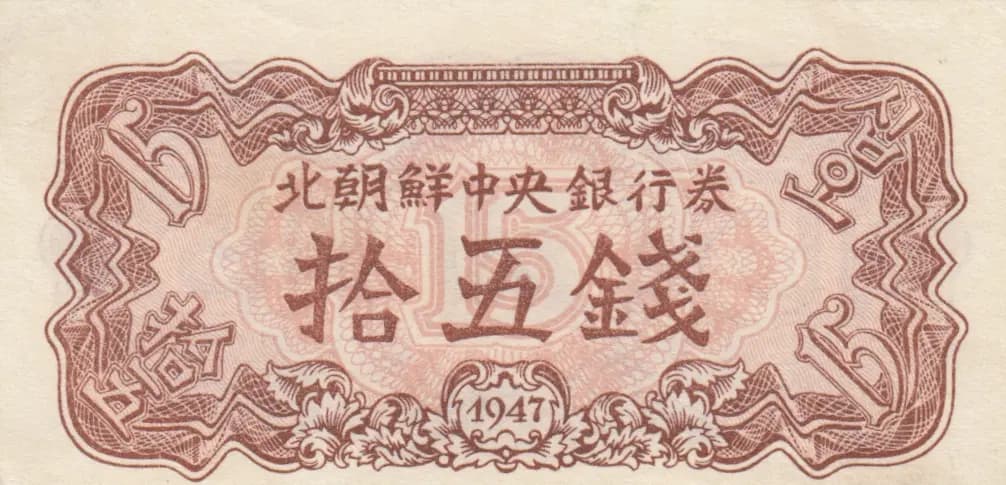
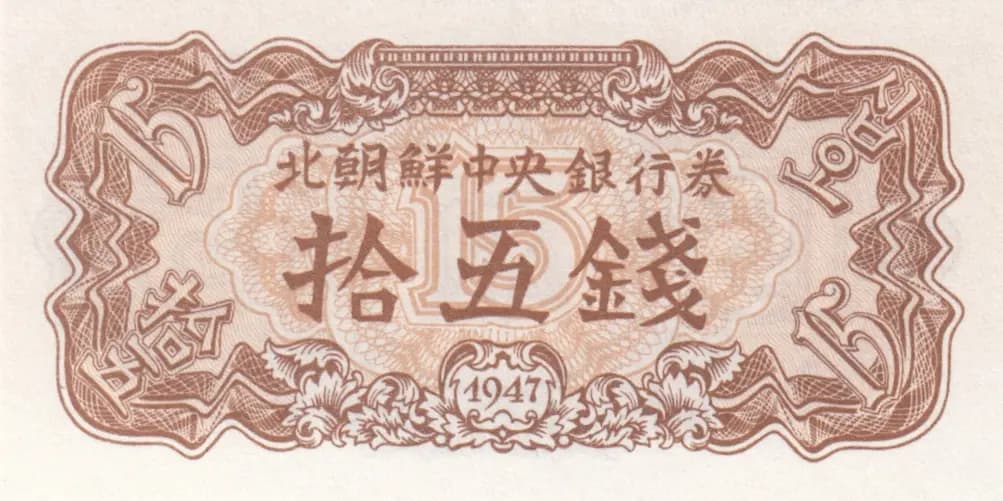
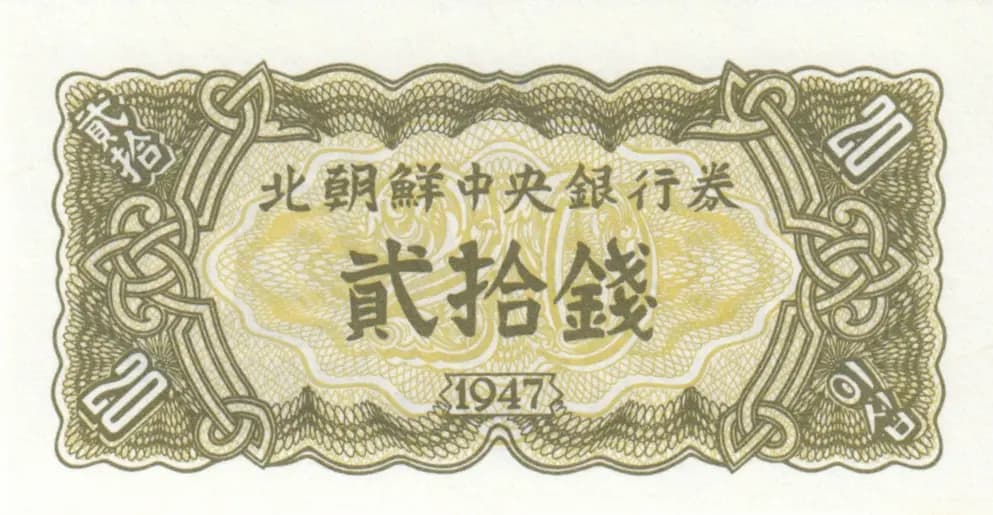
The obverse features a classical ornamental frame with fine lacework and spiral scrollwork embellishments in all four corners, characteristic of early 20th-century East Asian banknote design. The central field displays a light greenish-yellow background with geometric crosshatch patterning for security purposes, within an ornamental rectangular cartouche with curved flourishes. The reverse maintains the consistent aesthetic with similar lacework borders and scrollwork patterns, displaying large denomination numerals (50) flanking a central shield or crest emblem, set against a fine stippled or dotted background pattern. The overall design eschews portraiture in favor of abstract geometric and ornamental elements, reflecting contemporary security printing practices and ideological preferences of the issuing authority.
Front: '北朝鮮中央銀行券' (Bank of North Korea Note), '五拾銭' (Fifty Chon), '1947', '朝' (Korea), '鮮' (Fresh). Back: '50' (Arabic numerals appearing twice), '朝鮮' (Chosen/Korea), '民' (People), '主' (Master/Democratic). Complete phrase on reverse: '朝鮮民主主義人民共和國' translates to 'Democratic People's Republic of Korea.'
This note was produced using intaglio (engraved) printing, evidenced by the fine, precise lacework patterns, detailed scrollwork, and the sharp geometric crosshatch and stippled background patterns visible in both the visual analysis and characteristic of Korean Central Bank security printing from this period. The intricate border designs and fine line work are consistent with copperplate engraving techniques employed by security printers of the era. The color palette of navy blue, cream, and light yellow-green suggests multicolor intaglio printing with careful registration.
This note is cataloged as Pick P-7b, indicating it is the second identified variety of the 50 Chon 1947 issue. Varieties within this series may be distinguished by signature combinations, subtle design elements, or printing variations. The 'b' designation suggests there is at least one other cataloged variety (P-7a). Without access to detailed signature analysis or comparison specimens, specific distinguishing characteristics between P-7a and P-7b cannot be definitively stated from the visual analysis alone, though the uncirculated condition and clean presentation suggest this is a well-preserved example of the identified variety.