5 won 1978
About This Note
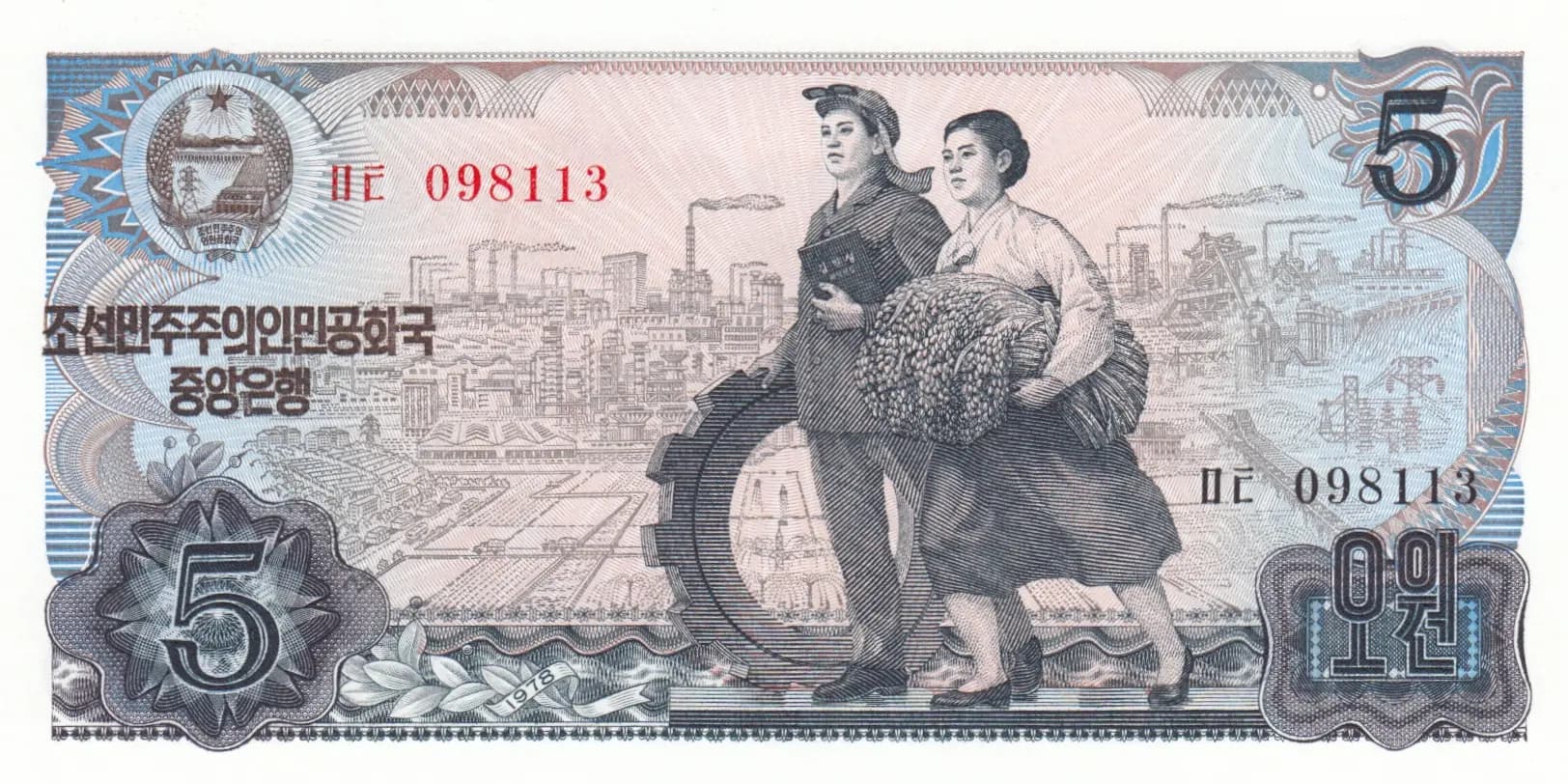
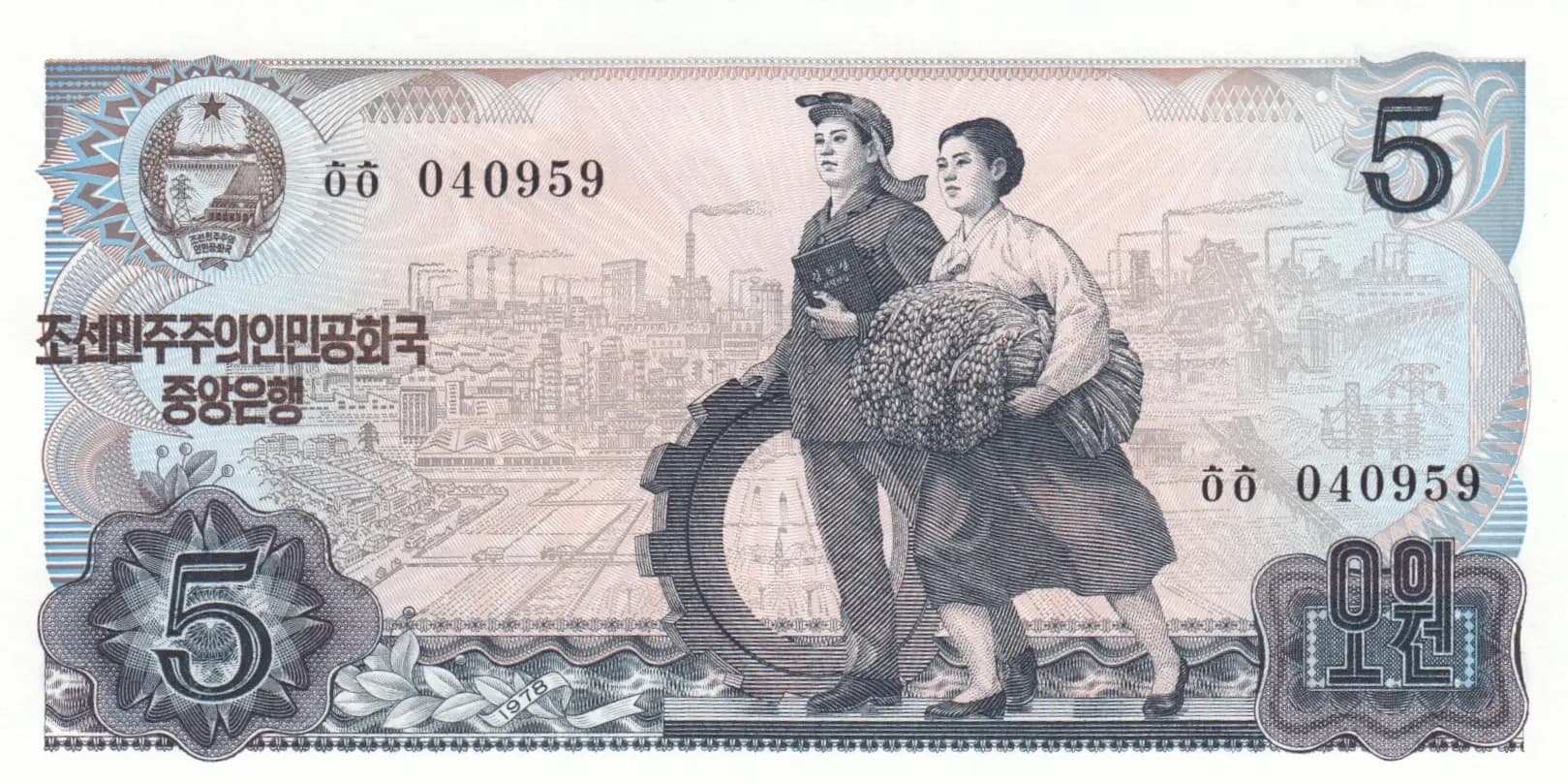
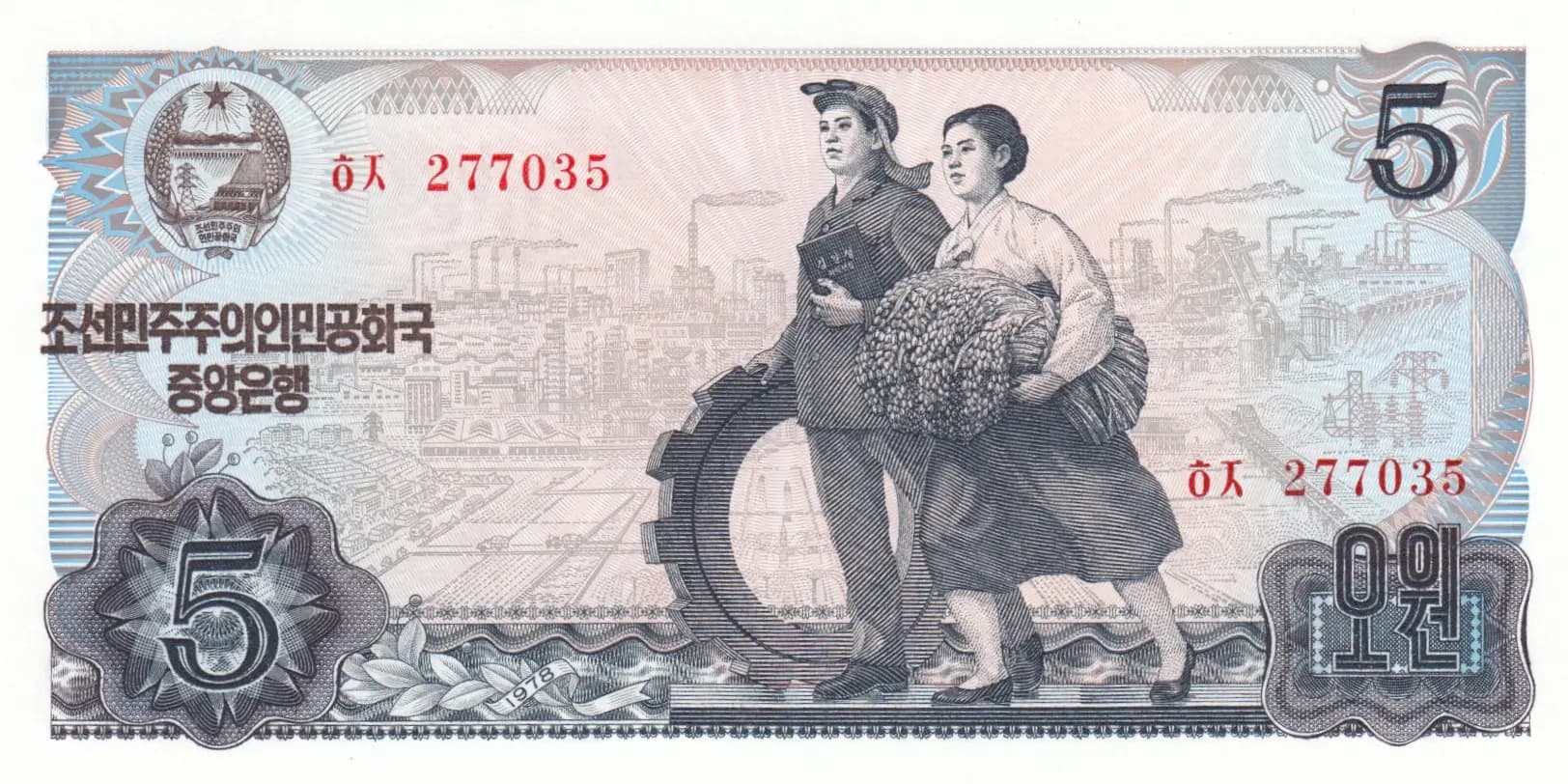
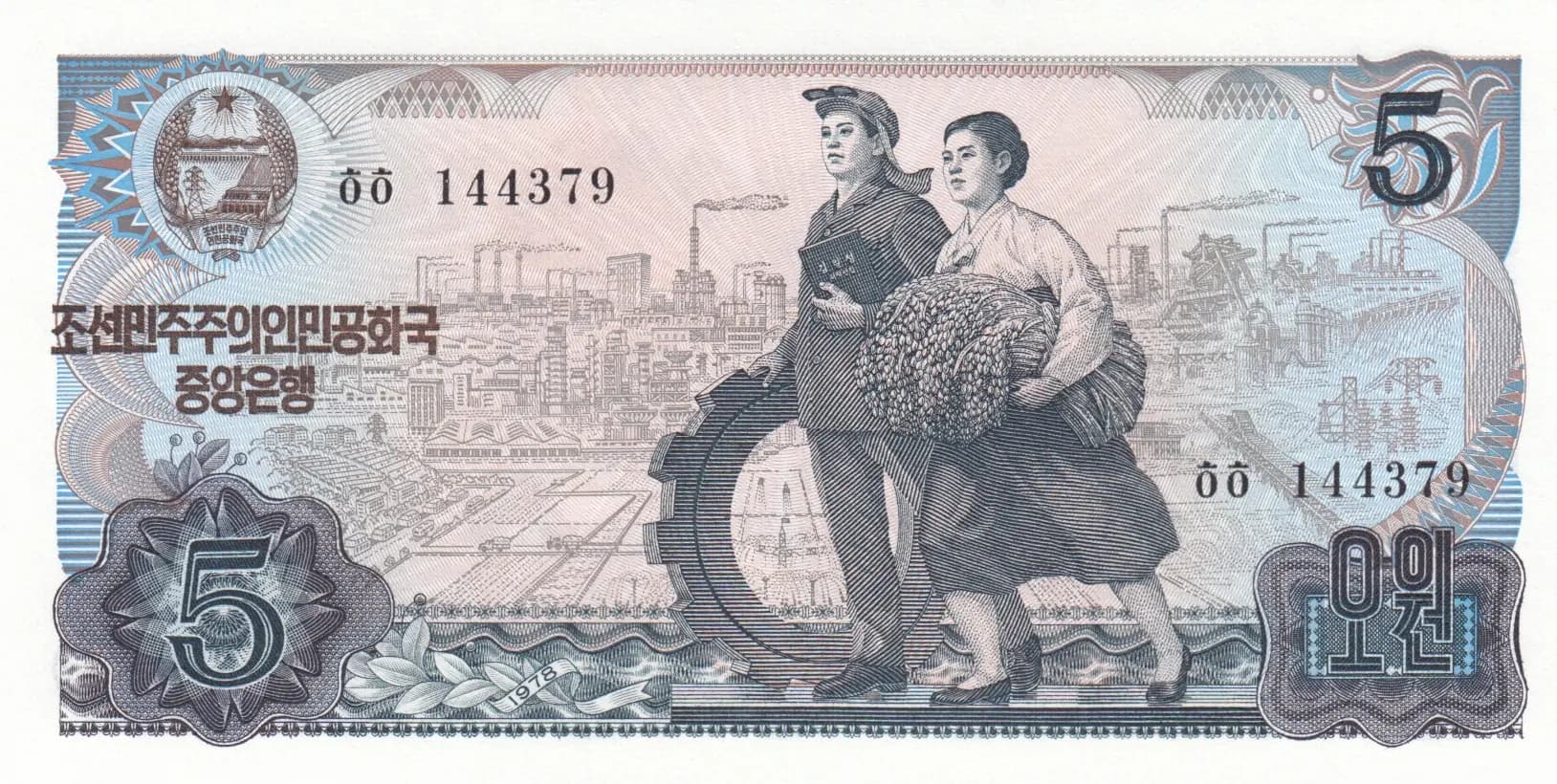
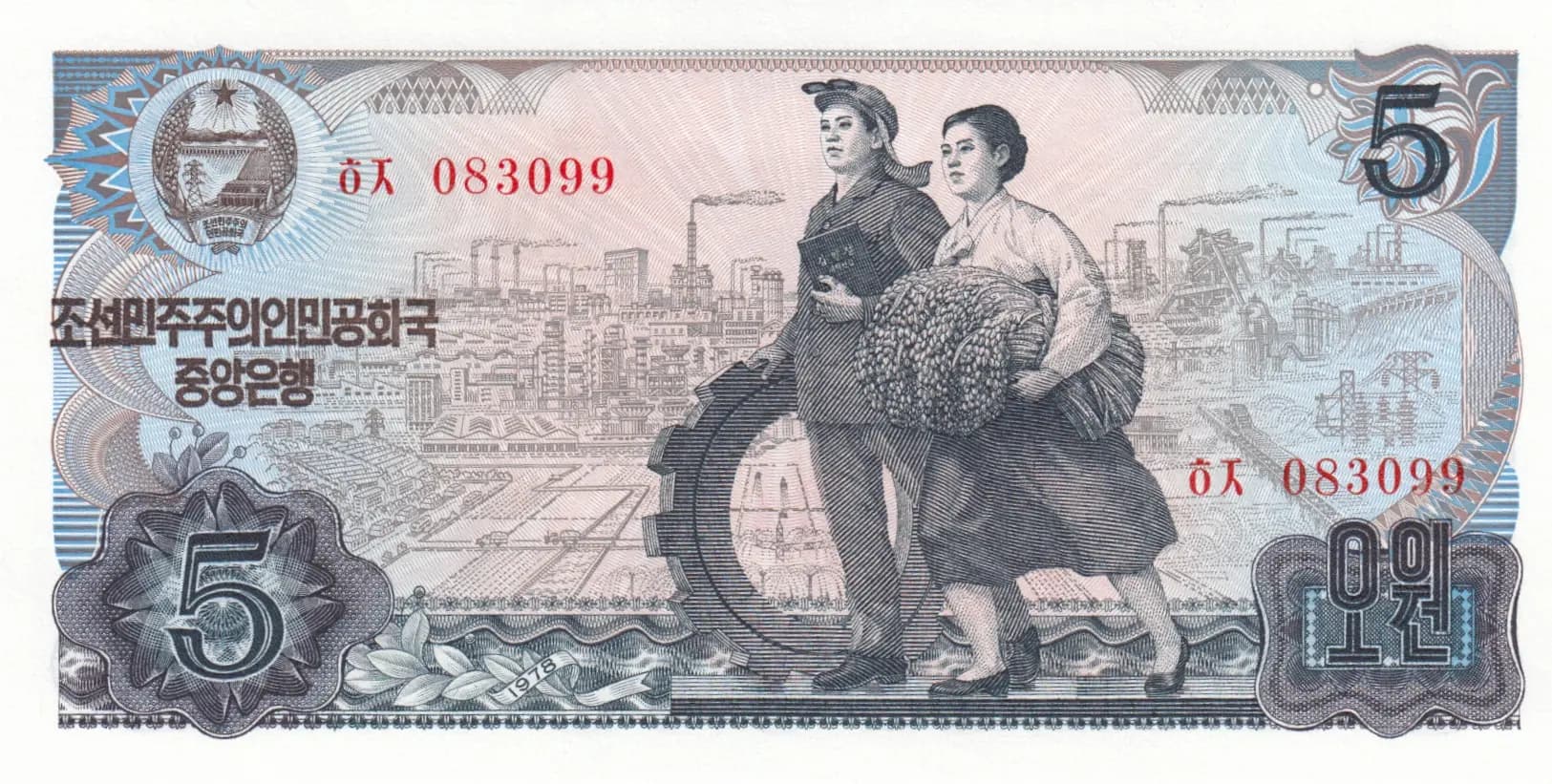
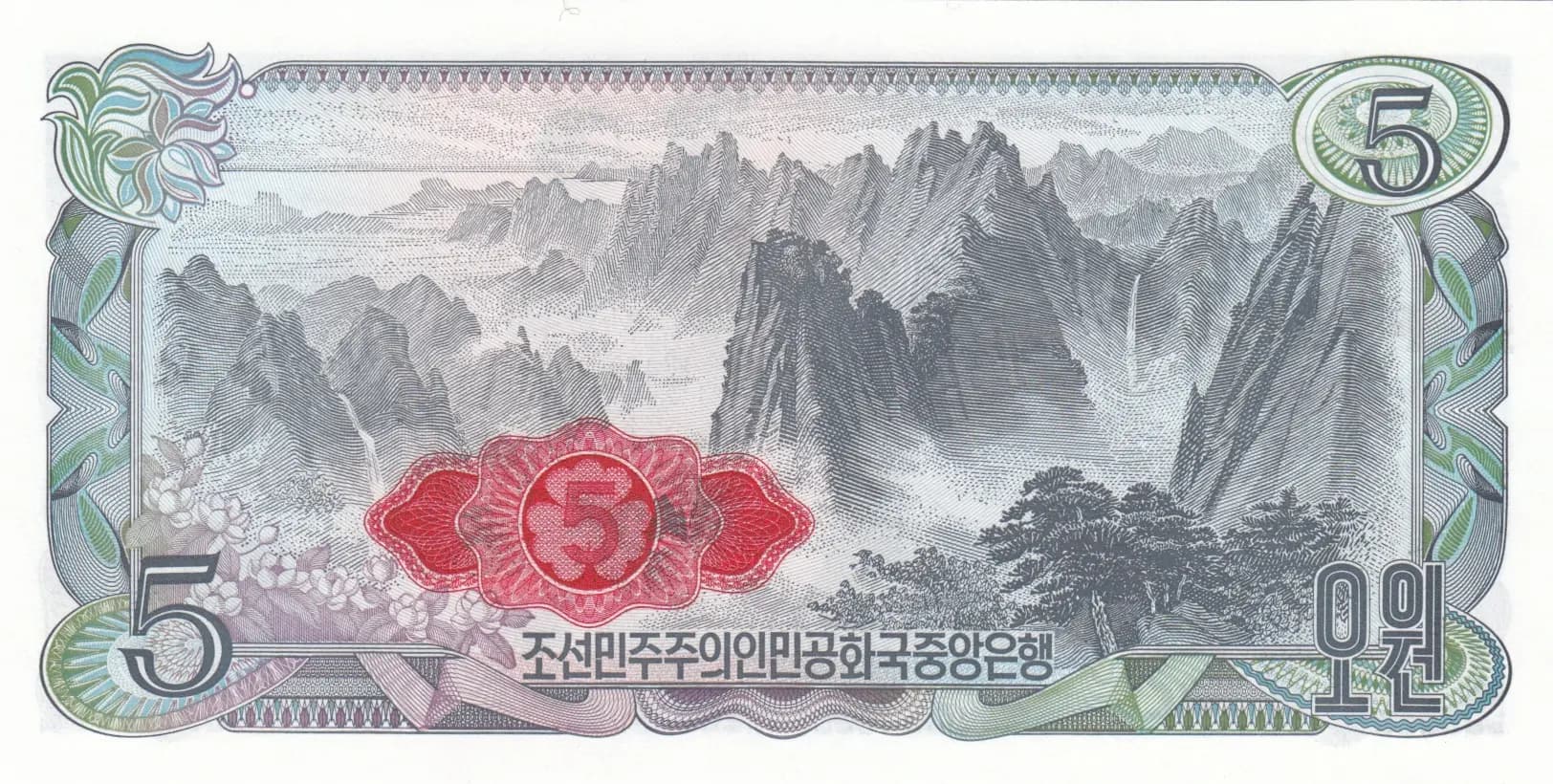
This is an uncirculated 1978 North Korean 5 won note (Pick P-19d) featuring two figures in traditional dress on the obverse against an urban industrial backdrop, with a mountainous landscape scene on the reverse. The note displays exceptional preservation with no visible wear, creases, or damage, showcasing the fine engraved line work and ornate decorative borders characteristic of DPRK currency from this period. The red serial numbering and intricate security features reflect the careful production standards of North Korea's Central Bank during the late 1970s.
Common. The 5 won denomination from 1978 was part of standard currency circulation in North Korea and represents a regular issue from the DPRK Central Bank with no documented print run restrictions or recall status. Pick P-19d notes are regularly encountered in numismatic markets, and uncirculated examples, while desirable, do not command premium prices indicative of rarity. This note's value is primarily derived from its collectibility as part of DPRK currency series and its excellent condition rather than scarcity.
Issued during the consolidation period of Kim Il-sung's regime in North Korea, this 1978 note reflects the socialist aesthetic prioritizing agricultural and industrial development. The obverse depicts figures representing workers and agricultural production set against an urban skyline with industrial structures, while the reverse's mountainous landscape symbolizes the nation's natural resources and territorial identity. These design elements were common in DPRK currency of this era, emphasizing the state's focus on self-reliance (juche) and economic development.
The obverse features two allegorical figures representing socialist ideals: a man in dark traditional clothing on the left and a woman in light-colored hanbok on the right holding grain or crops, symbolizing agricultural productivity. They are positioned against a detailed urban skyline containing multiple buildings and industrial structures, including a prominent tower or architectural landmark. A circular emblem with radiating lines and a central building design appears in the upper left corner, representing state authority. Ornate decorative borders with intricate patterns frame the composition, with a lotus-like floral design in the lower left. The reverse displays a fine-engraved mountain landscape with multiple peaks, valleys, and vegetation rendered in atmospheric perspective. A large red ornamental cartouche containing the numeral '5' dominates the center, flanked by decorative floral border patterns in green and multi-colored designs in the corner ornaments.
Front side: '조선민주주의인민공화국' (Democratic People's Republic of Korea), '중앙은행' (Central Bank), denomination '5', and serial number in red text. Back side: '조선민주주의인민공화국중앙은행' (Democratic People's Republic of Korea Central Bank) and denomination '5'. All inscriptions are in Korean Chosongul script with numerals denoting the five-won denomination.
Intaglio engraving (line engraving) executed with fine detail work throughout, as evidenced by the intricate border patterns, engraved landscape rendering, and sharp line work visible in the security features. The red serial numbering and ornamental cartouche suggest specialized press work typical of DPRK Central Bank production during this period. The complexity and fine detail indicate production by North Korea's national security printer.
The observed serial number 'ðТ 083099' indicates red-text serial numbering characteristic of 1978 issues. The specific serial number prefix and formatting may distinguish varieties within the P-19d designation, though comprehensive variety documentation for this Pick number is limited. Collectors should note that serial number prefixes and printing characteristics may vary among notes from this series, potentially creating minor varieties within the P-19d classification.