5 won 1978
About This Note
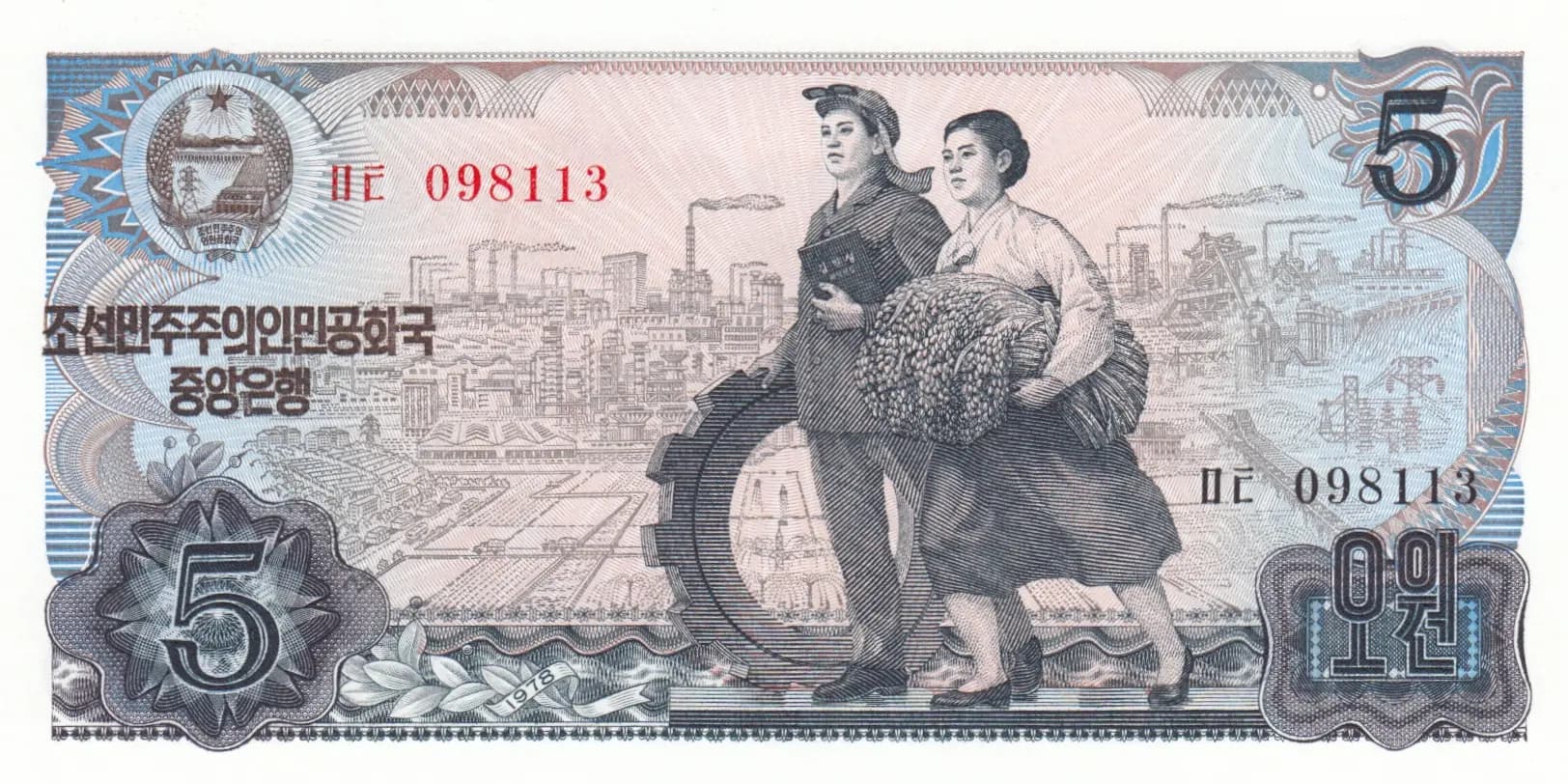
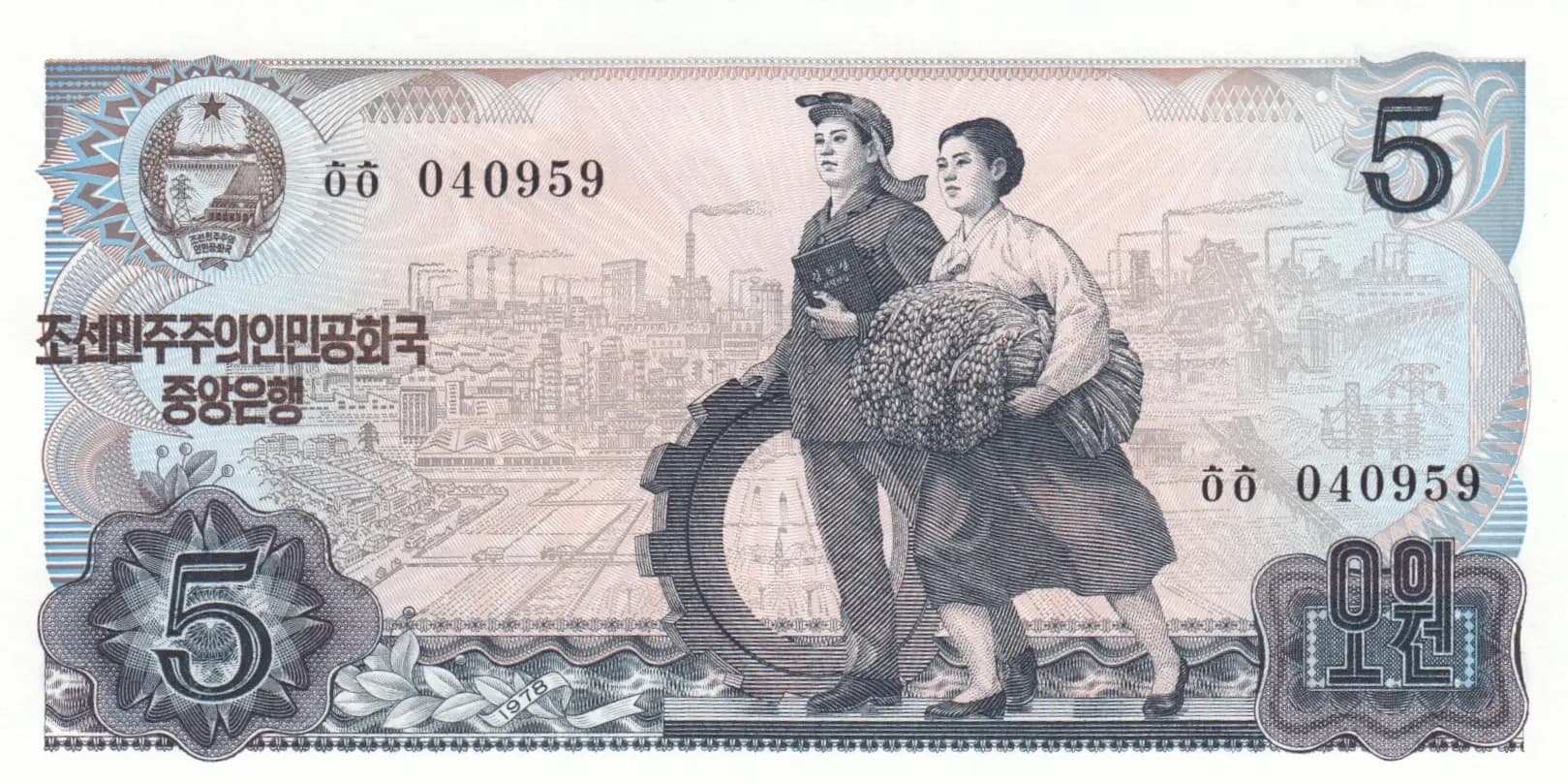
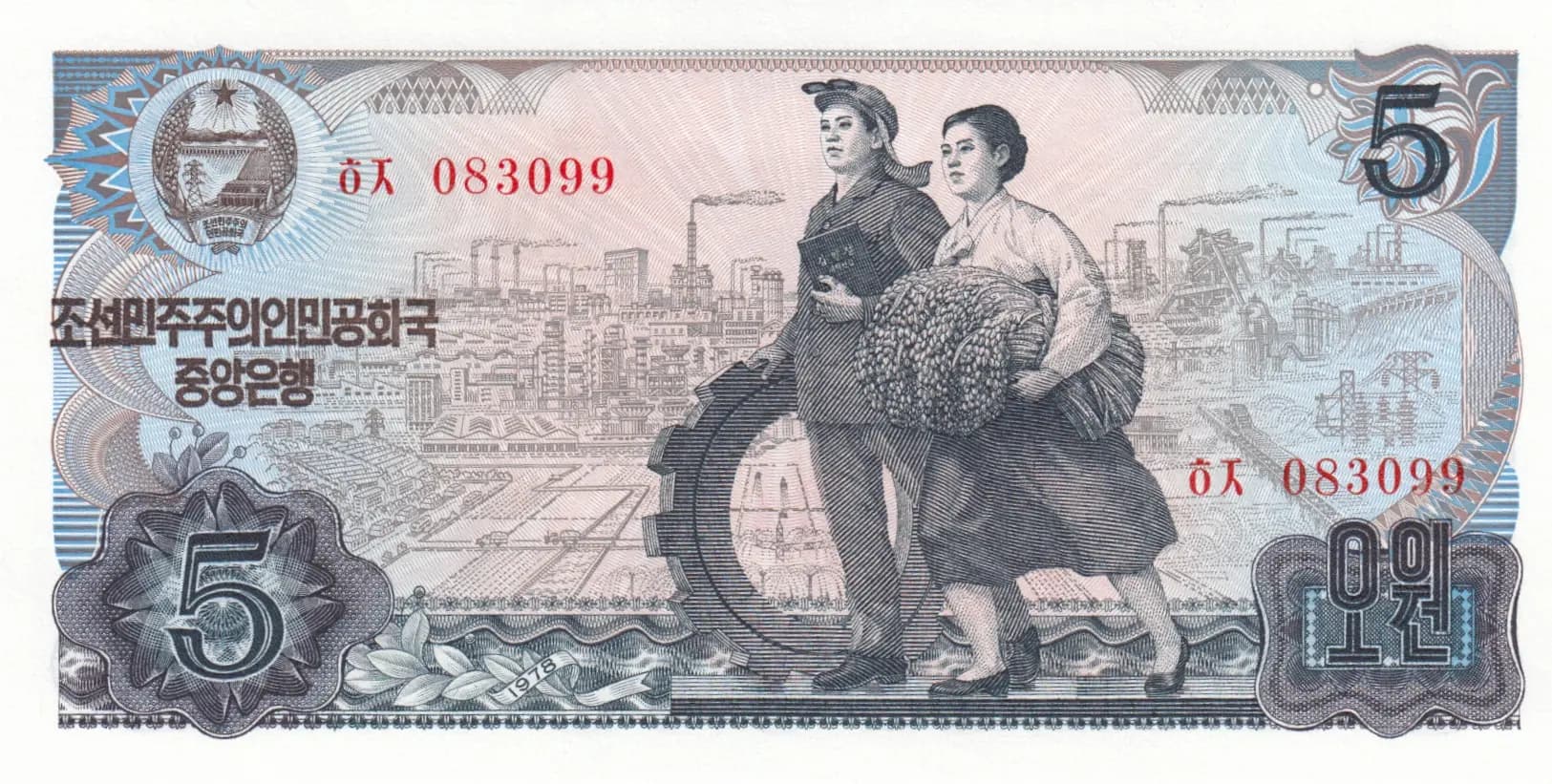
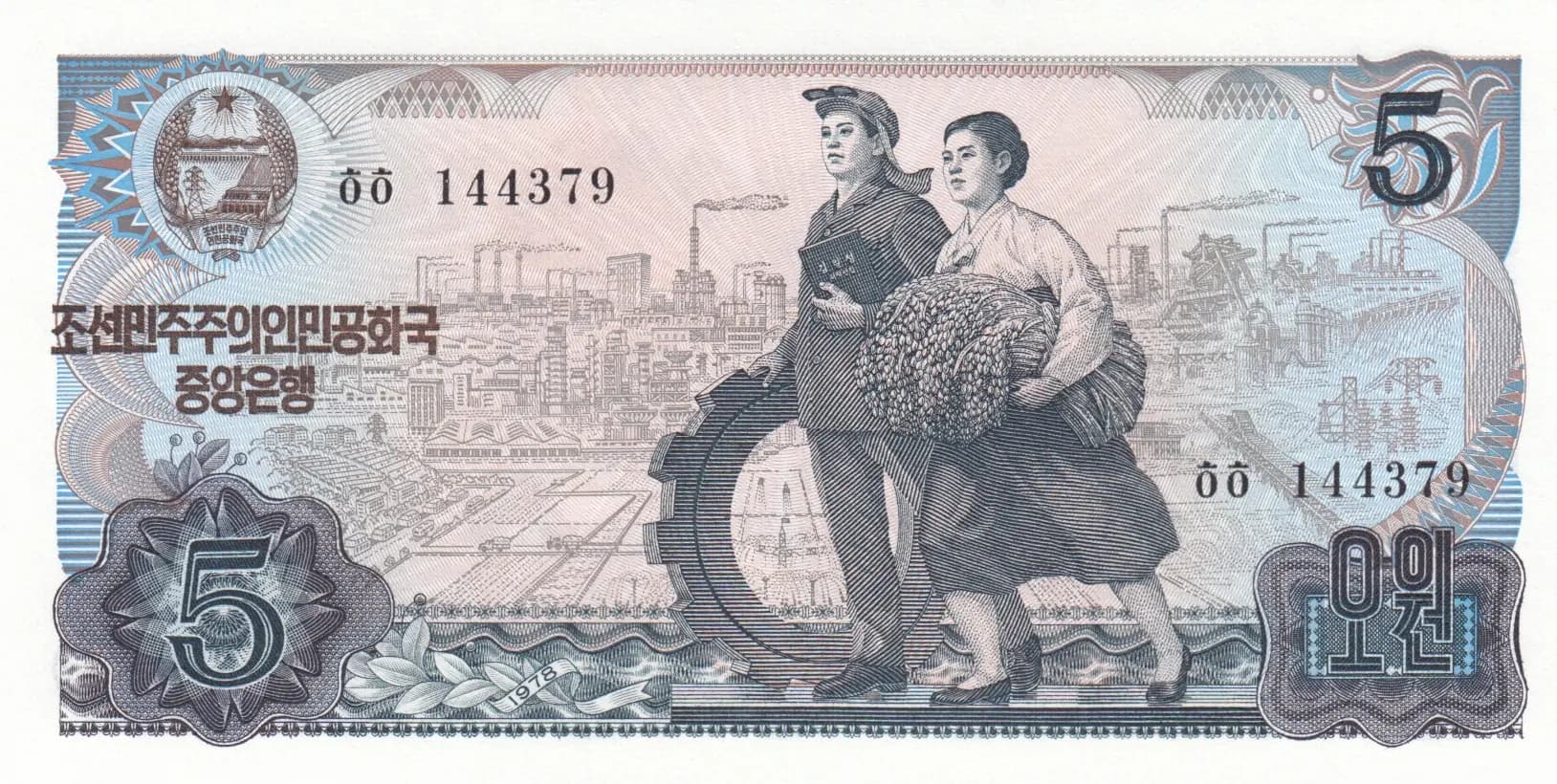
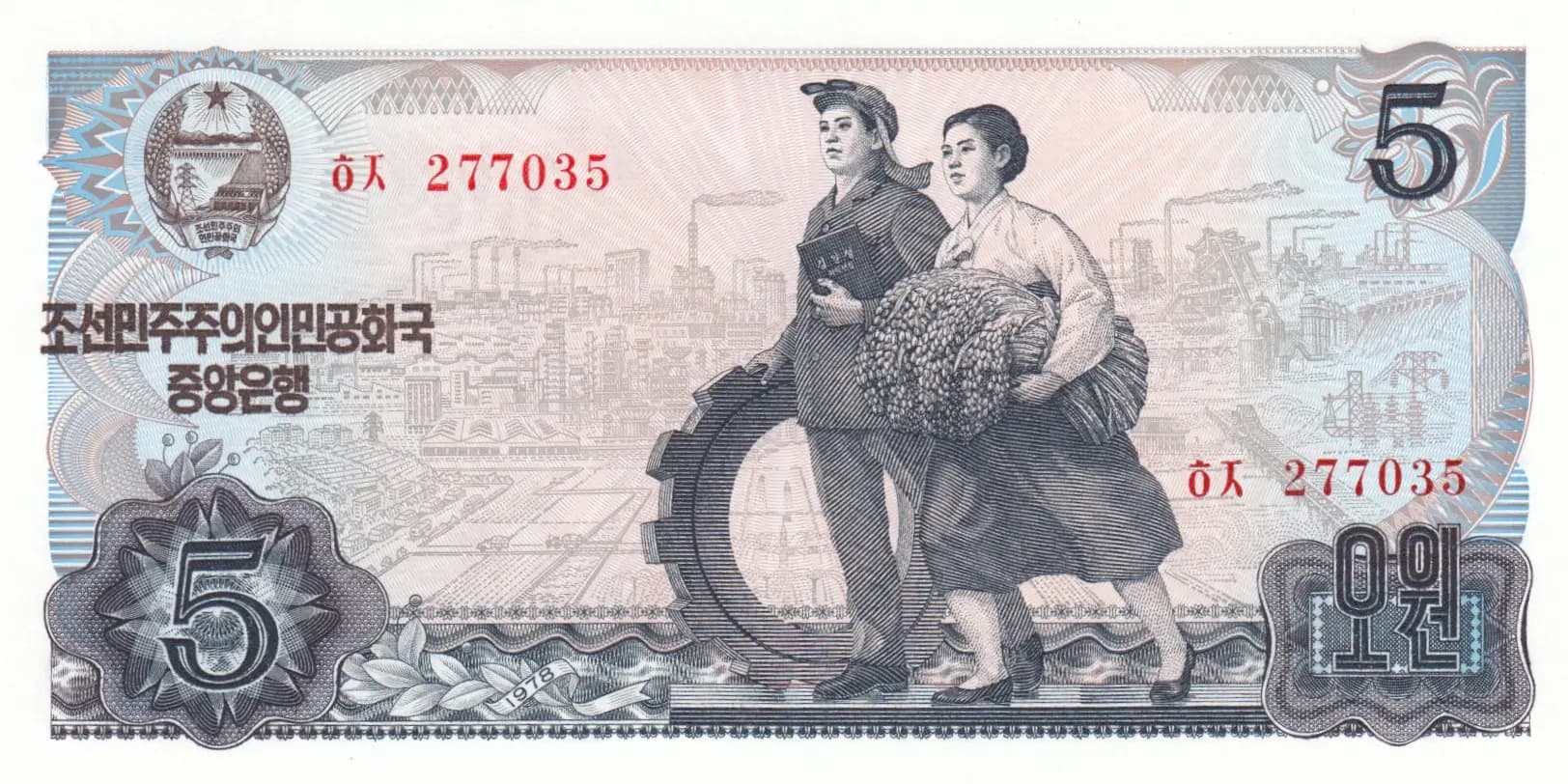
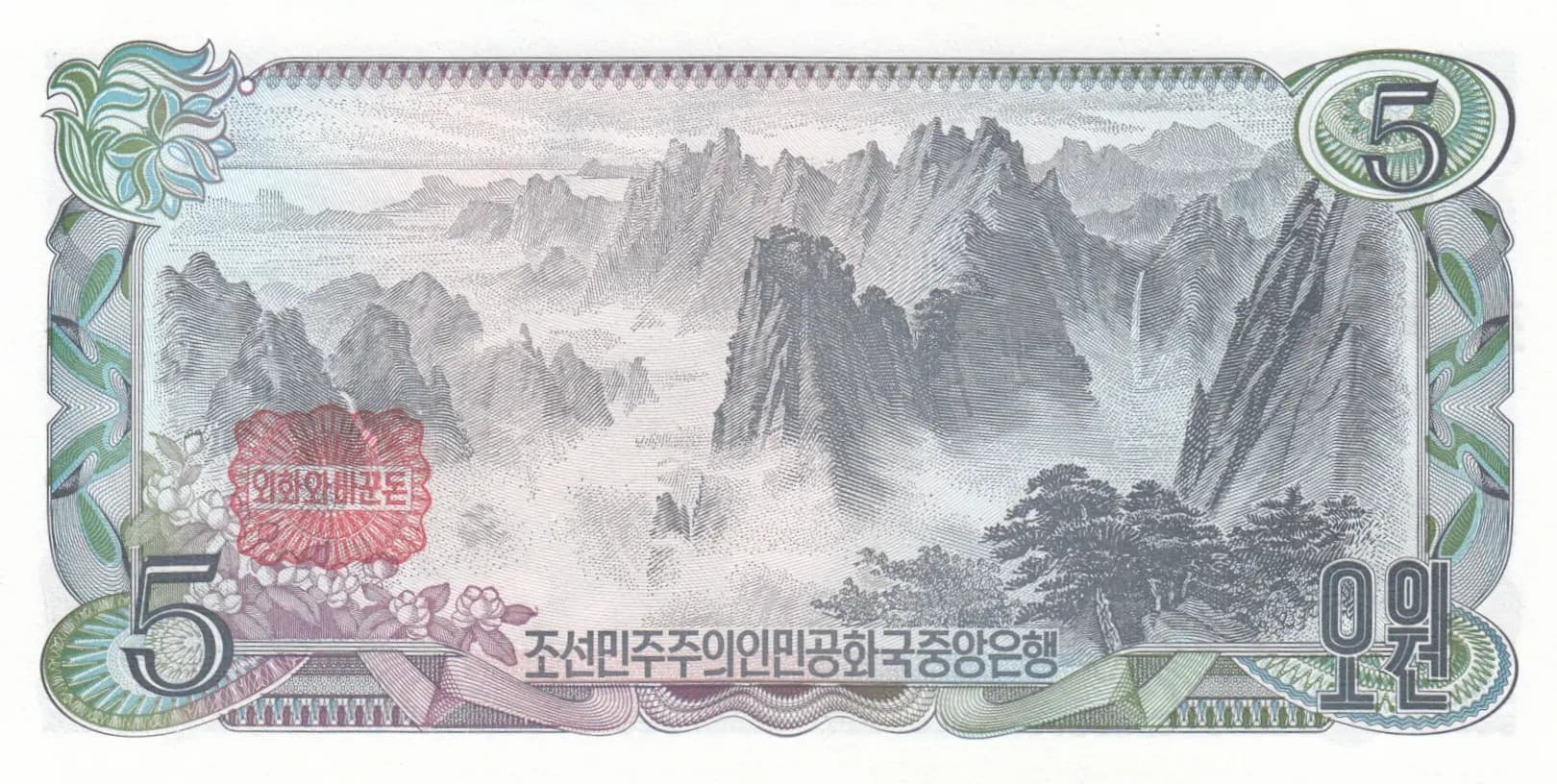
This is an exceptional uncirculated example of the North Korean 5 won note from 1978 (Pick P-19c), featuring a striking dual-portrait composition of a man and woman holding agricultural products against an industrial cityscape backdrop. The note demonstrates pristine condition with sharp definition, intact margins, and no visible wear, creases, or damage. The front's emphasis on agricultural-industrial harmony combined with the traditional East Asian landscape on the reverse makes this a representative example of DPRK propaganda numismatics from the late Cold War era.
Common. The 5 won denomination from 1978 (Pick P-19c) was part of standard circulation issue for the North Korean Central Bank and remains relatively available in the collector market. No evidence of limited print runs, recalls, or special circumstances that would elevate this note above common status. While DPRK banknotes have collector interest, this particular denomination and year are not known to be scarce.
Issued in 1978 by the North Korea Central Bank during the height of the Kim Il-sung era, this note reflects the regime's official ideology emphasizing the unity of agricultural and industrial production as cornerstones of the socialist state. The front depicts the romanticized agricultural worker and factory worker as national heroes, while the mountainous landscape on the reverse evokes Korean national identity and traditional aesthetics adapted to socialist themes. The note's imagery serves as both currency and a medium of state propaganda during a period of relative economic isolation.
The front features two central figures—a working man in dark formal attire on the left and a woman in light clothing on the right, both depicted as heroic socialist workers holding sheaves of grain. Behind them rises an industrial cityscape with multiple factory buildings, smokestacks, and urban structures symbolizing North Korea's industrialization. The upper left bears a circular state emblem with radiating lines representing the sun and architectural elements. Large ornate numeral '5' denominations appear in frames in the upper and lower right corners. The reverse presents a classical East Asian landscape composition with towering mountain peaks shrouded in mist, foreground vegetation including flowering plants and trees, and a red decorative seal on the left side. Both sides feature ornate geometric and floral decorative borders in green, blue, and brown tones characteristic of DPRK currency design.
Front side: '조선민주주의인민공화국' (Democratic People's Republic of Korea), '중앙은행' (Central Bank), Serial number 'õ工 277035' (repeated). Denomination '5' and '9원' (9 won, indicating a 1978 issue). Back side: '조선민주주의인민공화국중앙은행' (Democratic People's Republic of Korea Central Bank), Denomination '5' and '0원' (10 won designation as part of the complete denomination marking).
Intaglio (engraved) printing technique, evidenced by the fine line work visible throughout the portraits, cityscape details, mountain formations, and decorative borders. The complex geometric patterns and delicate detail work in both the background and border elements are characteristic of high-security intaglio production. The note was produced by the North Korean state printing authority; specific security printer details for DPRK notes of this period are not typically documented in Western catalogs.
The observed serial number is 'õ工 277035'. Pick P-19c represents the 1978 issue of the 5 won note; this specific variety may be distinguished from other printings of the same denomination by examining serial number prefixes and printing variations. The inscription anomaly showing both '9원' and '0원' in the visual analysis may indicate a transition period in denomination marking or a specific printing plate variety. Further research into the serial number prefix system used by the North Korean Central Bank in 1978 would be needed to definitively identify the specific printing variant.