100 won 1978 specimen
About This Note
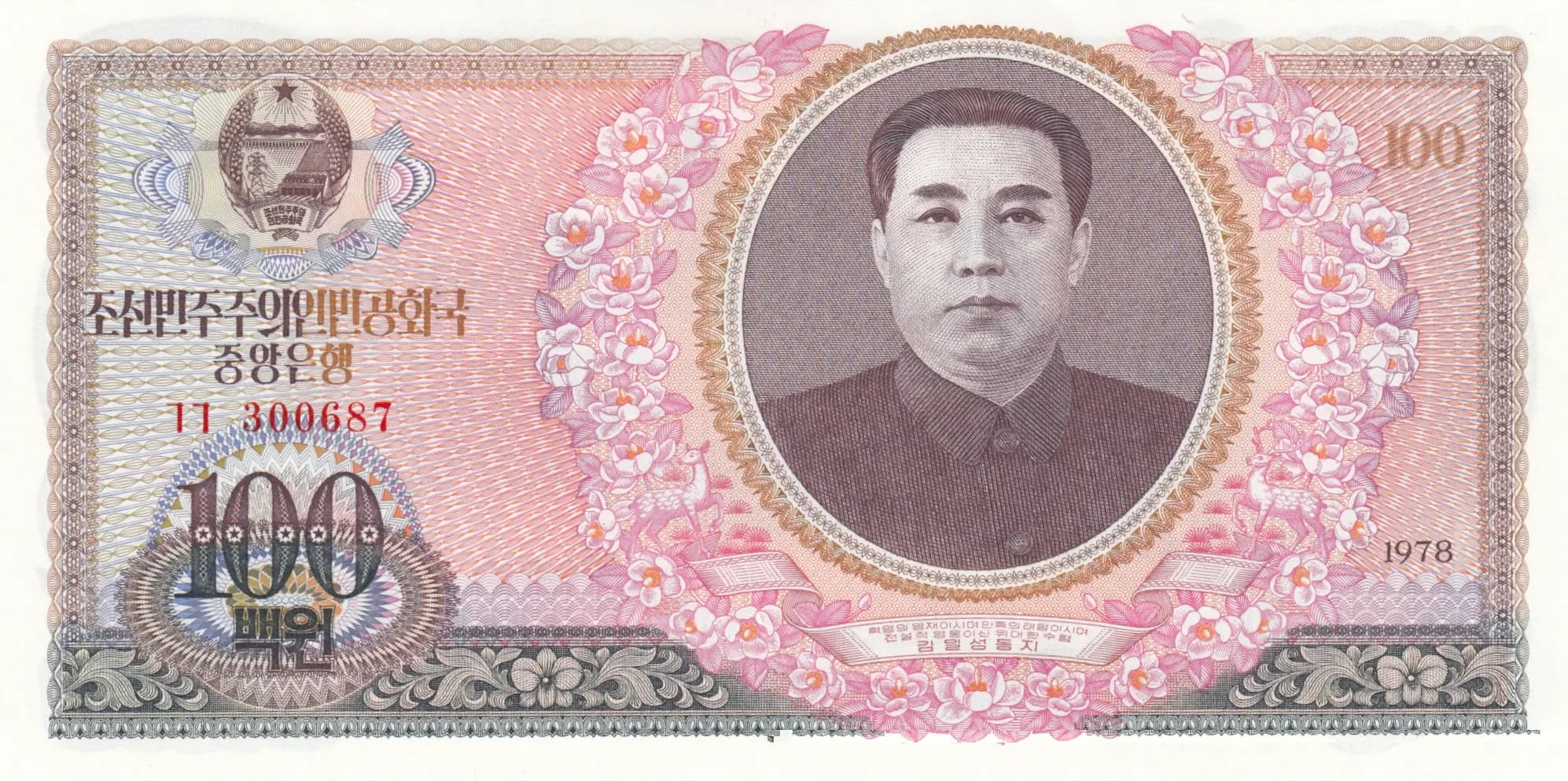
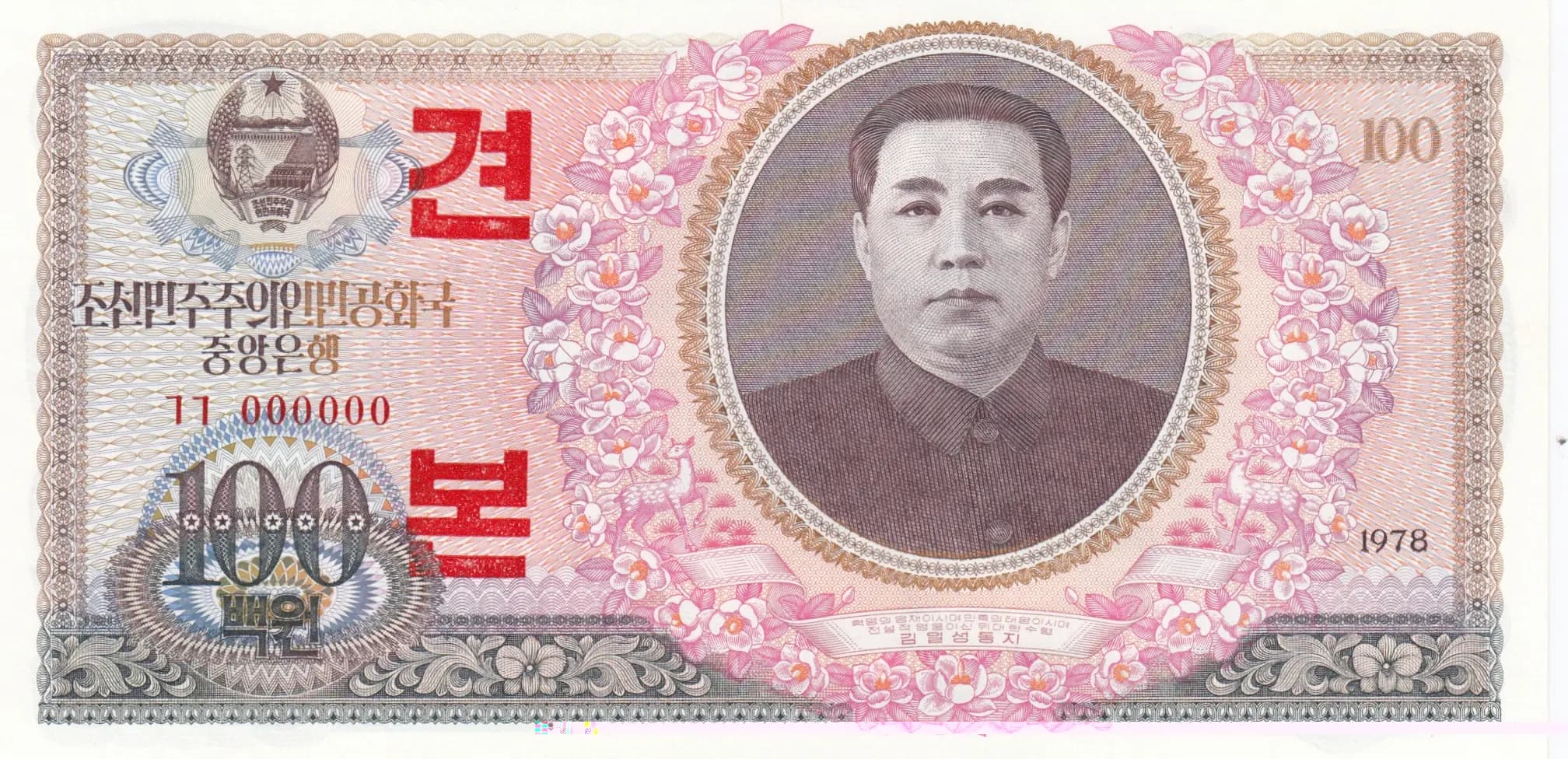
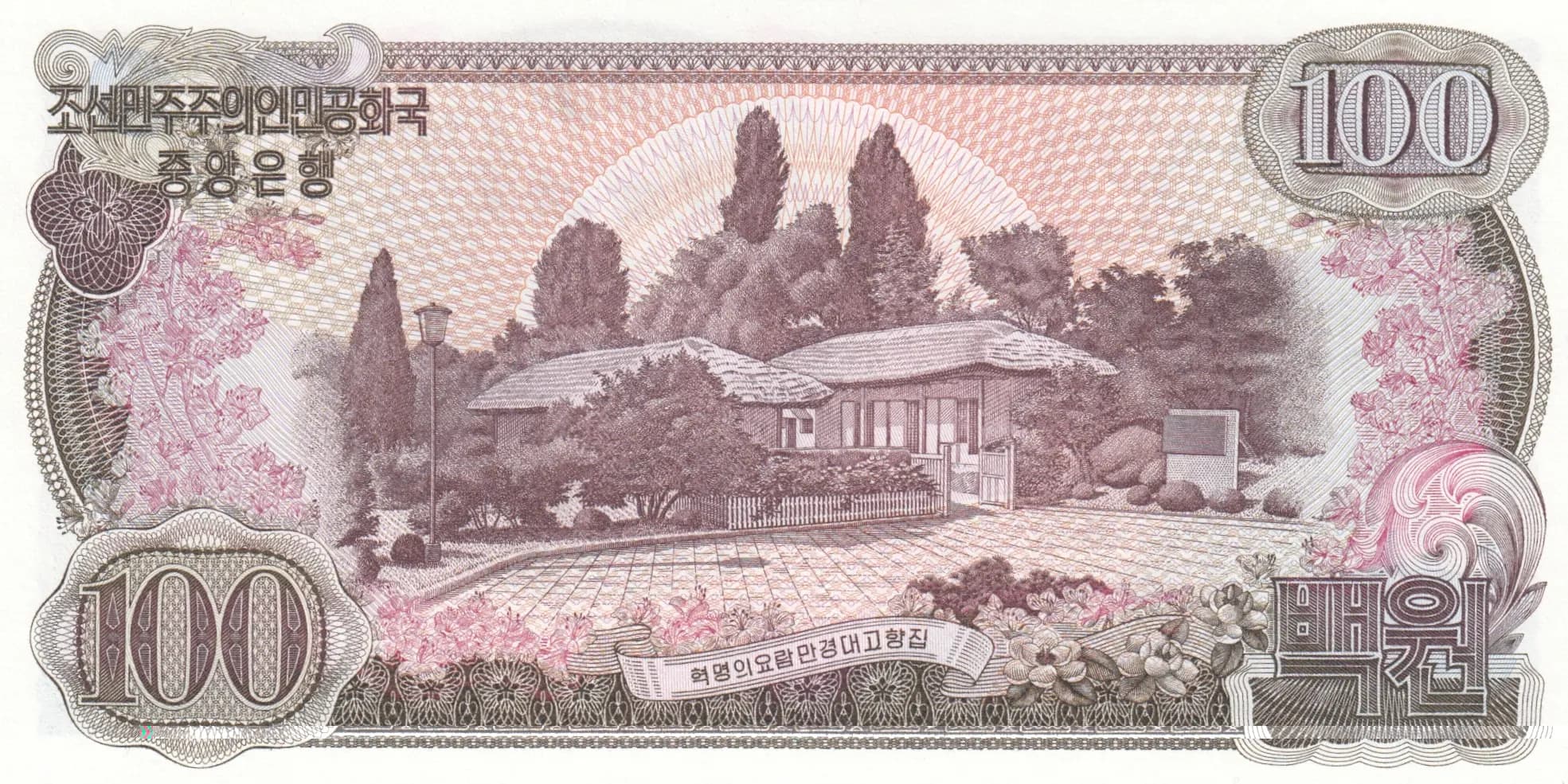
This is a North Korean 100 won banknote from 1978 in uncirculated condition, representing a classic example of DPRK currency design from the Cold War era. The note features a portrait of a dignitary in the center surrounded by ornate decorative elements and floral patterns, with the reverse displaying a traditional Korean architectural landmark set in a landscaped garden. The crisp printing and pristine condition make this an attractive specimen for collectors of Asian currency and Cold War-era political iconography.
common. The 100 won denomination from 1978 is a standard circulation issue from North Korea's post-war period with substantial print runs. While specimens in uncirculated condition command modest premiums over circulated examples, this Pick number is widely available to collectors and shows no indicators of scarcity such as short production runs, recall status, or limited distribution.
Issued by the North Korean Central Bank during the height of the Cold War, this 1978 banknote reflects the DPRK's nationalist aesthetic and emphasis on traditional Korean architecture and culture. The reverse depicts what appears to be a significant revolutionary or cultural landmark with cypress trees and formal gardens, imagery consistent with North Korea's promotion of revolutionary sites and monuments during this period. The use of Korean script exclusively and prominent national emblem underscores the regime's emphasis on sovereignty and ideological independence.
The obverse features a centrally positioned portrait of a middle-aged male figure of state importance, framed within an ornate circular decorative border with brown detailing. The background is predominantly pink with elaborate floral and leaf patterns throughout, creating an ornamental aesthetic typical of 1970s DPRK currency design. The North Korean national emblem appears on the left side, while the denomination '100 won' is displayed both in the lower left corner within a decorative shield and in the upper right corner. The reverse depicts a traditional Korean pavilion or commemorative structure with curved roof architecture, situated within a landscaped garden setting with cypress trees and formal paving. Both sides feature matching ornamental corner designs and floral medallion elements. The color palette transitions from the pink-dominated obverse to gray, brown, and tan tones on the reverse, with consistent use of red and brown for numerical denominations.
Front side: '조선민주주의인민공화국' (Democratic People's Republic of Korea), '중앙은행' (Central Bank), '백' (100), '원' (Won), '1978' (year of issue), '100' (denomination in Arabic numerals), '11.000000' (technical specification). Back side: '조선민주주의인민공화국' (Democratic People's Republic of Korea), '중앙은행' (Central Bank), '백' (100), '원' (Won), '혁명의요람인경대마강대기광집' (descriptive text referring to a revolutionary landmark or cultural site), '100' (denomination in Arabic numerals).
This banknote was produced using traditional intaglio (engraved) printing methods combined with multi-color lithographic printing, a standard technique for DPRK currency of this era. The fine line work visible in the portrait, ornate borders, and architectural details on the reverse are characteristic of intaglio engraving. The complex background patterns and floral elements suggest careful color separation and registration typical of security printing from this period. North Korea's banknotes of this era were generally produced domestically or with assistance from allied nations' security printers.
This note is cataloged as P-22s, with the 's' suffix indicating it is a specimen note rather than a regular circulation issue. Specimen notes typically feature overprints or special markings distinguishing them from currency intended for regular circulation. The notation '11.000000' visible in the inscriptions may represent a specimen designation or technical printing specification. No signature variations or overprints are evident from the visual analysis of this particular example.