5 pounds 1963 specimen
Market Prices
2 salesAbout This Note
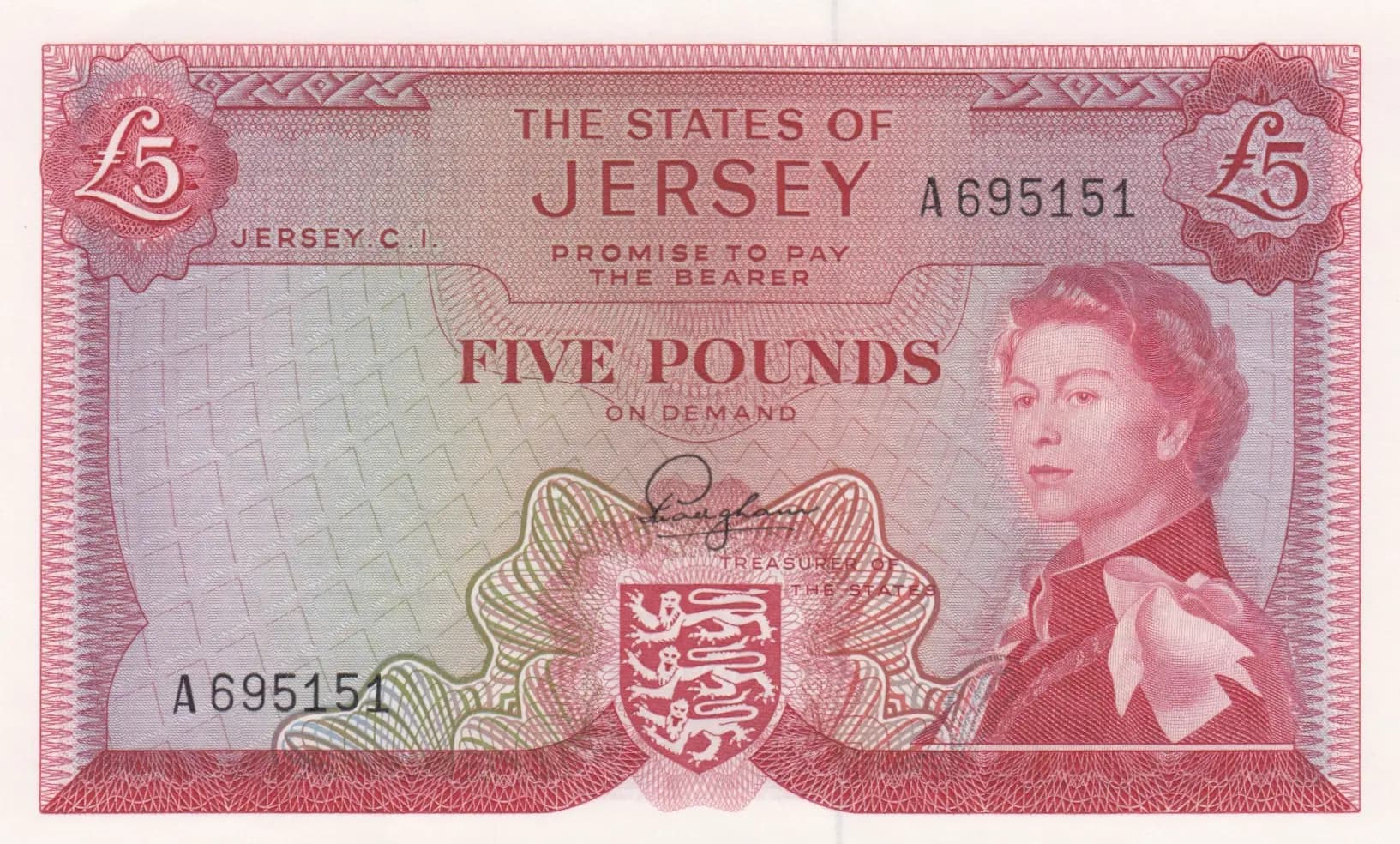
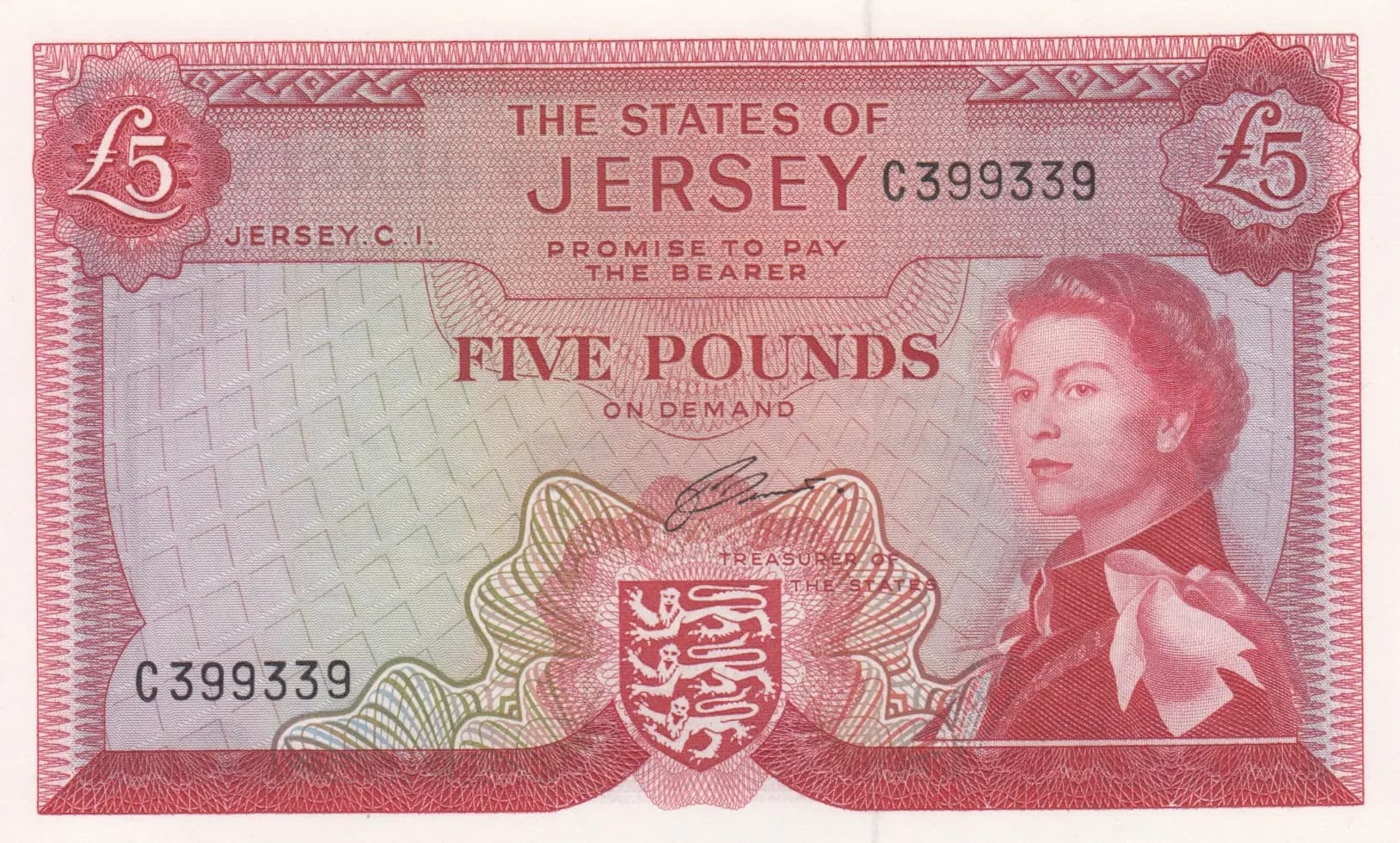
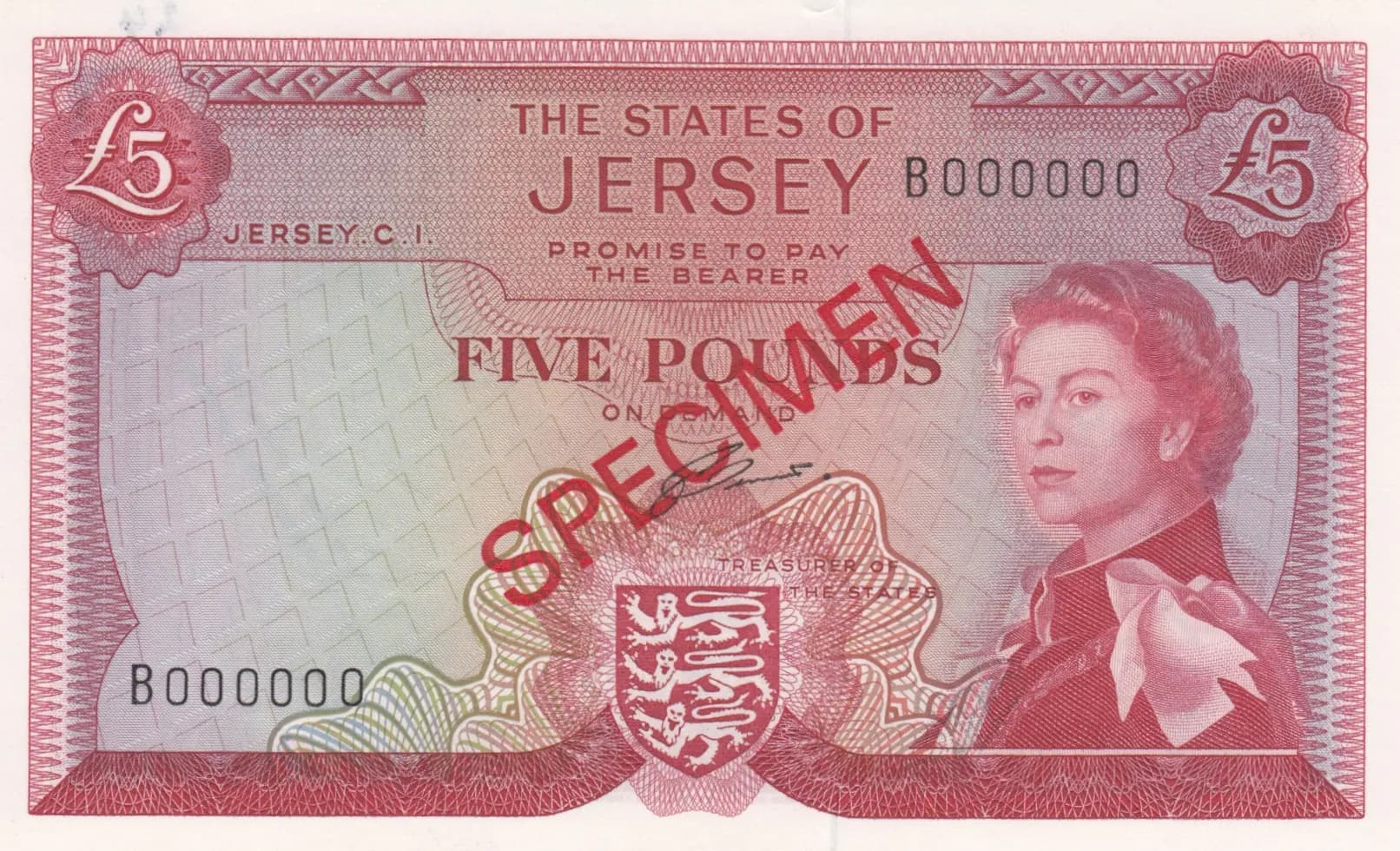
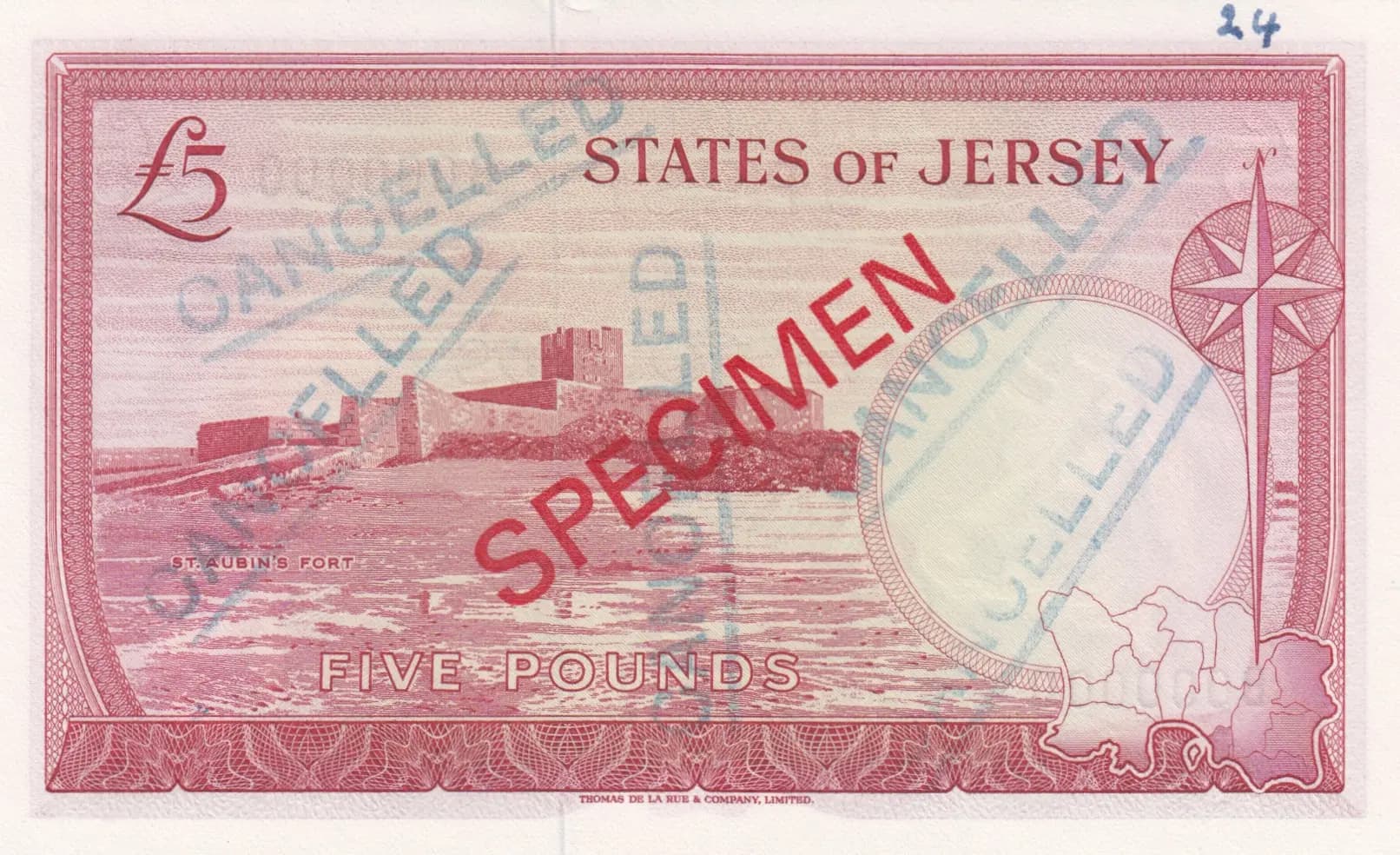
This is a 1963 Jersey £5 specimen banknote (Pick P-9bs) in uncirculated condition, featuring Queen Elizabeth II in profile on the obverse and St. Aubin's Fort on the reverse. The note displays the characteristic pink/mauve color scheme of this iconic first Jersey issue, with fine line engraving throughout and a prominent diagonal red 'SPECIMEN' overprint. As a specimen note with serial number B000000, this example represents a non-circulating presentation piece from the States of Jersey's inaugural banknote series, making it a significant piece of Channel Islands monetary history.
Common. The 1963 Jersey £5 note (Pick P-9) was part of the inaugural banknote series and was produced in substantial quantities for circulation and official distribution. Specimen examples (P-9bs) are somewhat more specialized, but as specimen notes were routinely produced in notable quantities for banking and archival purposes, they remain readily available to collectors. Catalog value data from realbanknotes.com shows UNC examples trading around $500 in 2019, with recent eBay sales in the $96-$240 range depending on condition (EF vs AUNC), indicating consistent collector demand but without the scarcity premiums that would characterize genuinely rare notes. This denomination and issue is well-represented in the collector market.
Issued in 1963 by the Treasury of the States of Jersey, this £5 note marked the introduction of Jersey's own banknote currency following increased autonomy in financial matters. The obverse depicts Queen Elizabeth II, reigning monarch and constitutional sovereign of the Channel Islands, while the reverse features St. Aubin's Fort, a 16th-century fortification that stands as a symbol of Jersey's maritime heritage and strategic importance. The specimen designation indicates this was produced for official distribution to banks and collectors, documenting the inaugural design standards of Jersey's monetary authority during the early 1960s.
The obverse features Queen Elizabeth II positioned on the right side of the note, depicted in left-facing profile wearing a cape, rendered in fine intaglio engraving. The Jersey coat of arms (shield with three lions) appears below the portrait on the right. The note employs an elaborate pink and mauve color scheme with ornamental rosette designs occupying the top left and right corners, and a complex guilloche (geometric line work) pattern forming the security background. The reverse displays a detailed landscape engraving of St. Aubin's Fort, a fortified coastal structure with towers and defensive walls rendered against a seascape background. A decorative compass rose symbol appears in the top right corner of the reverse, and an intaglio circular design element serves as an additional security feature. The border frame uses the same guilloche technique throughout, and denomination numerals and written text appear in appropriate positions on both sides.
Front side: 'THE STATES OF JERSEY' (header); 'PROMISE TO PAY THE BEARER FIVE POUNDS' (promise clause); '£5' (denomination in corners); 'FIVE POUNDS' (written amount); 'JERSEY C.I.' (issuing jurisdiction, Channel Islands); 'B000000' (specimen serial number); 'SPECIMEN' (overprint designation). Back side: 'STATES OF JERSEY' (header); 'ST. AUBIN'S FORT' (landmark identification); '£5' (denomination); 'FIVE POUNDS' (written amount); 'THOMAS DE LA RUE & COMPANY, LIMITED' (printer attribution).
This banknote was produced using traditional intaglio engraving, the standard high-security printing method for banknotes during this period. Thomas de la Rue & Company, Limited of London, one of the world's premier security printers, executed the design. The process involved engraving the master dies with fine parallel lines (guilloche patterns) and detailed portraiture and landscape elements, which were then transferred to printing plates. The fine line work visible throughout the note, the dimensional quality of the portrait and fort engravings, and the crisp serif details in typography are all characteristic of professional intaglio production. The multi-color printing (pink, mauve, red, cream) was achieved through successive plate passes, a standard procedure for Thomas de la Rue's work of this era.
This specimen is catalogued as Pick P-9bs, the specimen variant of the basic P-9 note. The PMG population report identifies four variants within the P-9 series: P-9a, P-9b, P-9s1, and P-9s2, all printed by Thomas de la Rue. The 'bs' designation in P-9bs indicates this is a specimen note (the 's' suffix) with the 'b' variant characteristics. The serial number B000000 is consistent with specimen issue practice, where specimen notes typically received standardized serial numbers rather than unique serial number ranges. No date variation is present, as the note is ND (no date) issued in 1963.