10 pounds 1963 specimen
Market Prices
About This Note
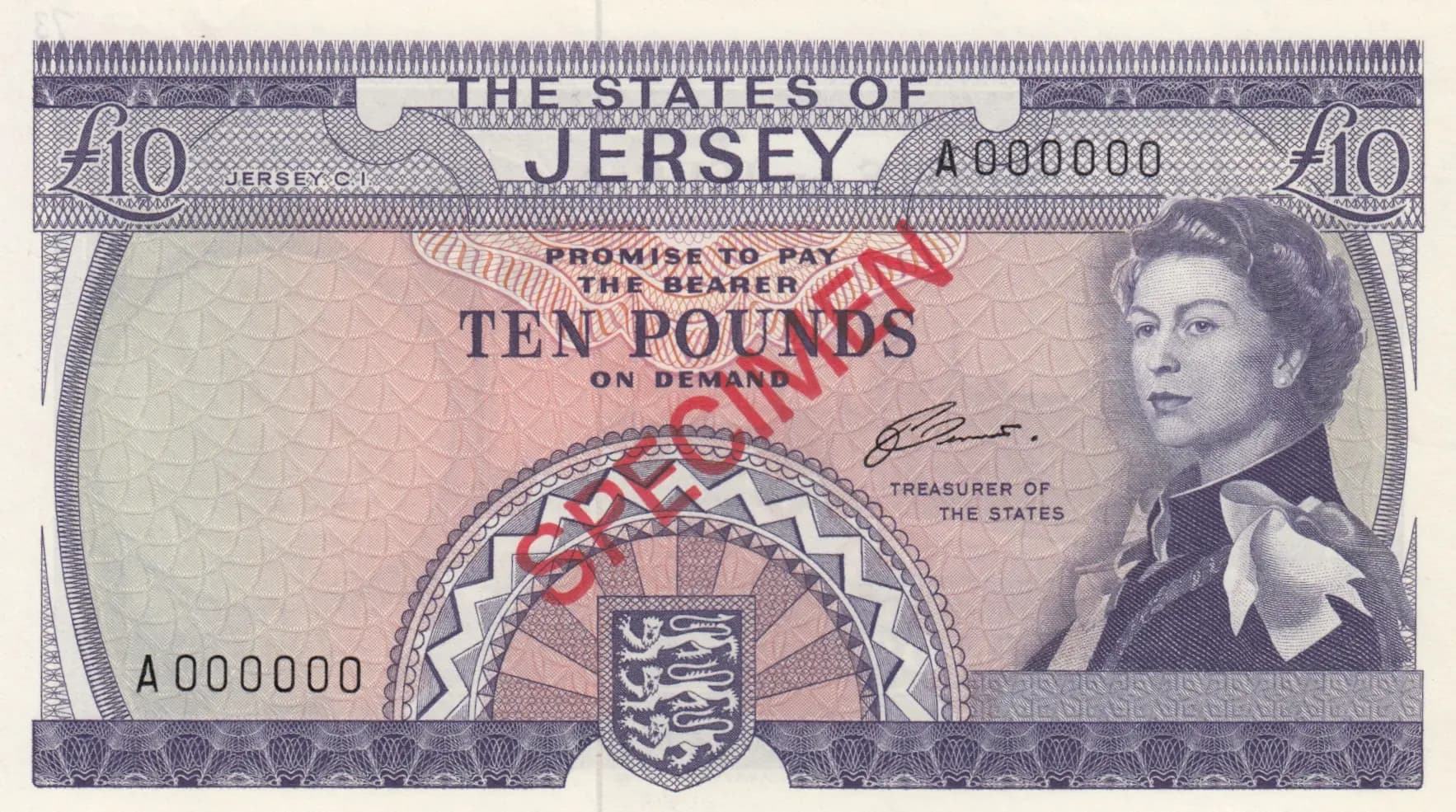
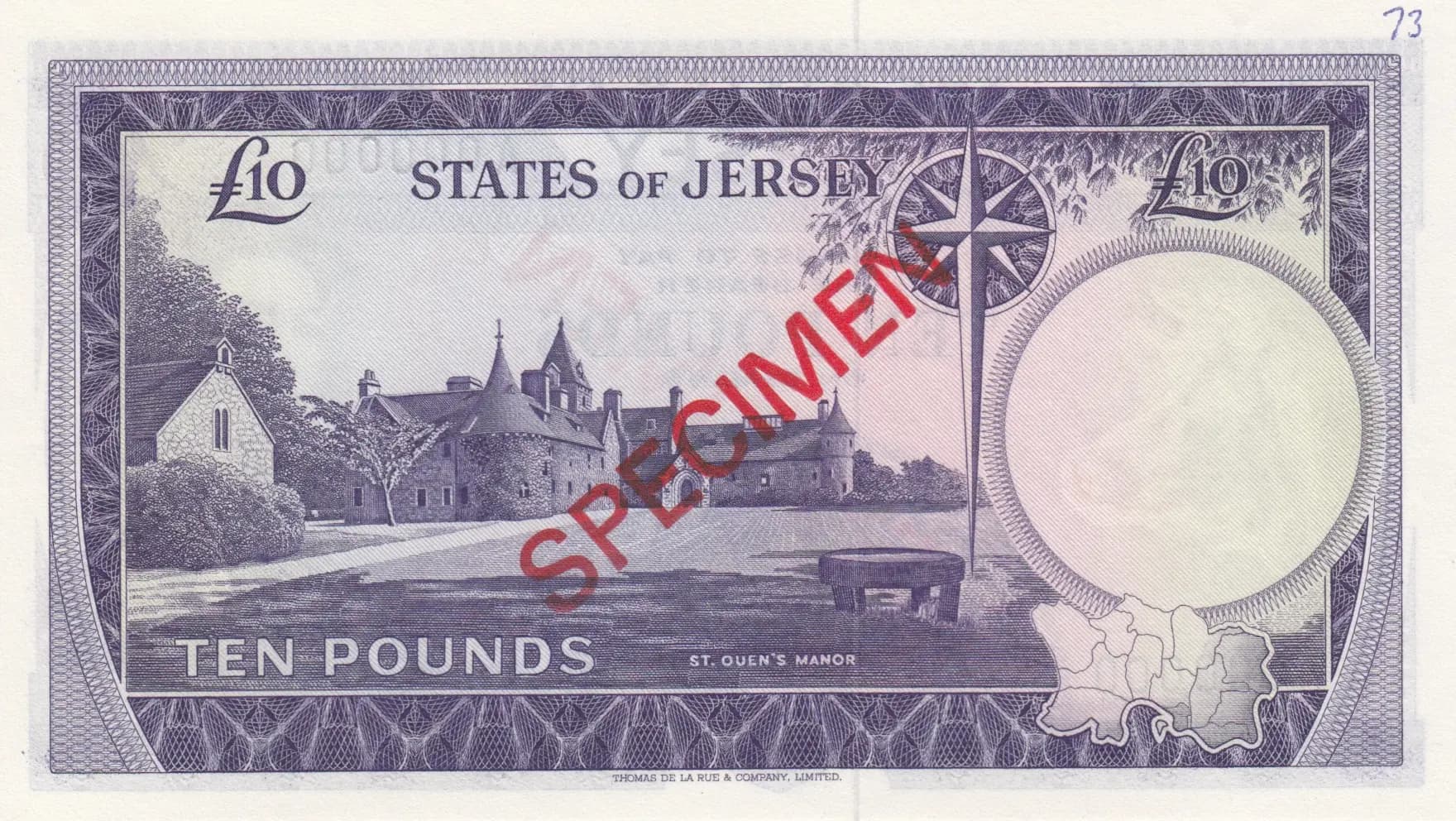
This is a 1963 Jersey £10 specimen note from the States of Jersey, printed by Thomas de la Rue and graded in uncirculated condition. The note features a striking purple and multicolored design with Queen Elizabeth II in profile on the obverse and St. Ouen's Manor on the reverse, both displaying the crisp, pristine characteristics expected of an unissued specimen with the prominent red 'SPECIMEN' overprint. As a specimen note from this early period of Jersey currency, it represents an important piece of Channel Islands monetary history and is particularly sought after by collectors of Commonwealth currency and specimen notes.
Uncommon. Specimen notes from Jersey's early currency issues (1963-1972) are less frequently encountered than their circulated counterparts, and the 1963 £10 specimen is not among the most commonly seen denominations in the specimen category. However, specimen notes were produced in reasonable quantities for distribution to banks and international correspondents, preventing them from being classified as rare. The eBay market data shows specimen £10 notes trading in the $100-$300 range for UNC examples, which suggests an active but limited collector market. The 2019 catalogue value of $225 for UNC specimens further confirms an uncommon but not scarce classification.
This note was issued during the early years of the States of Jersey's independent currency authority, established in 1963 to provide Jersey with its own banknotes distinct from British sterling. The obverse features Queen Elizabeth II, reflecting Jersey's status as a Crown Dependency under the British monarchy, while the reverse depicts St. Ouen's Manor, one of Jersey's most historically significant medieval buildings, emphasizing the island's cultural heritage and sovereignty. The specimen designation and immaculate preservation reflect its purpose as a reference example for currency officials and international banking partners during Jersey's transition to independent monetary administration.
The obverse features a three-quarter profile portrait of Queen Elizabeth II positioned on the right side, depicted wearing formal attire with jewelry, facing left in a dignified pose befitting Commonwealth currency. The central element is the Jersey coat of arms—a lion rampant within a shield surrounded by a distinctive geometric sunburst pattern with radiating triangular elements, serving as both heraldic symbol and security device. The reverse showcases an engraved landscape of St. Ouen's Manor, a medieval stone manor house with multiple chimneys and period architecture, surrounded by period-appropriate landscaping and trees, anchored by a compass rose design in the upper right. The entire design employs intricate decorative borders with repeating ornamental elements and fine line work characteristic of de la Rue's premium security printing, with the purple and multicolored palette providing visual distinction and security against counterfeiting.
OBVERSE (Front): '£10' and 'THE STATES OF JERSEY' appear at top; 'JERSEY C.I' (Jersey, Channel Islands) identifies the issuer; 'A000000' represents the specimen serial number; 'PROMISE TO PAY THE BEARER TEN POUNDS ON DEMAND' is the standard promise clause; 'SPECIMEN' appears in red diagonal overprint; 'TREASURER OF THE STATES' identifies the authorizing official; '£10' repeated in corners. REVERSE (Back): '£10' appears in top corners; 'STATES OF JERSEY' and 'TEN POUNDS' identify the value; 'ST. OUEN'S MANOR' labels the depicted landmark; 'SPECIMEN' in red diagonal overprint; 'THOMAS DE LA RUE & COMPANY, LIMITED' credits the printer.
This note was produced using traditional intaglio (engraved) printing by Thomas de la Rue & Company, Limited, London, the world's leading security printer of the era. The fine line work visible throughout the design, the precise portrait rendering, the detailed architectural engraving of St. Ouen's Manor, and the intricate geometric patterns all demonstrate the hallmarks of hand-engraved intaglio plates. The multicolored printing effect was achieved through the use of multiple engraved plates in sequence, allowing for the purple, blue, pink, and beige color combinations observed. The red 'SPECIMEN' overprint was applied separately as a security measure to distinguish this note from any potential circulating currency.
This is catalogued as P-10s, designating it as a specimen note variant of the Pick 10 series (the circulating version is P-10a). Both variants were printed by Thomas de la Rue. The presence of the red 'SPECIMEN' overprint and the zero serial number (A000000) are defining characteristics of the specimen variety. No signature varieties or date variations are noted for the 1963 specimen issue, as specimen notes were typically printed with uniform, non-personalizable designations. The reference number '73' visible on the reverse may indicate this particular specimen's position in the printing sequence or archival cataloging system.