1 pound 1963 specimen
Market Prices
14 salesAbout This Note
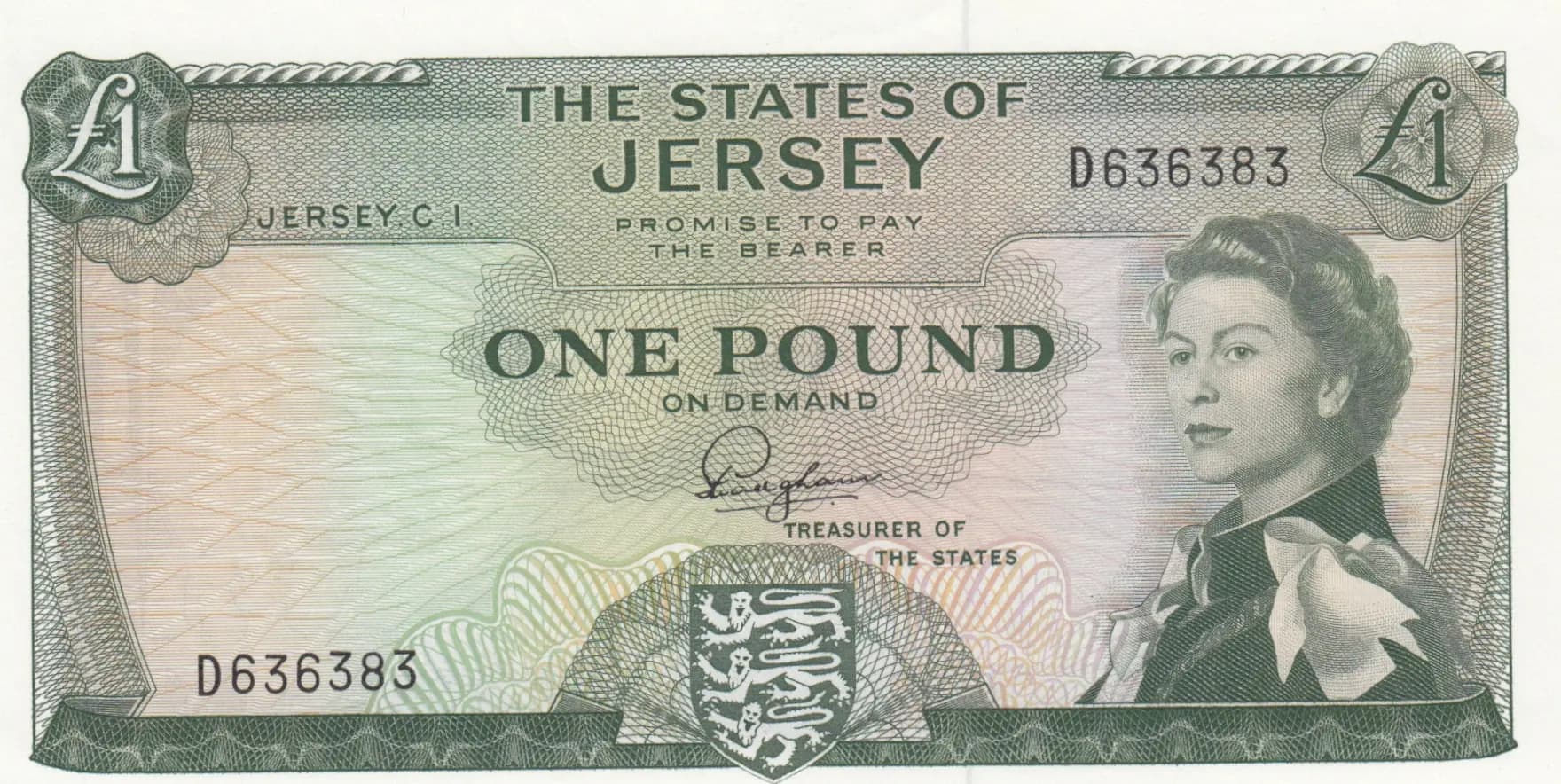
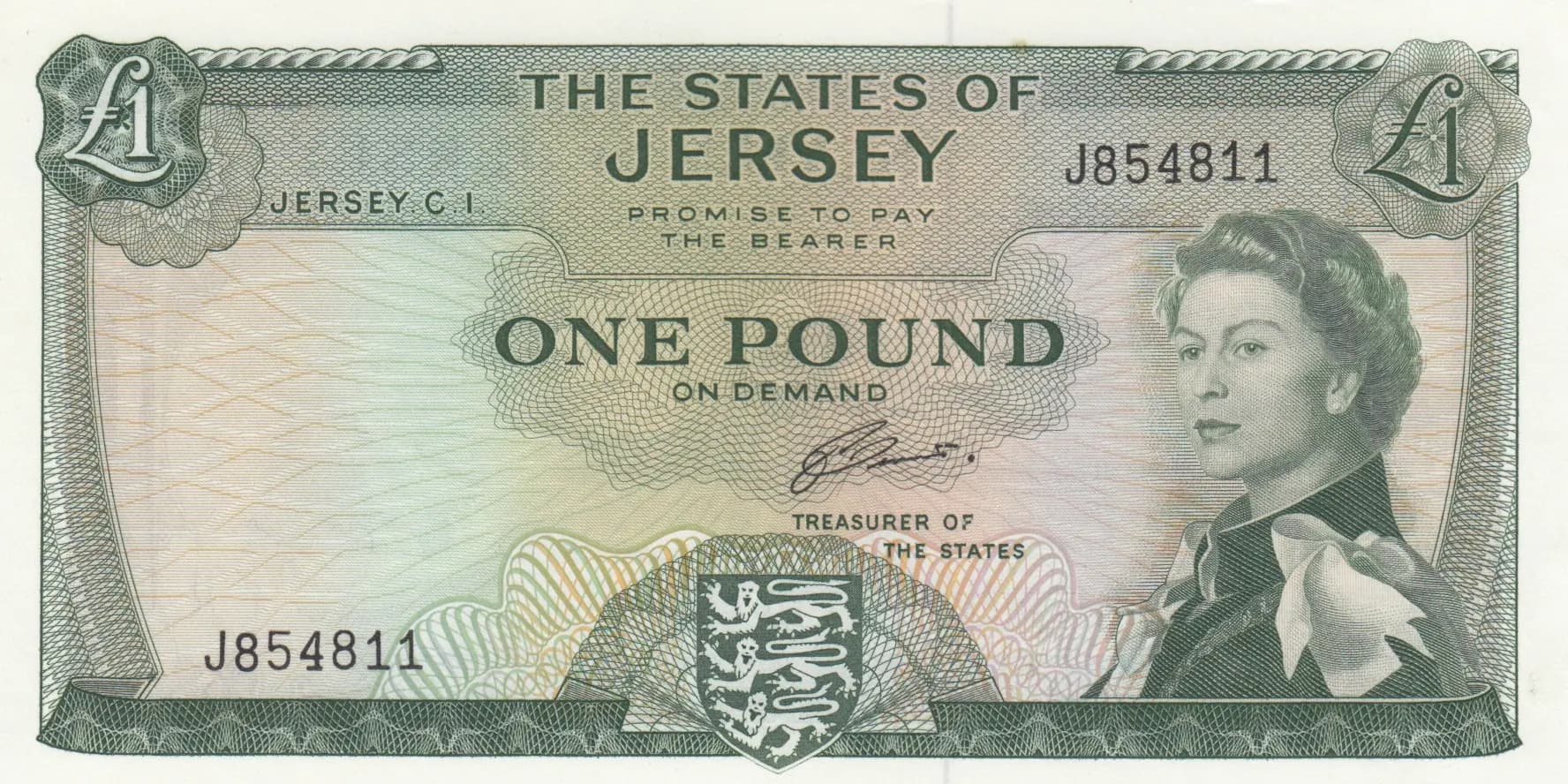
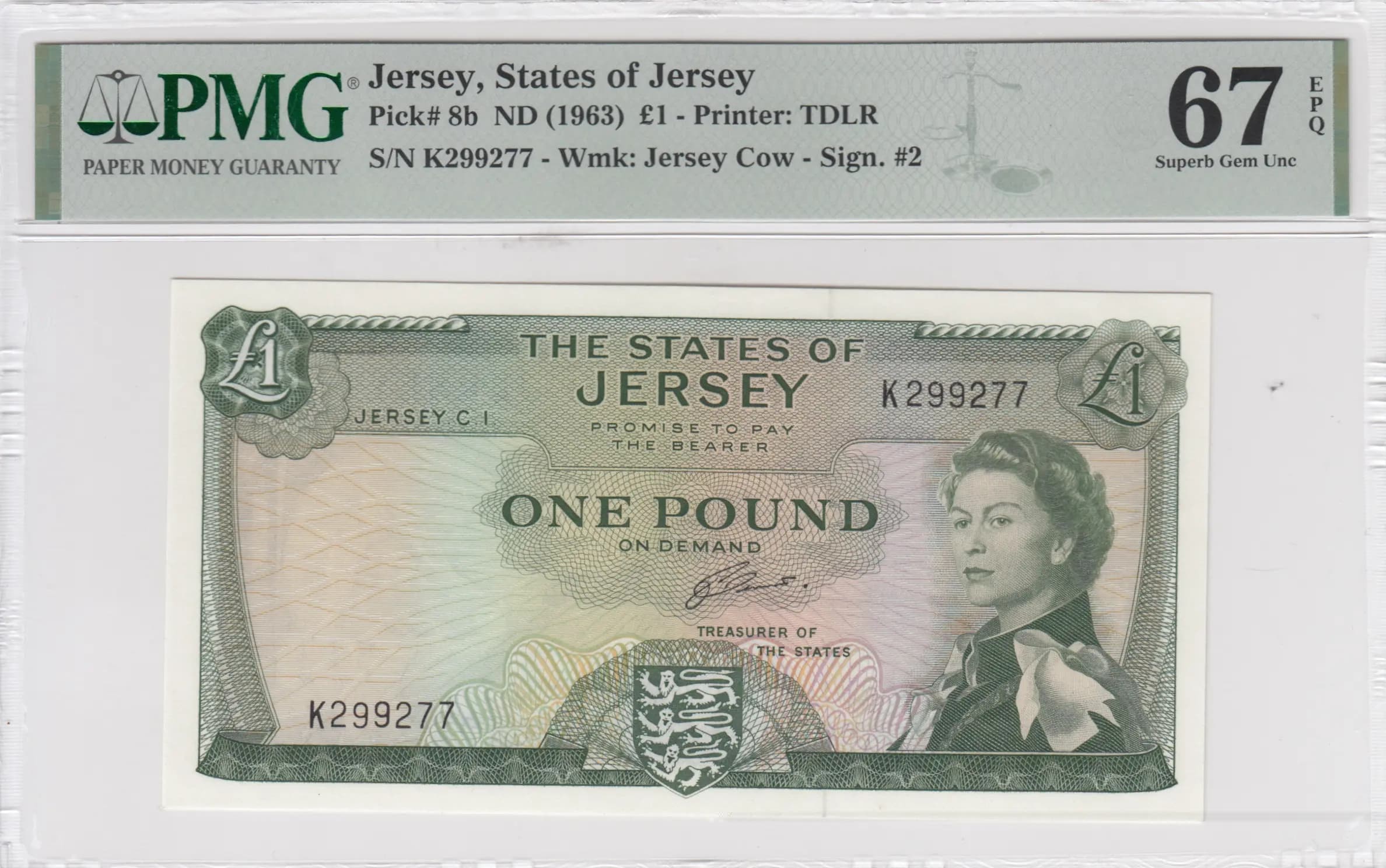
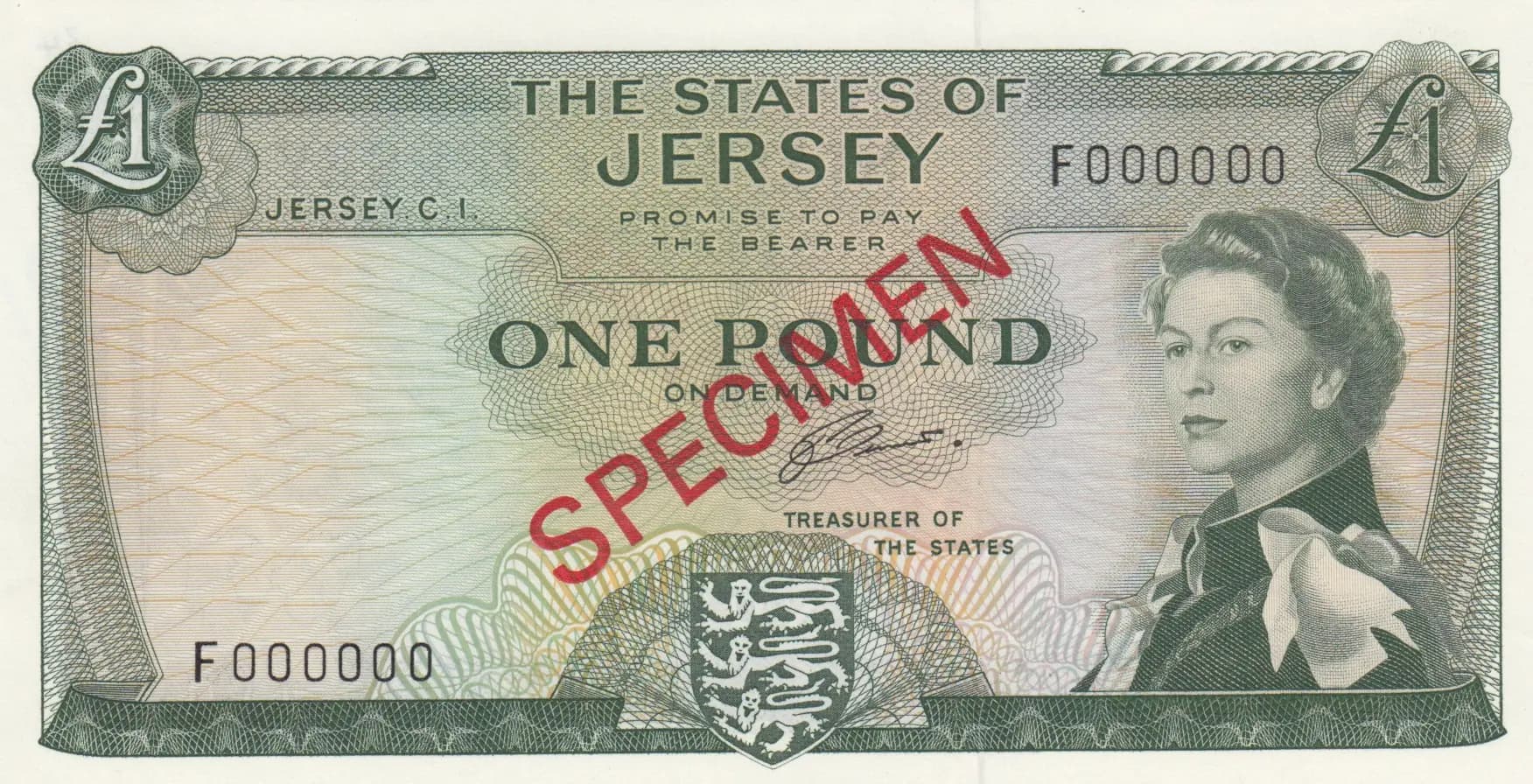
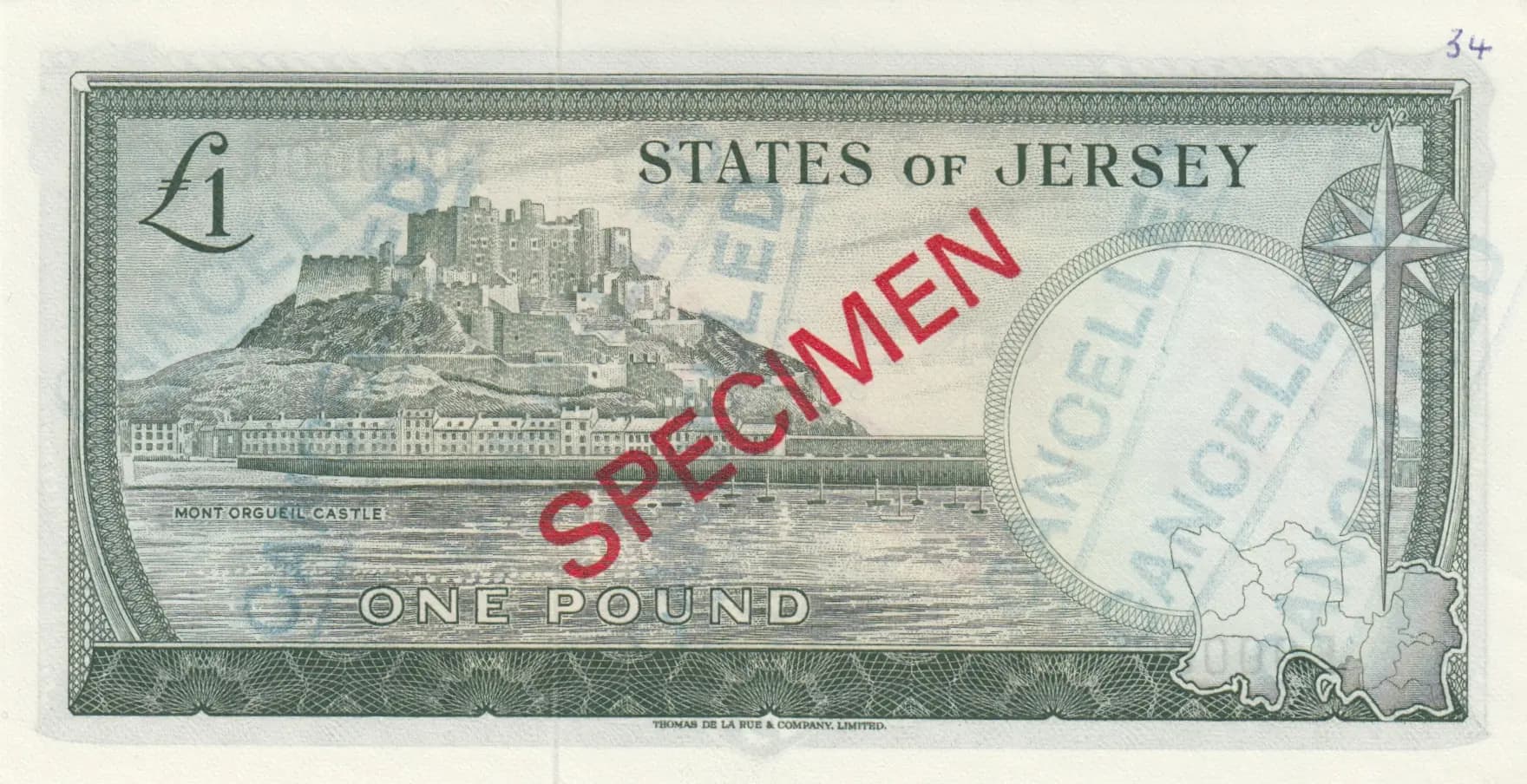
This is a 1963 Jersey £1 specimen note issued by the States of Jersey and printed by Thomas de la Rue, displaying the characteristic green-on-multicolor design of the era. The note features Queen Elizabeth II in profile on the obverse and Mont Orgueil Castle on the reverse, both rendered in fine engraving with intricate security printing. This specimen example, graded UNC and bearing the prominent red diagonal 'SPECIMEN' overprint, represents a notable piece of Channel Islands currency history and demonstrates the high-quality security printing standards of the period.
Common. This is a specimen note from the standard 1963 issue of Jersey £1 notes (Pick P-8bs), and specimen overprints were typically produced in moderate quantities for distribution to banks, government archives, and collectors. The eBay market data provided shows consistent sales activity with recent examples in various grades selling for $15–$53 USD for circulated and uncirculated specimens, indicating ready availability among collectors. While specimen notes command a modest premium over regular circulation examples, the steady supply of this note in the secondary market confirms it is not scarce.
Issued in 1963, this note reflects Jersey's post-war assertion of financial autonomy within the Channel Islands, with the States of Jersey establishing its own currency distinct from sterling circulation. The prominence of Mont Orgueil Castle—a 13th-century fortification that had served as Jersey's primary defense for centuries—underscores the island's connection to its medieval heritage and its role as a strategic location in the English Channel. The portrait of Queen Elizabeth II affirms Jersey's continued status within the Commonwealth during the height of the British monarch's reign.
The obverse features a right-facing profile portrait of Queen Elizabeth II wearing formal attire with a detailed collar, positioned prominently on the right side of the note. The design incorporates a heraldic shield with three lions (representing Jersey's connection to the English Crown) positioned near the bottom center. Ornamental rosette designs occupy the top left and right corners, with decorative £1 denomination symbols framing the note. The reverse showcases a detailed engraved landscape of Mont Orgueil Castle, a fortified medieval structure situated on a rocky promontory overlooking the waterfront and period buildings of the harbor below. A compass rose symbol appears in the top right corner of the reverse, and ornamental leaf and plant motifs border the design. Throughout both sides, fine-line mesh and cross-hatch patterns provide intricate security detailing. A circular vignette frame on the right side of the reverse suggests a reserved security element area. The dominant color scheme is green with black and white accents.
Front side: 'THE STATES OF JERSEY' (issuing authority), 'JERSEY C.I.' (Channel Islands designation), 'PROMISE TO PAY THE BEARER ON DEMAND' (standard currency promise clause), 'ONE POUND' (denomination in words), 'TREASURER OF THE STATES' (authorized official title), 'SPECIMEN' (indicating this is a non-circulating sample), and 'F000000' (specimen serial number appearing at top right and bottom left). Back side: 'STATES of JERSEY' (issuer), 'MONT ORGUEIL CASTLE' (identifying the depicted landmark), 'ONE POUND' (denomination), 'SPECIMEN' (overprint), '£1' (symbolic denomination in top left corner), and 'THOMAS DE LA RUE & COMPANY, LIMITED' (printer attribution at bottom).
This note was produced using traditional intaglio (engraving) and letterpress printing methods by Thomas de la Rue & Company, Limited, London—the premier British currency printer of the era. The fine-line mesh backgrounds, intricate cross-hatch patterns, and detailed architectural rendering of Mont Orgueil Castle demonstrate the sophisticated security printing techniques characteristic of mid-20th-century de la Rue production. The crisp detail and definition visible in the specimen condition indicate the high-quality multi-stage engraving and printing processes employed for currency-grade security printing.
This is Pick P-8bs, specifically identified as a specimen variant (the 's' designation and red 'SPECIMEN' overprint confirm this classification). The catalog data indicates that PMG has recorded four variants for this base Pick number (P-8a, P-8b, P-8b*, and P-8s1), suggesting minor variations in printing, serial number sequences, or overprint placement across the issue run. This particular example exhibits serial number F000000, typical of specimen notes produced for non-circulating distribution. The TDLR printer mark (Thomas de la Rue & Company, Limited) is confirmed on the reverse, consistent with the only printer used for this issue.