5 shillings 1950
Market Prices
19 salesAbout This Note
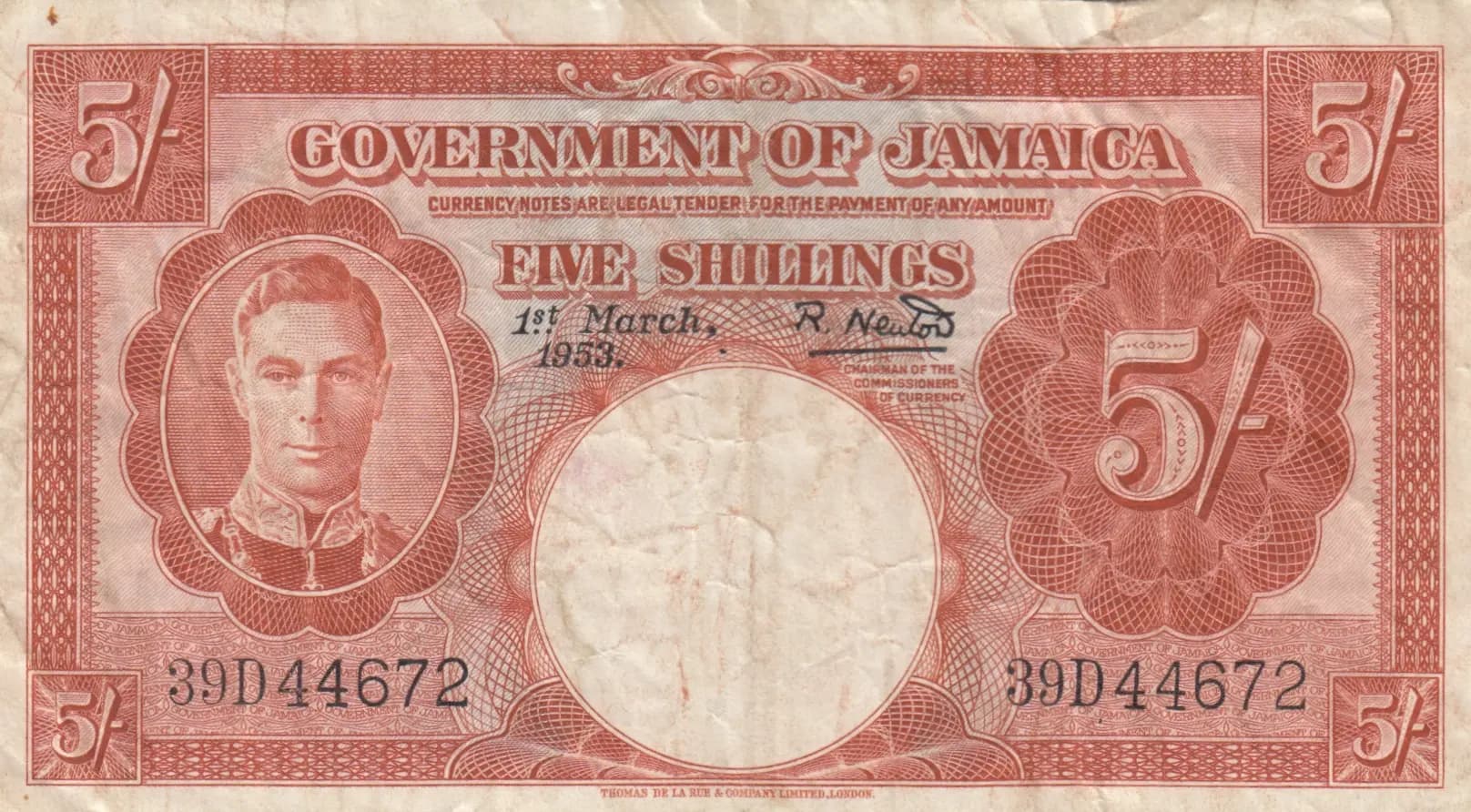
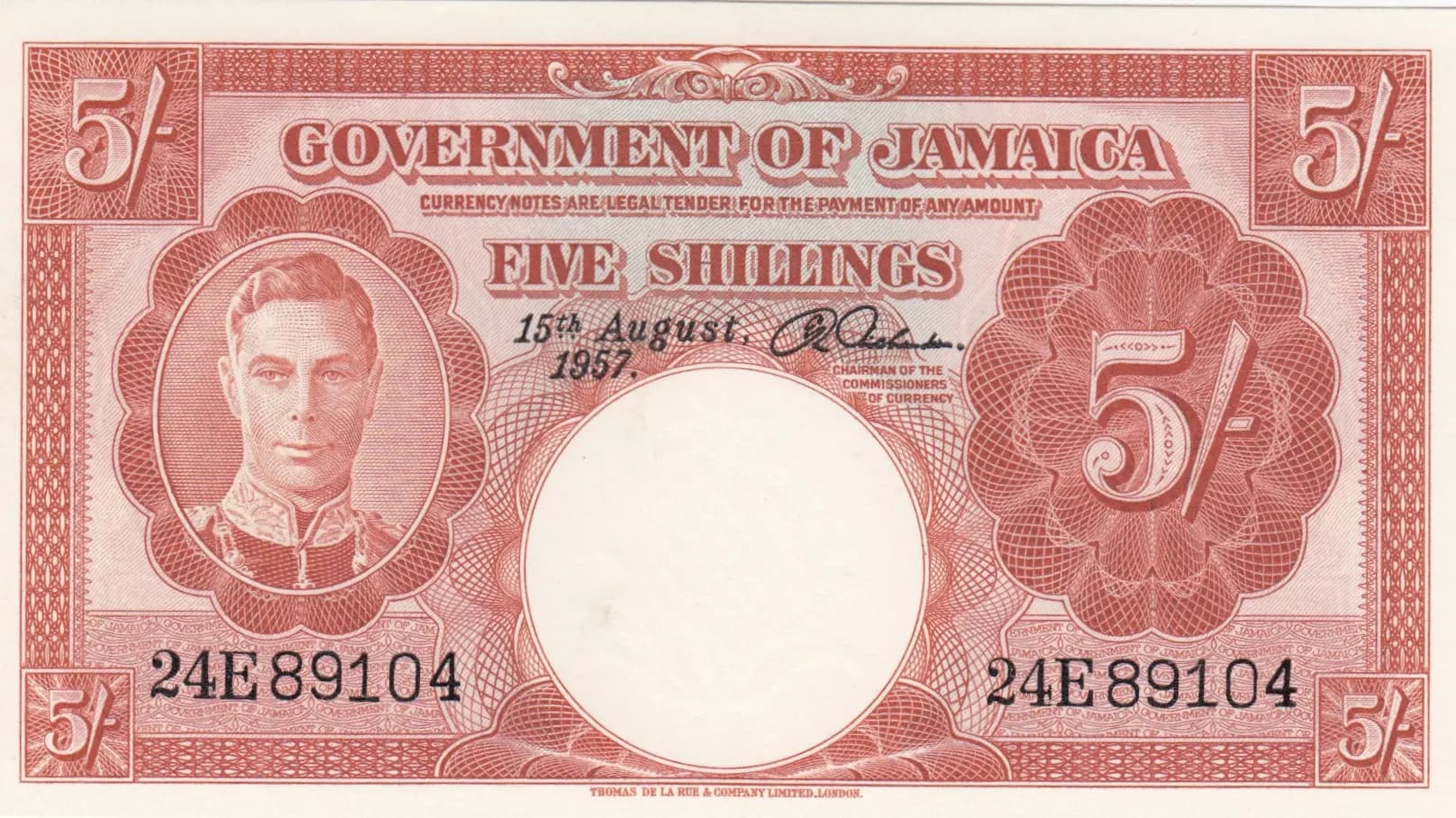
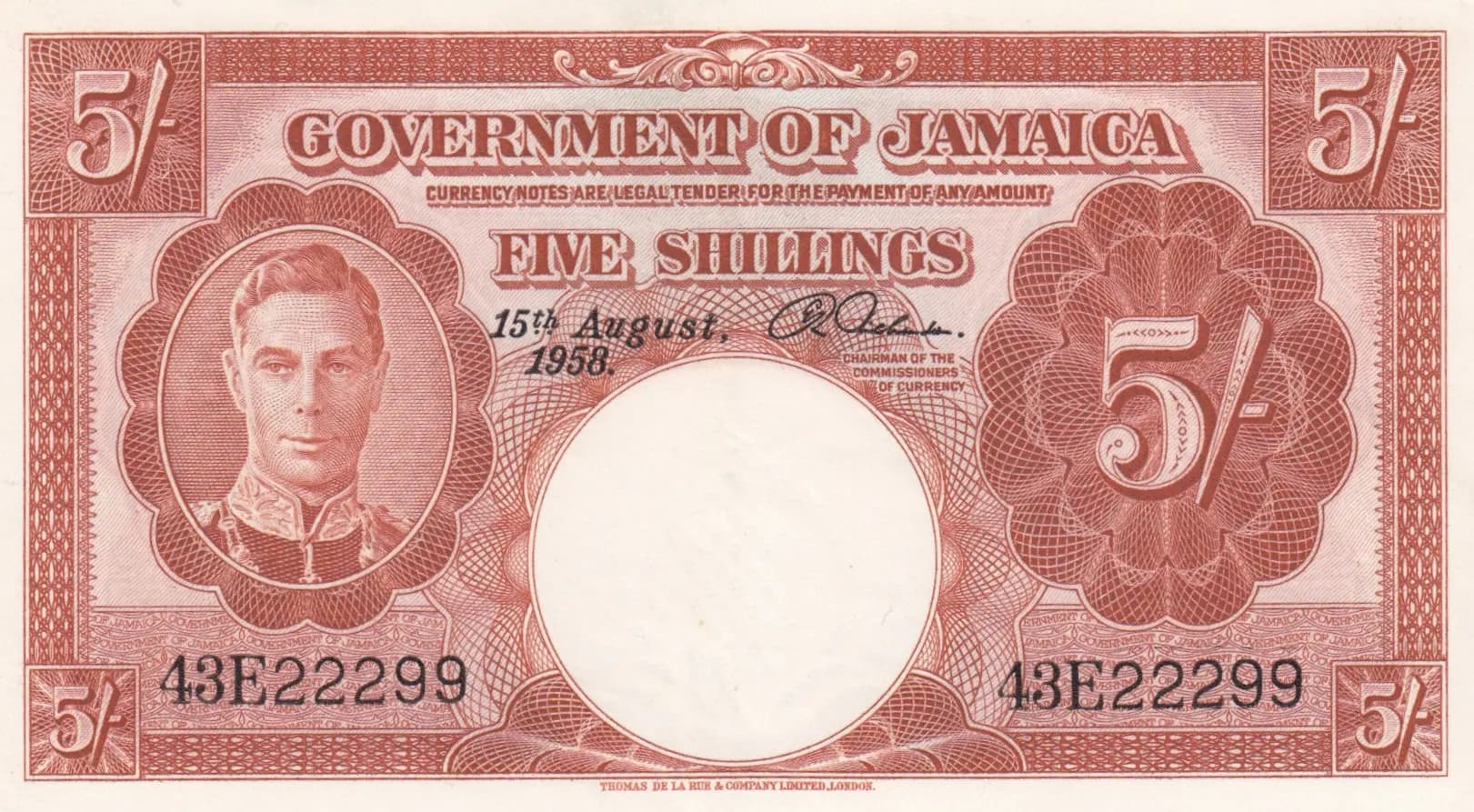
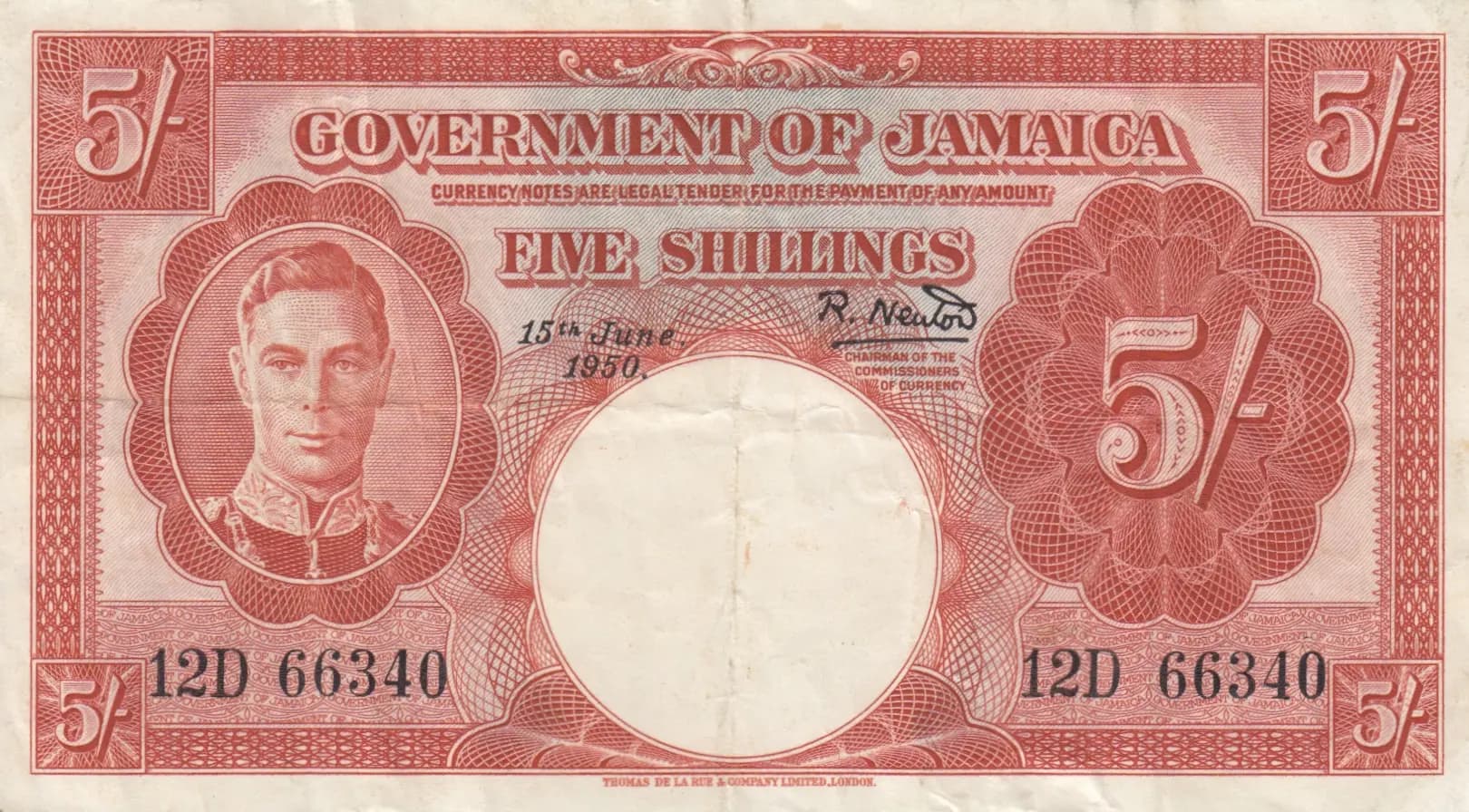
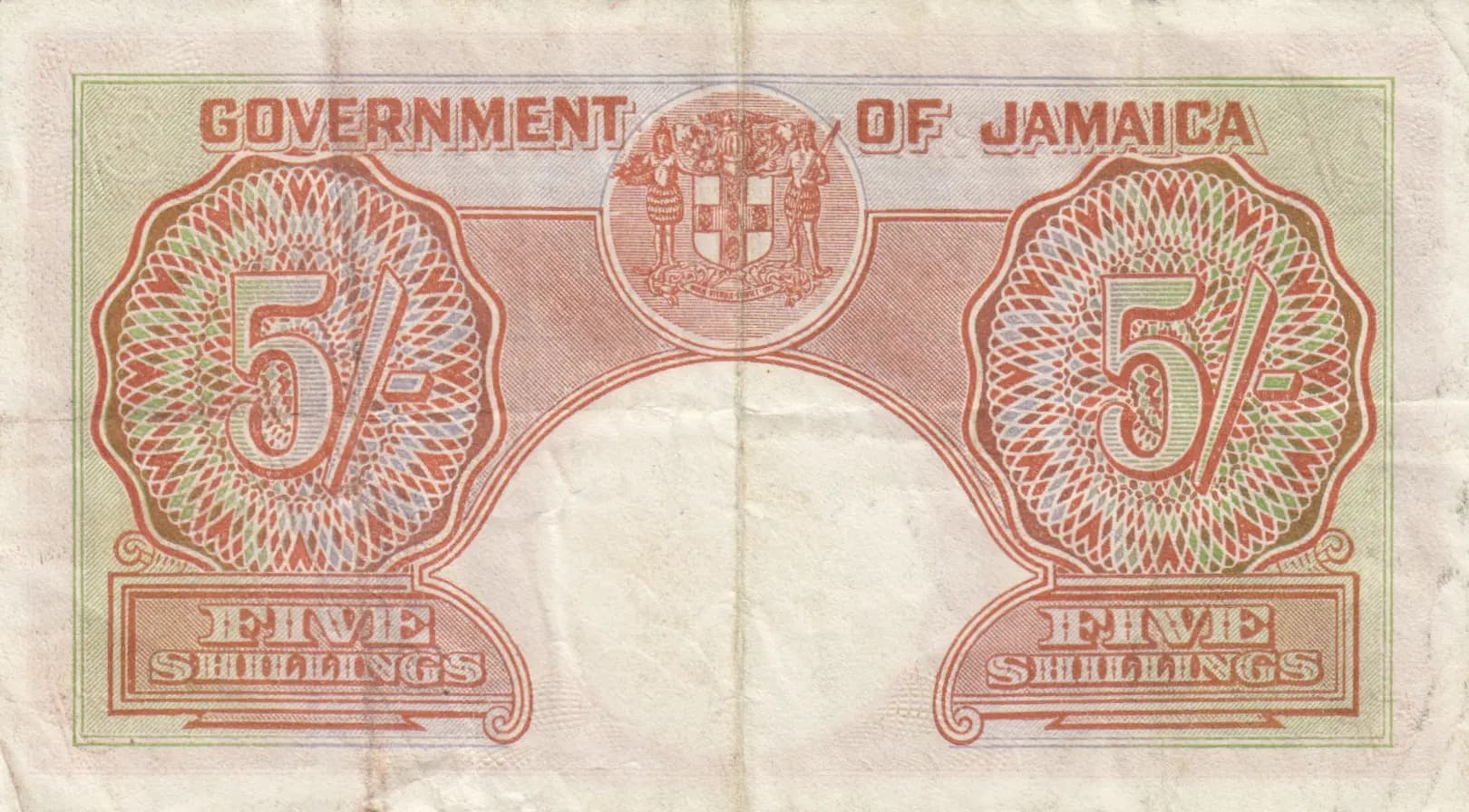
This is a Jamaican Government 5 Shillings note from 1950 (dated 15th June 1950), Pick P-37a, printed by Thomas de la Rue in London. The note displays the classic pre-decimal Commonwealth design with King George VI's portrait in profile on the obverse and the Jamaican coat of arms on the reverse, both surrounded by elaborate geometric cross-hatching security patterns. In VF condition, this example shows considerable circulation wear including a prominent vertical center fold, multiple creases, and overall surface aging consistent with mid-20th century circulation, with estimated value around $40 based on recent market data.
Common. This is a standard regular-issue note with substantial print runs during the 1939-1950 period. eBay market data shows consistent availability with VF specimens selling in the $35-$91 range historically, indicating healthy supply. The 2016 catalogue value of $40 for VF condition and the note's circulation history confirm it was produced in quantities sufficient to remain readily available to collectors. No print run restrictions, recall notices, or scarcity indicators are documented for Pick P-37a.
Issued during the post-World War II period when Jamaica remained a British Crown Colony, this note reflects the Commonwealth monetary system with its denomination in shillings and featuring the reigning British monarch, King George VI. The 1950 date represents a transitional period in Jamaica's history, just two years before the island would gain significant constitutional reforms and over a decade before independence in 1962. The Jamaican coat of arms depicted on the reverse served as an emblem of colonial governmental authority during this era of gradual decolonization.
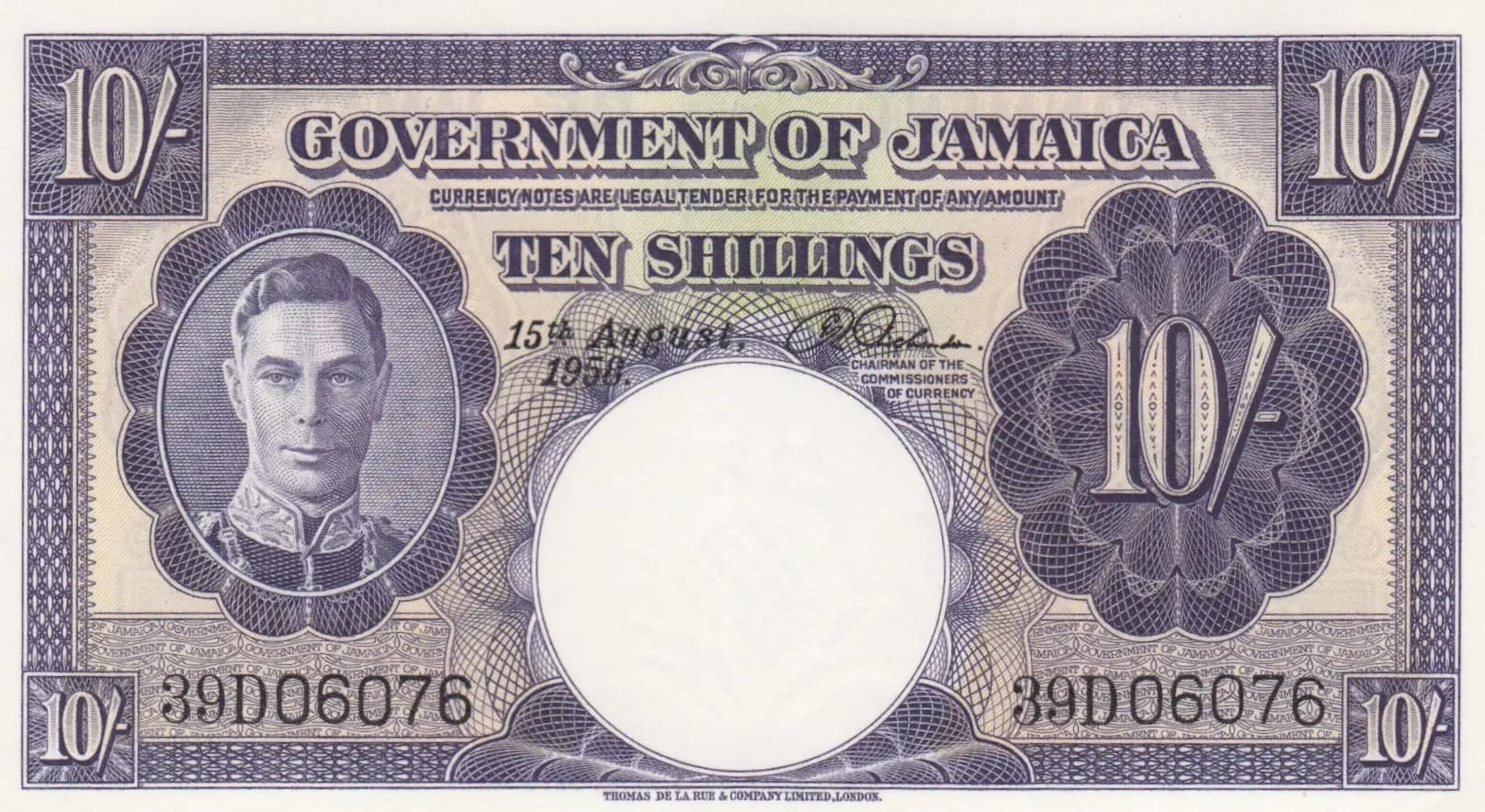
The obverse features a left-facing profile portrait of King George VI in formal dress with military collar and insignia, enclosed within an ornamental scalloped circular medallion frame positioned on the left side. Denomination numerals '5' appear in all four corners within matching scalloped frames. The reverse displays the Jamaican coat of arms (heraldic design with crossed implements and shield) in a circular frame at the top center, flanked by two large symmetrical ornamental medallions containing the numeral '5' surrounded by elaborate radiating and geometric cross-hatching patterns (characteristic of fine intaglio security printing). Decorative floral and scrollwork elements frame the top and bottom of both sides. The dominant color scheme is red/coral pink on cream/off-white, with green/olive tinting visible on the reverse, typical of Thomas de la Rue's multi-color printing of the era.
FRONT: 'GOVERNMENT OF JAMAICA' (issuing authority); 'CURRENCY NOTES ARE LEGAL TENDER FOR THE PAYMENT OF ANY AMOUNT' (legal tender declaration); 'FIVE SHILLINGS' (denomination); '15th June 1950' (issue date); 'R. Naylor' (signature of Chairman); 'CHAIRMAN OF THE COMMISSIONERS OF CURRENCY' (title); '12D 66340' (serial number); 'THOMAS DE LA RUE & COMPANY LIMITED, LONDON' (printer attribution). BACK: 'GOVERNMENT OF JAMAICA' (issuing authority); 'FIVE SHILLINGS' (denomination, printed in two lines as per P-37a variety).
Intaglio printing (line engraving), as evidenced by the deep, intricate cross-hatching patterns, fine geometric line work, and the characteristic raised surface quality visible throughout both sides. The elaborate security printing with radiating peacock-feather-like patterns and complex ornamental designs are hallmarks of Thomas de la Rue's premium banknote production. Multi-color printing was employed with careful registration of red, green, and cream inks.
This specimen is Pick P-37a, identified by: (1) 'FIVE SHILLINGS' printed in two lines on the reverse (P-45 variant has it in one line); (2) Printer mark 'THOMAS DE LA RUE & COMPANY LIMITED, LONDON'; (3) Issue date of 15th June 1950; (4) Signature of R. Naylor as Chairman; (5) Serial number prefix '12D'. The PMG population report indicates both P-37a and P-37b variants exist for this base Pick number, with the primary distinction being layout of text or minor design elements. This example represents the standard P-37a configuration.