1 pound 1961 specimen
Market Prices
6 salesAbout This Note
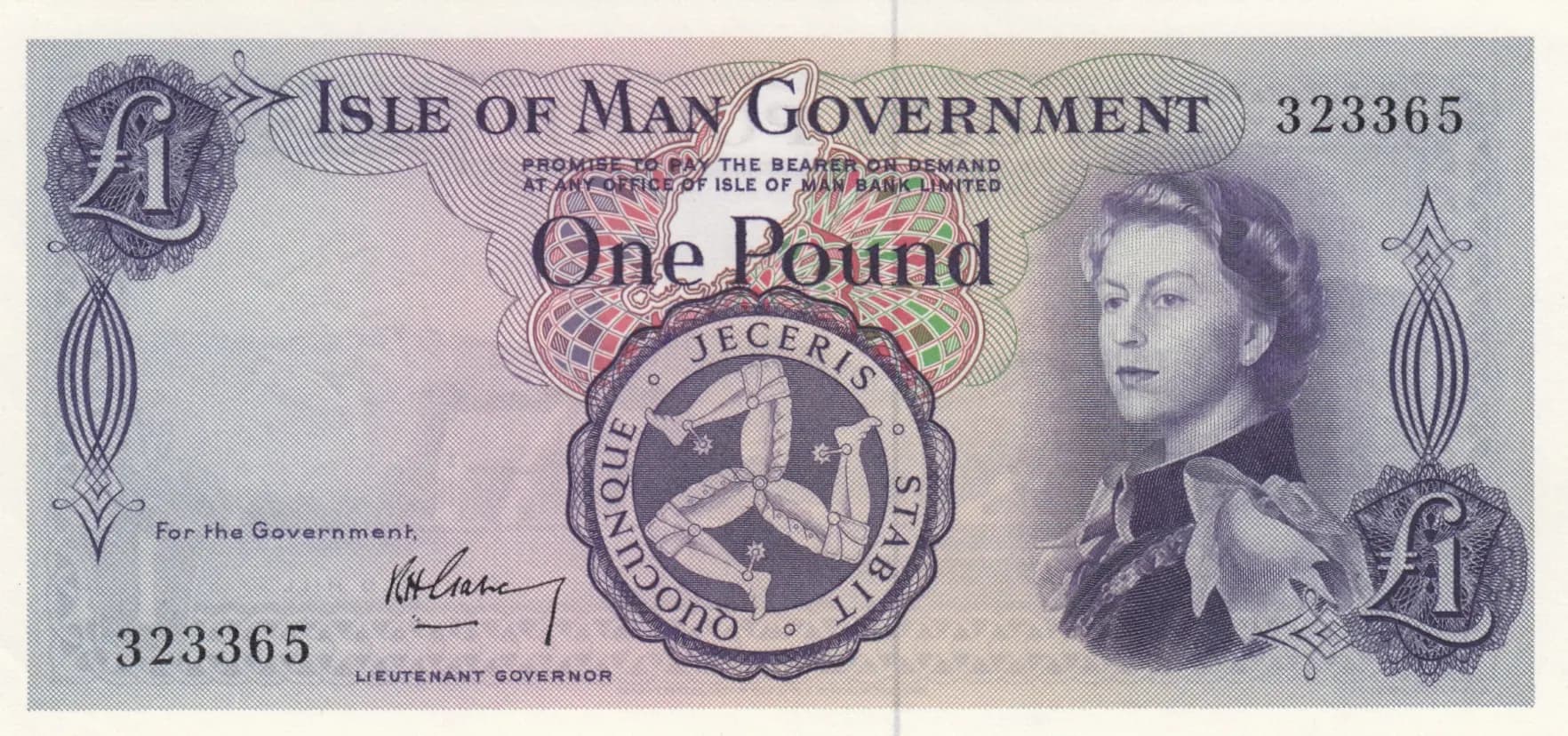
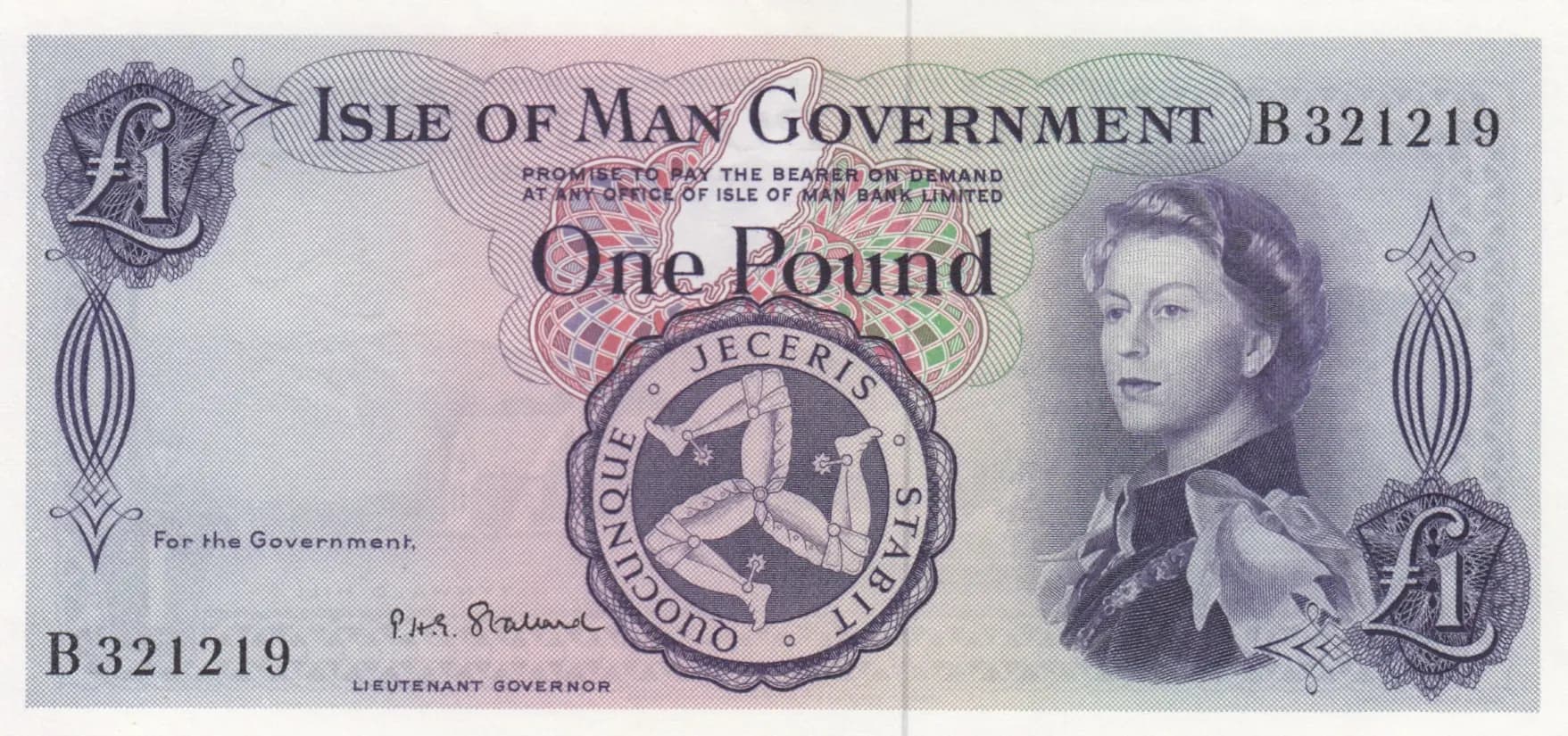
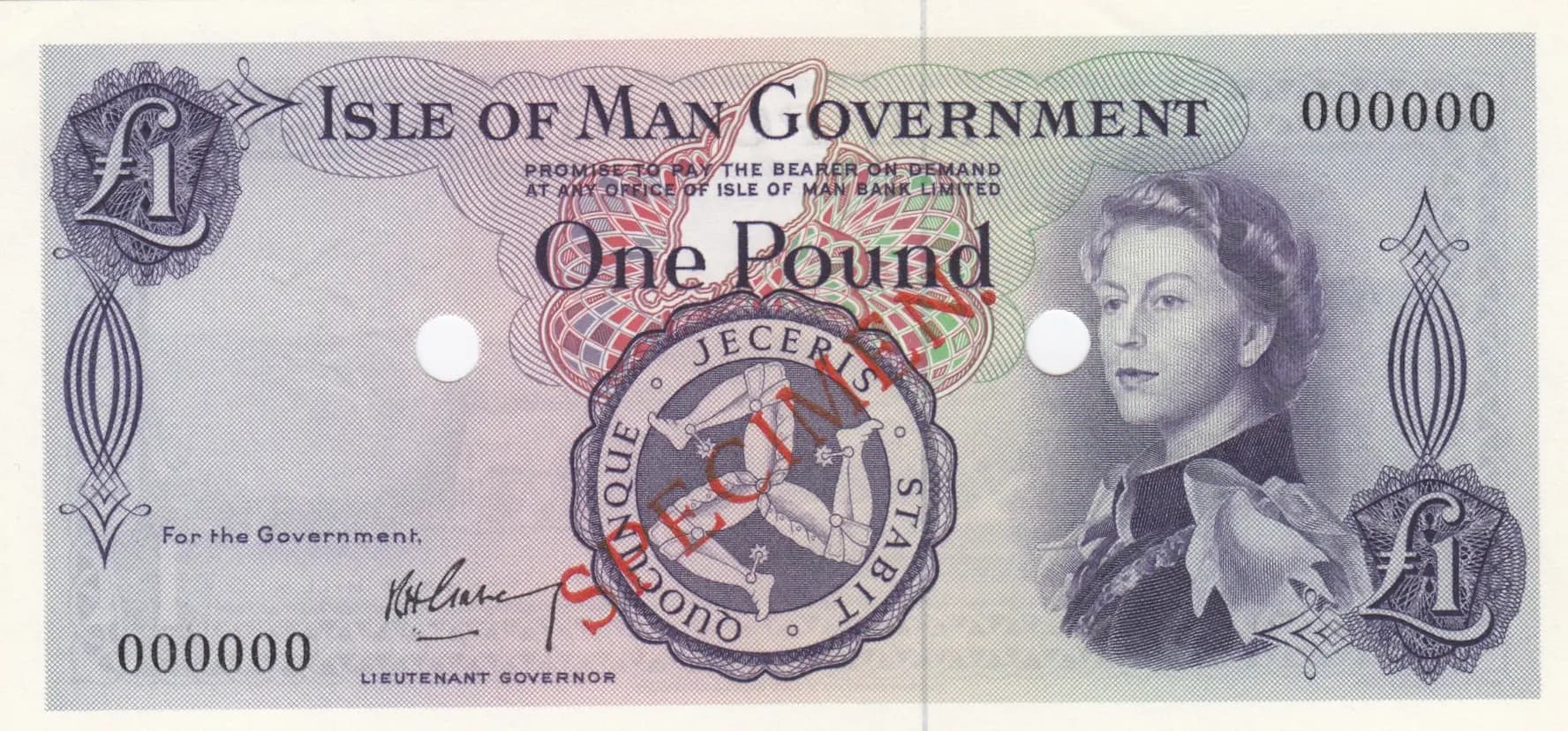
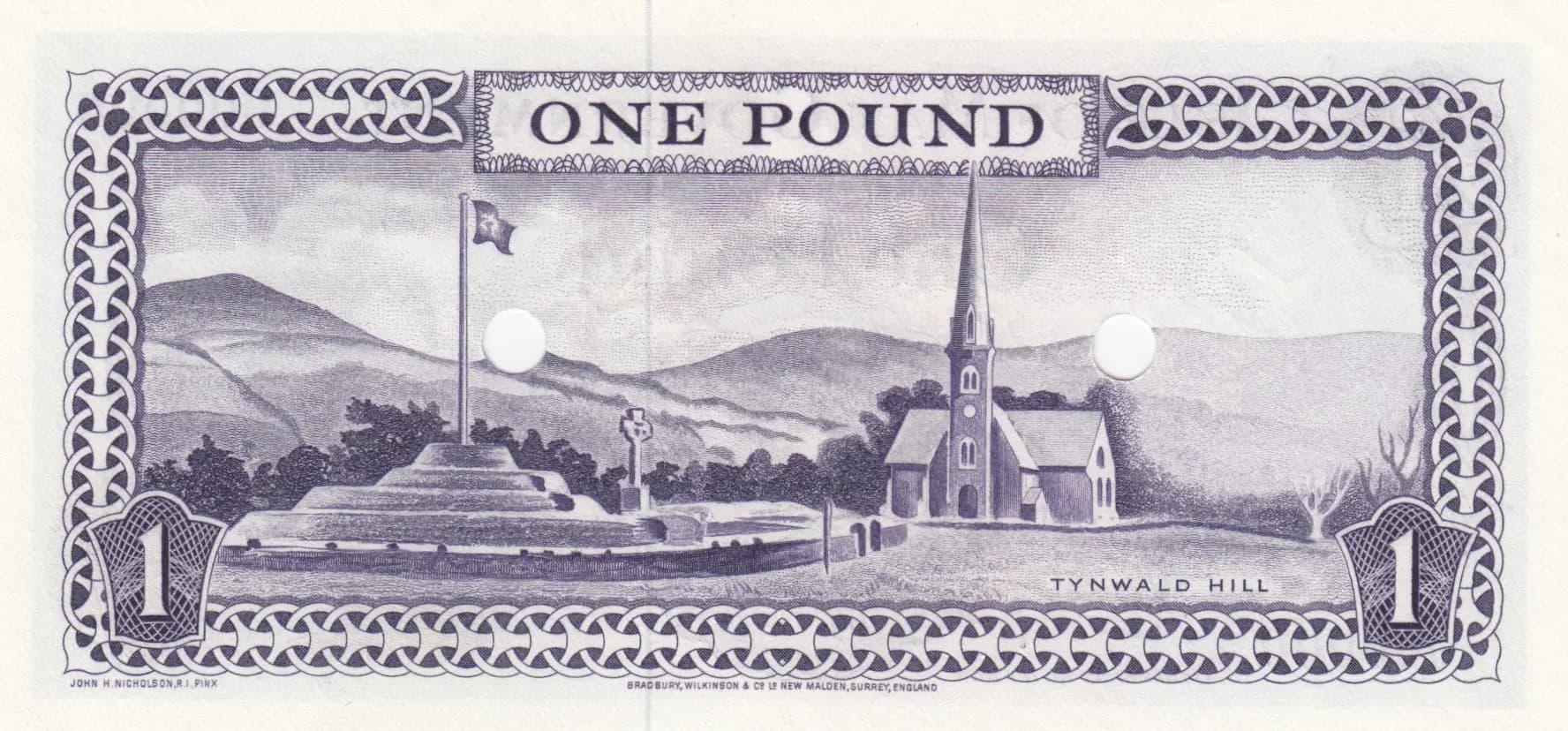
This is a 1961 Isle of Man Government one pound specimen note in pristine uncirculated condition, featuring a young portrait of Queen Elizabeth II on the obverse and the historic Tynwald Hill on the reverse. The note displays exceptional clarity in its purple and multicolor engraved design, with the characteristic specimen markings (000000 serial numbers and punch holes) that identify it as a bank archive or presentation piece rather than circulated currency. As a 1961 specimen from the inaugural issue of Isle of Man notes, this represents an important piece of early Commonwealth currency history.
common. While this is a 1961 specimen note from the inaugural Isle of Man issue, eBay sales data shows UNC specimens selling in the $120-$200 range (2015-2020), which is modest and consistent with readily available notes. The PMG population report indicates multiple variants (P-25a, P-25b, P-25cts, P-25s1, P-25s3) exist, suggesting reasonable production quantities. Specimen notes of this era, while not circulated, were produced in sufficient quantities that they remain relatively accessible to collectors. The note is not scarce despite its age and historical interest.
This note was issued in 1961 at the beginning of Isle of Man's independent banking operations, featuring imagery that celebrates the island's constitutional heritage and British Crown connections. The obverse depicts the young Queen Elizabeth II, reigning over the British Commonwealth, while the reverse prominently features Tynwald Hill—the historic site of the Tynwald ceremony, where Manx laws have been promulgated since the 14th century, symbolizing the island's distinct legal and governmental identity within the Crown Dependencies. The Isle of Man Government's issuance of its own currency during this period reflected the island's growing autonomy in financial and economic matters.
The obverse presents an ornate classical banknote design centered on the Isle of Man coat of arms (Triskele, three-legged symbol) positioned centrally with the Latin motto 'QUOD SECRERIS' on a decorative seal. The portrait of Queen Elizabeth II appears on the right side in formal profile, facing left, rendered in the refined engraving style typical of 1961 currency portraiture. The design incorporates elaborate Celtic-inspired and geometric decorative elements—including Celtic knot patterns, spiral scroll ornaments, and diamond-shaped motifs—in purple, pink, and green tones on a multicolor underprint. The reverse depicts a detailed landscape engraving of Tynwald Hill, the stepped pyramidal stone monument central to Manx governance, shown with a church building and spire, flags, rolling hills, and vegetation in the background. Celtic knot borders frame the top and bottom of the reverse, reinforcing the island's cultural identity. Both sides feature fine line engraving work and security elements including watermark positions marked by circular white areas.
FRONT: 'ISLE OF MAN GOVERNMENT' (issuing authority); 'PROMISES TO PAY THE BEARER ON DEMAND AT MY OFFICE IN THE ISLE OF MAN BANK LIMITED' (promise clause); 'One Pound' (denomination); 'For the Government.' (authorization); 'LIEUTENANT GOVERNOR' (official signature); '000000' (specimen serial number, repeated twice); 'QUOD SECRERIS' (Latin, 'What you keep secret' - likely part of the coat of arms motto). BACK: 'ONE POUND' (denomination); 'TYNWALD HILL' (landmark identification); 'JOHN H NICHOLSON & PINK' (engravers); 'BRADBURY, WILKINSON & CO LTD NEW MALDEN, SURREY, ENGLAND' (printer); '1' (denomination indicators).
Intaglio (steel plate engraving) by Bradbury, Wilkinson & Co Ltd of New Malden, Surrey—the renowned British security printer responsible for Commonwealth banknotes. The engraving was executed by John H Nicholson & Pink. The fine detail, complex interlaced patterns, and multi-color printing on this note are characteristic of mid-20th century high-security banknote production. The specimen marking punches visible on both sides are consistent with archive or presentation specimens.
This specimen is catalogued as P-25as per the Pick catalog. The 's' designation indicates specimen status. Based on the PMG population data, this Pick number (P-25) has at least five catalogued varieties distinguished by printer details and watermark configurations. The visual analysis confirms this is a Bradbury Wilkinson & Co (BWC) printing. The specimen designation, indicated by the punch holes and 000000 serial numbers, distinguishes it from circulation issues P-25a and P-25b. The specific variety within the specimen classification (whether P-25s1 or P-25s3) would require additional details such as precise signature variants or serial numbering patterns not fully discernible from the provided images.