20 rials 1974
Market Prices
3 salesAbout This Note
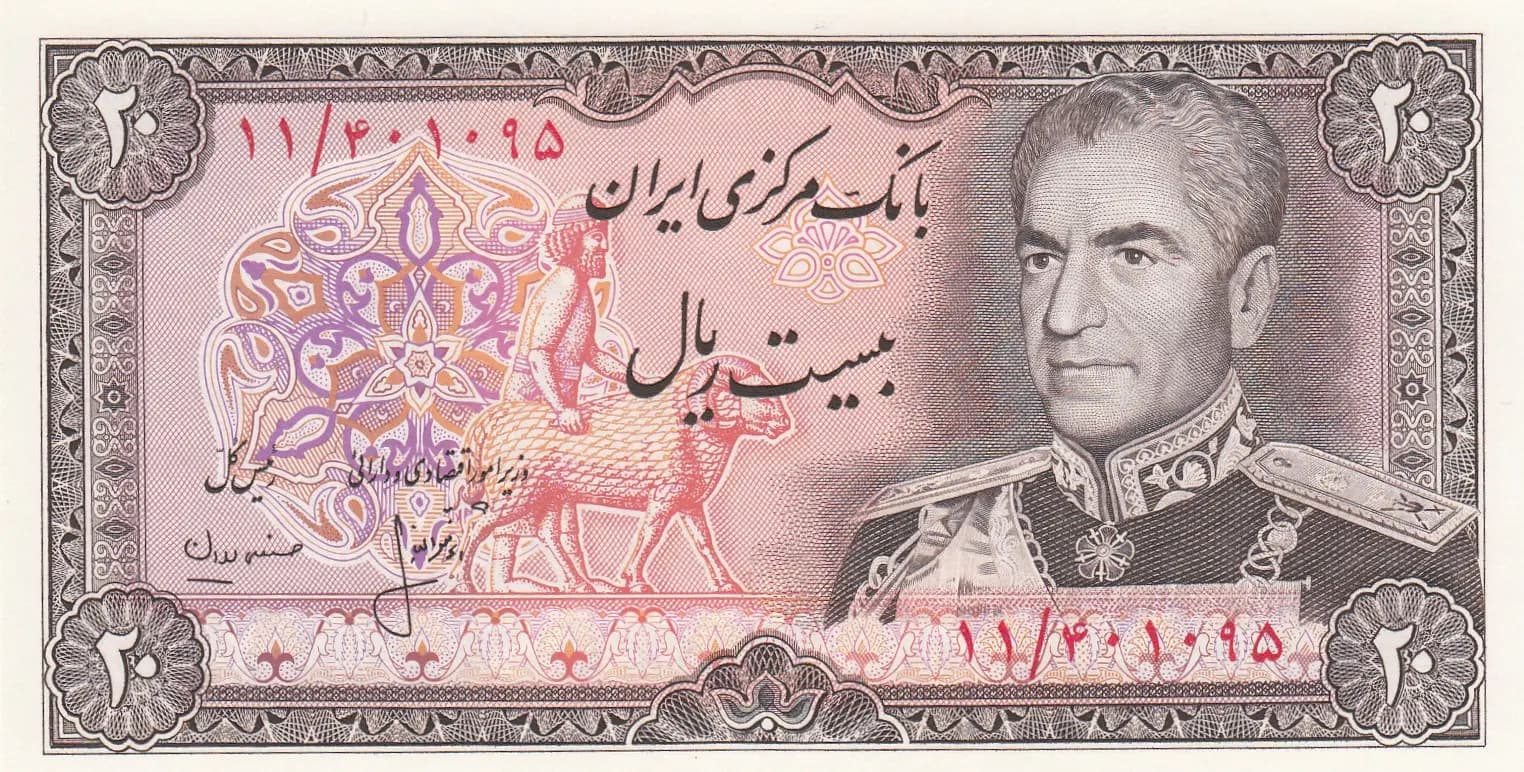
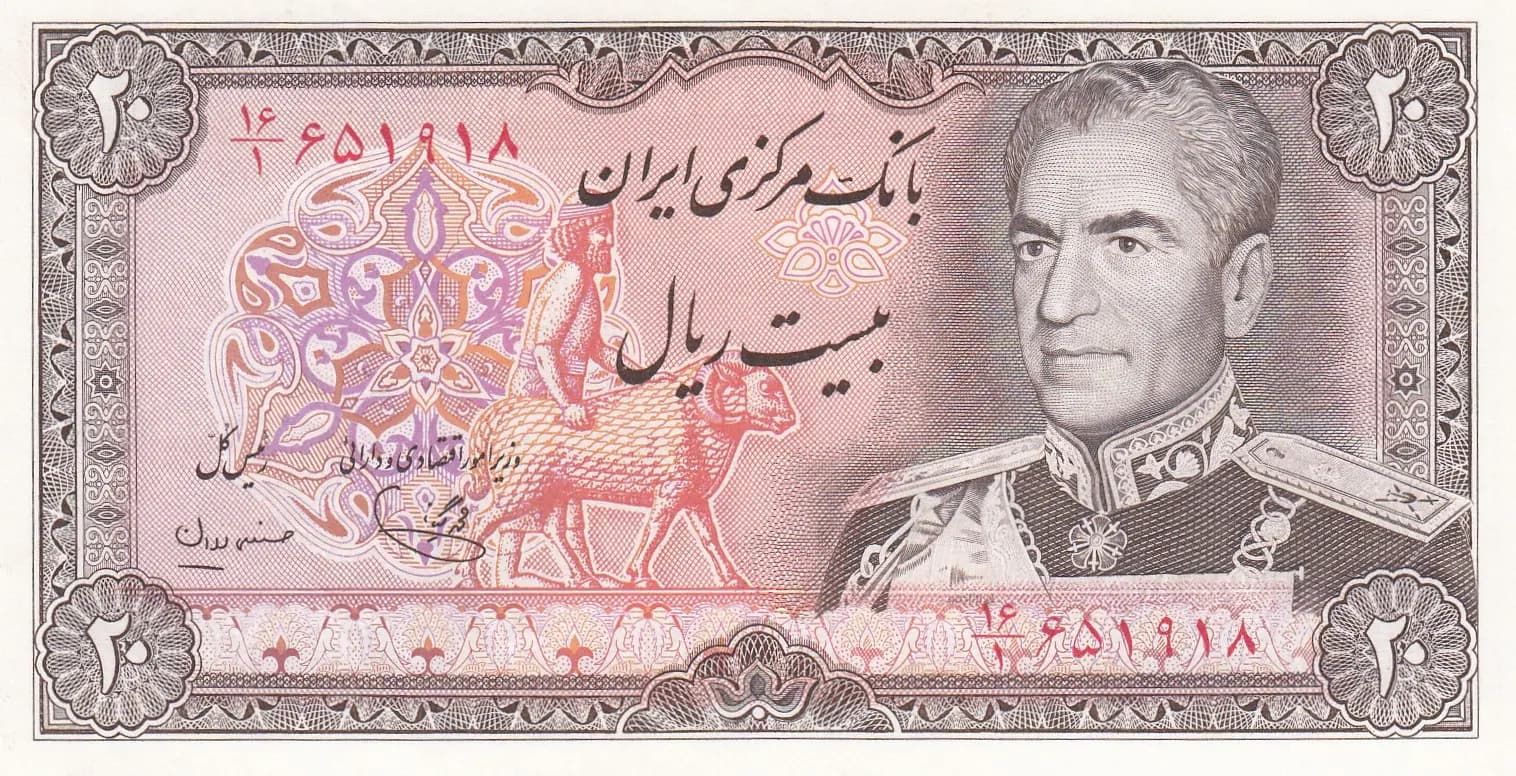
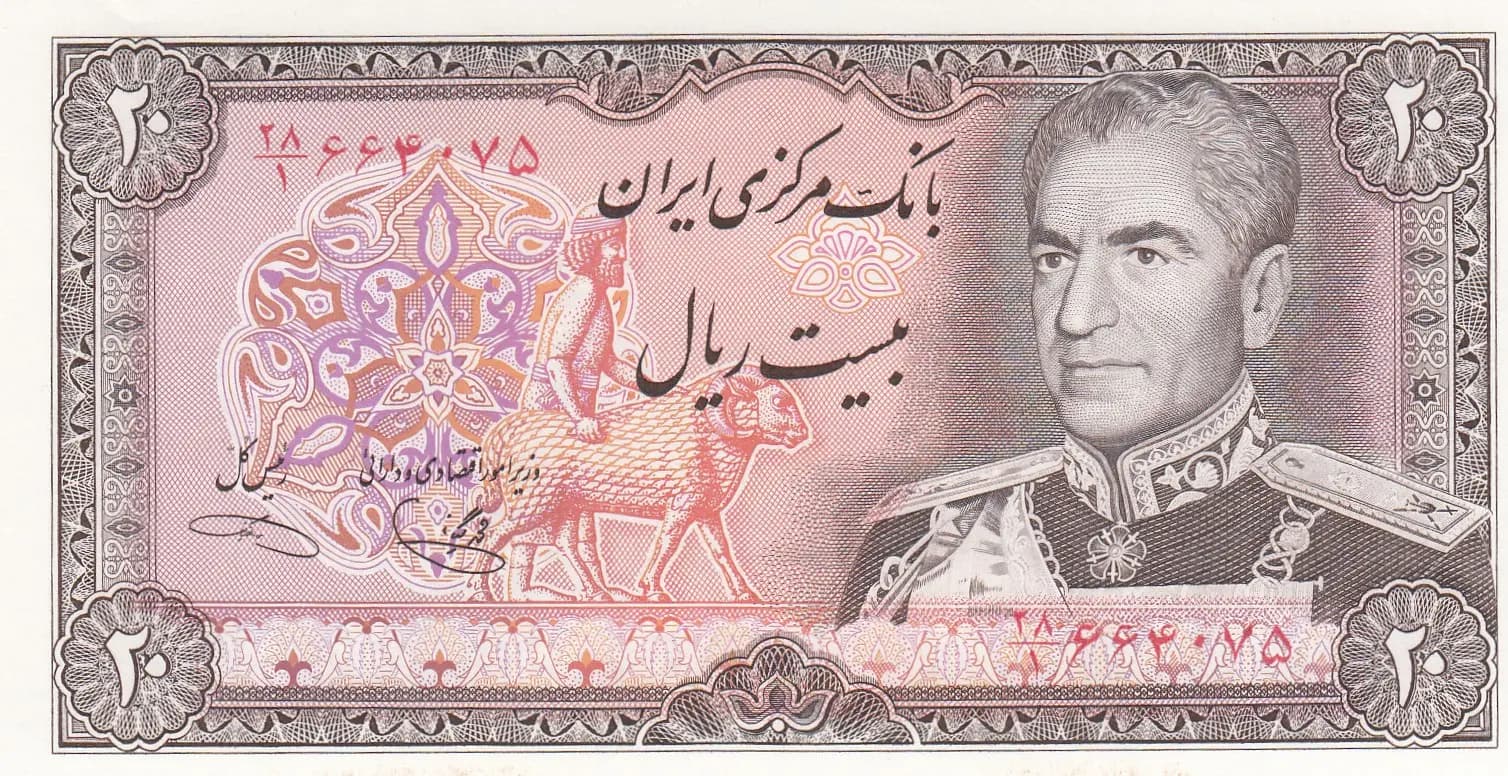
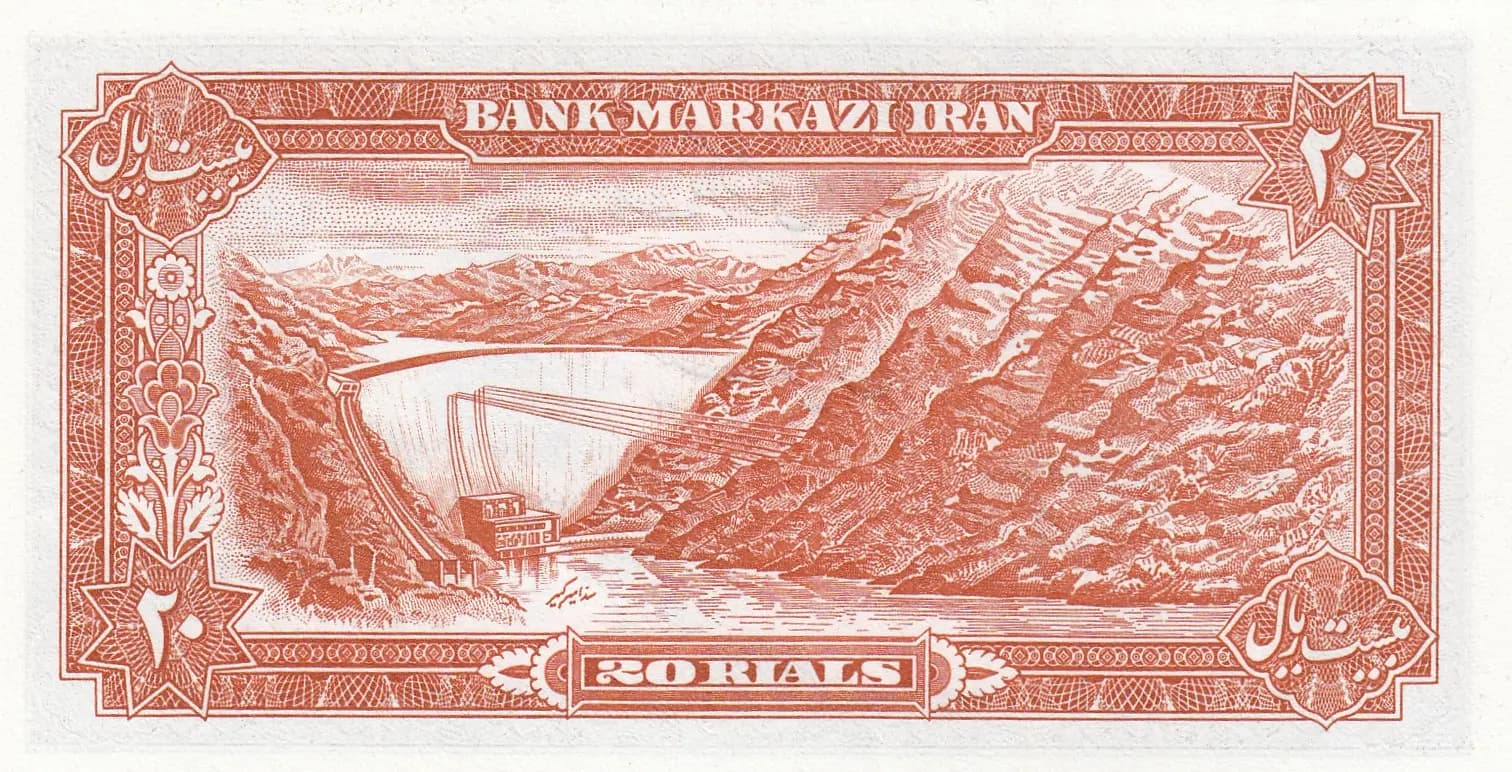
This is an uncirculated 1974 Iranian 20 Rials note (Pick P-100c) issued by Bank Markazi Iran, displaying crisp condition with no visible wear. The obverse features Shah Mohammad Reza Pahlavi in formal military dress uniform accompanied by an ornate Persian lion motif in pink and purple tones, while the reverse showcases a detailed engraving of the Amir Kabir Dam near Karaj set within a mountainous landscape rendered in warm brown tones. The note exemplifies mid-1970s Iranian banknote design with its sophisticated combination of portraiture, engineering achievement imagery, and intricate Persian geometric ornamentation.
Common. This note from the 1974-1979 issuance period represents a standard regular issue from Bank Markazi Iran with substantial print runs. eBay market data shows UNC specimens selling in the $2.80 to $4.50 range historically, with 2019 catalog values at $12 UNC, confirming steady collector demand but no scarcity premium. The Pick P-100c designation indicates this is among multiple cataloged variants of the 20 Rials series, all of which remain readily available in the collector market.
This note was issued during the reign of Mohammad Reza Shah Pahlavi, the last shah of Iran, in the mid-1970s when the country was experiencing significant modernization and oil wealth-driven development projects. The prominent depiction of the Amir Kabir Dam on the reverse reflects Iran's investment in hydroelectric infrastructure and engineering prowess during this period of the Pahlavi era. The formal military portraiture of the Shah and the emphasis on national infrastructure symbolized the regime's vision of Iran as a modern, technologically advancing nation.
The obverse features a formal right-facing profile portrait of Shah Mohammad Reza Pahlavi in full ceremonial military dress with decorated shoulder boards, positioned at the right of the note against a pink background. The left side displays an ornate Persian design element featuring a lion motif rendered in purple and pink geometric patterns, reflecting traditional Iranian artistic heritage. The note's frame consists of an elaborate Islamic geometric border with rosette patterns adorning all four corners and fine decorative black and white line work throughout. The reverse depicts the Amir Kabir Dam (also known as the Dariush Dam) located near Karaj in a mountainous river valley, rendered through fine engraving in brown and rust tones. The dam is shown with radiating lines suggesting water discharge, flanked by steep mountain terrain and associated infrastructure buildings, all contained within an equally ornate decorative border featuring eight-pointed star emblems in the top corners and intricate floral and geometric patterns.
Front: Persian inscriptions reading 'بانک مرکزی ایران' (Bank Markazi Iran / Central Bank of Iran) and 'بیست ریال' (Twenty Rials). Back: English inscriptions reading 'BANK MARKAZI IRAN' (Central Bank of Iran) and '۲۰ RIALS' (20 Rials in Persian/English combined format).
Intaglio engraving (line engraving and recess printing) as evidenced by the fine detail work, complex geometric patterning, and dimensional line structures visible throughout both sides. The catalog reference identifies TDLR (Thomas De La Rue) as the printer, one of the world's premier security printers. Security features include a yellow security thread and watermark of young Shah Pahlavi, though these are not fully visible in the provided images.
This note is cataloged as Pick P-100c, indicating it is one of at least three identified varieties within the base Pick number P-100 for the 20 Rials denomination. PMG population reports show P-100a1 as a variant, suggesting differences in signature combinations, security features, or printing characteristics exist within this series. Without visible signature details or serial number prefixes clearly discernible in the provided images, the specific distinguishing features of the P-100c variety cannot be definitively confirmed from the visual analysis alone, though the printing appears consistent with TDLR production standards.