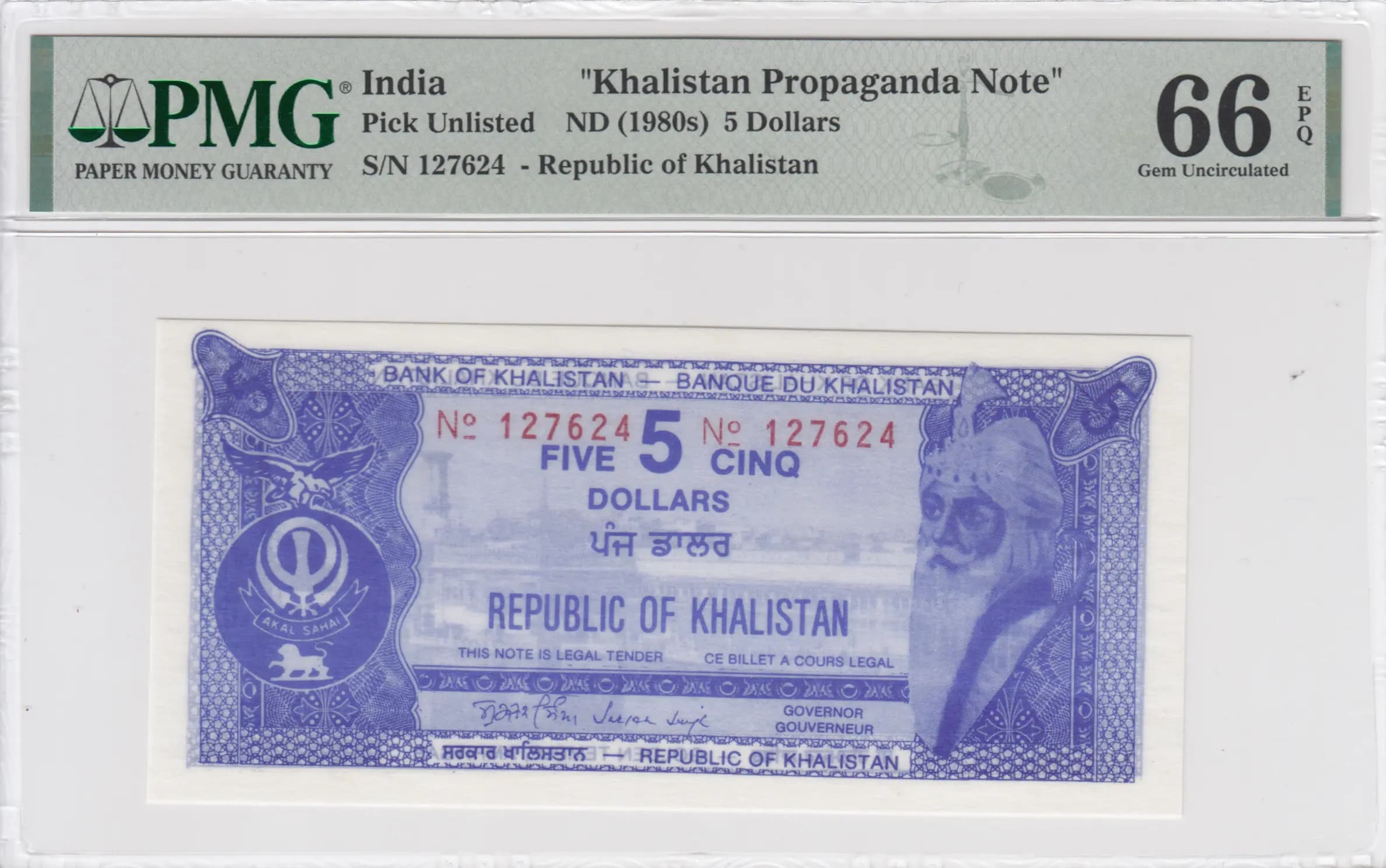
5 dollars 1980's
About This Note
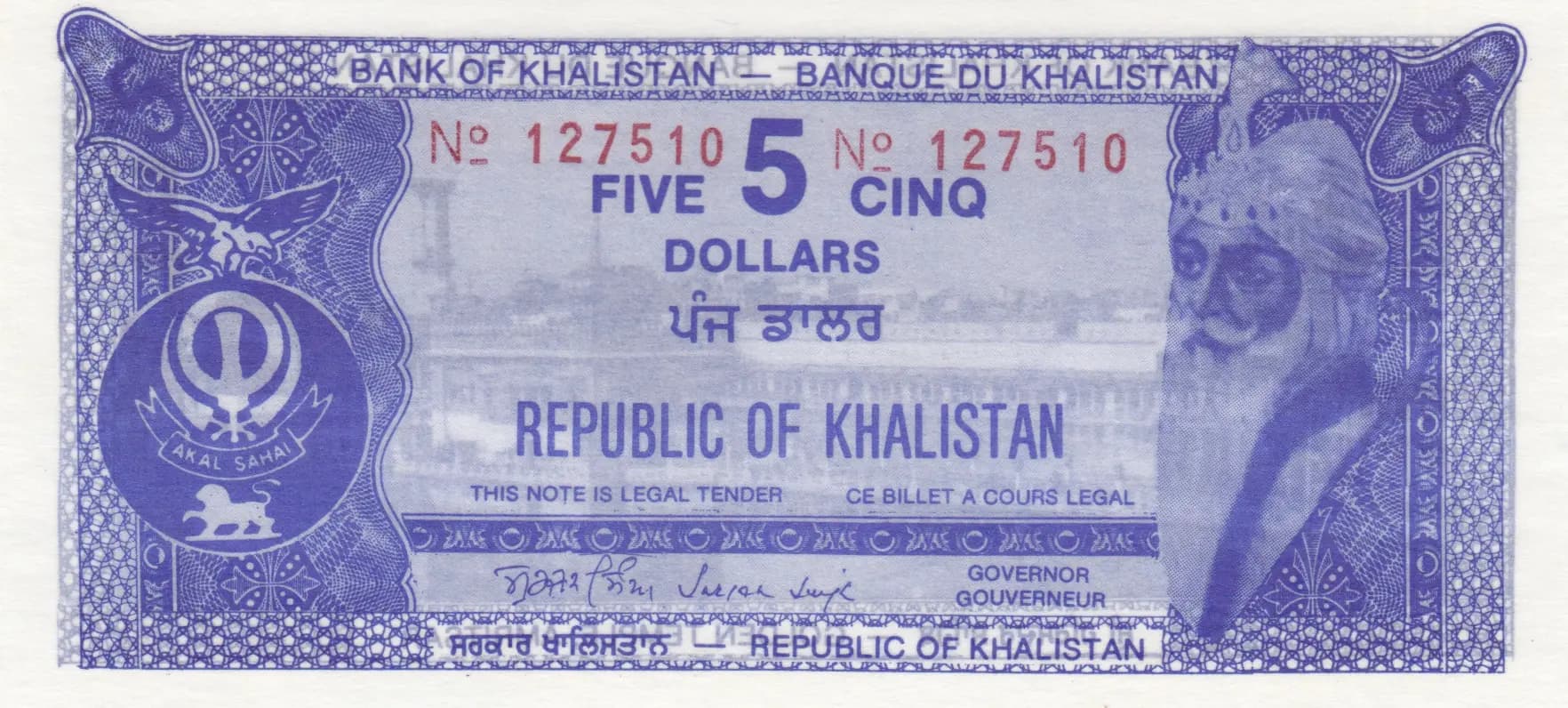
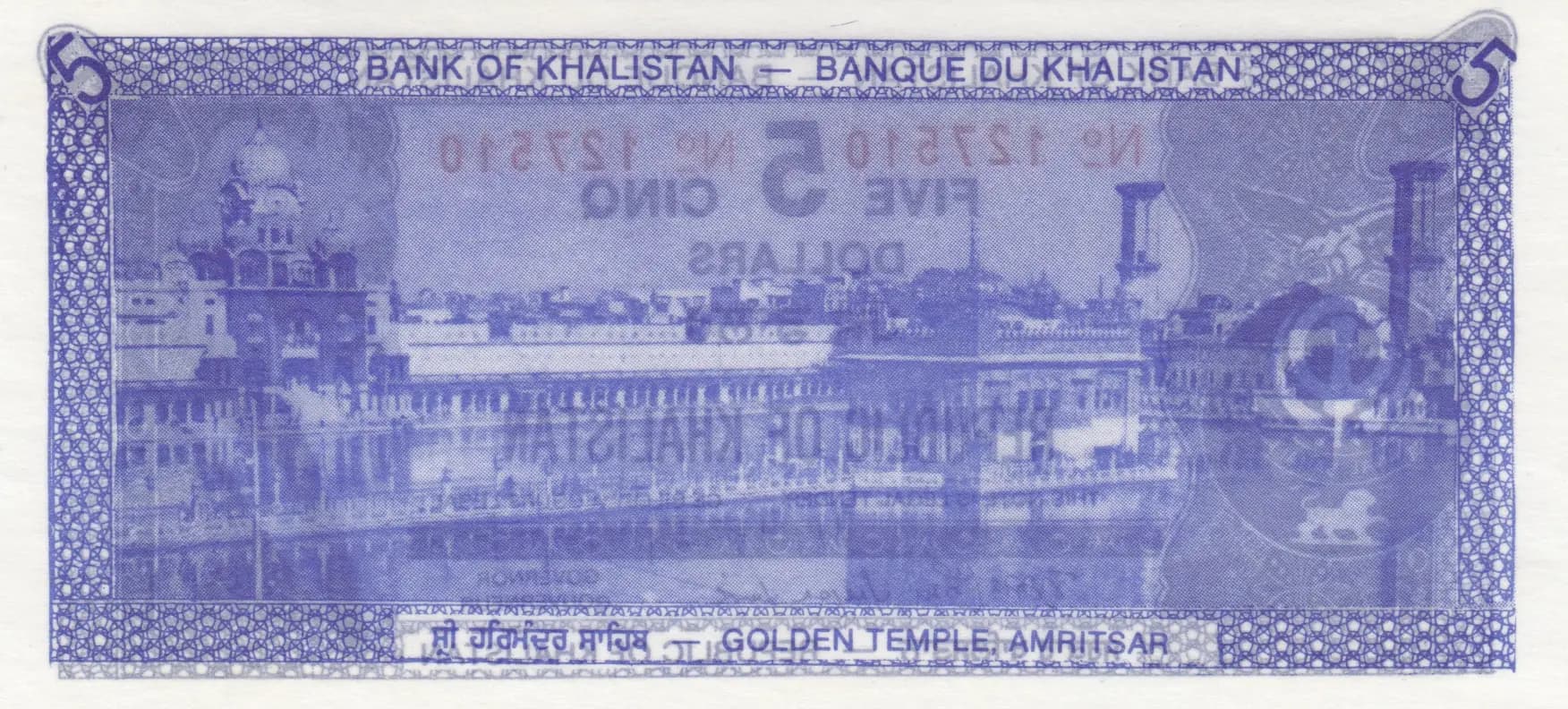
This is a 5 Dollar note from the Bank of Khalistan issued in 1980, rendered in striking blue and purple tones with intricate geometric border designs. The note features the Khanda symbol and a portrait on the obverse, with the iconic Golden Temple of Amritsar depicted on the reverse. Despite showing signs of age with minor fading and discoloration consistent with handling, the note remains in uncirculated condition with no major damage, making it an interesting artifact of this unrecognized political entity's numismatic output.
Uncommon. This note is from an unlisted Pick catalog number representing a politically symbolic rather than officially recognized currency. Khalistan banknotes were produced in limited quantities as political artifacts during the 1980s independence movement and were never in actual circulation as legal tender. The specific serial number 127510 and UNC condition suggest this was part of a restricted print run. These notes remain scarce in the collector market, particularly in high grades, as they were never widely distributed or retained by numismatists until decades later.
This banknote represents the currency aspirations of the Khalistan independence movement during the 1980s, a period of significant political and separatist activity in Punjab. The prominent display of the Golden Temple (Sri Harmandir Sahib) and Sikh religious symbolism reflects the cultural and religious foundations of the Khalistan movement. The bilingual inscriptions in English and French, along with Punjabi in Gurmukhi script, underscore the political nature of this currency as a symbolic representation rather than functional legal tender of any recognized nation-state.
The obverse features a left-facing bearded man in profile on the right side, representing a significant figure in Khalistan political history, framed by a circular emblem containing the Khanda—the sacred Sikh symbol consisting of crossed curved swords (talwars) encircling a chakra. Below the Khanda is a lion symbol, likely representing strength and sovereignty. The design employs symmetrical geometric patterns in the borders and incorporates watermark security features. The reverse depicts the Sri Harmandir Sahib (Golden Temple) complex in Amritsar with its characteristic golden dome and multi-domed architectural features, rendered as a detailed cityscape with multiple building structures and a minaret visible to the right. The consistent use of blue and purple coloration across both sides creates visual coherence.
FRONT SIDE: 'Bank of Khalistan - Banque du Khalistan' (English/French), 'FIVE DOLLARS / CINQ DOLLARS' (English/French), 'ਪੰਜ ਡਾਲਰ' (Punjabi: Five Dollars), 'REPUBLIC OF KHALISTAN / ਸ਼੍ਰੀ ਖਾਲਿਸਤਾਨ' (English/Punjabi), 'THIS NOTE IS LEGAL TENDER / CE BILLET A COURS LEGAL' (English/French), 'GOVERNOR / GOUVERNEUR' (English/French), Serial Number '№ 127510'. BACK SIDE: 'BANK OF KHALISTAN - BANQUE DU KHALISTAN' (English/French), 'GOLDEN TEMPLE, AMRITSAR' (English), 'ਸ਼੍ਰੀ ਹਰਿਮੰਦਿਰ ਸਾਹਿਬ' (Punjabi: Sri Harmandir Sahib).
The note exhibits characteristics of intaglio (engraved) printing, evidenced by the fine line work, intricate geometric border patterns, and detailed landscape rendering on the reverse. The watermark visible behind both the portrait and central images indicates multi-stage security printing. The fading observed in background areas and the overall print quality suggest production by a specialized security printer, though the specific printer for Khalistan notes is not definitively documented in standard references.
Serial number 127510 is noted on the obverse. The note displays bilingual French-English text alongside Punjabi Gurmukhi script, which may indicate a specific variety or print edition intended for broader appeal. The signature area marked 'GOVERNOR' on the front appears unsigned or with a facsimile signature, consistent with many commemorative or symbolic issues. No documented varieties with different portraits, denominations, or overprints are currently known for this specific 5 Dollar denomination.