10 rupees 1962
Market Prices
22 salesAbout This Note
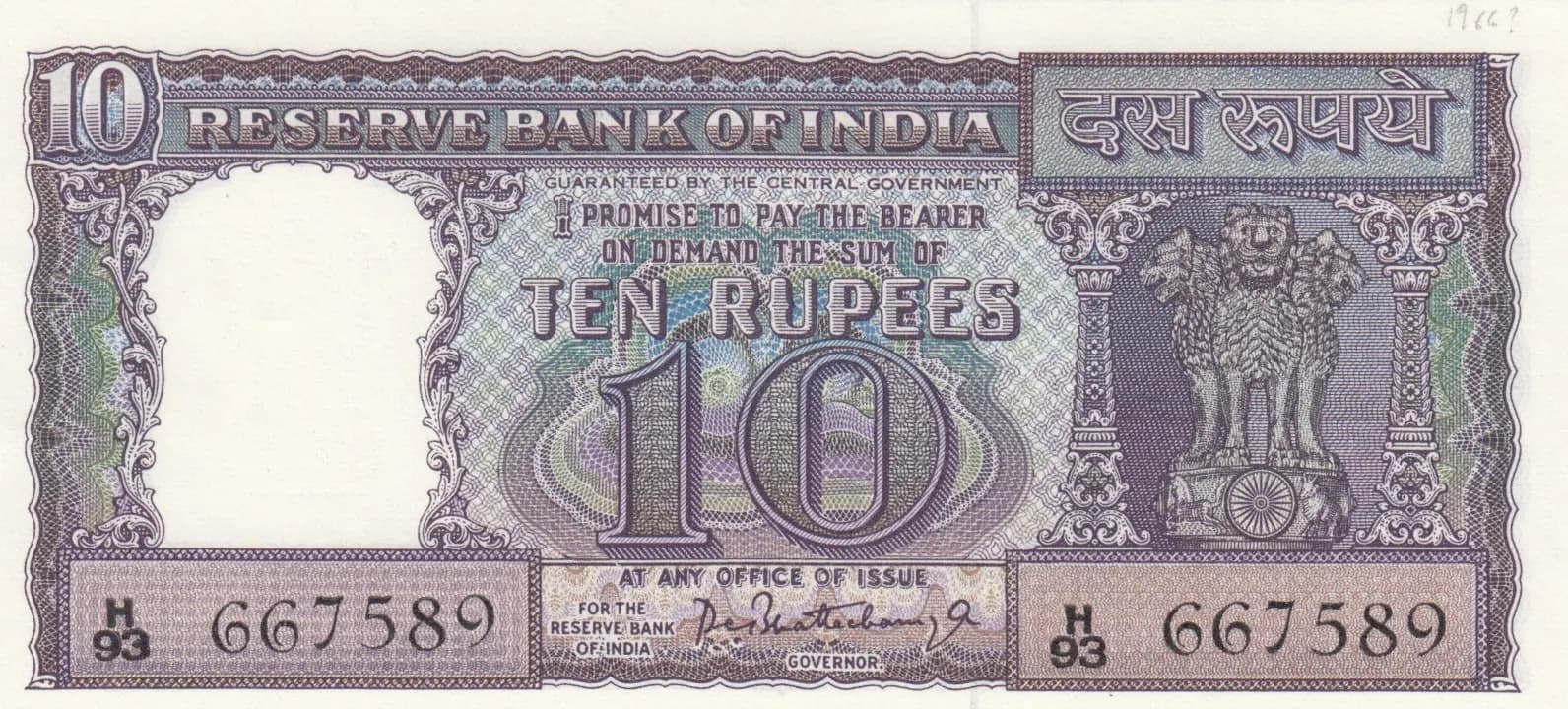
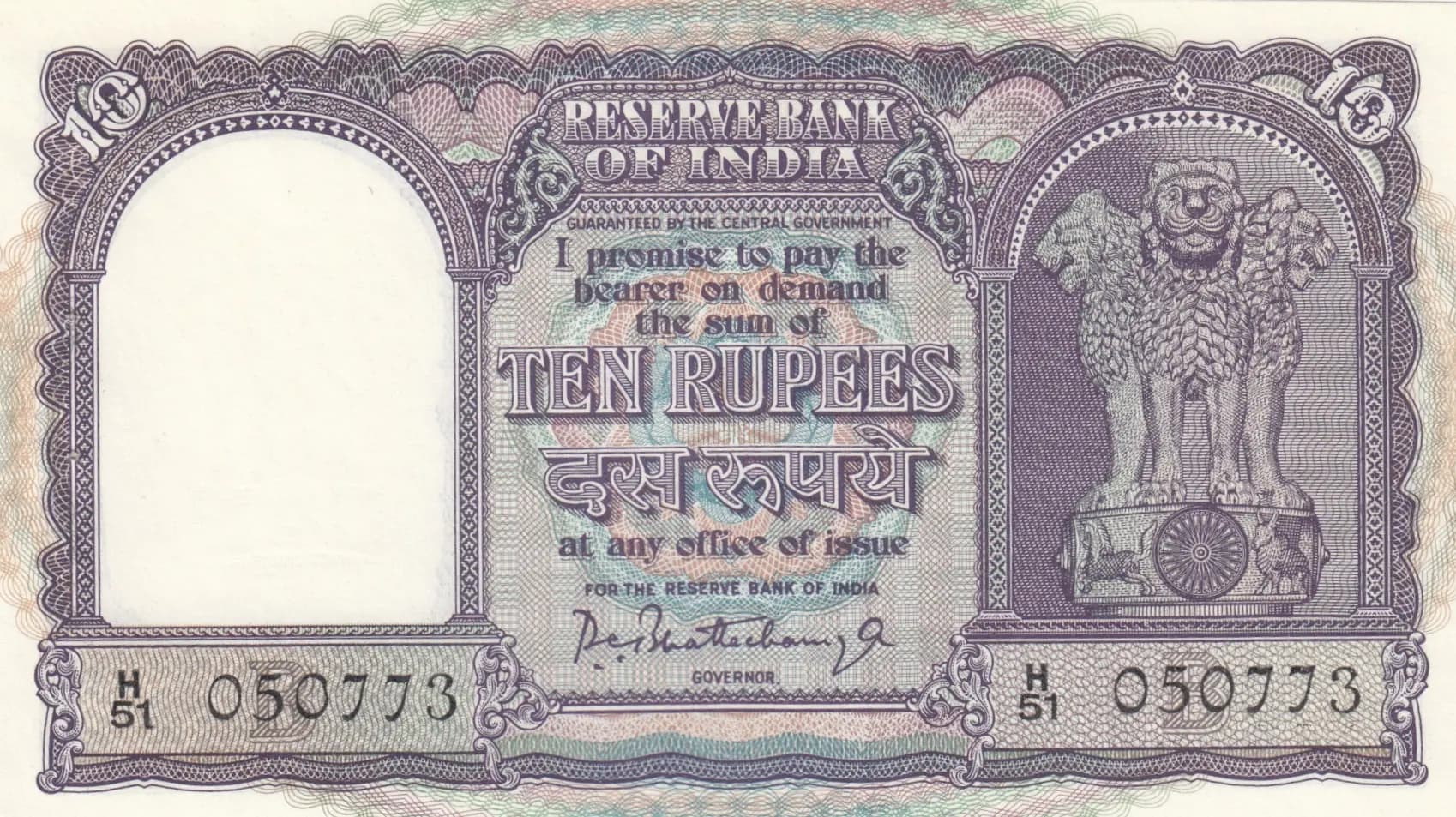
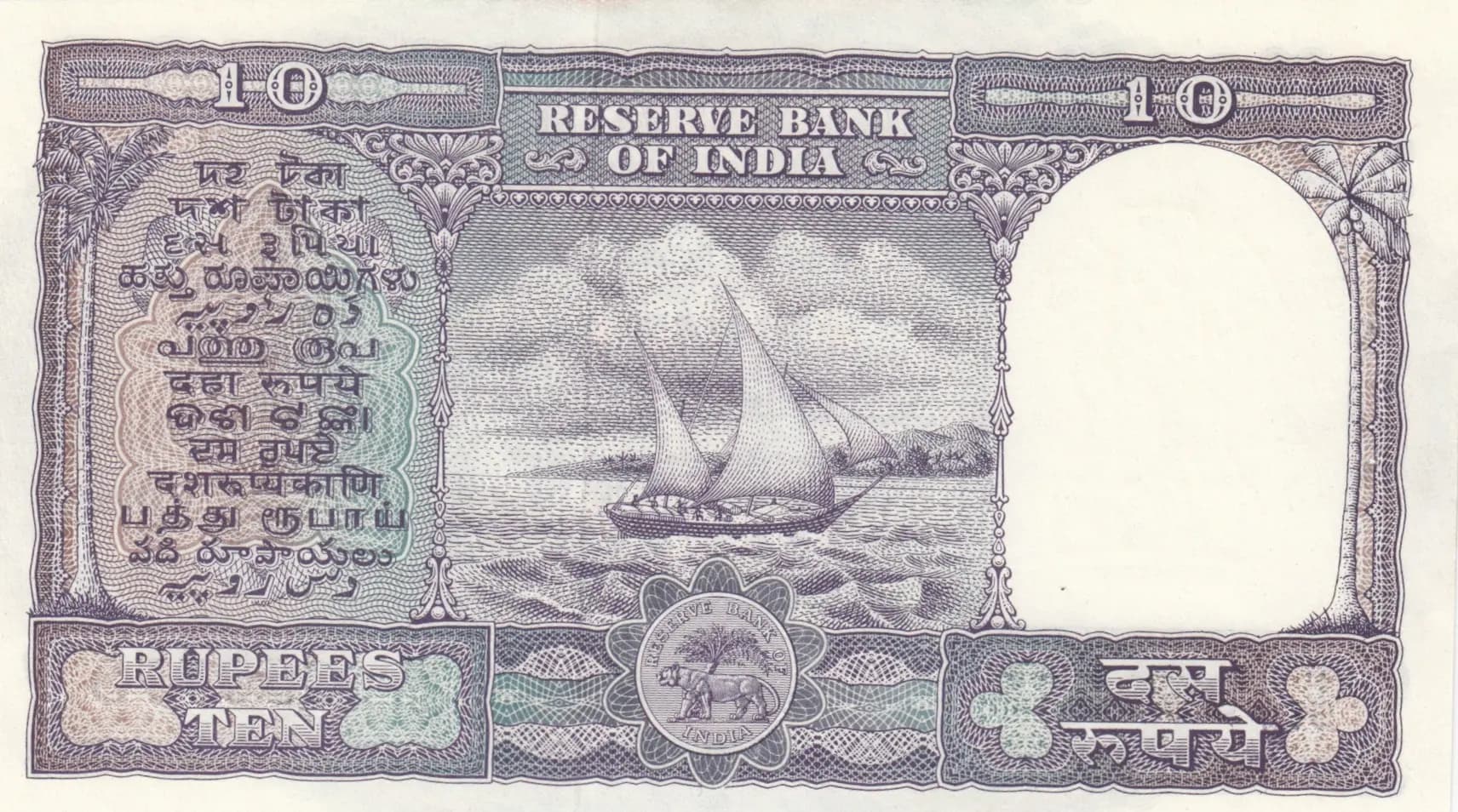
This is an uncirculated 1962 Reserve Bank of India 10 Rupees note (Pick P-40b) featuring the iconic Lion Capital of Ashoka on the obverse and a traditional dhow sailing vessel on the reverse. The note displays pristine condition with sharp printing throughout, ornate decorative borders, and bilingual English-Hindi inscriptions with the correct Hindi plural 'Rupaye,' making it a notable example of India's early post-independence currency. The inclusion of regional script text on the reverse reflects the note's role in India's multilingual nation-building period.
Common. This note circulated widely during the 1960s and remains plentiful in the numismatic market. eBay sales data shows consistent pricing in the $3–$21 range depending on condition, with UNC examples averaging around $12–$15. The 2019 catalogue valuation of $15 for UNC specimens, combined with regular market sales activity, confirms this as a common date and variety for collectors.
Issued in 1962, this note commemorates independent India's cultural heritage through the Lion Capital of Ashoka, symbolizing the nation's Buddhist legacy and connection to ancient Indian governance. The dhow depicted on the reverse represents India's maritime trade history and coastal economic significance. This series marked a transition in Indian currency design, incorporating both English and Hindi text alongside regional scripts to reflect the newly unified Republic's linguistic diversity.
The obverse features the Lion Capital of Ashoka (Sarnath Museum original), depicting four lions arranged back-to-back facing cardinal directions atop a pedestal with the Ashoka Chakra (dharma wheel) beneath. The reverse displays a traditional Indian dhow or sailing vessel with multiple sails on water, accompanied by palm tree motifs, representing India's historical maritime trade routes. Both sides are framed by ornate decorative borders composed of intricate geometric and floral patterns characteristic of Indian classical design. The note incorporates a blank oval space (watermark area) on the obverse and includes a Reserve Bank of India seal on the reverse. Denomination numerals appear in the top corners of both sides. The color scheme employs purple, pink, and green tints on a cream background.
FRONT SIDE: 'RESERVE BANK OF INDIA' (English) - Reserve Bank of India; 'I promise to pay the bearer on demand the sum of' (English) - Standard promise clause; 'TEN RUPEES' (English) - Ten Rupees; 'दस रुपये' (Hindi) - Ten Rupees (correct plural form 'Rupaye'); 'at any office of issue' (English) - Redemption location; 'FOR THE RESERVE BANK OF INDIA' (English) - Authority statement; 'GUARANTEED BY THE CENTRAL GOVERNMENT' (English) - Government backing; 'GOVERNOR' (English) - Signature title (centered); Serial number with 'H' prefix. BACK SIDE: 'RESERVE BANK OF INDIA' (English) - Reserve Bank of India; 'TEN' and 'RUPEES' (English) - Denomination; '10' (Numeric) - Denomination numeral; 'दस रुपये' (Hindi) - Ten Rupees; Regional script text (likely Tamil, Telugu, Kannada, and Malayalam) arranged vertically on left side providing denomination in major Indian languages.
Intaglio engraving, the standard security printing method for Reserve Bank of India currency of this period. The fine line work, sharp denomination numerals, complex border patterns, and detailed maritime scene illustration are characteristic of high-security intaglio production. This note was likely printed by the India Government Security Press or Thomas De La Rue & Company, the primary security printers for Indian currency during the 1960s.
This is identified as Pick P-40b, distinguished by centered 'GOVERNOR' signature title (differentiating it from P-39 with title right-aligned and P-37 with English-only text). The note displays the 'H' serial number prefix and correct Hindi spelling 'Rupaye' (plural of Rupee), confirming it is not the incorrect spelling variant (P-38). The bilingual English-Hindi inscriptions on both obverse and reverse, combined with regional script text on the reverse, are standard for this issue. Serial numbers appear at bottom left and right corners.