1 rupee 1940
Market Prices
About This Note
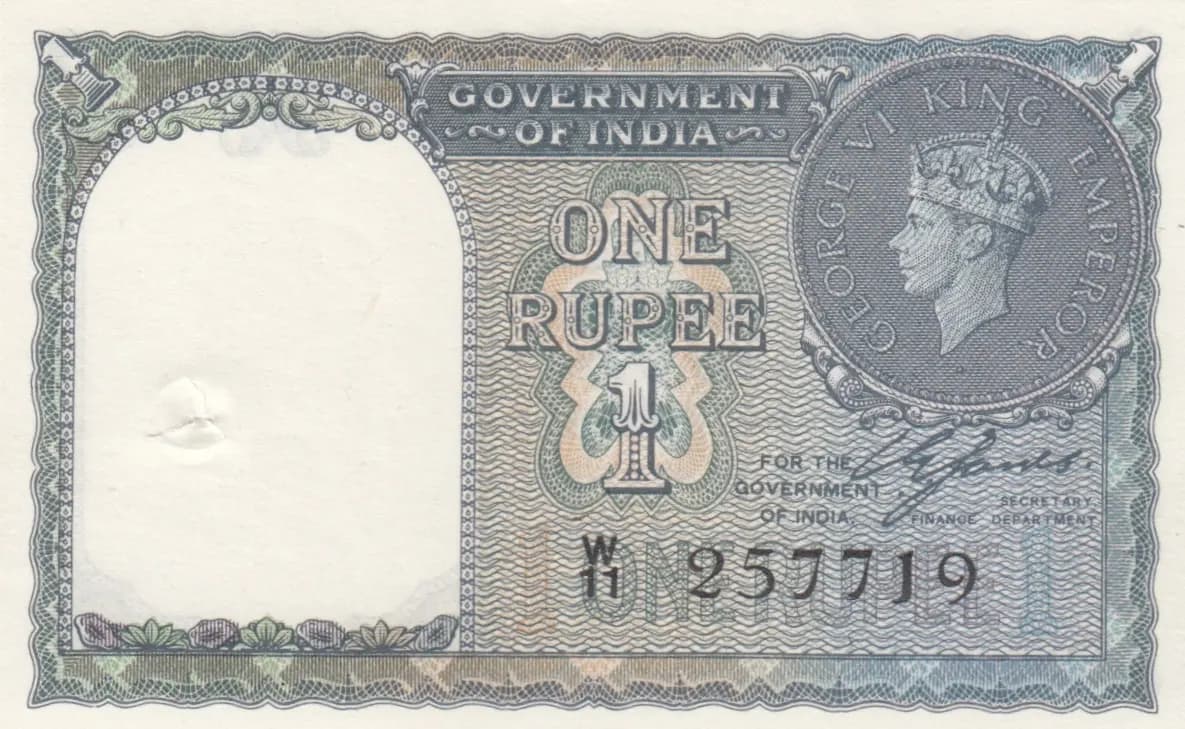
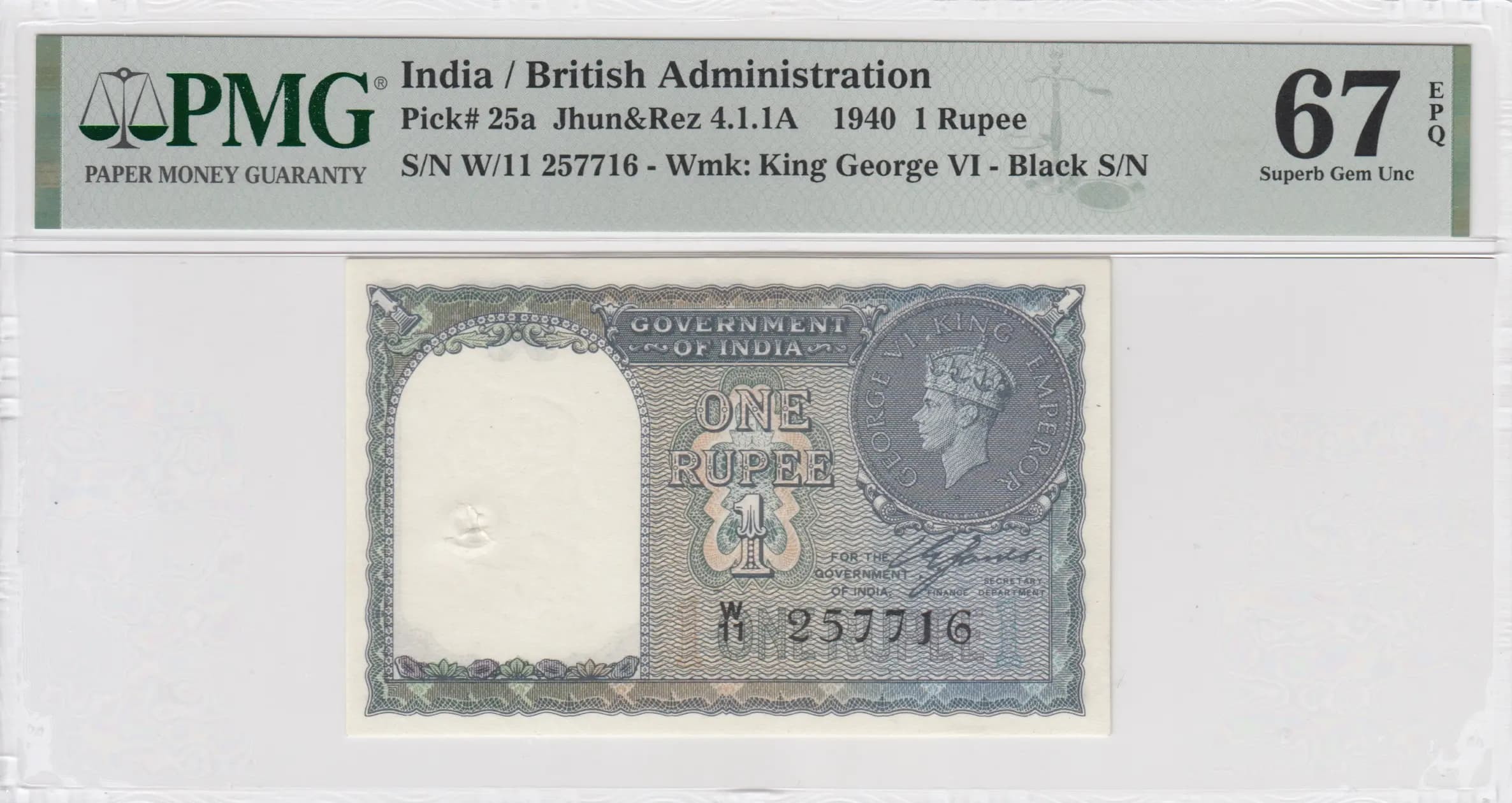
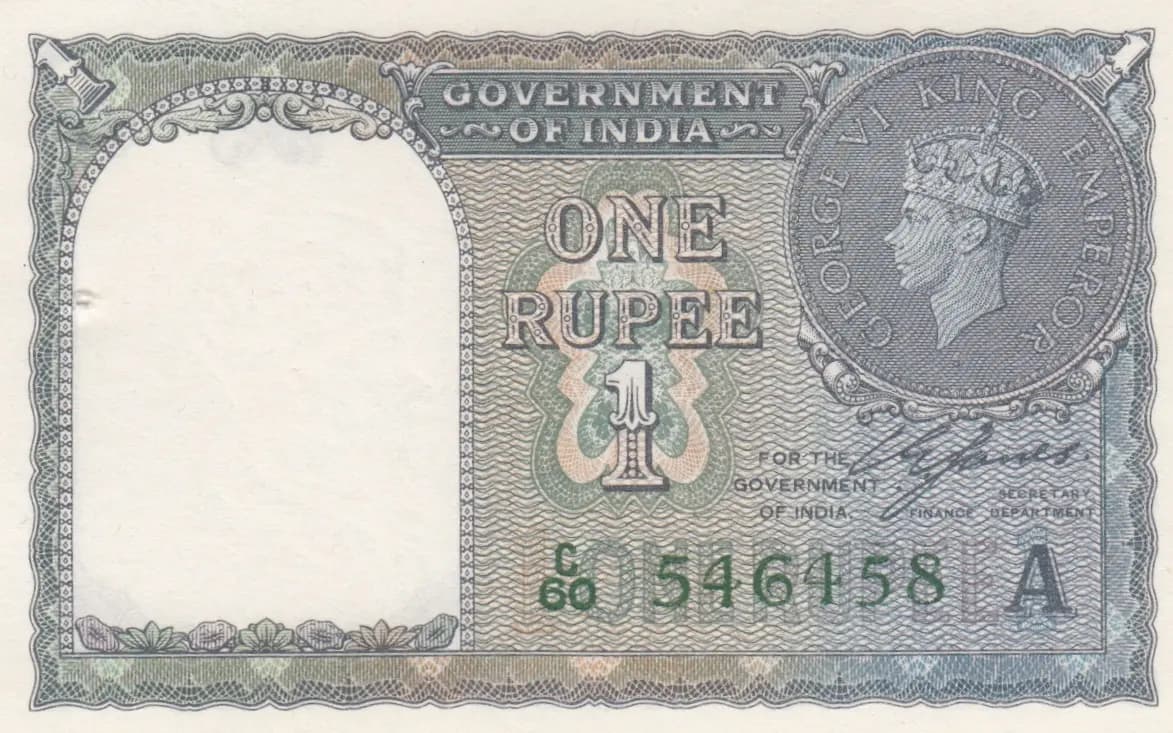
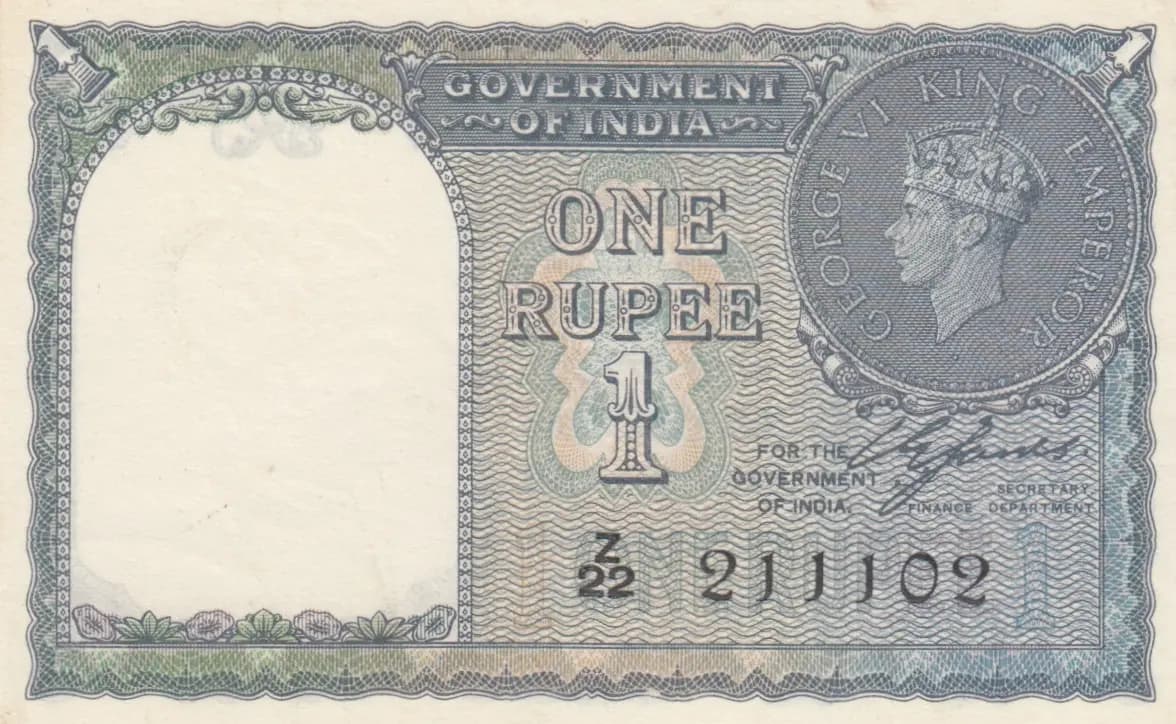
This is a Government of India 1 rupee note from 1940 (Pick P-25c) in AU condition, featuring a striking portrait medallion of King George VI in left-facing profile on the obverse. The note displays the characteristic green-gray color scheme of British Indian currency from this period, with ornate decorative borders and fine engraving work throughout. Light foxing consistent with age is visible, particularly in blank areas, but the note shows no major damage, making it a solid collector example of this early post-independence transition-era currency.
Common. The 1 rupee denomination from this period was printed in large quantities for circulation throughout British India. eBay market data shows AU specimens trading in the $25 range, with circulated examples at $8-14, indicating strong supply. The catalog values provided (2016: AU $25, VF $600, UNC $1200) likely reflect older data; modern market pricing suggests this is not a scarce variety. The Pick P-25c designation indicates this is a standard issue variant, not a rare overprint or limited release.
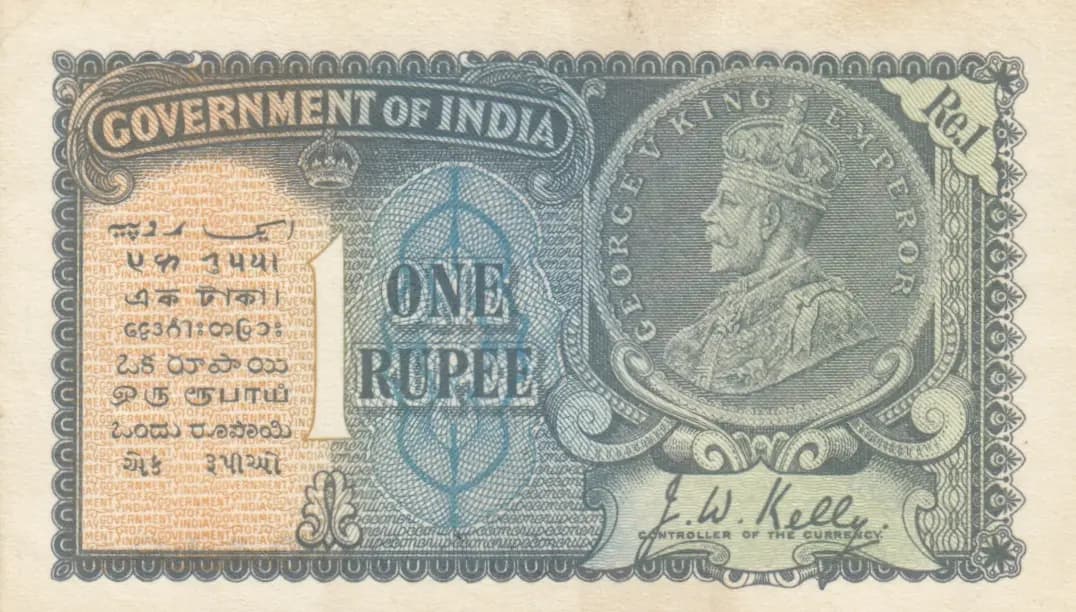
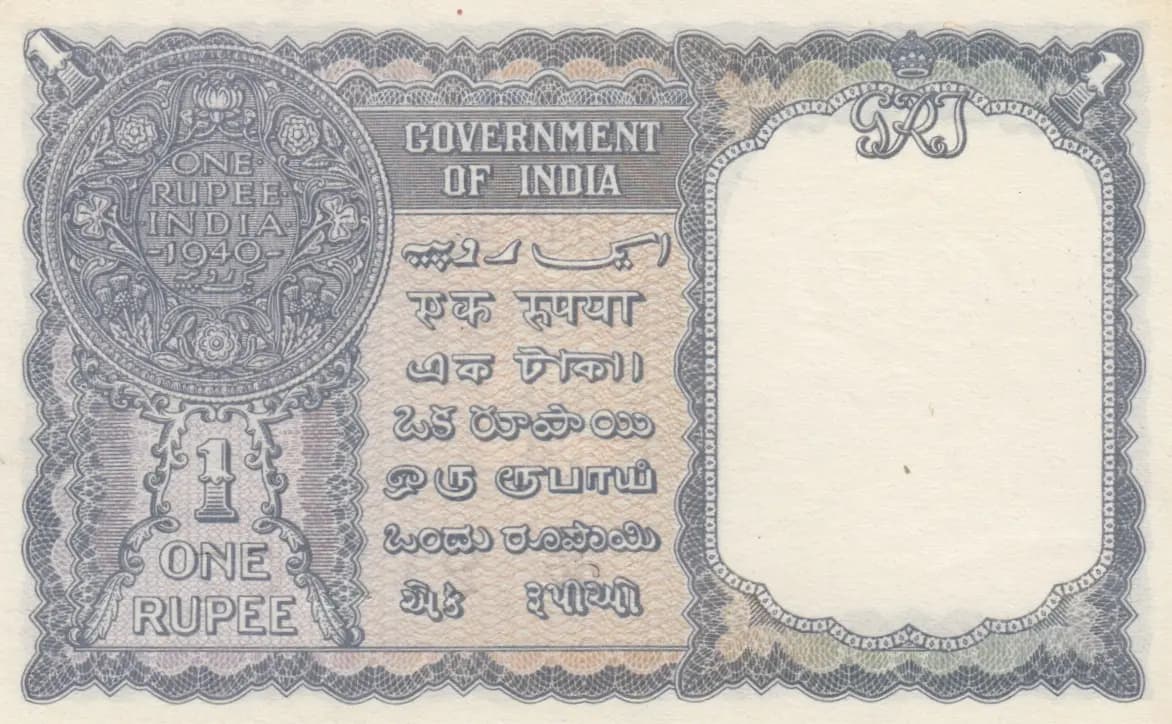
Issued during the final years of British rule in India, this 1940 note bears the portrait of King George VI, reflecting India's status as part of the British Commonwealth at that time. The reverse design incorporates text in six major Indian languages (Hindi, Urdu, Gujarati, Kannada, Tamil, and Telugu), demonstrating the Government of India's commitment to linguistic pluralism even under colonial administration. The note represents a transitional period in Indian numismatic history, issued just seven years before Indian independence in 1947.
The obverse features a left-facing profile portrait of King George VI enclosed within an ornamental circular medallion with a crown symbol positioned above. The center displays large, bold text reading 'ONE RUPEE' with a decorative numeral '1' below it. The reverse showcases an elaborate circular ornamental medallion on the left side containing the text 'ONE RUPEE INDIA 1940' with intricate floral patterning. The center of the reverse is dominated by denominations rendered in six official Indian languages arranged vertically, reflecting the multilingual character of independent India's aspirations. Both sides feature sophisticated ornamental borders with wave patterns and decorative corner flourishes. The color scheme employs gray, blue-gray, and cream tones with green highlights, creating a distinguished appearance typical of high-security currency engraving of the period.
FRONT: 'GOVERNMENT OF INDIA' (English); 'ONE RUPEE' (English); 'FOR THE GOVERNMENT OF INDIA' (English); 'SECRETARY FINANCE DEPARTMENT' (English); Serial number '22 2J11109' (Alphanumeric). BACK: 'GOVERNMENT OF INDIA' (English); 'ONE RUPEE INDIA 1940' (English); 'ONE RUPEE' (English); एक रुपया (Hindi/Devanagari: 'One Rupee'); ایک روپیہ (Urdu/Perso-Arabic: 'One Rupee'); એક ટંકા (Gujarati: 'One Rupee'); ಒಂದು ರೂಪಾಯಿ (Kannada: 'One Rupee'); ஒரு ரூபாய் (Tamil: 'One Rupee'); ఒక రూపాయి (Telugu: 'One Rupee').
Intaglio engraving (steel plate engraving), the standard security printing method for British Indian currency. The fine line work visible in the decorative borders, the detailed portrait medallion, and the intricate ornamental patterns are characteristic of high-quality intaglio production. This note was likely printed by Waterlow & Sons or De La Rue, the primary security printers for British Indian government currency during this period, though specific printer attribution would require additional documentation.
Pick P-25c is the standard cataloging designation for the Government of India 1 rupee notes from 1940. The serial number observed ('22 2J11109') indicates this is from the regular circulation issue. No overprints, signatures variations, or special markings are evident that would distinguish this as a rare variety. The PMG population report notes variants P-25A and P-25s exist (both identified as 5 Rupias from Nova Goa, suggesting possible cataloging cross-reference issues in external databases), but this specimen represents the standard P-25c variety.