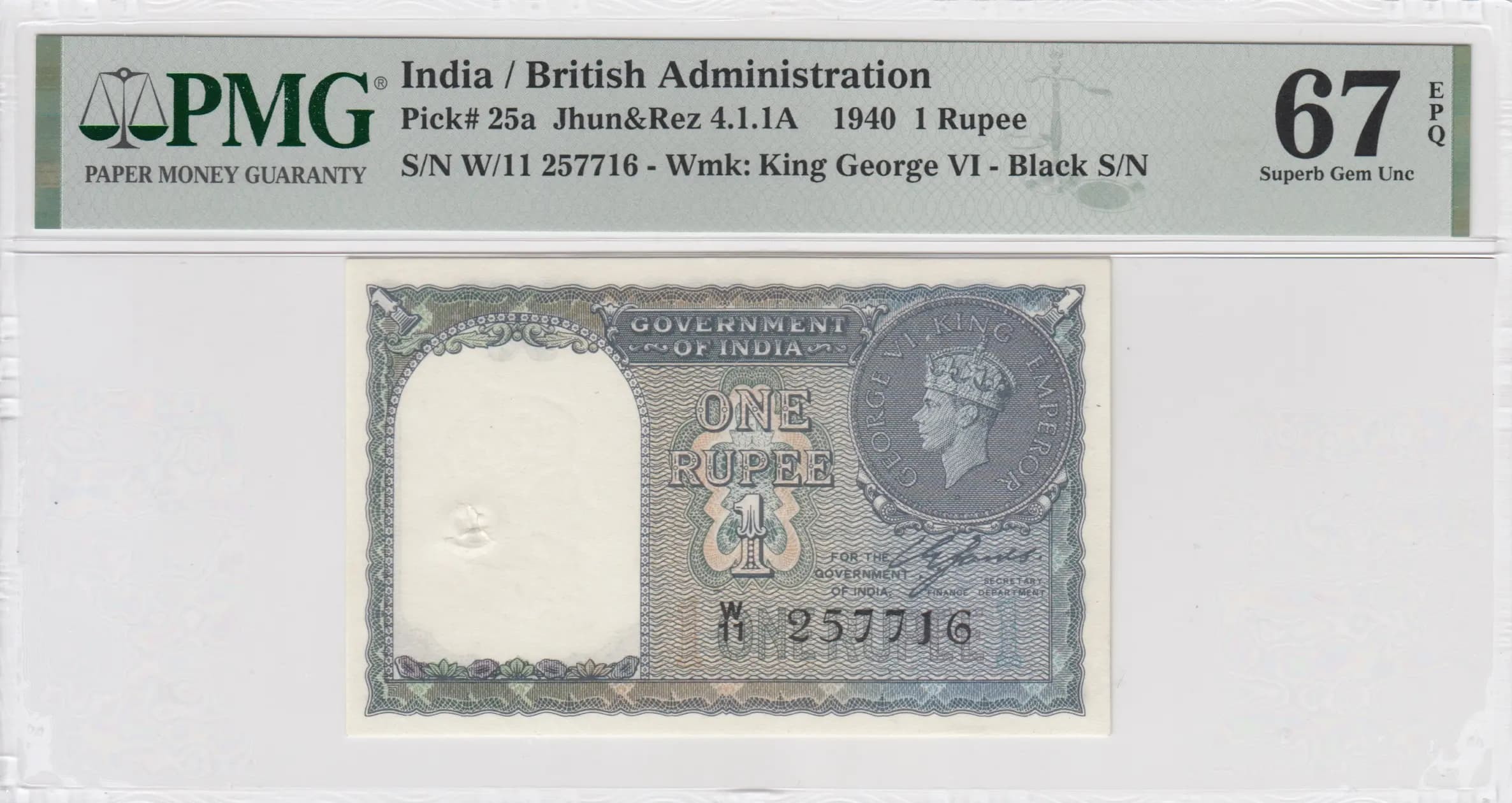
1 rupee 1940
Market Prices
113 salesAbout This Note
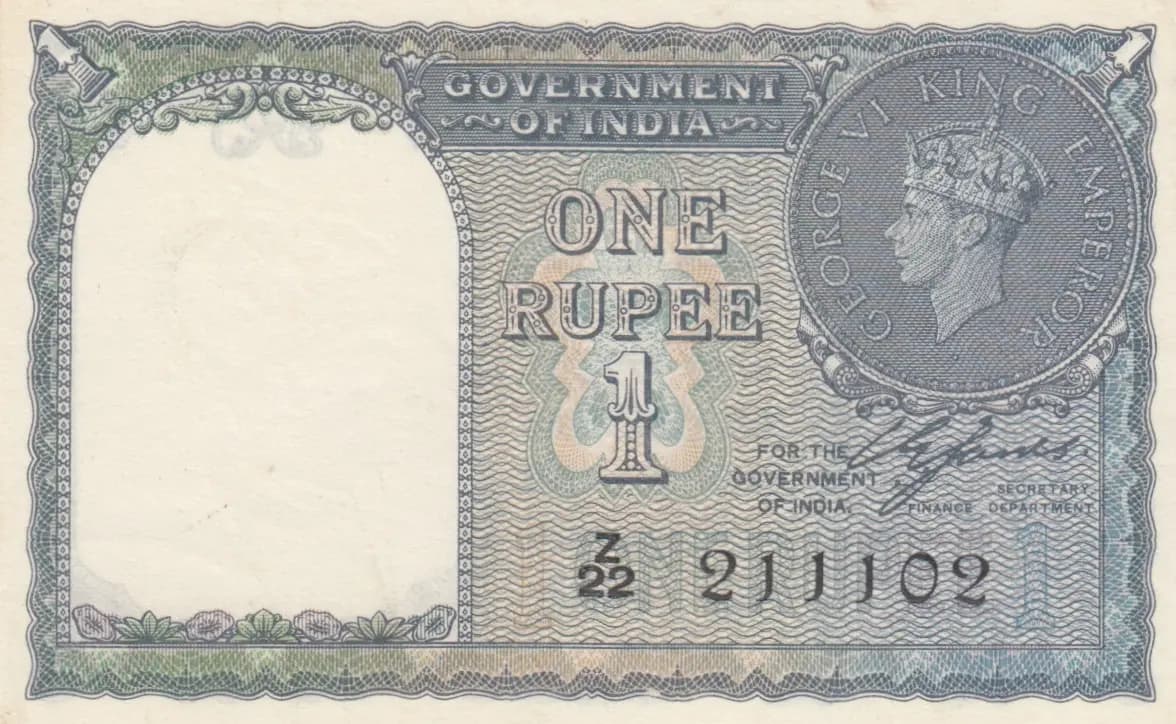
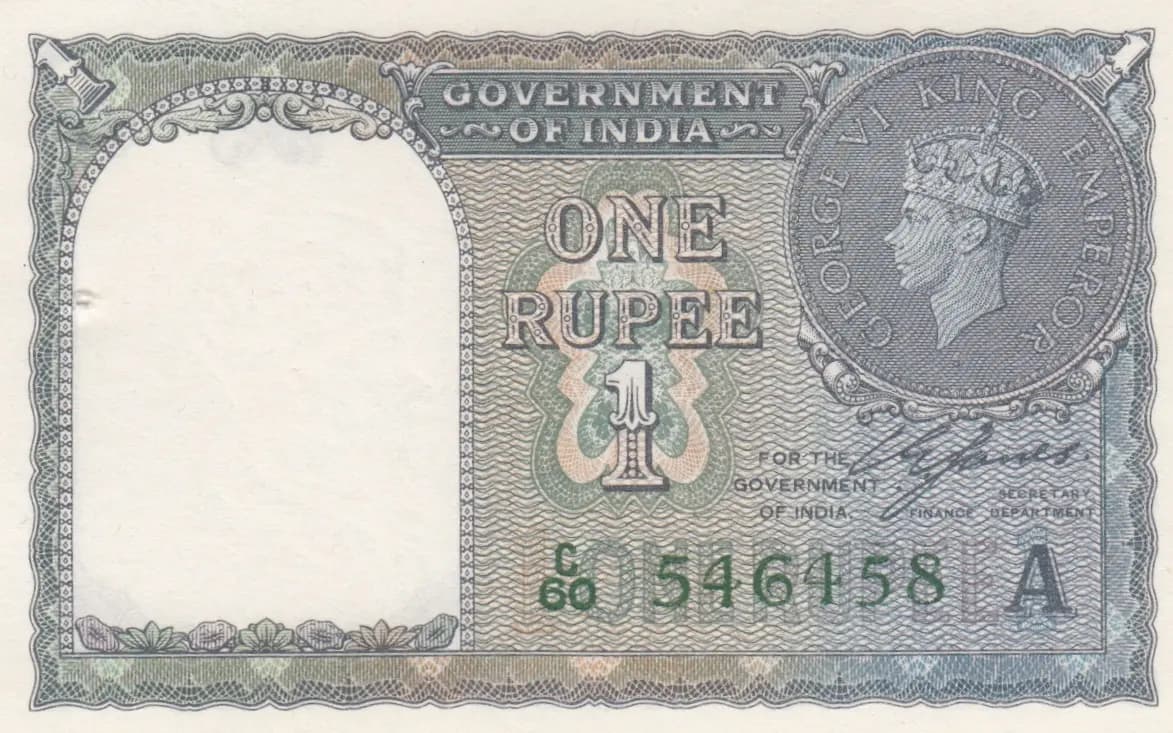
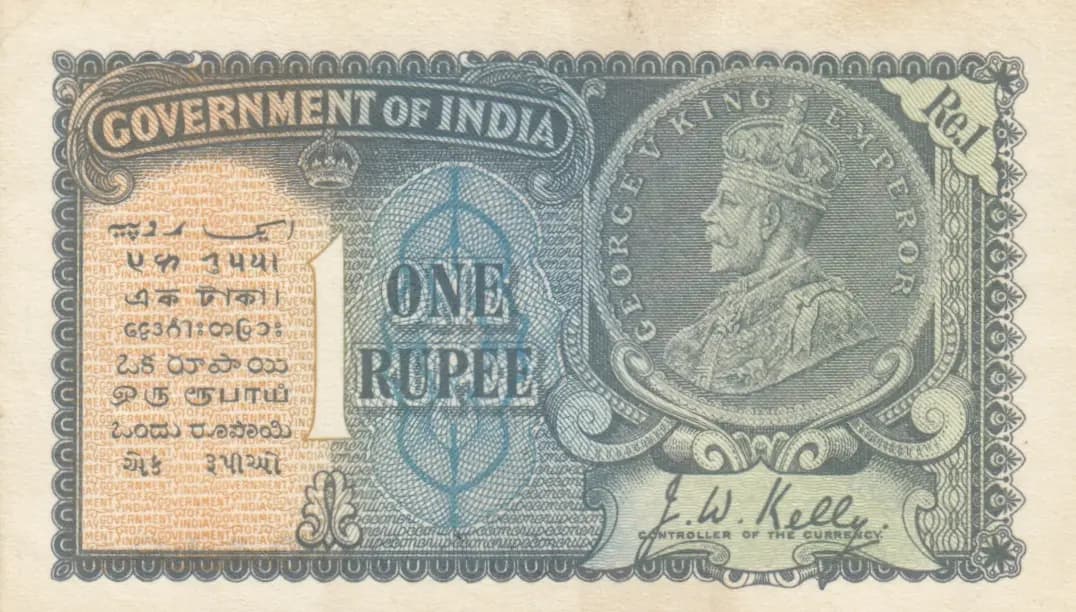
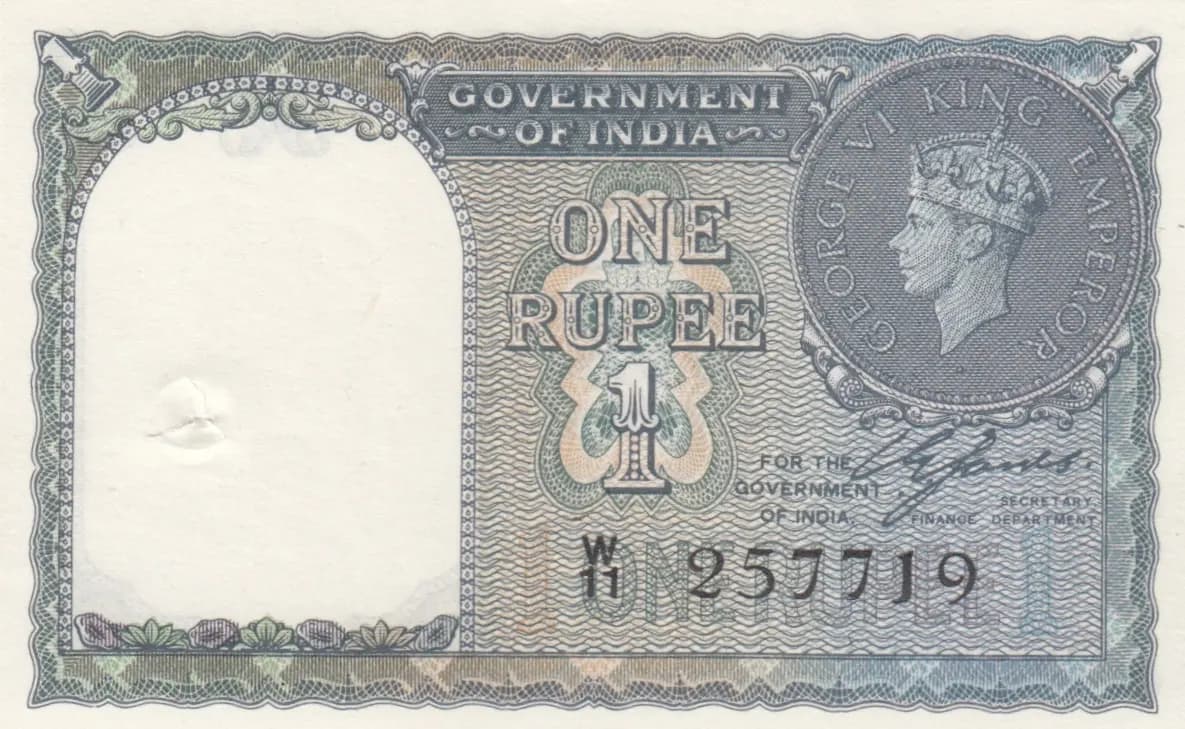
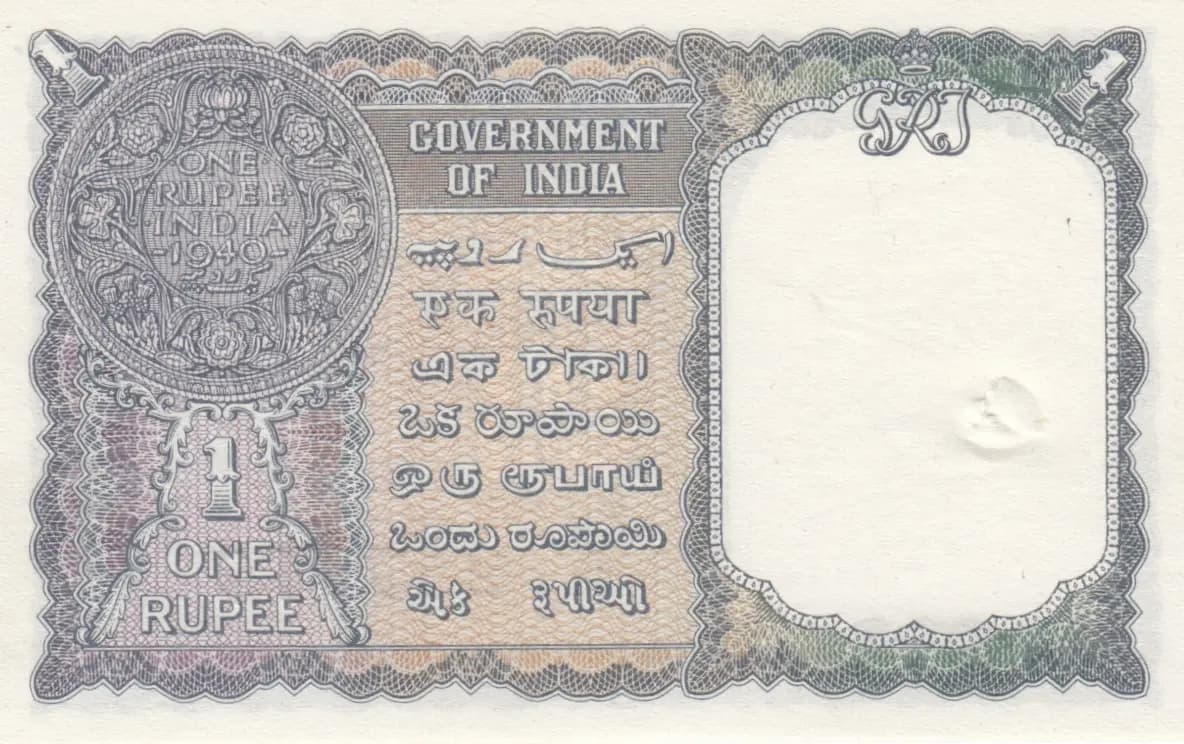
This is a Government of India 1 Rupee note from 1940 (Pick P-25a) in Uncirculated condition, featuring a left-facing profile portrait of King George VI in a circular medallion on the obverse. The note displays the characteristic ornate engraved borders, wave patterns, and floral designs typical of Indian currency from this era, with multilingual inscriptions in English, Hindi, Bengali, Kannada, and Telugu. The reverse features an intricate circular ornamental medallion with floral designs, and while the note shows age-related discoloration and light foxing consistent with an 80+ year old specimen, it remains well-preserved with intact structural integrity.
Common. The eBay market data provided shows consistent sales ranging from $0.99 to $471.22, with the vast majority of non-graded examples selling between $5-$25 regardless of condition grade (F to VF range). Even in high grades, PMG-graded examples (65-66) sell in the $95-$200 range, indicating substantial survivor population. The Pick P-25a 1 Rupee note from 1940 had significant print runs and remains readily available to collectors. The stated catalog value of $500 in UNC condition appears optimistic relative to actual market performance, where even certified high-grade examples command considerably less.
Issued during the final years of the British Raj, this 1940 note represents a transitional period in Indian currency when British monarchical imagery was still featured on Indian banknotes under the Government of India's authority. The inclusion of multiple Indian regional languages (Hindi, Bengali, Kannada, Telugu) alongside English reflects the growing emphasis on Indian linguistic diversity and nationalist sentiment during the pre-independence era. The note's design with its ornate engraved security features and multilingual text demonstrates the sophisticated printing standards maintained by British security printers serving the Government of India during this period.
The obverse features a right-hand positioned circular medallion containing a left-facing profile portrait of King George VI wearing a crown, rendered in fine engraved detail. The denomination 'ONE RUPEE' is centrally positioned with the Ashoka Lion Capital emblem positioned beneath it, serving as the official state symbol of India. The reverse displays a large ornamental circular medallion on the left side containing intricate floral and geometric patterns with the denomination, while the right side contains a blank cartouche (likely intended for watermark or security feature placement). Both sides feature elaborate decorative borders with wave patterns, floral ornaments in the corner sections, and fine-line engraving throughout. The multilingual text arrangement reflects the linguistic diversity of India with systematic placement of denomination text in five languages across the reverse.
FRONT SIDE: 'GOVERNMENT OF INDIA' (English), 'ONE RUPEE' (English), 'FOR THE GOVERNMENT OF INDIA' (English), 'FINANCE DEPARTMENT' (English), Serial number 'H 257719'. BACK SIDE: 'GOVERNMENT OF INDIA' (English), 'ONE RUPEE INDIA' (English), 'एक रुपया' (Hindi - 'One rupee'), 'এক টাকা' (Bengali - 'One rupee'), 'ಒಂದು ರುಪಾಯಿ' (Kannada - 'One rupee'), 'ఒక రూపాయి' (Telugu - 'One rupee'), 'ONE RUPEE' (English), repeated regional language denominations.
Intaglio (engraved) printing on high-quality banknote paper. The fine line work, ornate border details, and intricate floral patterns visible in both the circular medallion and decorative elements are characteristic of security printing by De La Rue or similar British security printers who produced Indian government notes during this period. The note exhibits the precision and anti-counterfeiting features typical of 1940s Government of India currency production.
This specimen is identified as Pick P-25a variant of the 1940 Government of India 1 Rupee issue. The serial number prefix 'H' and the specific design elements (multilingual reverse, George VI portrait, Ashoka emblem) confirm this as the standard variety for this pick number and date. No overprints, stamps, or other modifications are evident in the visual analysis. The blank cartouche areas visible on both sides of this specimen are characteristic of the design rather than indicating a specimen or trial note.