5000 kronur 1961
About This Note
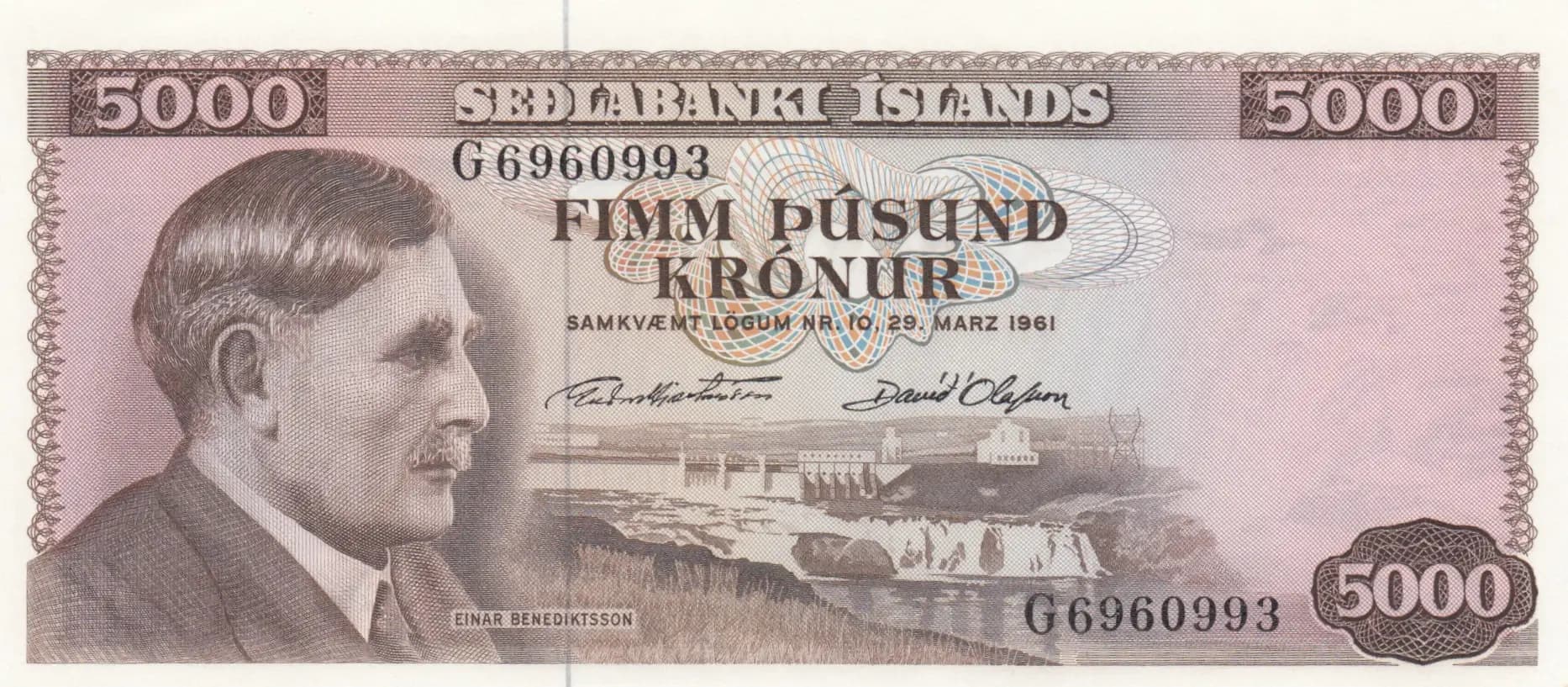
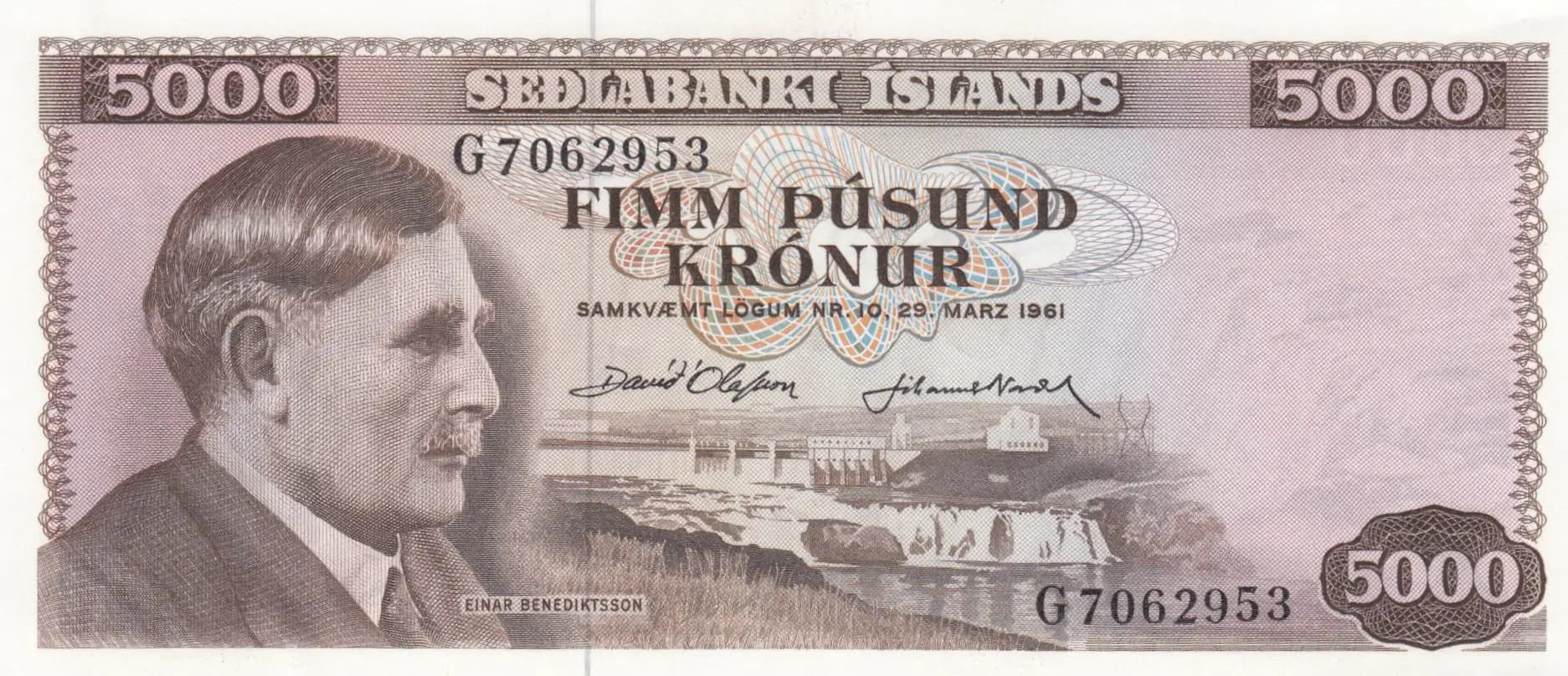
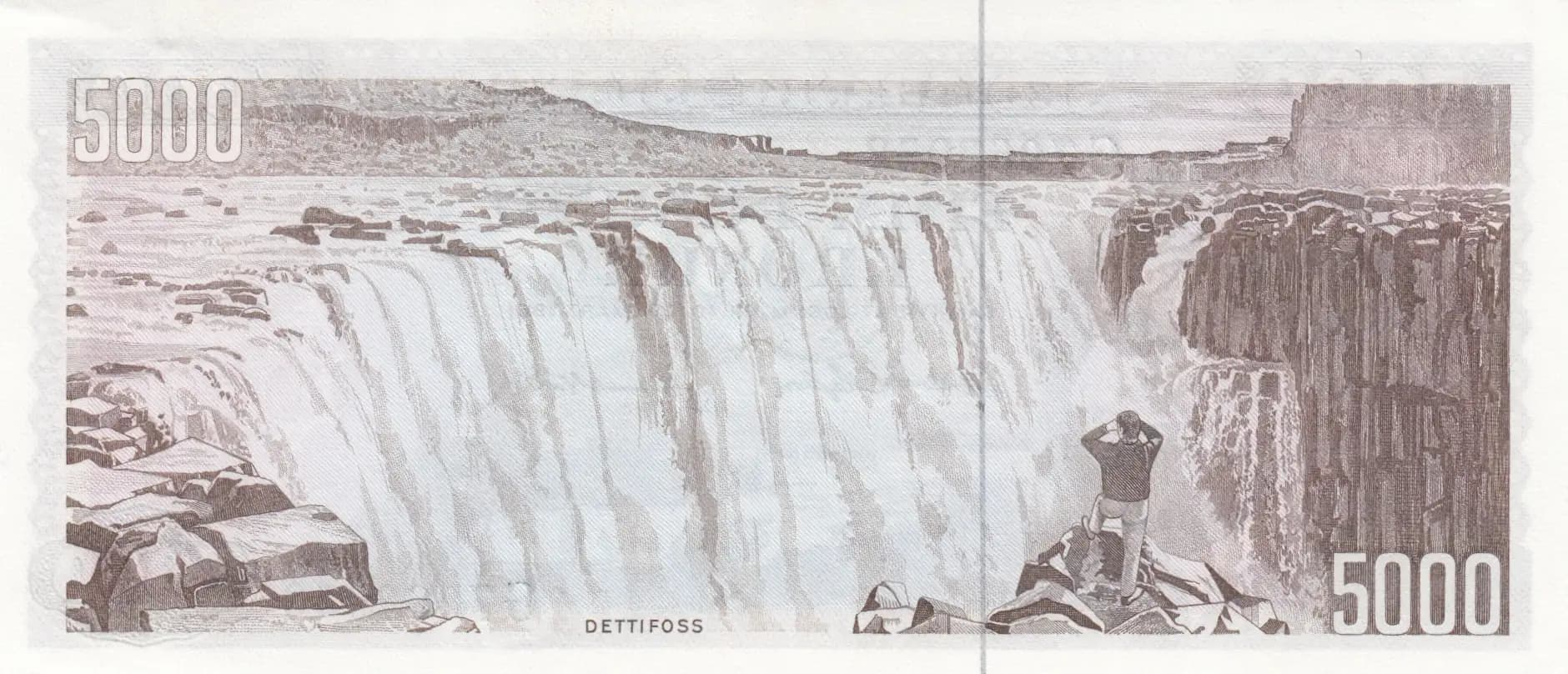
This is an exceptional example of Iceland's 1961 5000 Krónur banknote (Pick P-47(2)), presented in uncirculated condition with crisp paper and pristine surfaces. The note features a striking purple-mauve color scheme and showcases dual commemorative subjects: a portrait of renowned Icelandic poet Einar Benediktsson on the obverse and the magnificent Dettifoss waterfall on the reverse, making it a culturally significant representation of Iceland's literary and natural heritage. The fine line engraving throughout demonstrates sophisticated security features and artisanal craftsmanship characteristic of mid-20th century Icelandic currency.
Common. The 1961 5000 Krónur note was part of a standard circulation series for Iceland and had a substantial print run to meet monetary demand. While individual examples in uncirculated condition are desirable to collectors, the Pick P-47(2) variety itself is not scarce in the international numismatic market. No historical evidence of recalls, limited-run printings, or extreme scarcity exists for this denomination and date combination.
Issued under Law No. 10 on March 29, 1961, this banknote was produced during a formative period for Iceland's independent monetary policy following its break from Danish rule. The choice to feature Einar Benediktsson (1874-1954), Iceland's most celebrated modernist poet and nationalist intellectual, reflects the nation's emphasis on cultural identity and literary heritage. Dettifoss, Europe's largest waterfall by volume, on the reverse symbolizes Iceland's dramatic natural landscape and was a deliberate selection to emphasize the country's unique environmental character to international audiences.
The obverse features a left-facing profile portrait of Einar Benediktsson rendered in fine engraving, positioned in the upper left quadrant. His characteristic beard and dignified appearance emphasize his status as a literary icon. The center-right displays an ornamental oval frame with interlocking geometric circular patterns serving as a security element. Below the portrait is an engraved industrial or architectural landscape scene. Two official signatures occupy the center area, with serial numbers positioned at upper right and lower left. The reverse showcases a panoramic landscape engraving of Dettifoss waterfall with characteristic columnar basalt formations visible on the right side, rocky terrain in the foreground, and a silhouetted human figure positioned on rocks to provide scale. The waterfall's powerful cascading tiers are rendered through intricate cross-hatching and shading techniques. Denomination numerals frame the design.
FRONT: '5000' (denomination in numerals); 'SEDLABANKI ISLANDS' (Central Bank of Iceland); 'FIMMTUSUND KRÓNUR' (Five Thousand Crowns in Icelandic); 'SAMKVÆMT LÖGUM NR. 10, 29. MARZ 1961' (According to Law No. 10, 29 March 1961); 'EINAR BENEDIKTSSON' (portrait subject identification); Serial number 'G7062953' (appears twice); Signatures of 'David Oddsson' and 'Hannes Hnara' (Bank officials). BACK: '5000' (appears upper left and lower right); 'DETTIFOSS' (waterfall name/designation).
Intaglio (copper plate engraving) printing, characteristic of high-denomination banknotes of this era. The fine line engraving, detailed cross-hatching throughout the waterfall scene, and the intricate ornamental security patterns are consistent with precision intaglio production. Likely produced by a Scandinavian security printer specializing in Icelandic currency; Thomas De La Rue or similar European security printer facilities were common contractors for Nordic central banks during this period.
This example is identified as Pick P-47(2), indicating it is the second variety classification for the 1961 5000 Krónur denomination. The signature combination of David Oddsson and Hannes Hnara, combined with the serial number prefix 'G', may help identify specific printing batches or date sub-varieties. Collectors should note that signature varieties are common for Icelandic notes of this era as different officials served in roles during the note's circulation period. The specific serial number G7062953 indicates this note is from a mid-range printing batch.