1000 kronur 1961
About This Note
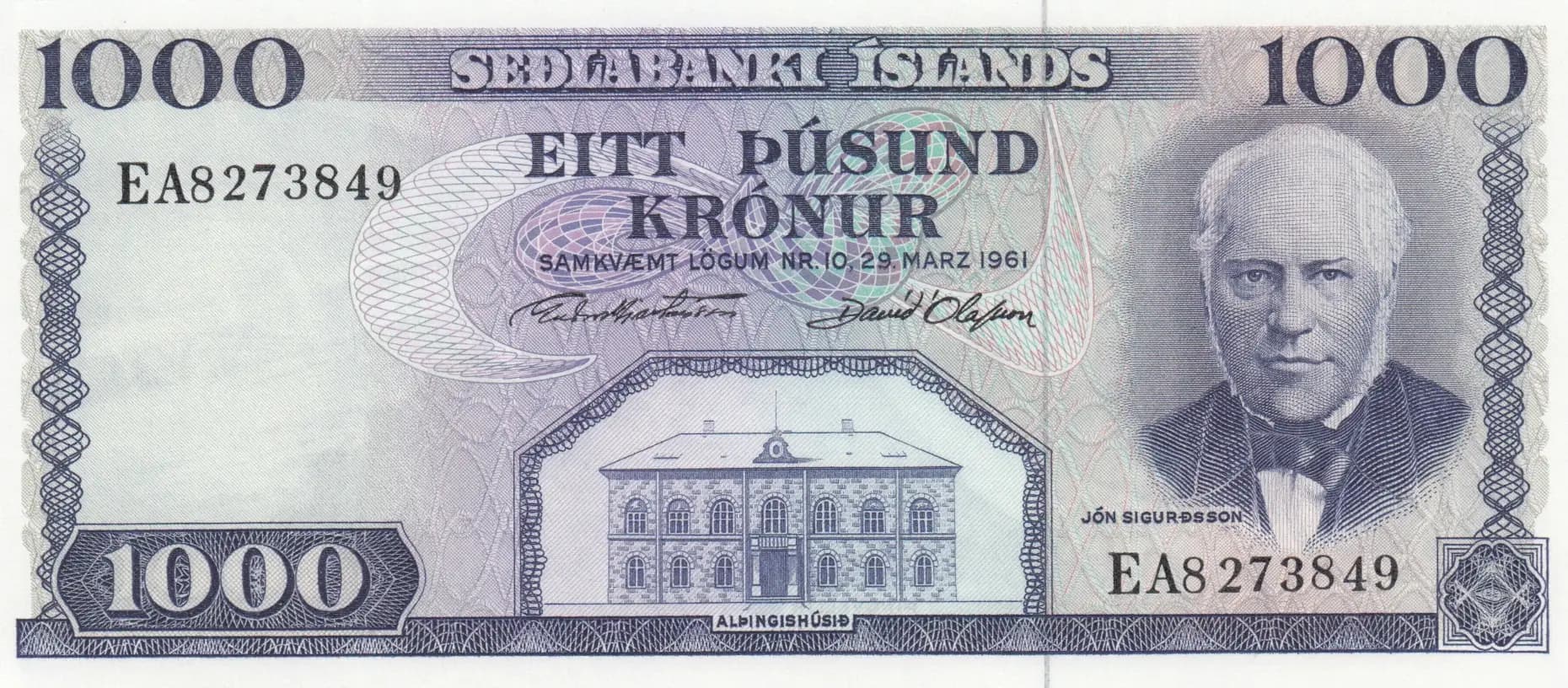
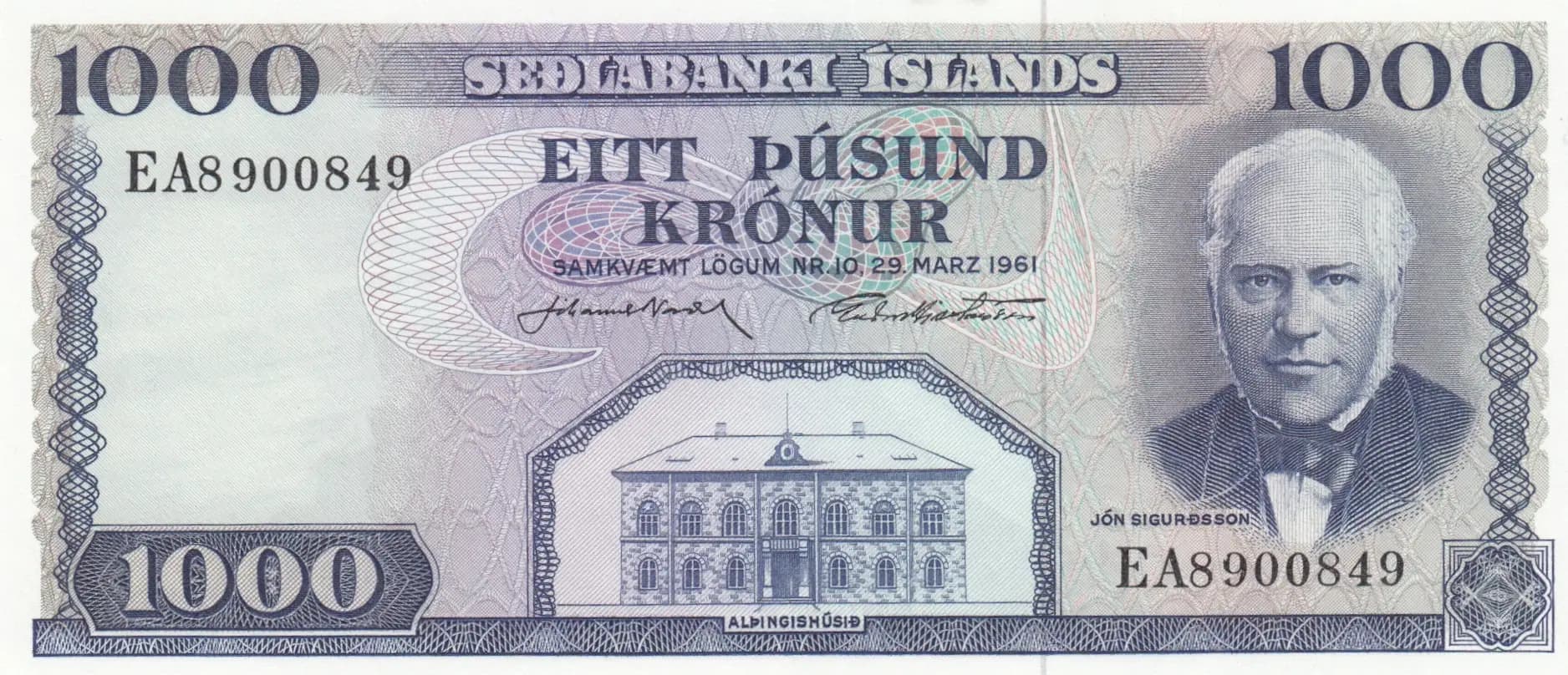
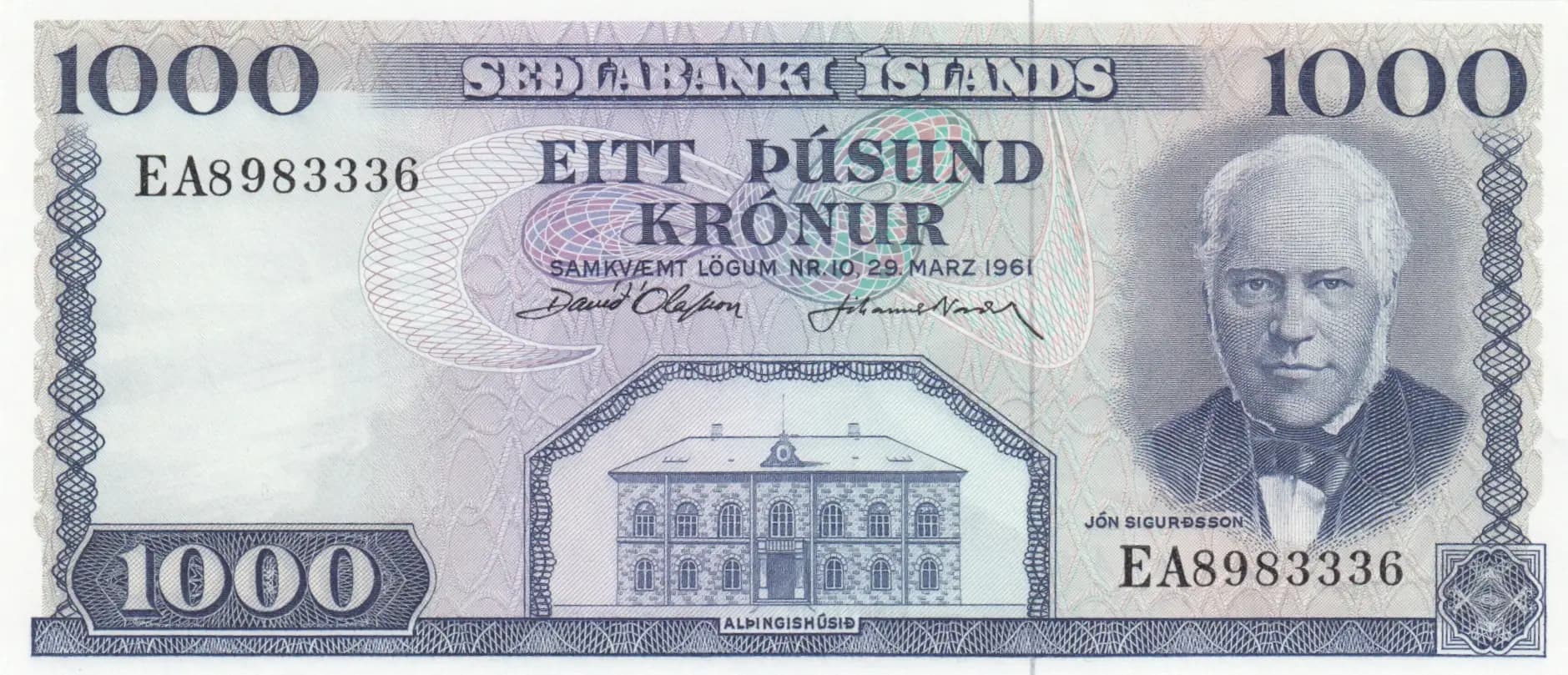
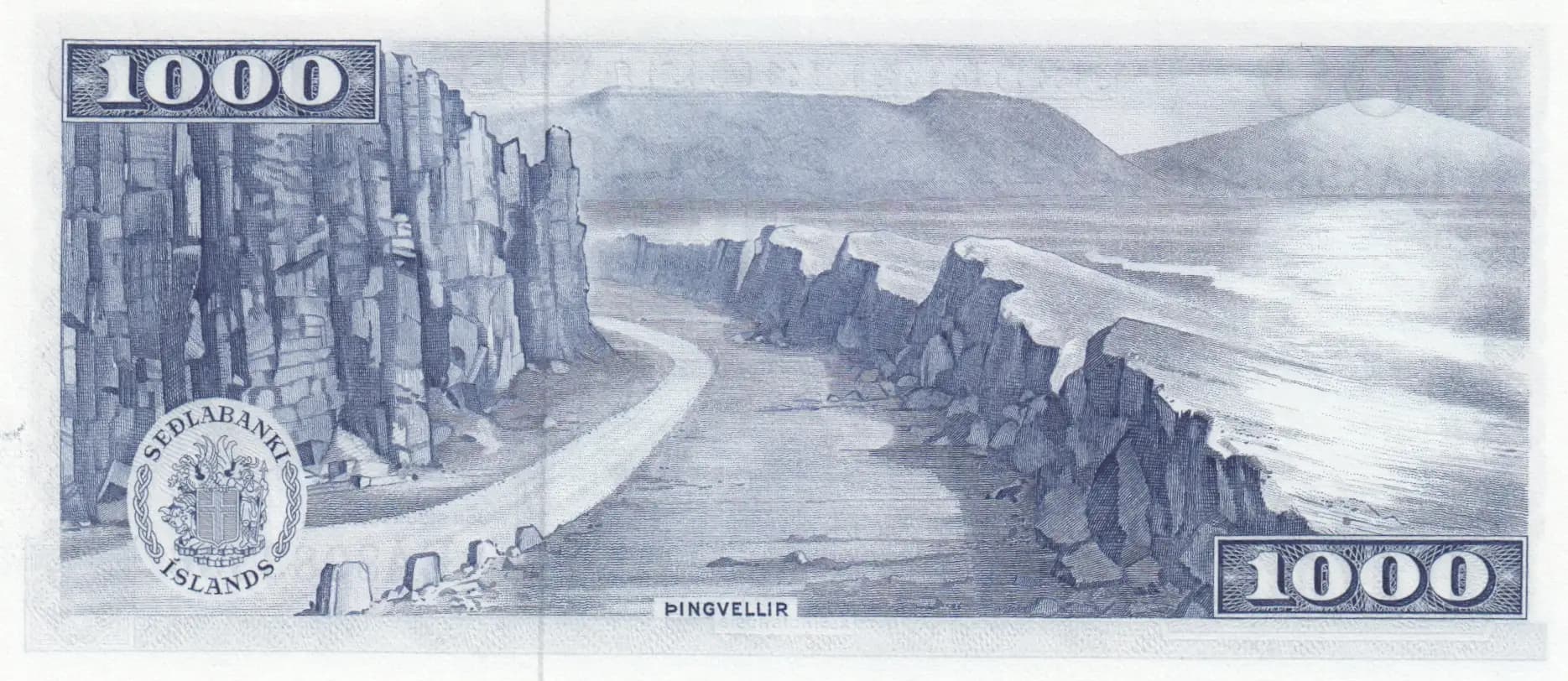
This is an exceptional example of Iceland's 1000 kronur note from 1961, presented in uncirculated condition with crisp, clean printing throughout. The note features a striking portrait of Jón Sigurdsson, the 19th-century Icelandic statesman, alongside an architectural rendering of the Alþingi (Icelandic Parliament) building on the obverse, while the reverse showcases the dramatic basalt formations and river landscape of Þingvellir, Iceland's historic parliamentary site. The fine guilloche security printing and well-preserved paper demonstrate the quality of this Central Bank of Iceland issue from the early post-independence period.
Common. The 1000 kronur denomination from 1961 was part of a standard circulating issue by the Central Bank of Iceland with substantial print runs typical of major denominations. While early post-independence Icelandic currency does attract collector interest, this particular note in its standard uncirculated form remains readily available on the numismatic market at modest valuations, indicating no scarcity premium. No factors (limited print run, recall, or short-lived issuer) suggest rarity for this Pick number.
Issued on March 29, 1961 under Law No. 10, this 1000 kronur note commemorates a transformative period in Icelandic history, with Jón Sigurdsson (1811-1879) honored as the nation's independence movement leader. The dual imagery of parliamentary governance (the Alþingi building) and Þingvellir—where Iceland's medieval parliament convened from 930 AD and where the nation's sovereignty was later reasserted—reflects Iceland's connection to democratic traditions and national identity during the early years of the modern republic.
The obverse features a formal portrait of Jón Sigurdsson (1811-1879), the preeminent Icelandic statesman and independence advocate, positioned on the right side in formal attire with bow tie. Central to the composition is an architectural illustration of the Alþingi (Parliament) building, rendered with classical institutional styling and multiple fenestration, symbolizing democratic governance. The reverse depicts the geologically distinctive landscape of Þingvellir National Park, featuring the characteristic basalt columnar formations and the winding river valley that historically hosted Iceland's open-air parliamentary assemblies. Both sides employ ornamental geometric guilloche borders and security patterns in a restrained light blue-gray and dark blue color scheme, creating an elegant, authoritative appearance befitting the nation's central bank currency.
FRONT SIDE: 'SEÐLABANKI ÍSLANDS' (Central Bank of Iceland); 'EITT ÞÚSUND KRÓNUR' (One Thousand Kronur); 'SAMKVÆMT LÖGUM NR. 10, 29. MARS 1961' (According to Law No. 10, March 29, 1961); 'JÓN SIGURDSSON' (the portrayed statesman's name); Signatures of 'David Olafsen' and 'Jóhanna Waer' (bank officials); Serial number 'EA8983336'; Denomination '1000'. BACK SIDE: 'SEÐLABANKI ÍSLANDS' (within the coat of arms seal); 'ÞINGVELLIR' (identifying the depicted landscape location); Denomination '1000' (repeated in corners).
Intaglio (engraved) printing, the standard technique for high-security banknotes of this era. The fine line guilloche patterns, ornamental borders, and detailed engraving of both the portraiture and landscape demonstrate the precision characteristic of professional security printing. The crisp impression and fine line work visible throughout suggest production by a specialized currency printer; Icelandic notes of this period were typically produced by reputable European security printers, though the specific printer attribution for P-46(6) would require archival documentation.
The observed note carries serial number EA8983336, indicating it is from the EA-series printing of the 1961 issue. Pick catalog designation P-46(6) confirms this as the sixth variety cataloged for the 1000 kronur denomination from this issuing authority and date. The signatures present (David Olafsen and Jóhanna Waer) are consistent with the authorized bank officials of the 1961 issue period. Serial number prefixes and signature combinations constitute the primary variety markers for this series; collectors may encounter variations based on different letter-prefix batches (EA, EB, EC, etc.) and corresponding official signatures, though all represent the same basic Pick cataloged type.