1000 kronur 1961
About This Note
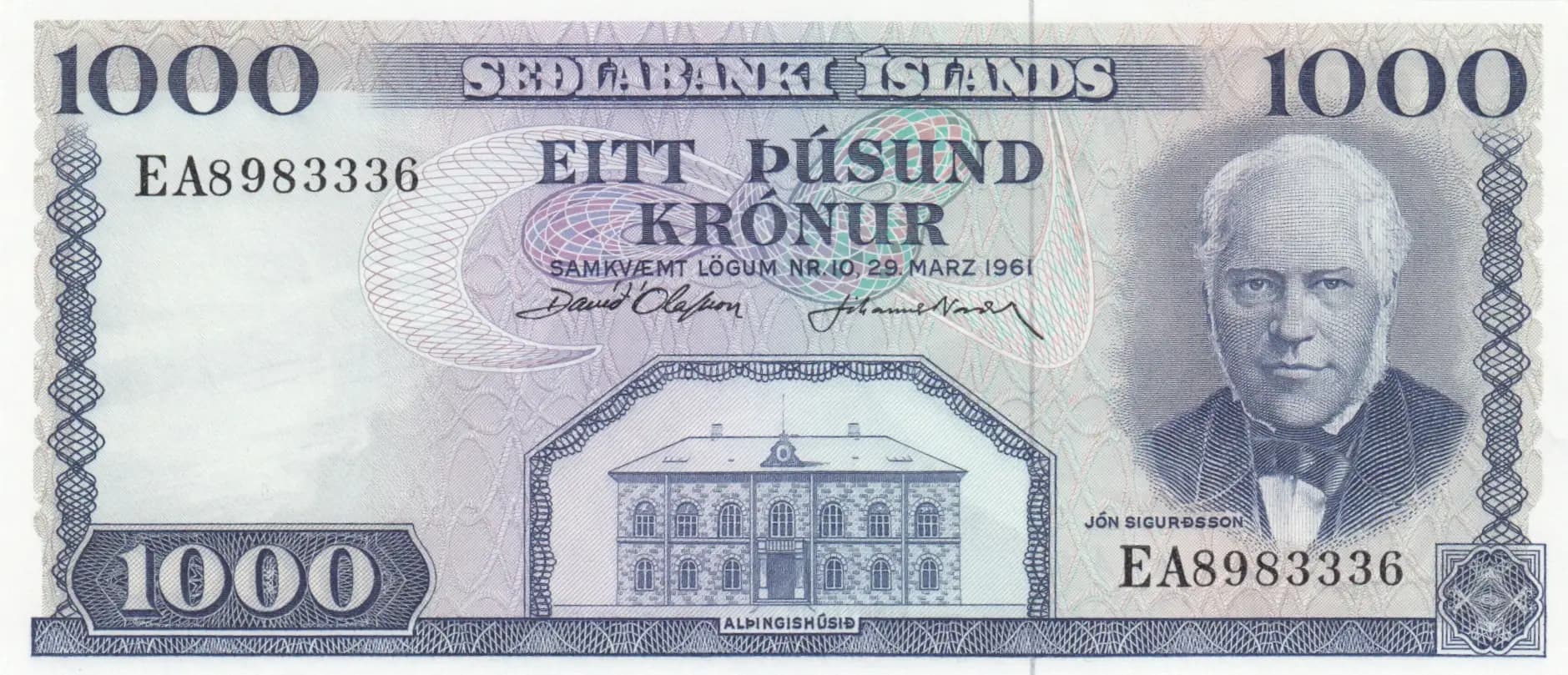
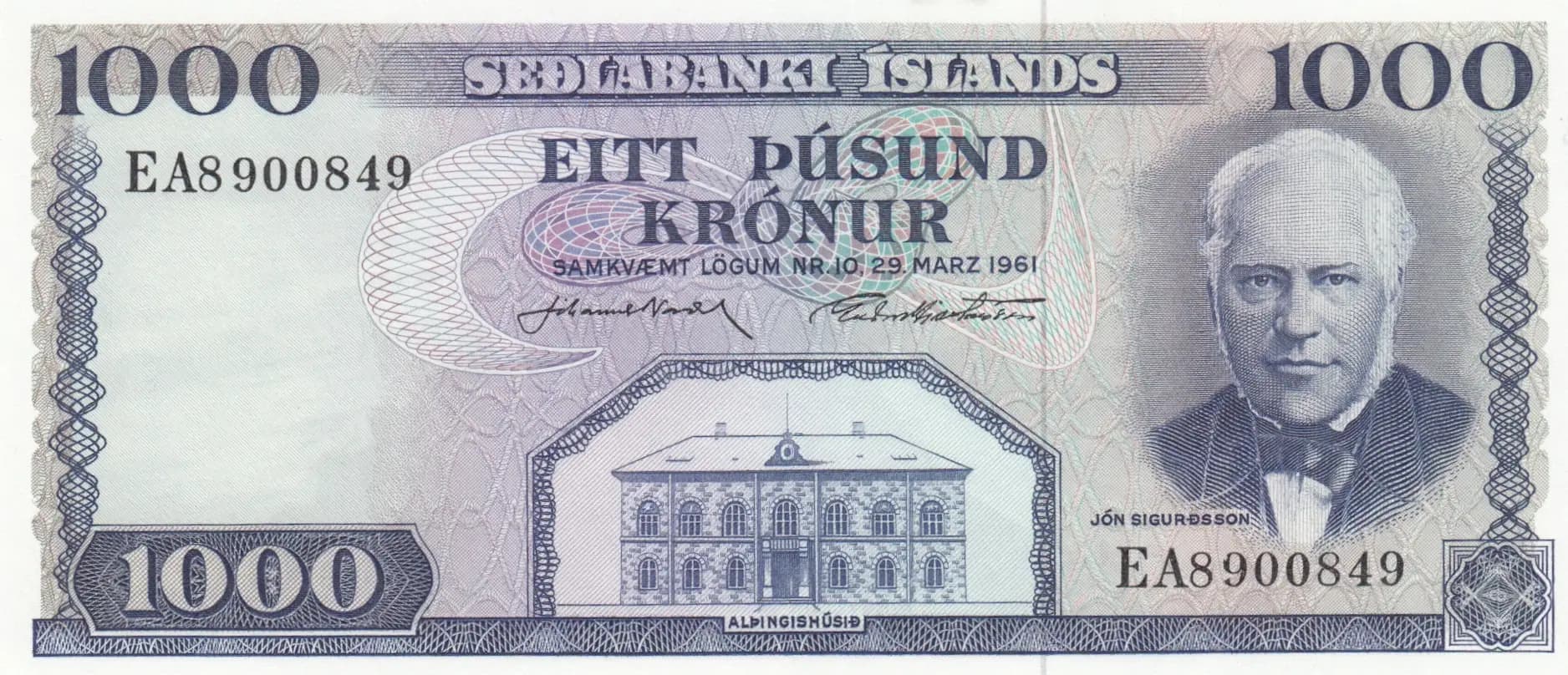
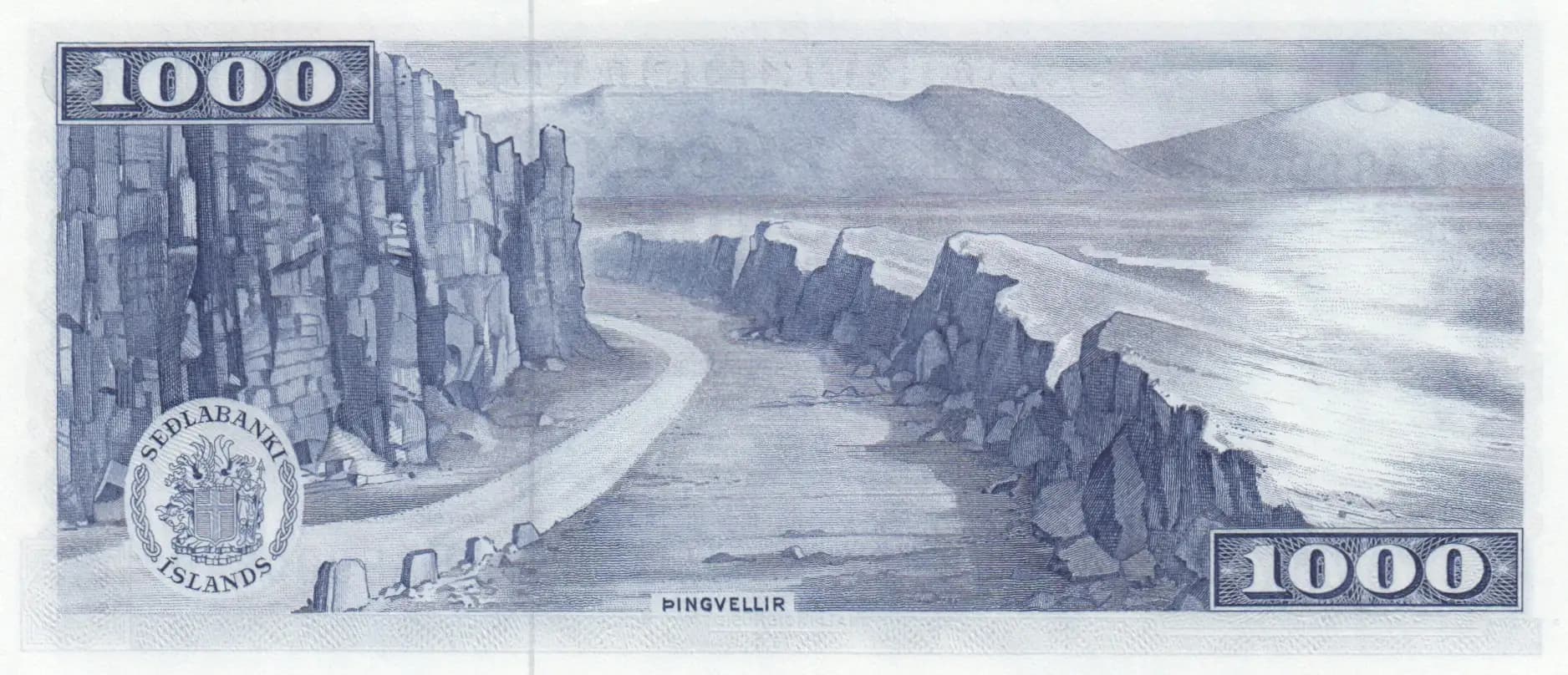
This uncirculated 1000 krónu note from 1961 represents a striking example of Icelandic monetary design from the early independence period. The note features exceptional engraving quality with a portrait of national hero Jón Sigurdsson on the obverse and Iceland's dramatic Þingvellir landscape with distinctive basalt columns on the reverse, both rendered in rich blue and purple tones. The crisp, well-preserved condition with no visible wear indicates minimal to no circulation, making this an attractive example for collectors of Nordic banknotes.
Common. The 1000 krónu denomination from 1961 was a standard circulation note issued by the Central Bank of Iceland with substantial print runs typical of such denominations in mid-20th century Nordic banking. No evidence indicates a limited print run, recall, or short issuing period. While uncirculated examples command modest premiums over circulated examples, this Pick number remains commonly encountered in the numismatic market. Most Icelandic banknotes from the 1960s are collectible but not scarce.
Issued on March 29, 1961, this note represents a pivotal moment in Iceland's monetary history, issued by the Seðlabanki Íslands (Central Bank of Iceland) following the country's transition to full independence. The obverse depicts Jón Sigurdsson (1811-1879), the leading figure in Iceland's independence movement and founder of the Althing (parliament), whose image reflects the nation's emphasis on its medieval democratic heritage. The reverse depicts Þingvellir, the historic location where Iceland's parliament was established in 930 AD and where the continental plates meet, symbolizing Iceland's geological and cultural significance.
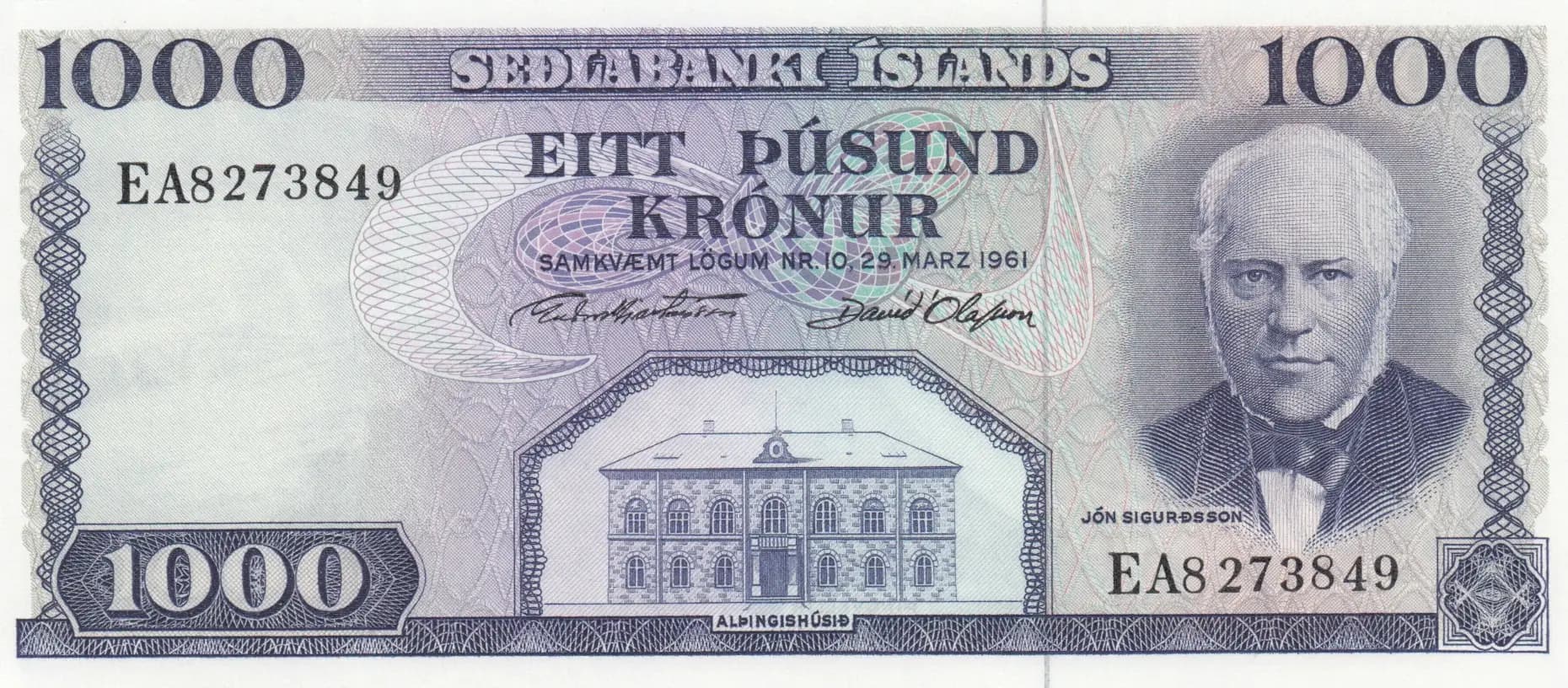
This 1000 krónu note features a classical two-part design typical of Icelandic banknotes from this era. The obverse displays a three-quarter profile portrait of Jón Sigurdsson, the 19th-century statesman and independence advocate, rendered in formal 19th-century dress with bow tie, positioned on the right side of the note. The center of the obverse showcases the Alðingishúsið (Parliament House), a neoclassical two-story building with symmetrical architecture, multiple windows, and a prominent central entrance, representing Iceland's governmental authority. Ornate geometric decorative borders frame both sides, with two oval security feature areas containing intricate line patterns visible in the center. The reverse presents a panoramic engraving of Þingvellir National Park, depicting the dramatic landscape of hexagonal basalt columnar formations flanking a curved river valley, with mountains visible in the background, conveying Iceland's unique geological and historical character. A coat of arms seal appears on the lower left of the reverse.
FRONT SIDE: 'SEÐLABANKI ÍSLANDS' (Central Bank of Iceland), 'EITT ÞÚSUND KRÓNU' (One Thousand krónu), 'KRÓNIUR' (krónu - currency designation), 'SAMKVAEMT LÖGUM NR.10 29.MARZ 1961' (According to Law No. 10, March 29, 1961), 'JÓN SIGURDSSON' (name of depicted historical figure), denomination '1000' (appears in all four corners), serial number 'EA8900849'. BACK SIDE: 'SEÐLABANKI ÍSLANDS' (Central Bank of Iceland), 'PINGVELLIR' (Thingvellir - the historic parliamentary location), denomination '1000' (appears in two corners).
This note was produced using steel engraving (intaglio printing), as evidenced by the fine line work, complex geometric patterns, and detailed landscape rendering visible throughout both sides. The intricate engraving in the security feature ovals, the fine detail work in the basalt column formations on the reverse, and the crisp definition of portraiture indicate high-quality intaglio production. For this Pick number (P-46), the note was likely printed by Sedlabanki Íslands' authorized printer; many Icelandic notes of this period were produced by De La Rue or similar security printers, though definitive attribution requires specialized research.
The observed variety is identified by serial number prefix 'EA' and the legal authority citation 'LÖGUM NR.10' with the specific date of March 29, 1961. The serial number EA8900849 indicates this is from the early printing period. Multiple letter prefixes and serial number ranges exist for this Pick number, representing different print runs or batches. No overprints, experimental features, or significant design variations are evident on this example; it represents the standard issue type for P-46(11).