5 dollars 1956
Market Prices
26 salesAbout This Note
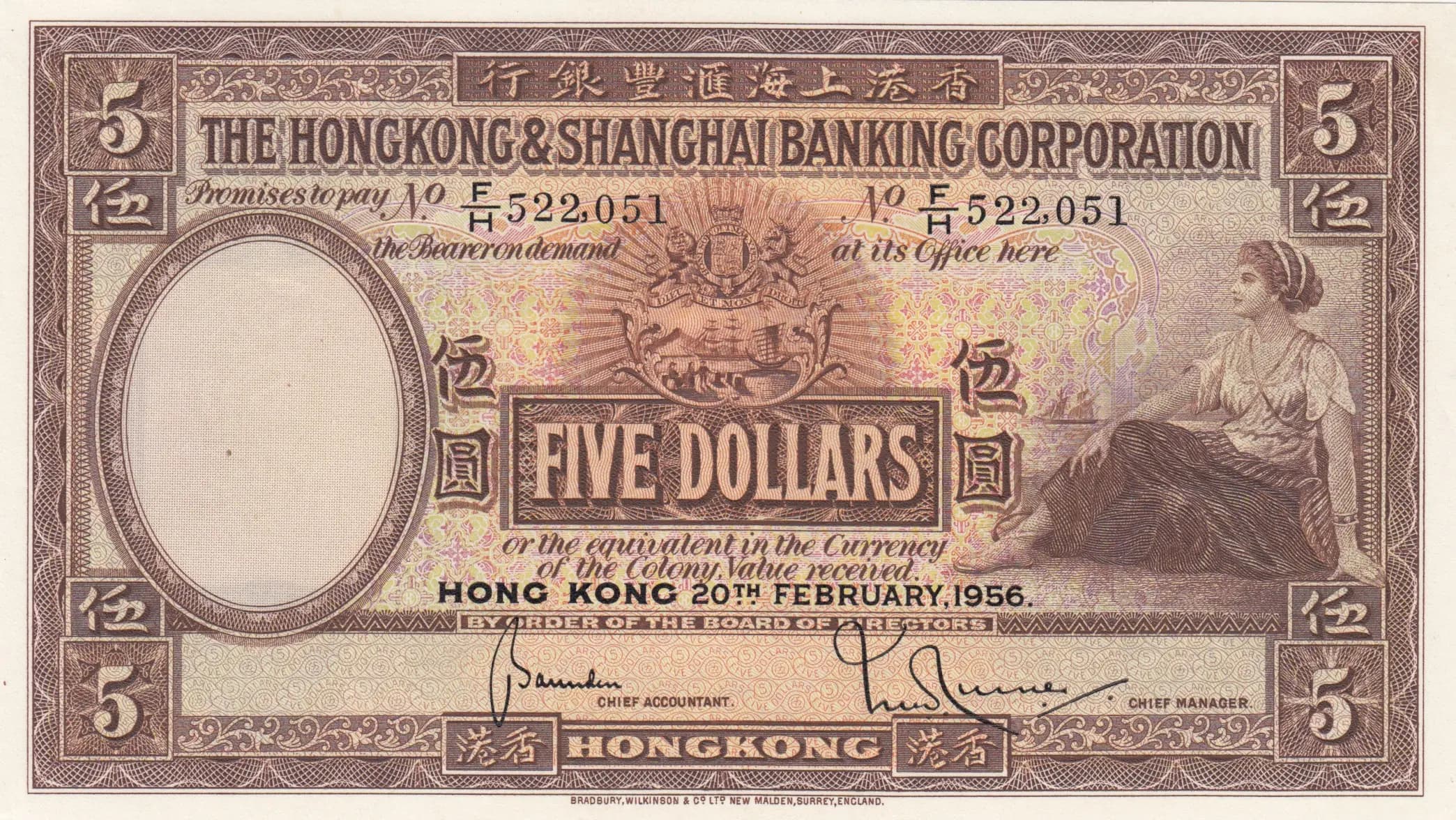
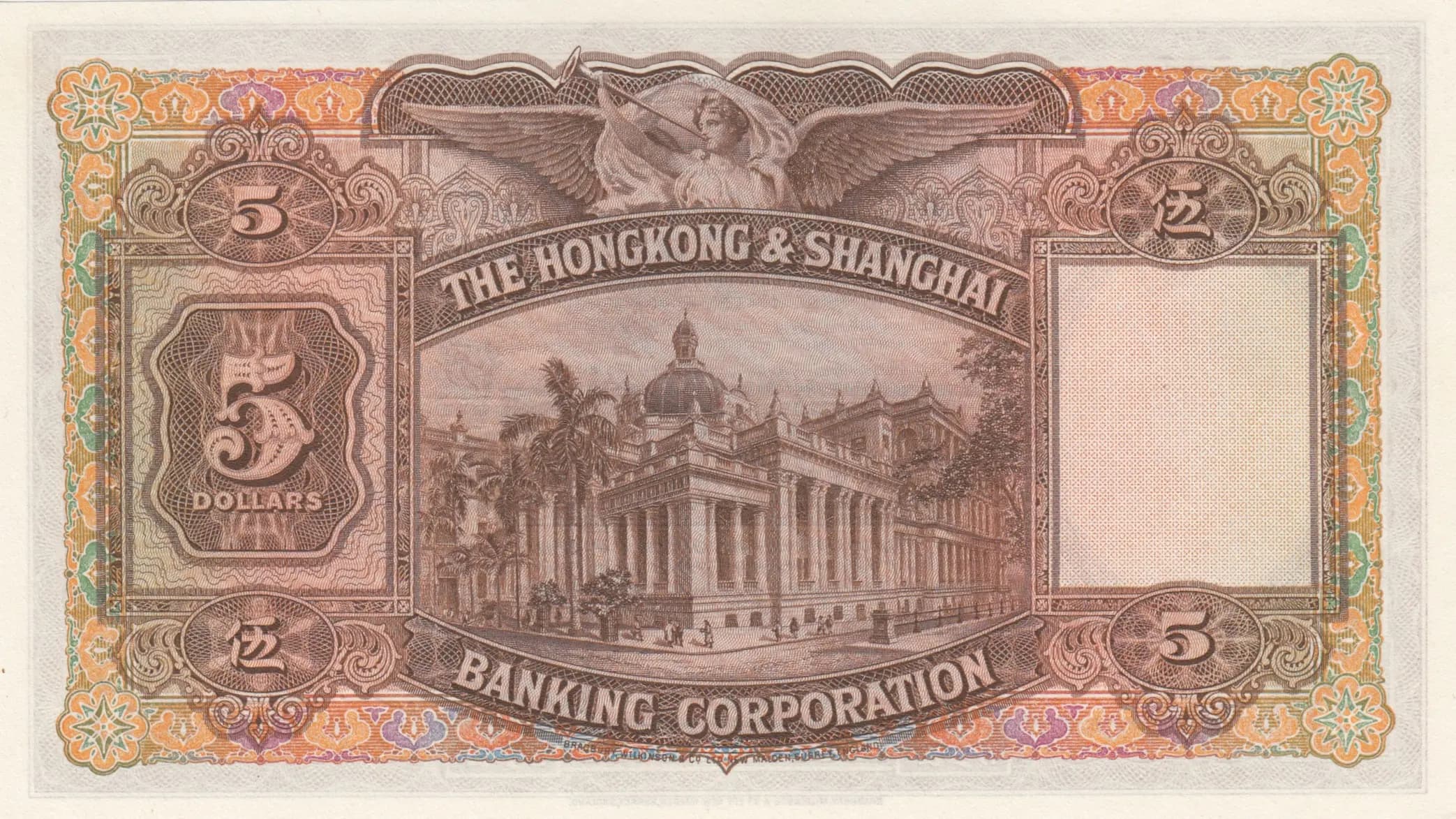
An exceptionally well-preserved 1956 Hong Kong & Shanghai Banking Corporation 5 dollar note in uncirculated condition, featuring elegant classical allegorical imagery and intricate engraving throughout. The front displays a seated female figure in classical dress with the bank's coat of arms, while the reverse showcases the impressive neoclassical HSBC building framed by palm trees and topped with a winged cherub. This note exemplifies the high-quality security printing characteristic of Bradbury Wilkinson's work and represents a notable issue from the post-war stabilization period of Hong Kong's banking system.
Common. While this note receives strong secondary market prices for high-grade examples (UNC specimens consistently sell for $200-450 based on recent eBay sales), the denomination, issue period (1954-1959), and number of notes in circulation indicate substantial print runs. The prevalence of examples in various grades (from G to PMG 66) further confirms this is a regularly available note in the collector market. High-grade specimens command premium prices typical of sought-after mid-20th century colonial banknotes, but the note itself is not rare.
Issued on 20 February 1956, during the height of HSBC's authority as one of Asia's most prestigious banking institutions, this note reflects Hong Kong's recovery and economic growth in the immediate post-World War II era. The depicted neoclassical banking building symbolized stability and British colonial financial power, while the allegorical female figures evoked classical ideals of commerce and prosperity. The dual English-Chinese inscriptions underscore Hong Kong's unique position as a British colony with significant Chinese commerce and influence.
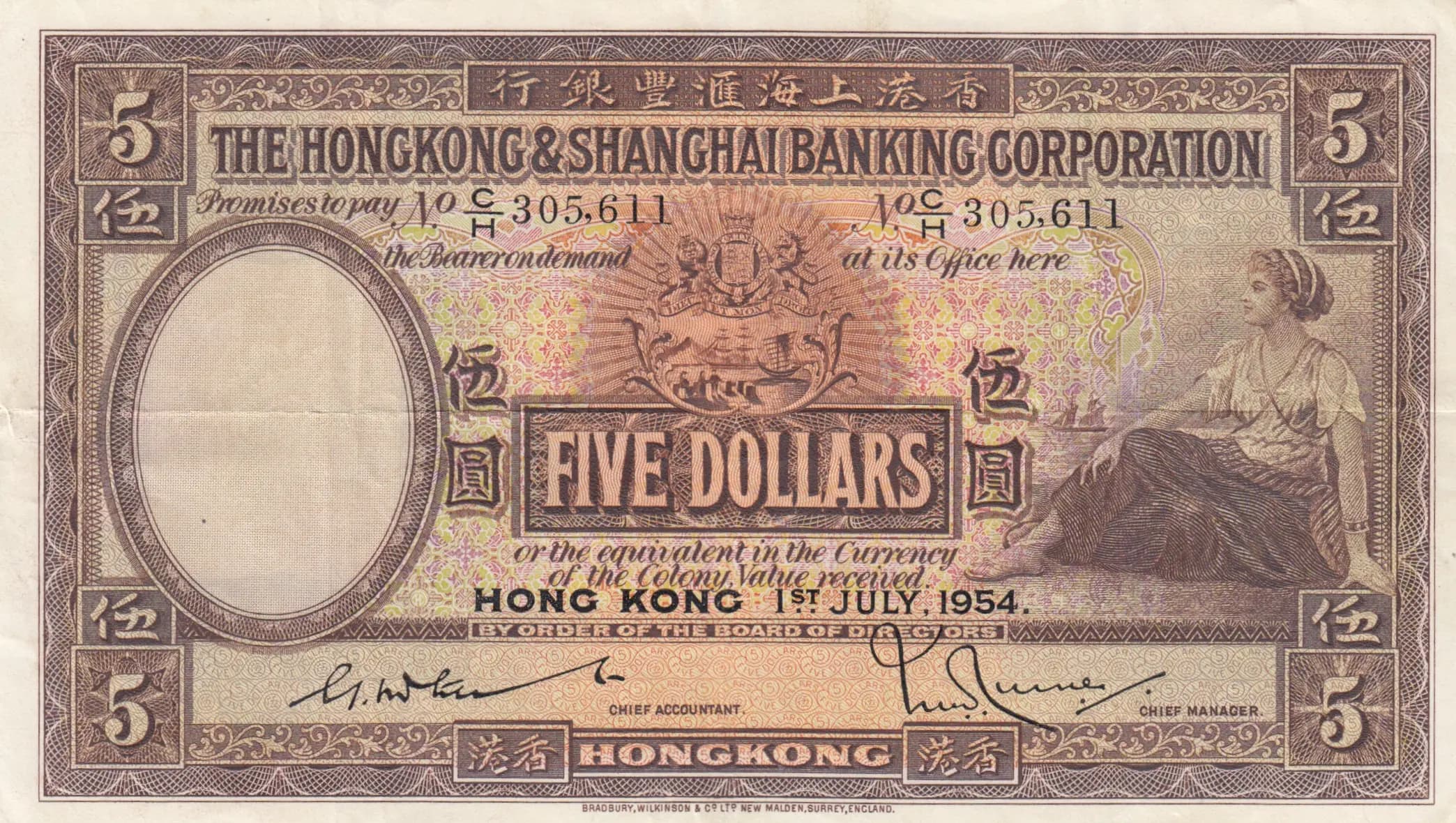
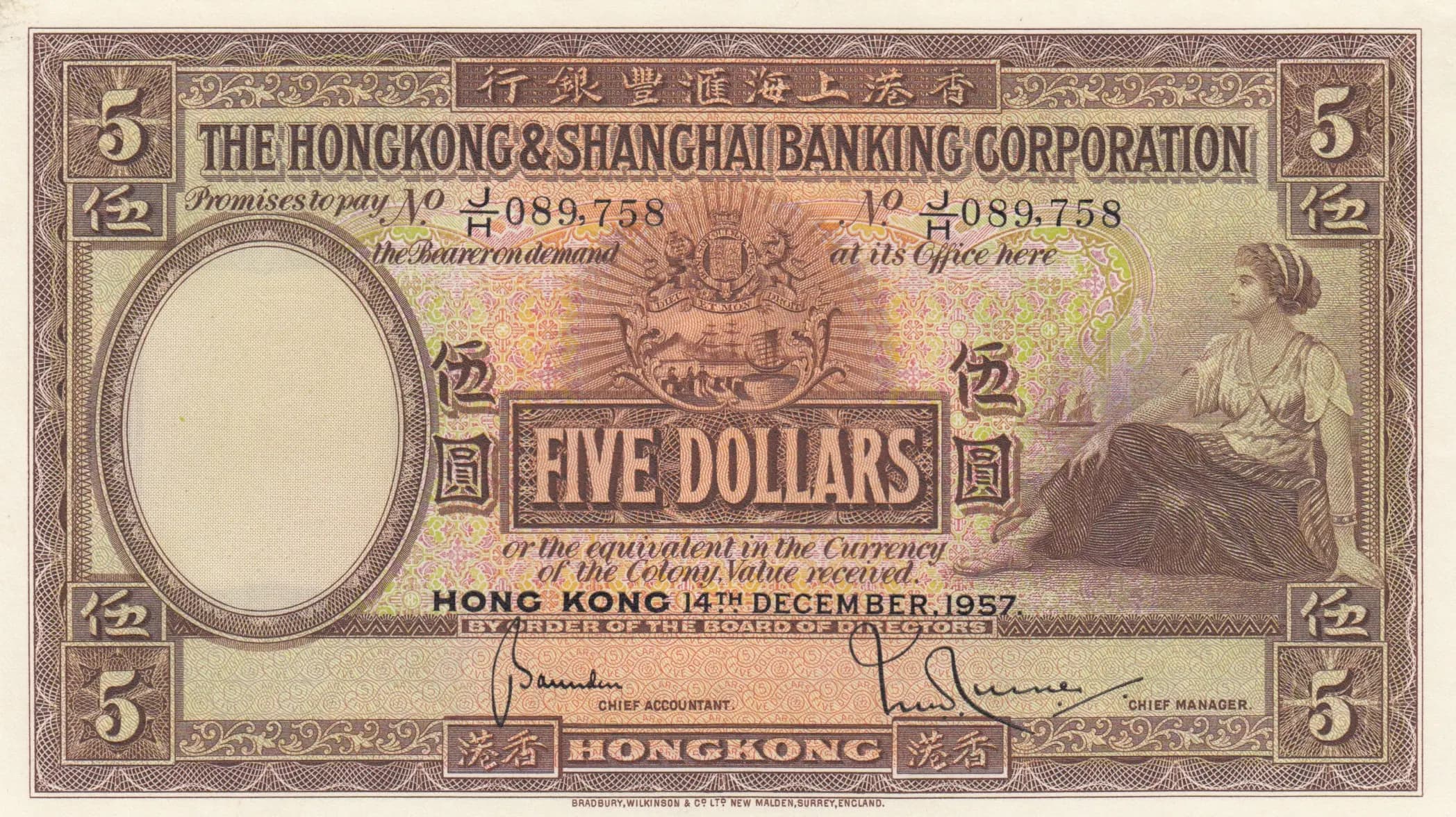
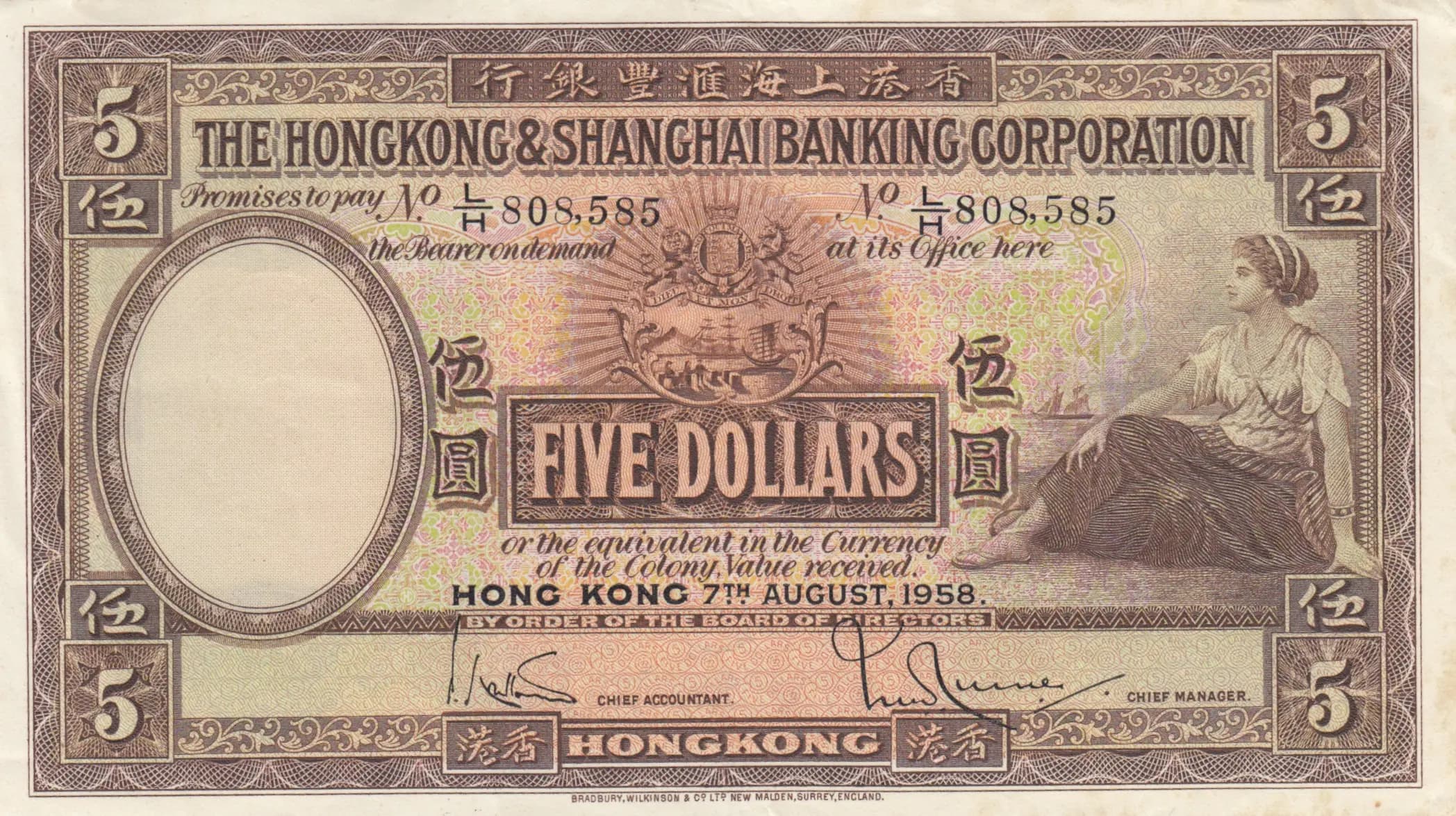
The front features a classical seated allegorical female figure in Greco-Roman dress positioned on the right side, symbolizing Commerce or Prosperity. The central motif showcases the HSBC coat of arms with a shield design and radiating solar rays, crowned with heraldic crests, positioned prominently in the upper center. A large blank oval frame on the left side was designed as a security feature for portrait placement. The reverse depicts the actual Hong Kong & Shanghai Banking Corporation headquarters building—a grand neoclassical structure with prominent columns, a domed roof with lantern, and manicured landscaping including palm trees. An allegorical winged figure (angel or cherub) crowns the architectural vignette, symbolizing prosperity and divine favor. Both sides feature ornate borders with intricate geometric and floral patterns in brown, sepia, orange, teal, and purple tones, characteristic of high-grade security printing.
FRONT: The Hong Kong & Shanghai Banking Corporation / 香港上海匯豐銀行 (Hong Kong Shanghai Banking Corporation) / Promises to pay the Bearer on demand / at its Office here / FIVE DOLLARS / 圓 (Dollar/Yuan) / or the equivalent in the Currency of the Colony, Value received / HONG KONG 20TH FEBRUARY, 1956 / BY ORDER OF THE BOARD OF DIRECTORS / CHIEF ACCOUNTANT / CHIEF MANAGER / Serial No. E 522,051 / HONGKONG / 香港 (Hong Kong) / 伍 (Five) / BRADBURY, WILKINSON & CO LTD, NEW MALDEN, SURREY, ENGLAND. BACK: THE HONGKONG & SHANGHAI BANKING CORPORATION / BANKING CORPORATION / 5 / DOLLARS / 伍 (Five).
Intaglio engraving (line engraving) by Bradbury, Wilkinson & Co Ltd, New Malden, Surrey, England, as noted in the printer's credit line. The fine line work visible throughout the note—particularly in the building's architectural details, decorative borders, and the allegorical figures—confirms this premium security printing technique. The complex color variations and ornamental patterns indicate multi-plate color printing layered over the engraved base.
Pick 180a designation indicates this is the standard variety of the 1956 Hong Kong $5 HSBC issue. The observed serial number prefix 'E' appears consistent with the series. No overprints, date varieties, or signature varieties are apparent in the visual analysis. The note bears the standard imprint of Bradbury, Wilkinson & Co Ltd and shows the baseline design without reported modifications or emergency overprints that might create recognized sub-varieties.