1 dollar 1926
Market Prices
2 salesAbout This Note
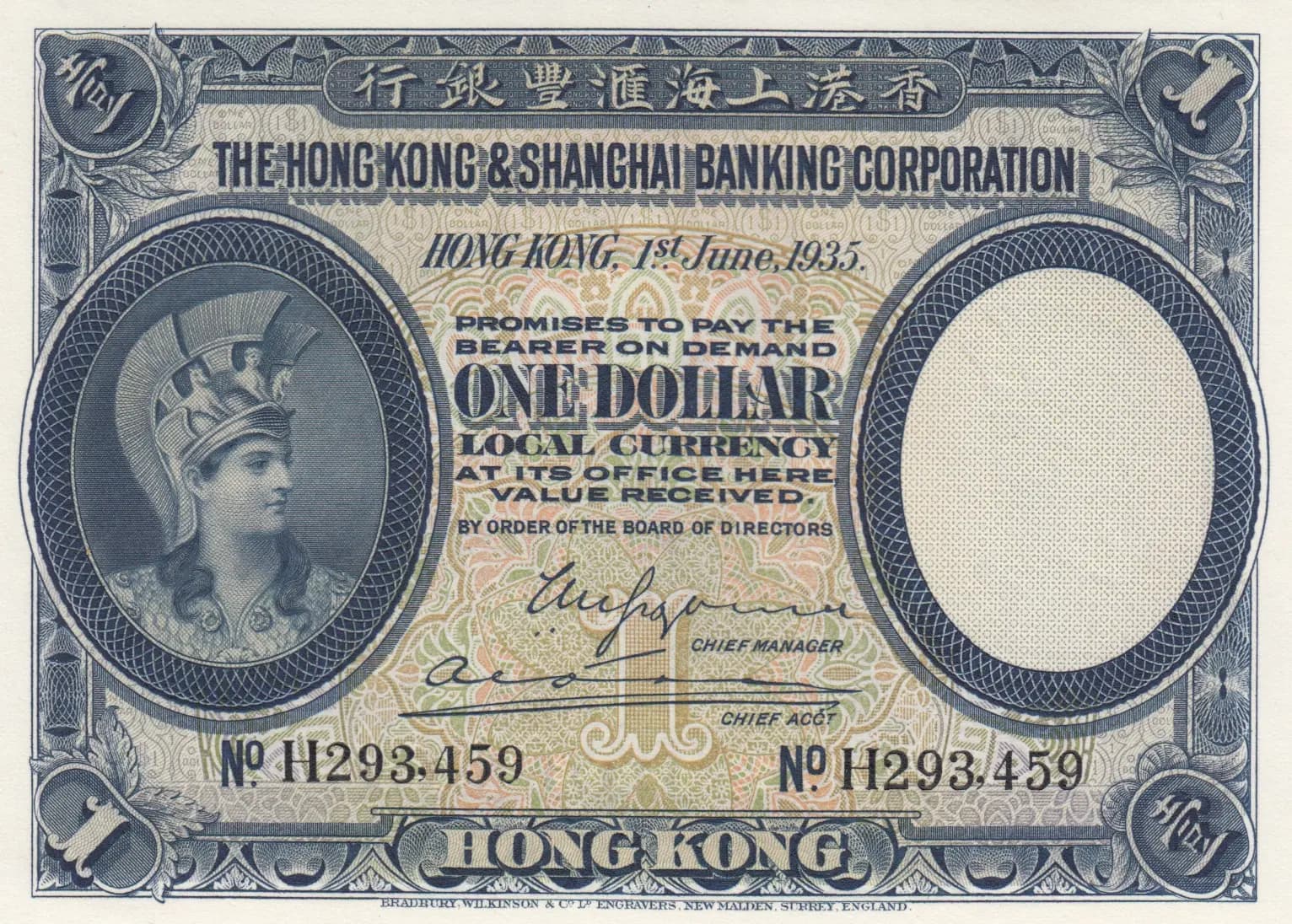
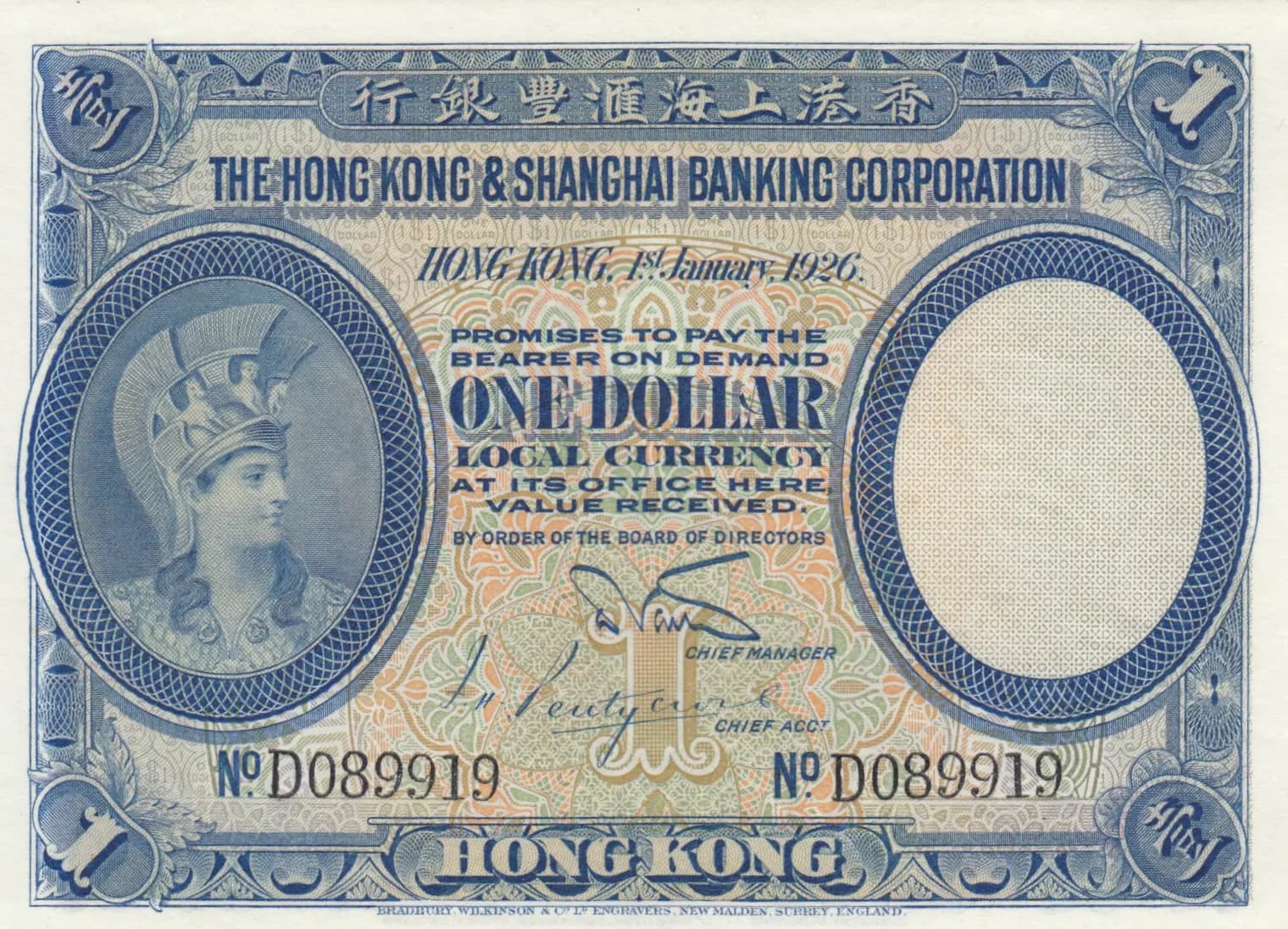
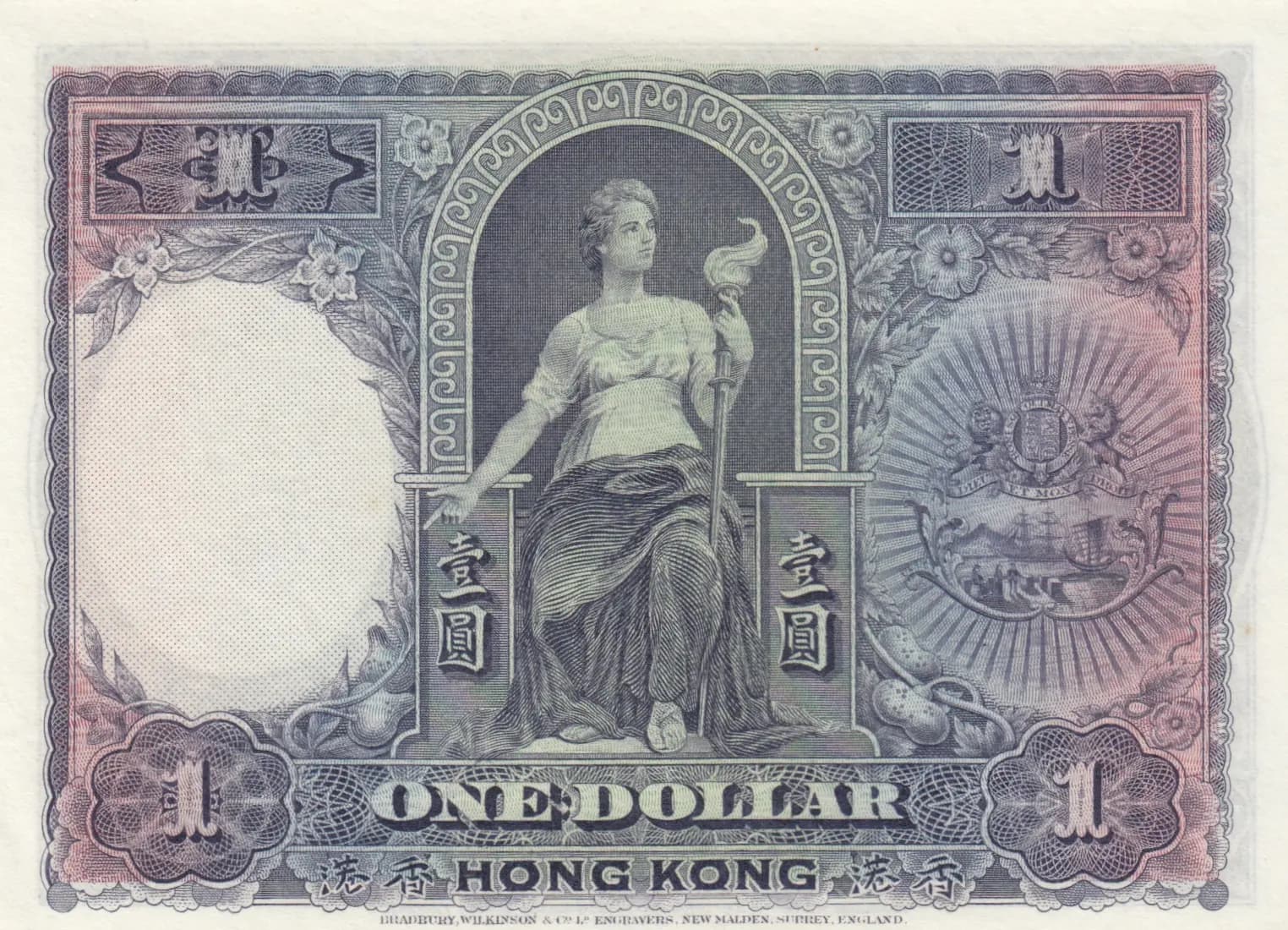
This is an exceptional uncirculated example of the 1926 Hong Kong & Shanghai Banking Corporation 1 Dollar note (Pick 172a), featuring pristine condition with no evidence of circulation. The note displays the characteristic blue and cream obverse with an ornate classical design, while the reverse showcases a detailed allegorical figure in pink and purple tones. The fine engraving quality and bilingual English-Chinese inscriptions reflect the cosmopolitan nature of early 20th-century Hong Kong banking.
Common. While catalog values list UNC specimens at $1,500 (2016 valuation), eBay market data shows AUNC examples selling for $588 (2012) and F-grade examples at $33 (2021), indicating the note trades with reasonable frequency in the secondary market. The Hong Kong & Shanghai Banking Corporation issued substantial quantities during the 1926-1935 period, and this note does not represent a short print run or recalled issue. The denomination (1 Dollar) and issuing period were among the most prolific.
Issued on 1st January 1926, this note represents the Hong Kong & Shanghai Banking Corporation's currency authority during the British colonial period. The allegorical figure on the reverse—likely representing Britannia or Commerce—symbolizes British imperial commercial dominance in Asia, while the dual-language inscriptions reflect Hong Kong's position as a crucial trading hub connecting British and Chinese commerce. This series was produced during a period of significant economic activity in Hong Kong prior to the Second Sino-Japanese War.
The obverse features a left-facing female portrait in profile within a medallion on the left side, wearing an ornate classical headdress, representing Britannia or a symbolic representation of British imperial authority. A blank oval medallion is positioned on the right, likely intended for a complementary allegorical figure or left unfilled in this design variant. The note is bordered by ornamental corner designs and intricate geometric patterns in classical style. The reverse showcases a seated allegorical female figure (representing Commerce or Britannia) in flowing robes, holding a staff topped with a phoenix or bird, symbolizing prosperity and trade. This figure is framed within an ornate border featuring Greek-key pattern designs. A heraldic coat of arms with a radiating sunburst design appears on the right side of the reverse. The overall design employs fine-line engraving with complex cross-hatching and classical decorative elements typical of high-security currency production of the era.
FRONT: 'THE HONG KONG & SHANGHAI BANKING CORPORATION' (English) / '香港上海豐渣海行' (Chinese: Hong Kong Shanghai Banking Corporation) / 'HONG KONG, 1st January 1926' (English date of issue) / 'PROMISES TO PAY THE BEARER ON DEMAND ONE DOLLAR LOCAL CURRENCY AT ITS OFFICE HERE VALUE RECEIVED' (Standard bearer promise) / 'BY ORDER OF THE BOARD OF DIRECTORS' / Signature lines for 'CHIEF MANAGER' and 'CHIEF ACCT[OUNTANT]' / 'NO D089919' (Serial number) / 'BRADBURY WILKINSON & CO LTD ENGRAVERS, NEW MALDEN, SURREY, ENGLAND' (Printer attribution). BACK: 'ONE DOLLAR' (English) / '壹圓' (Chinese: One Dollar) / 'HONG KONG' (English) / '香港' (Chinese: Hong Kong) / 'BRADBURY WILKINSON & CO LTD ENGRAVERS, NEW MALDEN, SURREY, ENGLAND' (Printer attribution).
Steel engraving and intaglio printing, as indicated by the fine line work, intricate cross-hatching, and dimensional quality visible throughout both sides. The note was produced by Bradbury Wilkinson & Co Ltd, New Malden, Surrey, England—a leading security printer specializing in banknote production. The precision of the geometric patterns, border work, and portraiture is consistent with hand-engraved steel plates and traditional intaglio press technology of the 1920s.
Pick 172a represents the 1926-1935 issue of the 1 Dollar denomination by HSBC. The specific variety is identifiable by the date '1st January 1926' printed on the note and serial number prefix 'D' visible on the examined specimen (D089919). Varieties within this Pick number may be distinguished by signature combinations (Chief Manager and Chief Accountant signatures vary), serial number prefixes, and printer imprint details. This specimen represents the standard design with no visible overprints or special markings.