10 dollars 1948
Market Prices
18 salesAbout This Note
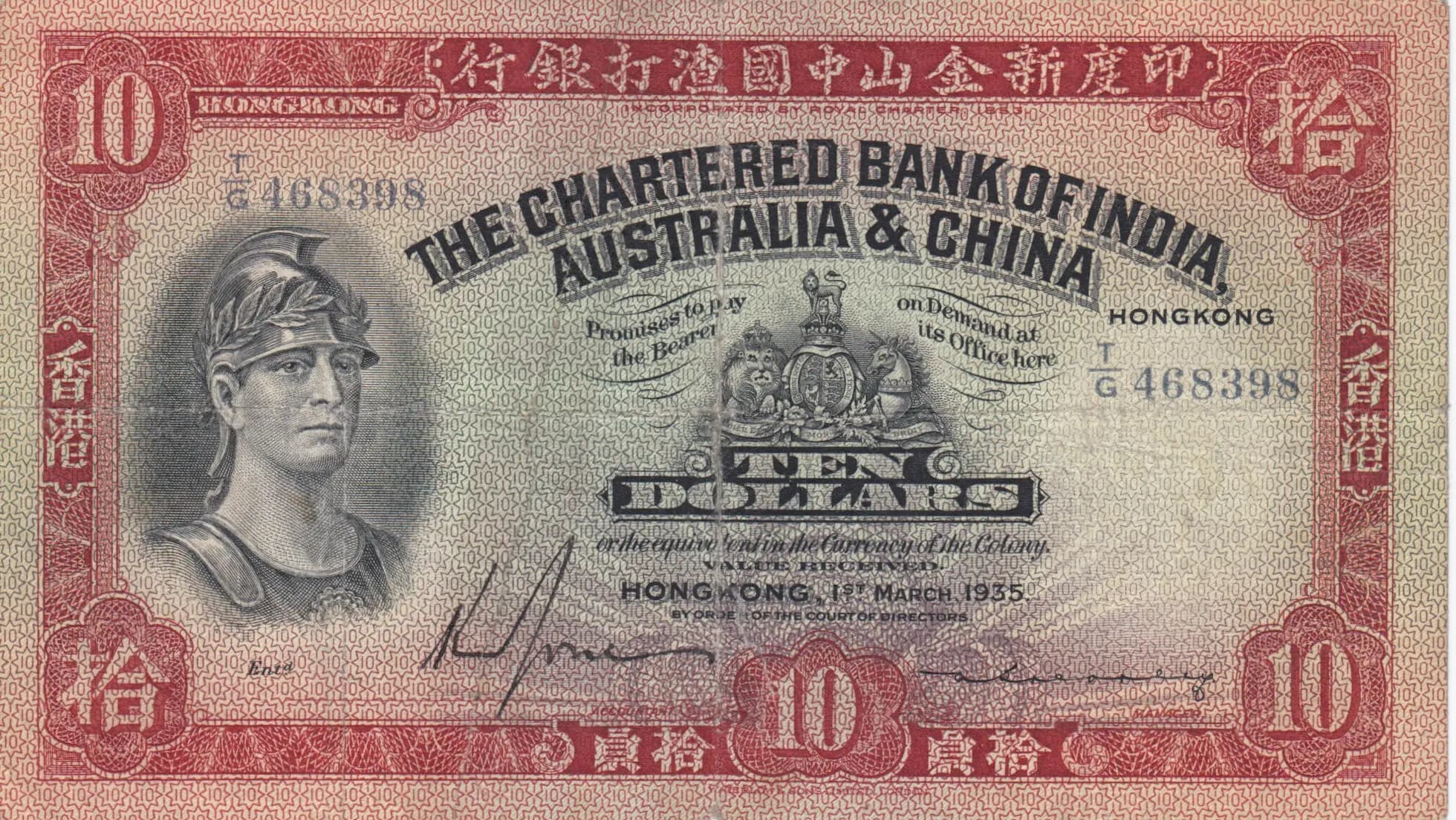
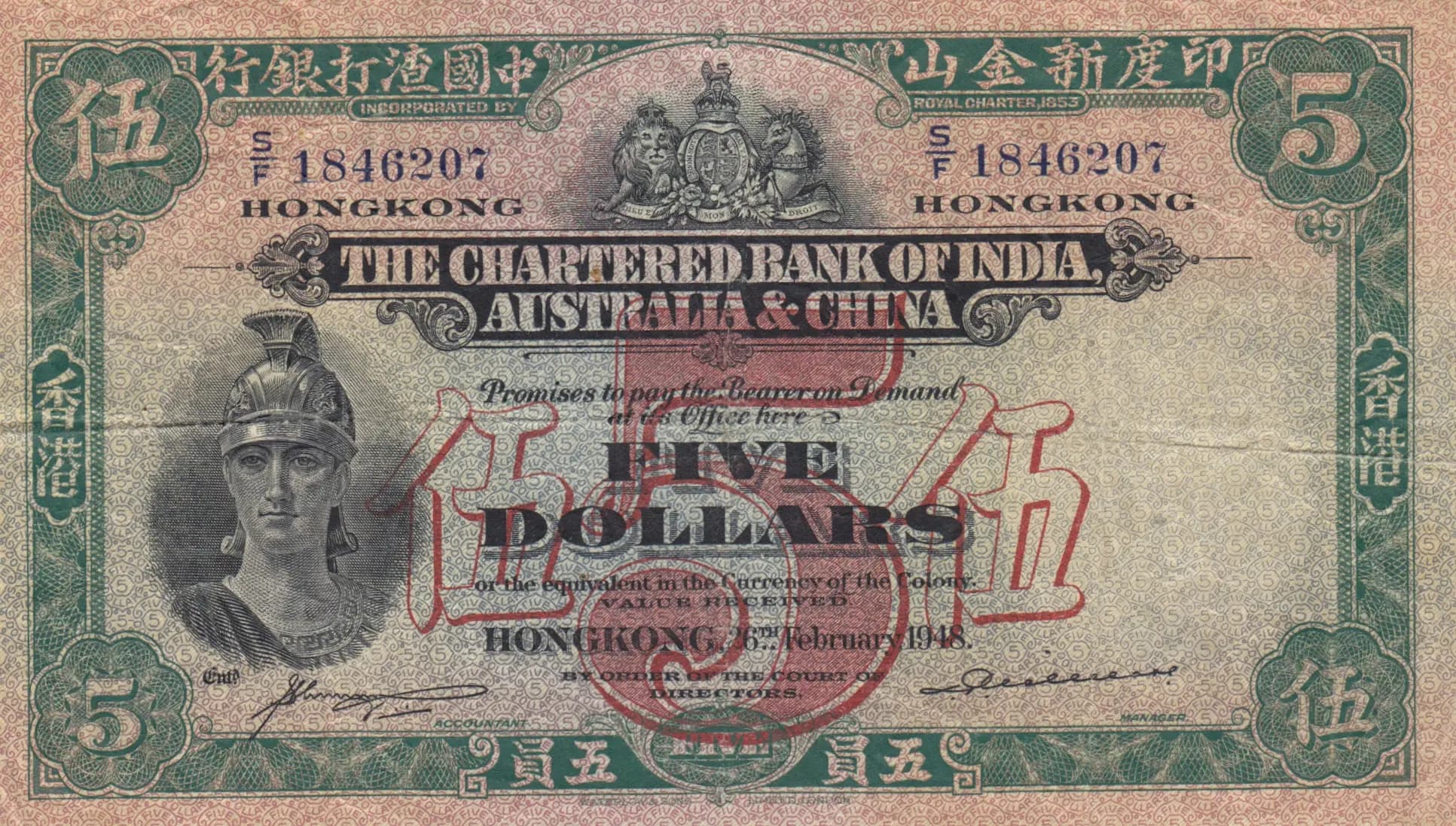
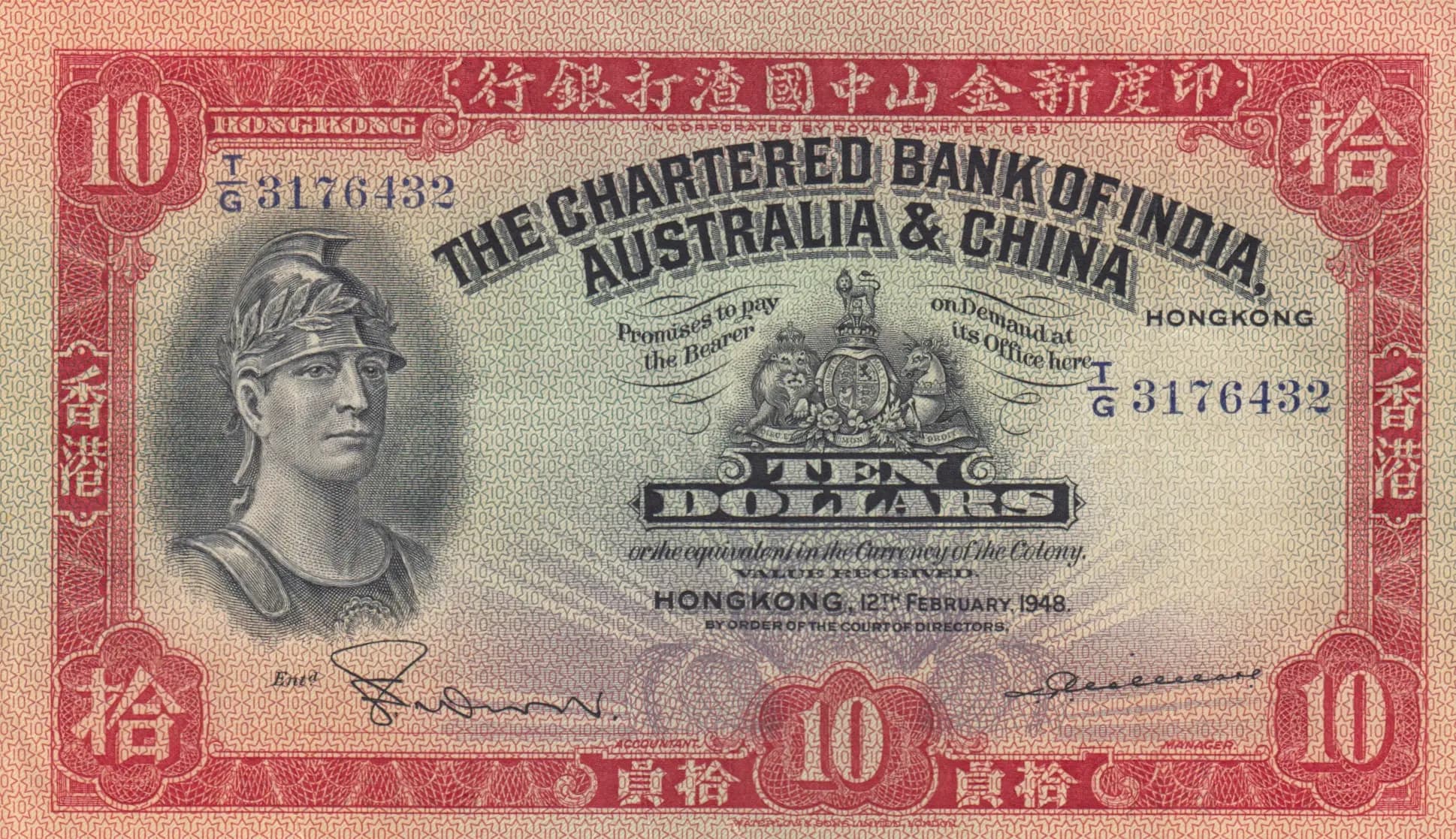
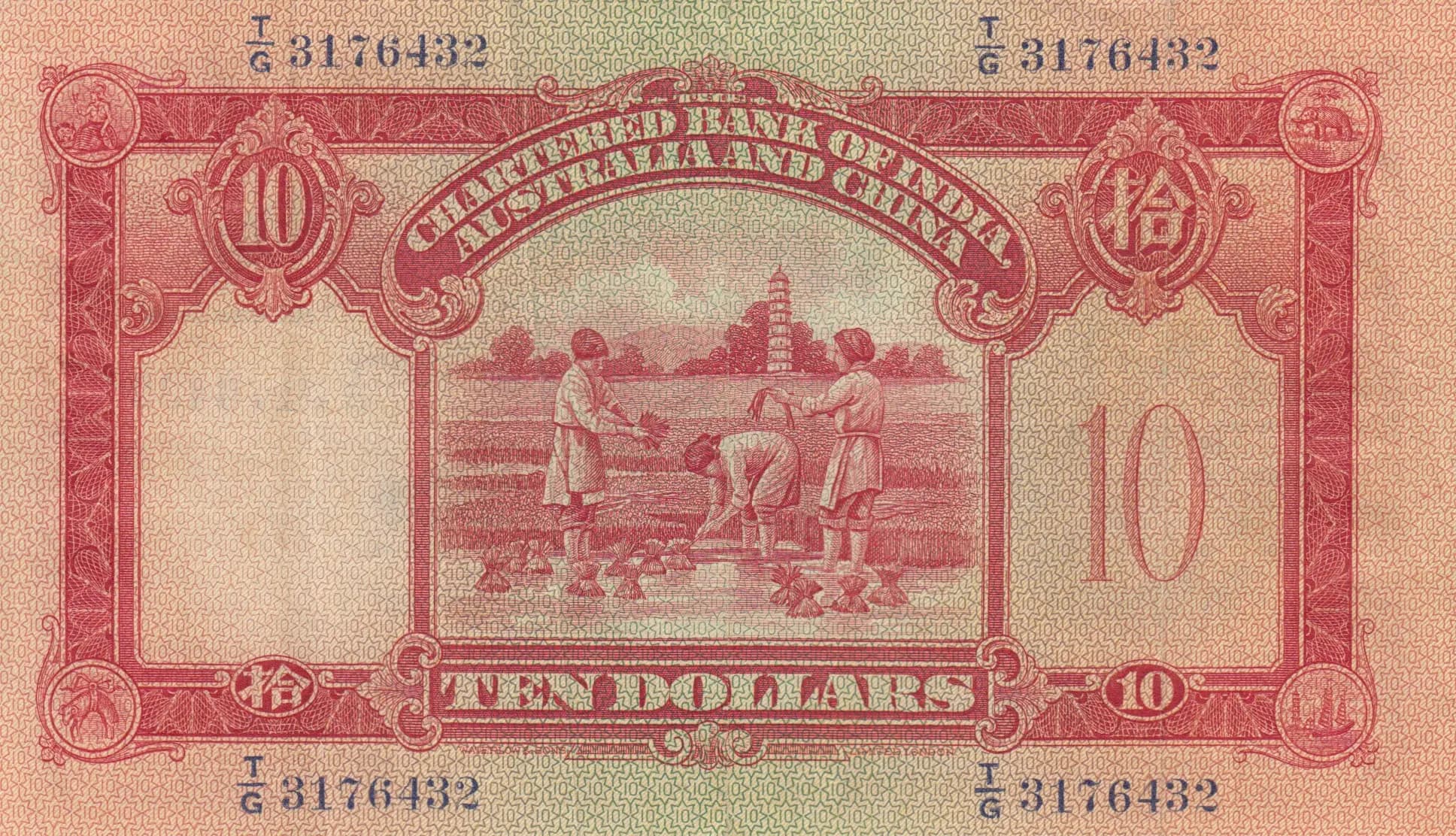
This is a Hong Kong 10 Dollar note from The Chartered Bank of India, Australia & China, dated 12th February 1948, graded VF (Very Fine). The obverse features a classical helmeted warrior's head in profile facing left, rendered in black with ornate red and pink decorative borders and a royal coat of arms. The reverse displays an agricultural vignette with workers harvesting in a rural landscape with a pagoda visible in the background. The note exhibits vibrant colors and excellent preservation with no visible wear, creases, or foxing, appearing to have seen minimal circulation.
Common. While this is a historically interesting 1948 issue from a defunct Hong Kong note-issuer, market data indicates steady availability. eBay auction records show VF-graded examples selling in the $163-$365 range between 2017-2021, with regular transactions at all condition levels (F to PMG 66). The 2016 catalog value for EF is $450. The consistent supply of examples at various grades and the relatively modest prices compared to earlier or rarer Hong Kong issues indicate this is a commonly encountered date and variety for collectors. Print runs for this series appear to have been substantial.
This note was issued during the post-World War II period when Hong Kong was transitioning back to civilian governance following Japanese occupation. The Chartered Bank of India, Australia & China was one of the three note-issuing banks in Hong Kong during this era. The classical warrior imagery on the obverse reflects the bank's heritage and prestige, while the agricultural vignette on the reverse depicts the rural economic foundation of Hong Kong's territory during the post-war reconstruction period.
The obverse features a left-facing classical warrior's head wearing a Corinthian helmet with laurel wreath, rendered in detailed black line engraving against a cream background. The design is framed by elaborate ornamental borders in red and pink tones, with decorative corner flourishes. The central area contains the bank's full name, promise to pay clause, and denomination in both English and Chinese. A royal coat of arms featuring lion and dragon supporters with a crown at the top is prominently displayed. The reverse showcases a scenic agricultural vignette depicting three workers engaged in harvesting activities in a rural landscape, with a multi-tiered pagoda tower visible in the background mountain setting. This is enclosed within an ornate decorative border with circular emblem designs in the corners. The overall design reflects the bank's imperial heritage and connection to Asia, with the agricultural imagery representing economic stability and colonial-era productivity.
FRONT: 'THE CHARTERED BANK OF INDIA AUSTRALIA & CHINA' / 'HONGKONG' / 'Promises to pay the Bearer on Demand at its Office here' / 'TEN DOLLARS' / 'of the equivalent in the Currency of the Colony' / 'HONGKONG, 12TH FEBRUARY, 1948.' / 'BY ORDER OF THE COURT OF DIRECTORS.' / Serial number: 'G 3176432' / Chinese text: '香港' (Hong Kong) / '中山國銀打港國中山金新產印' (The Chartered Bank of India, Australia & China, Hong Kong) / '拾圓' (Ten Dollars). BACK: 'THE CHARTERED BANK OF INDIA AND CHINA' / 'TEN DOLLARS' / '拾圓' (Ten Dollars) / Serial number: 'G 3176432'
Steel plate intaglio (engraved) printing, a premium security printing technique typical of high-value banknotes of this era. The printer was W&S (likely Waterlow & Sons, a prominent British security printer). The note features complex fine line work throughout both the portrait and decorative elements, with intricate background geometric patterns characteristic of intaglio printing. The note contains two printed signatures as noted in the catalog data.
This specific example is identified as Pick 55c with a date of 12th February 1948. The serial number prefix 'G 3176432' suggests this is from the standard circulation printing for this date. The note displays two printed signatures as specified in the catalog reference. This represents the regular issue for the 1941-1956 series, with the characteristic red and green underprint coloring noted in the catalog data for this Pick number. No overprints or special varieties are evident on the examined specimen.