1 dollar 1925
Market Prices
3 salesAbout This Note
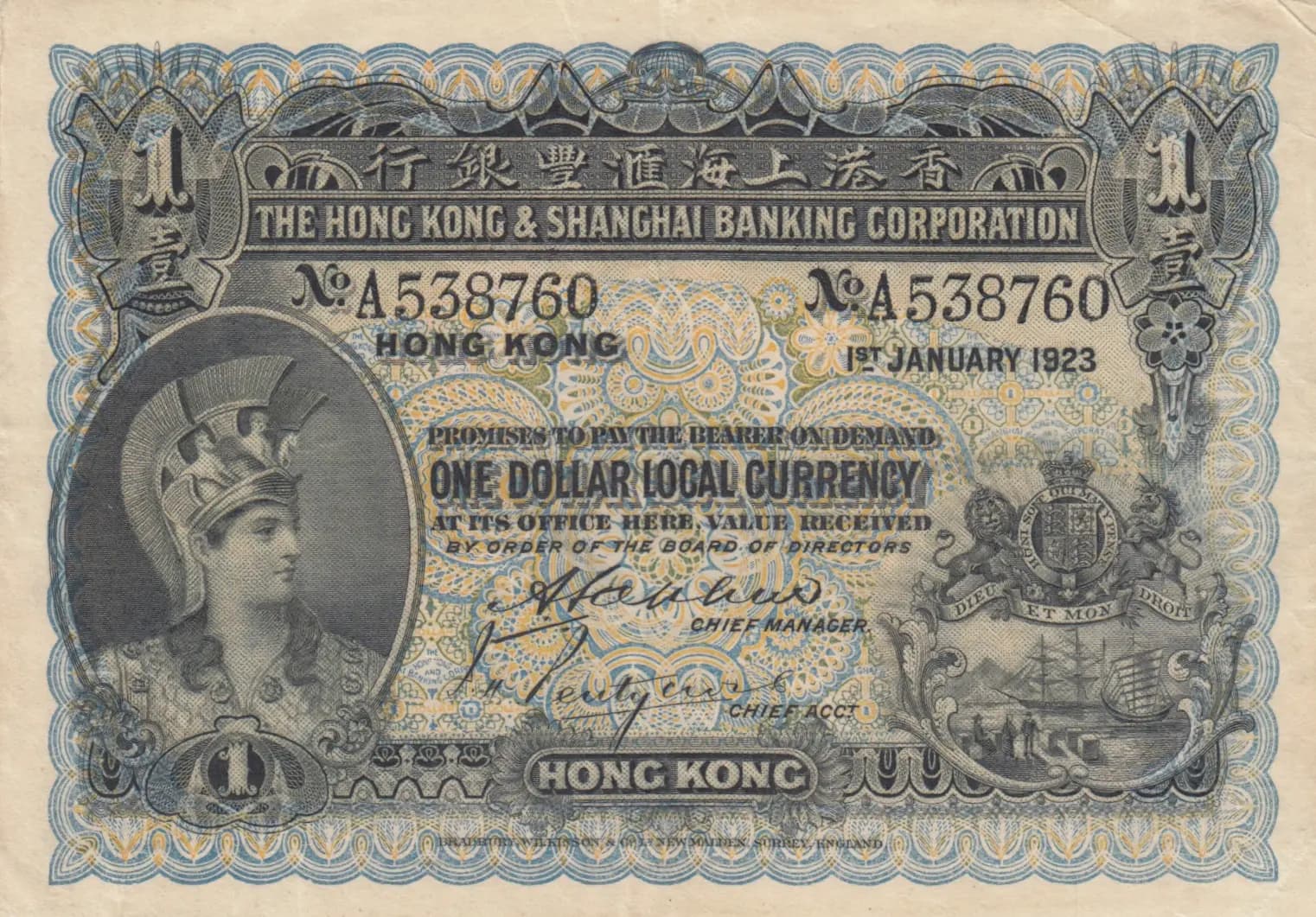
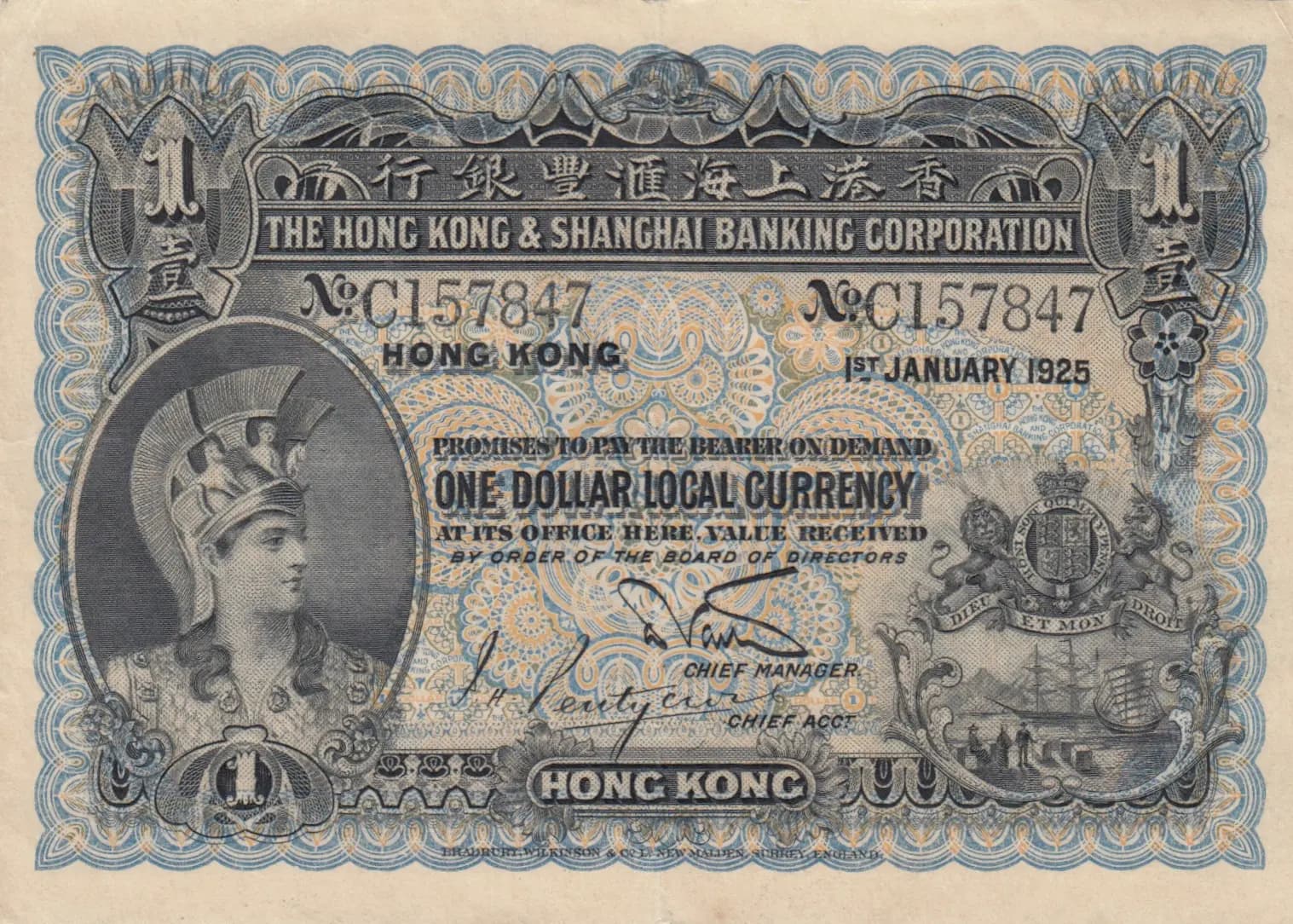
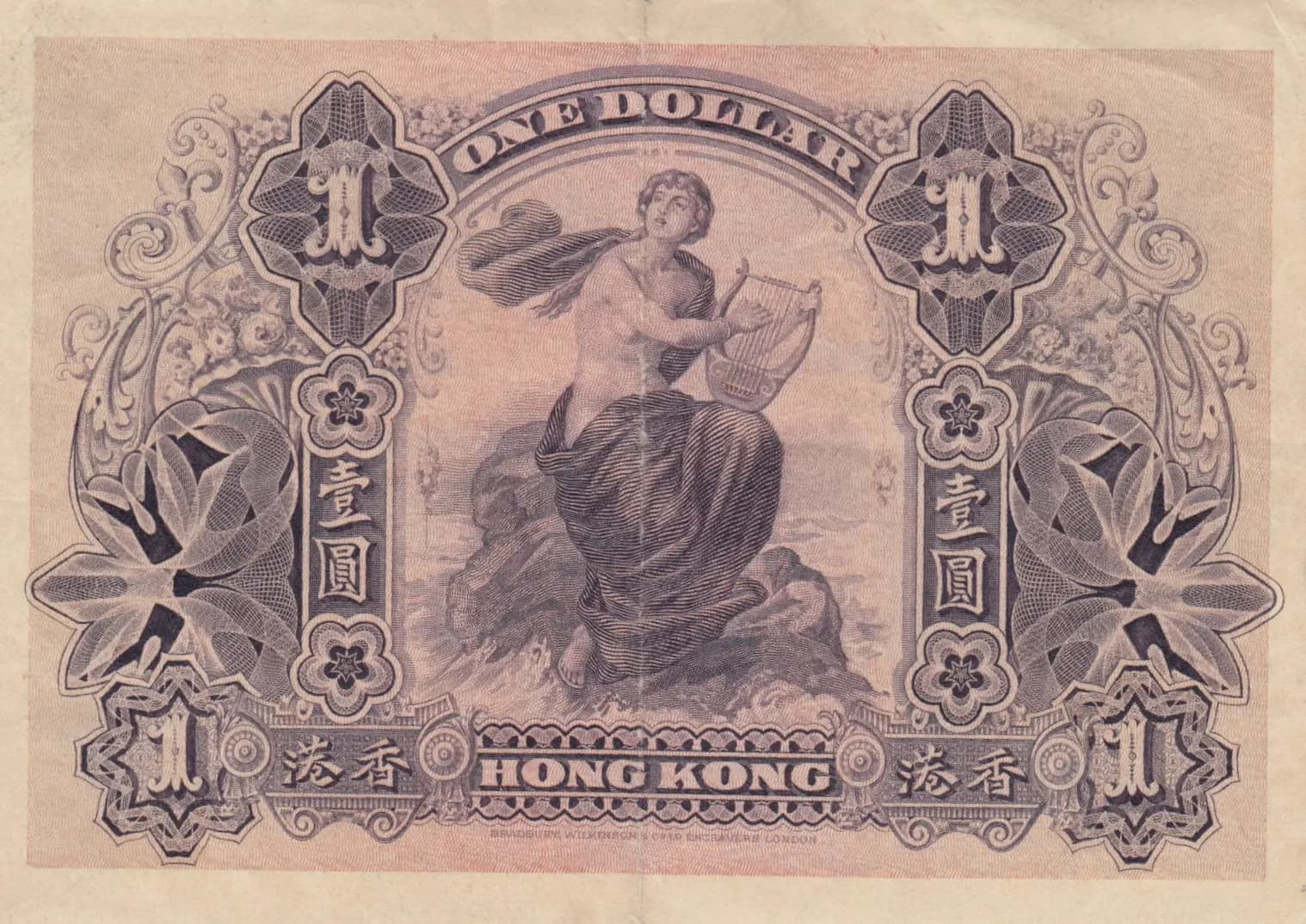
An attractive example of the Hong Kong & Shanghai Banking Corporation's 1925 one dollar note (Pick 171), featuring the iconic Britannia design on the reverse with her distinctive harp and clouds. The front displays an ornate helmeted woman in profile within an oval frame, accompanied by the bank's bilingual English/Chinese inscriptions and coat of arms. In VF condition, this well-circulated note shows expected aging including creasing, foxing, and color fading, but retains good detail clarity in its fine engraved work.
Common. This is a regular issue note from the Hong Kong & Shanghai Banking Corporation's established currency series. eBay market data indicates VF examples typically sell in the $300–$350 range (catalog value $325 per 2016 reference), and circulation examples appear regularly on the market. The print run for this denomination during 1923–1925 was substantial, supporting continuous availability of examples in various grades. No indication of short print runs, recalls, or special circumstances suggesting rarity.
This note was issued during the mid-1920s when Hong Kong & Shanghai Banking Corporation held significant authority to issue currency in the Hong Kong dollar system. The Britannia imagery on the reverse, along with the helmeted classical female portrait on the front, reflects the strong British imperial aesthetics that dominated colonial Hong Kong's visual culture during this period. The bilingual English-Chinese inscriptions demonstrate the corporation's position as a major intermediary institution serving both British colonial administration and the Chinese mercantile community.
The obverse features a classically-styled portrait of a helmeted woman (representing Britannia or Wisdom) in profile facing right, positioned in an ornate oval frame on the left side. A formal coat of arms with heraldic lions and shield design occupies the lower right. The entire note is framed by an elaborate decorative border composed of interlocking scrollwork, floral motifs, and geometric patterns in blue and cream tones, typical of Edwardian-era security printing. The reverse depicts an allegorical winged female figure (Britannia) in flowing robes, seated upon clouds and holding a classical harp—a powerful symbol of peace, commerce, and British imperial authority. This figure is centered within an ornate mauve and pink decorative frame adorned with acanthus leaf scrollwork and corner cartouches containing Chinese characters. The bilateral presentation of English and Chinese text throughout reflects Hong Kong's status as a colonial trading hub with significant Chinese participation in the currency economy.
FRONT: 'THE HONG KONG & SHANGHAI BANKING CORPORATION' / 香港上海豐銀行 (Hong Kong Shanghai Banking Corporation) | Serial Number: №C157847 | 'HONG KONG' | '1ST JANUARY 1925' | 'PROMISES TO PAY THE BEARER ON DEMAND' | 'ONE DOLLAR LOCAL CURRENCY' | 'AT ITS OFFICE HERE, VALUE RECEIVED' | 'BY ORDER OF THE BOARD OF DIRECTORS' | 'CHIEF MANAGER' | 'CHIEF ACCOUNTANT' | 'BRADBURY WILKINSON & CO LTD ENGRAVERS & PRINTERS SURREY ENGLAND'. BACK: 'ONE DOLLAR' | 'HONG KONG' | 壹圓 (One Yuan/Dollar) | 港香 (Hong Kong)
Steel engraving on banknote paper, executed by Bradbury Wilkinson & Co Ltd, the renowned London-based security printer (located in New Malden, Surrey, as noted in the imprint). The fine line work, cross-hatching, and intricate decorative patterns visible throughout the note are characteristic of high-security intaglio engraving. The multi-colored printing was achieved through separate passes for the blue-cream obverse design and the mauve-pink reverse design, with black overprinting for text and fine details—a standard practice for quality banknote production in the 1920s.
Issued in two years: 1923 and 1925. This example bears the '1ST JANUARY 1925' date. Serial number C157847 indicates this note from the 'C' series prefix. Signatures are handwritten in manuscript (Chief Manager and Chief Accountant positions), with variations expected across the issued notes. This specific date variant (1925 vs. 1923) may command slightly different pricing, though both remain common in collector circulation.