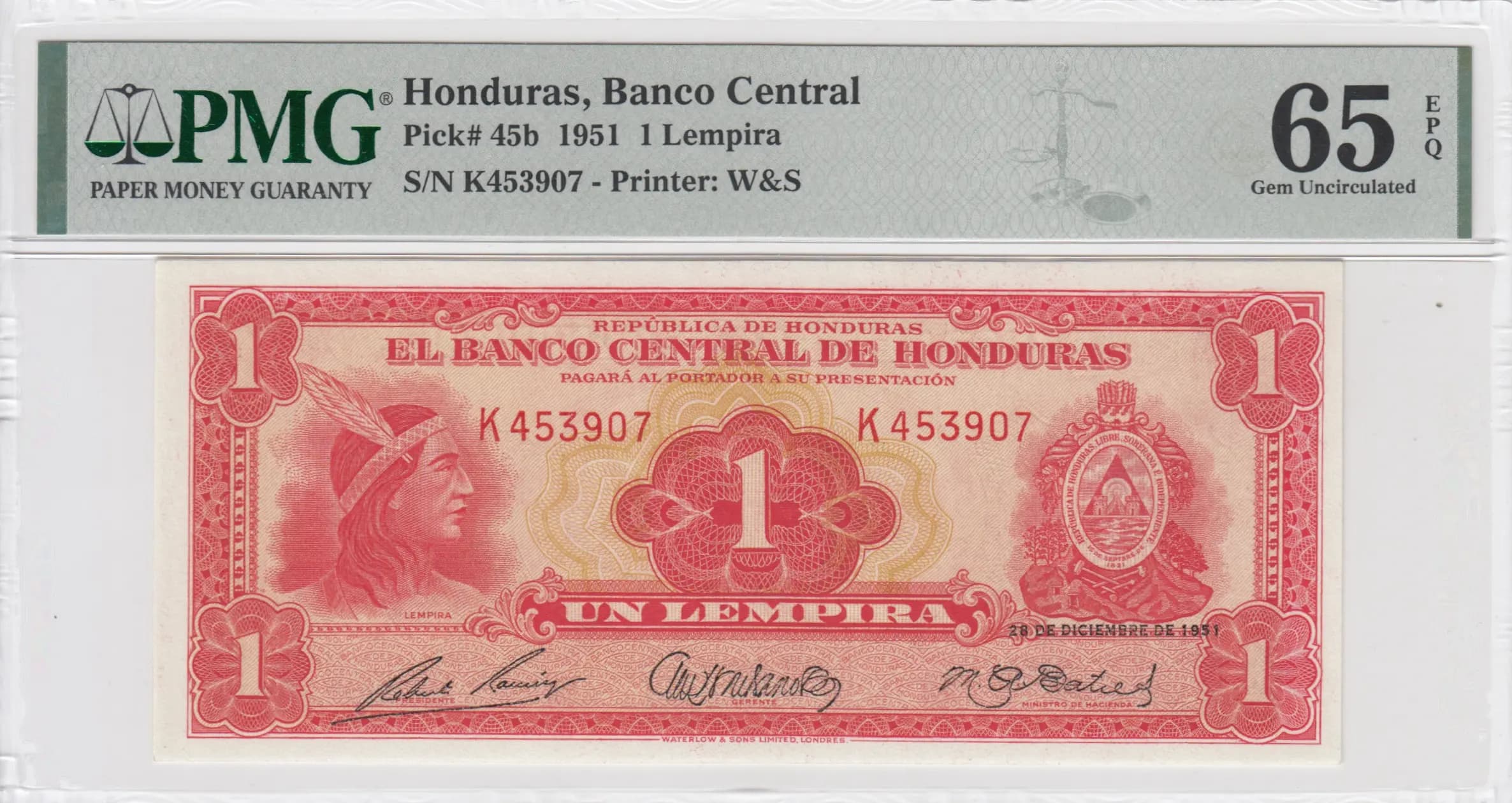
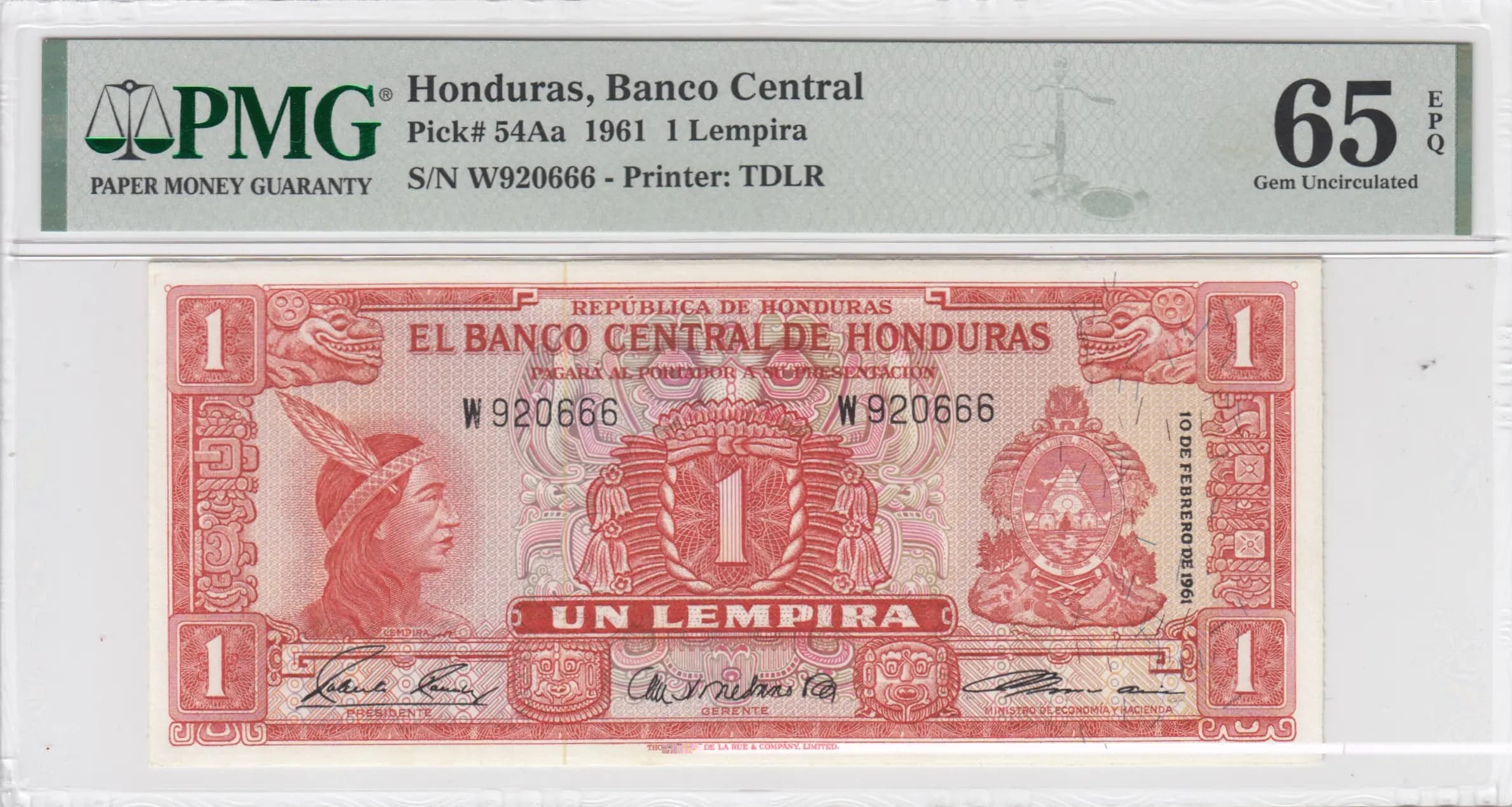
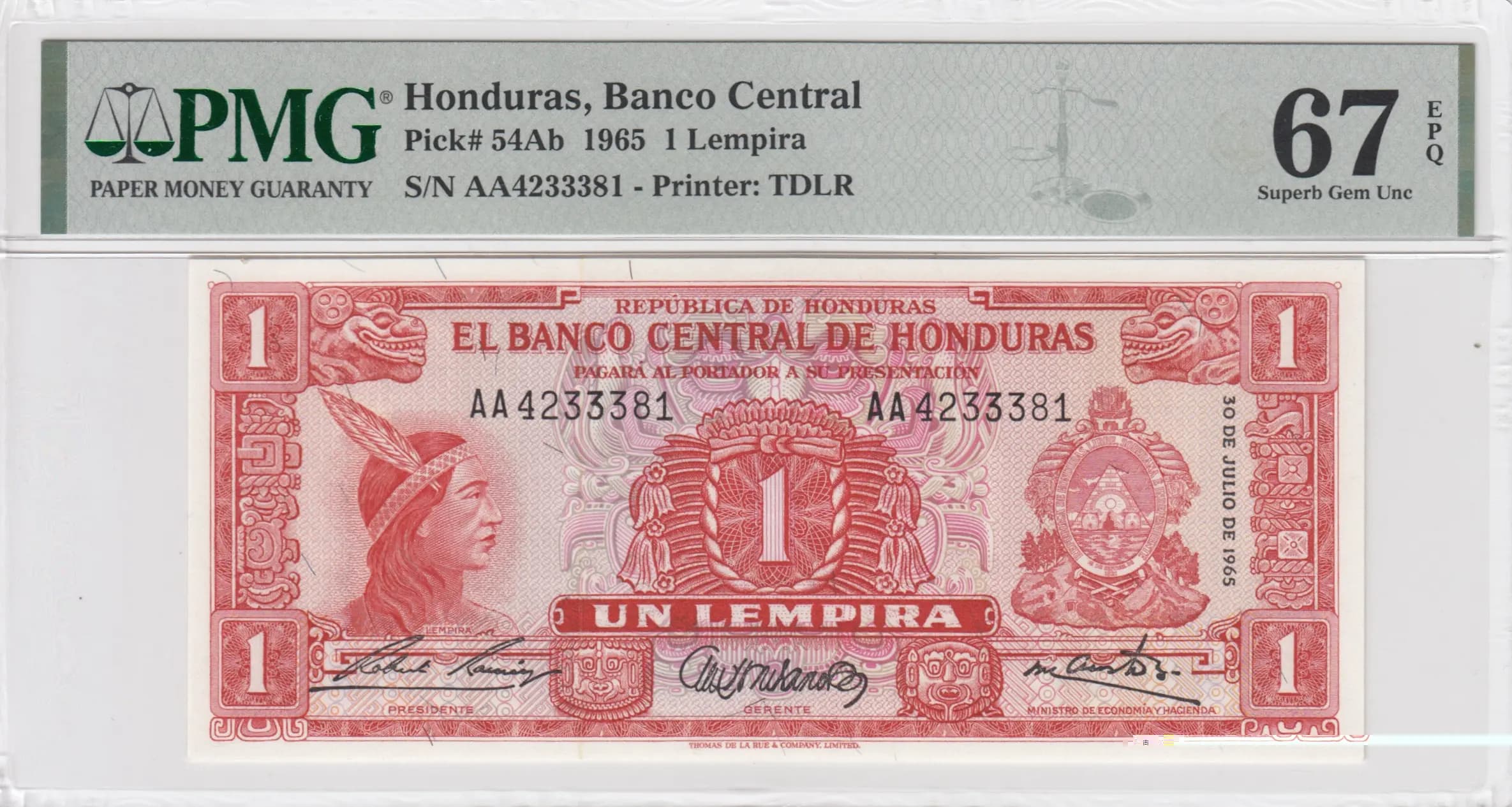
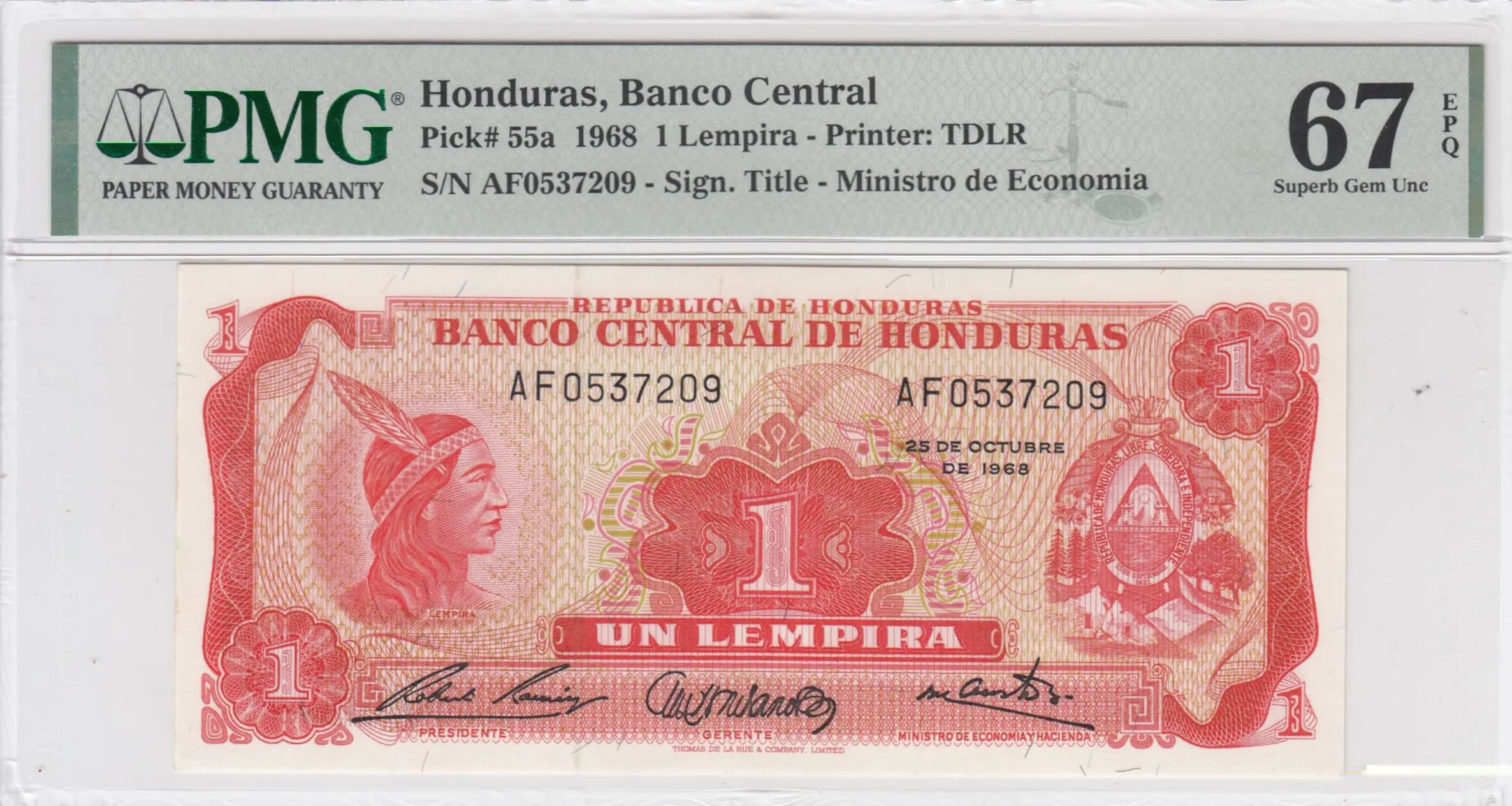
1 lempira 1978
Market Prices
10 salesAbout This Note
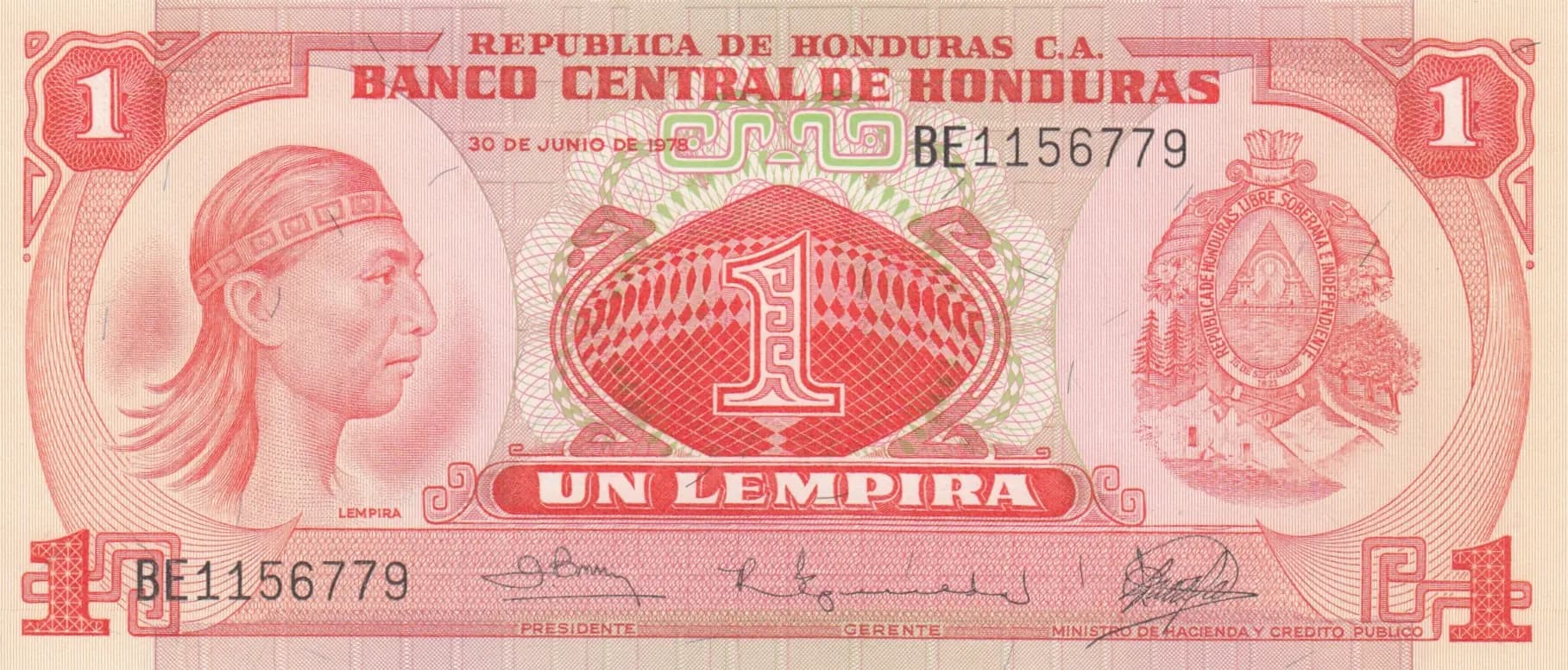
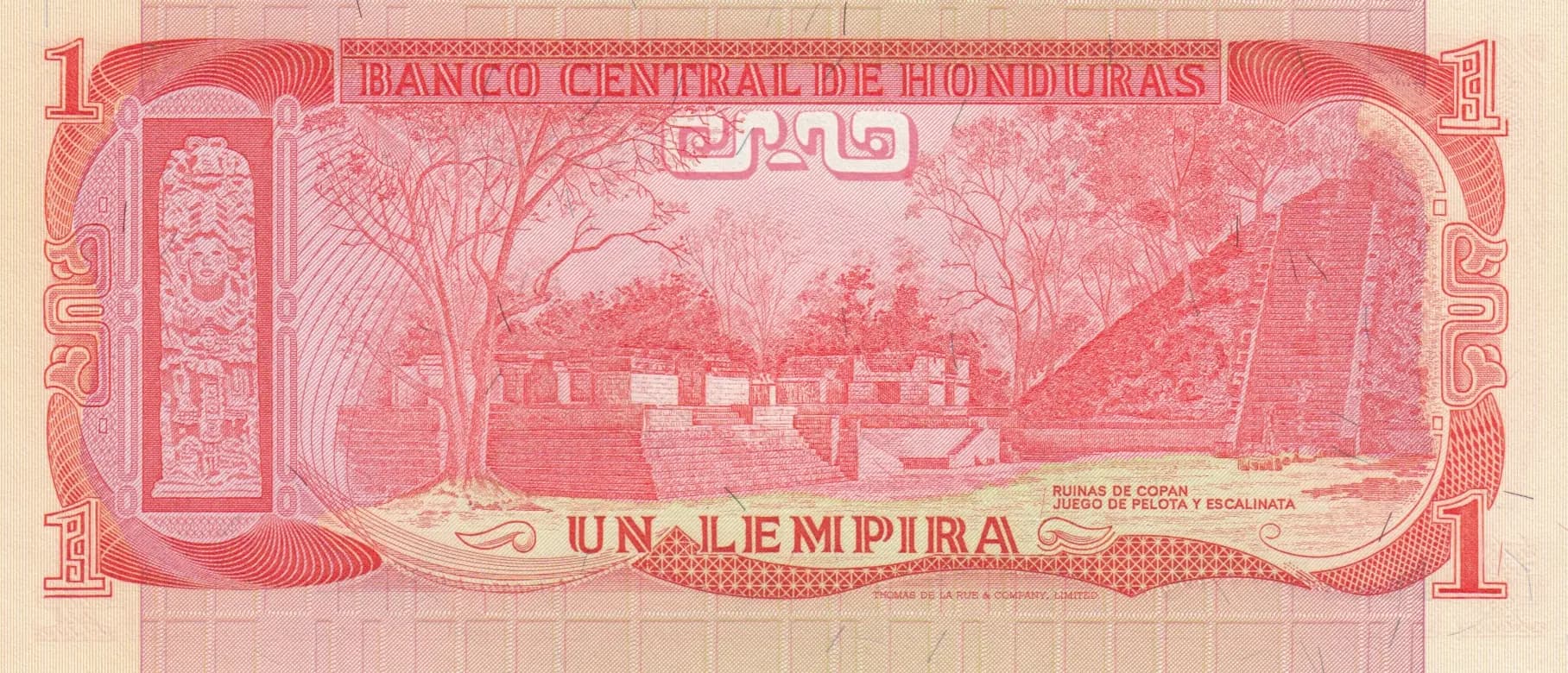
A pristine example of Honduras's 1978 1 Lempira note (Pick 62) in uncirculated condition, featuring a striking red and green color scheme with vibrant engraving throughout. The obverse displays a left-facing portrait of Lempira, the indigenous resistance leader, alongside the Honduran coat of arms, while the reverse showcases the architectural grandeur of the Ruins of Copan with pre-Columbian artistic elements. This Thomas de la Rue production represents a well-preserved specimen of a standard-issue banknote that remains popular with collectors of Central American currency.
Common. The eBay price history provided demonstrates consistent circulation in the collector market at modest valuations: recent examples selling in the $1.25–$30 range for grades F through UNC, with 2019 catalogue values of $0.75 (VF) and $7 (UNC). These price points and auction frequencies indicate this was a standard-issue note with a substantial print run, not a scarce or limited release. While this particular specimen in UNC condition represents a well-preserved example deserving of collector attention, the denomination itself remains common in numismatic markets.
Issued on June 30, 1978, by the Banco Central de Honduras, this note commemorates two pillars of Honduran national identity: Lempira, the 16th-century indigenous leader who resisted Spanish conquest, and the Ruins of Copan, one of the most significant archaeological sites of the Maya civilization located in western Honduras. The note's design reflects Honduras's efforts to honor its pre-Columbian heritage during the post-colonial period, with the ball court (juego de pelota) and ceremonial staircase representing the sophistication of ancient Mesoamerican civilization.
The obverse features a detailed profile portrait of Lempira, the indigenous Lenca leader, positioned on the left and rendered in classical engraving style facing right, wearing a traditional headband. The Honduran national coat of arms, featuring a pyramid structure with surrounding vegetation and ceremonial elements, is positioned prominently on the right side. The reverse depicts the Ruins of Copan, one of the most important archaeological sites of Maya civilization, showing the distinctive pyramid structures, the famous ball court (juego de pelota), and the ceremonial staircase (escalinata) in an elaborate landscape composition. Pre-Columbian artistic symbols and carved stone elements frame the ruins scene. Both sides employ large denomination numerals '1' in the corners with intricate Greek key and geometric decorative borders throughout, characteristic of Thomas de la Rue's security printing standards.
FRONT SIDE: 'REPUBLICA DE HONDURAS C.A.' (Republic of Honduras, Central America) | 'BANCO CENTRAL DE HONDURAS' (Central Bank of Honduras) | 'UN LEMPIRA' (One Lempira) | '30 DE JUNIO DE 1978' (June 30, 1978) | 'LEMPIRA' (currency name) | 'PRESIDENTE' (President) | 'GERENTE' (Manager) | 'MINISTRO DE HACIENDA Y CREDITO PUBLICO' (Minister of Finance and Public Credit) | Serial number 'BE1156779'. BACK SIDE: 'BANCO CENTRAL DE HONDURAS' (Central Bank of Honduras) | 'UN LEMPIRA' (One Lempira) | 'RUINAS DE COPAN' (Ruins of Copan) | 'JUEGO DE PELOTA Y ESCALINATA' (Ball Court and Staircase) | 'THOMAS DE LA RUE & COMPANY, LIMITED' (printer attribution, London).
Intaglio engraving (copperplate printing) executed by Thomas de la Rue & Company, Limited, of London, the world's leading banknote security printer of the period. The visual analysis reveals the hallmarks of this technique: complex fine line work creating the portrait and landscape details, intricate background patterns and geometric designs providing security against counterfeiting, and the precise registration of multiple color layers (red, pink, cream, and green accents). The note demonstrates the high standards of craftsmanship characteristic of Thomas de la Rue's banknote production.
This example is identified as the 1978 issue variant (Pick P-62) distinguished from the earlier P-58 by the addition of ornamental designs on the upper center of the reverse around the 'Banco Central de Honduras' text and pre-Columbian symbols below the bank name. The serial number prefix 'BE' and the specific numbering sequence can be noted for variety classification purposes. The note bears signatures corresponding to the officials named in the inscriptions (Presidente, Gerente, and Ministro de Hacienda y Crédito Público), which may vary by printing batch.