1 lempira 1961
Market Prices
9 salesAbout This Note
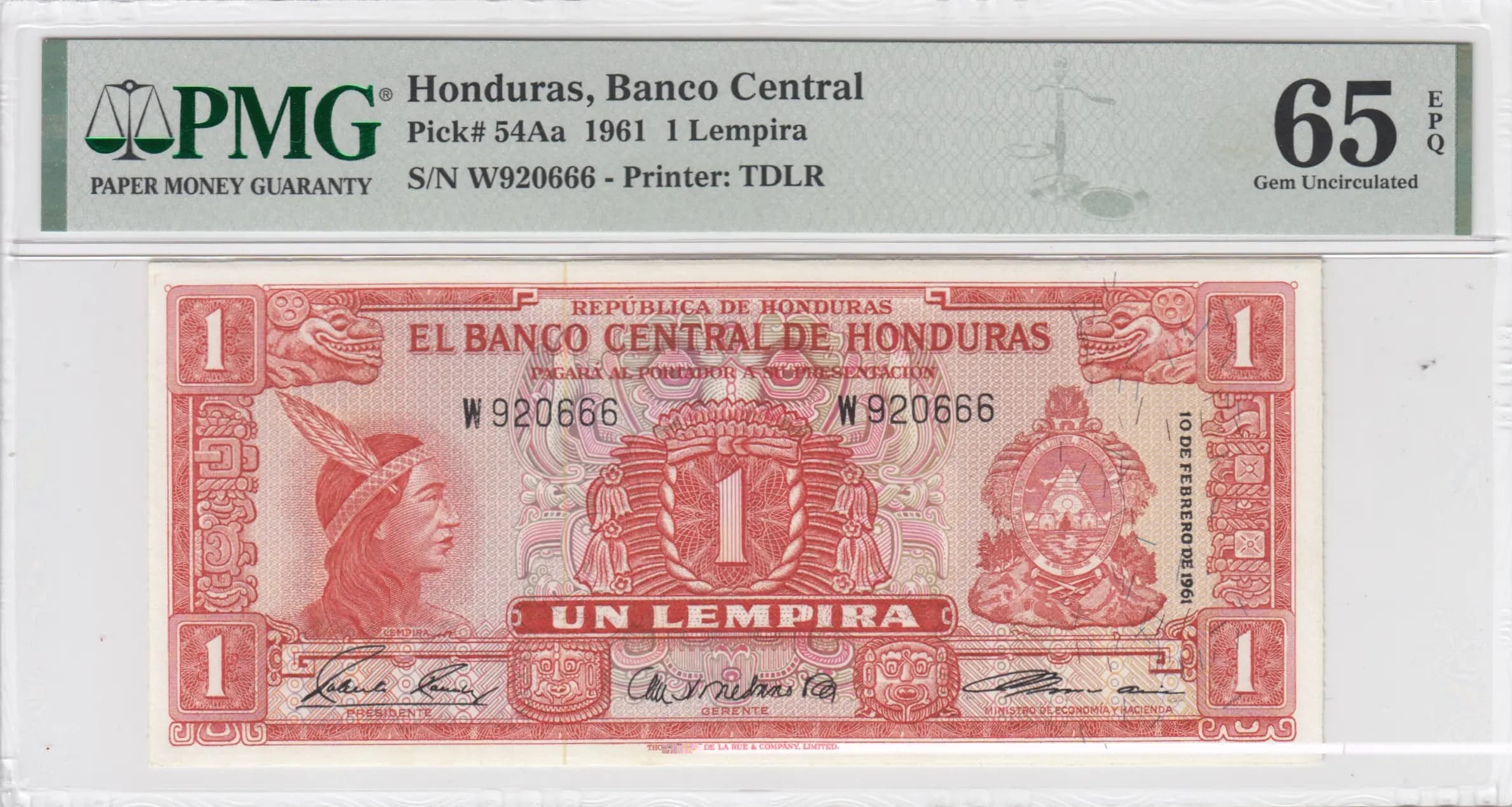
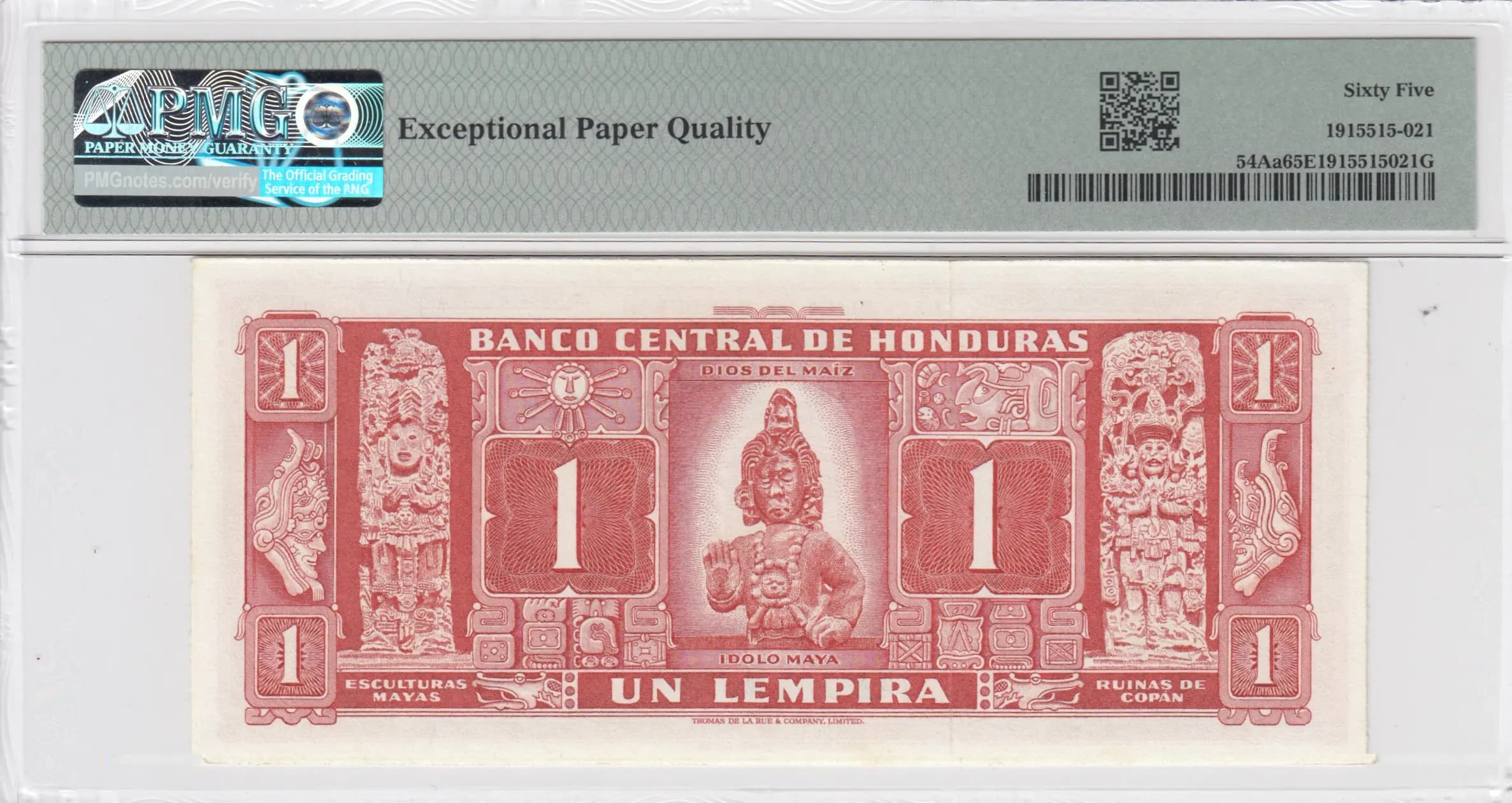
This is a gem uncirculated example of the 1961 Honduras 1 Lempira note (Pick P-54Aa), graded PMG 65 EPQ. The note features vibrant red and multicolored printing with intricate Mayan-inspired border designs and a central coat of arms on the obverse. The reverse showcases Pre-Columbian Mayan artistic motifs, including a central Mayan idol figure labeled as the 'God of Corn' flanked by architectural elements and references to the famous Copán Ruins. The pristine condition with sharp intaglio printing and exceptional paper quality makes this an attractive example for collectors of Central American currency.
Common. This is a regular issue note from 1961 with significant print runs, as indicated by the catalog designation P-54Aa (a standard variant rather than a scarce overprint or special issue). eBay market data shows consistent trading activity with recent sales in the $8-$82 range depending on condition grade. The most comparable recent sale was a PMG 66 example that sold for $82 in 2017, suggesting modest demand but ample supply. Catalog values listed at $4 for VF and $25 for UNC condition further support a common classification.
Issued in February 1961 by the Banco Central de Honduras, this note reflects Honduras's cultural pride in its Pre-Columbian Mayan heritage, prominently featuring the 'Dios del Maíz' (God of Corn) and the renowned Copán Ruins on the reverse. The design choices underscore the nation's connection to its archaeological significance during a period of post-colonial nation-building. The formal presidential and ministerial signatures indicate the governmental authority structure of Honduras during the early 1960s.
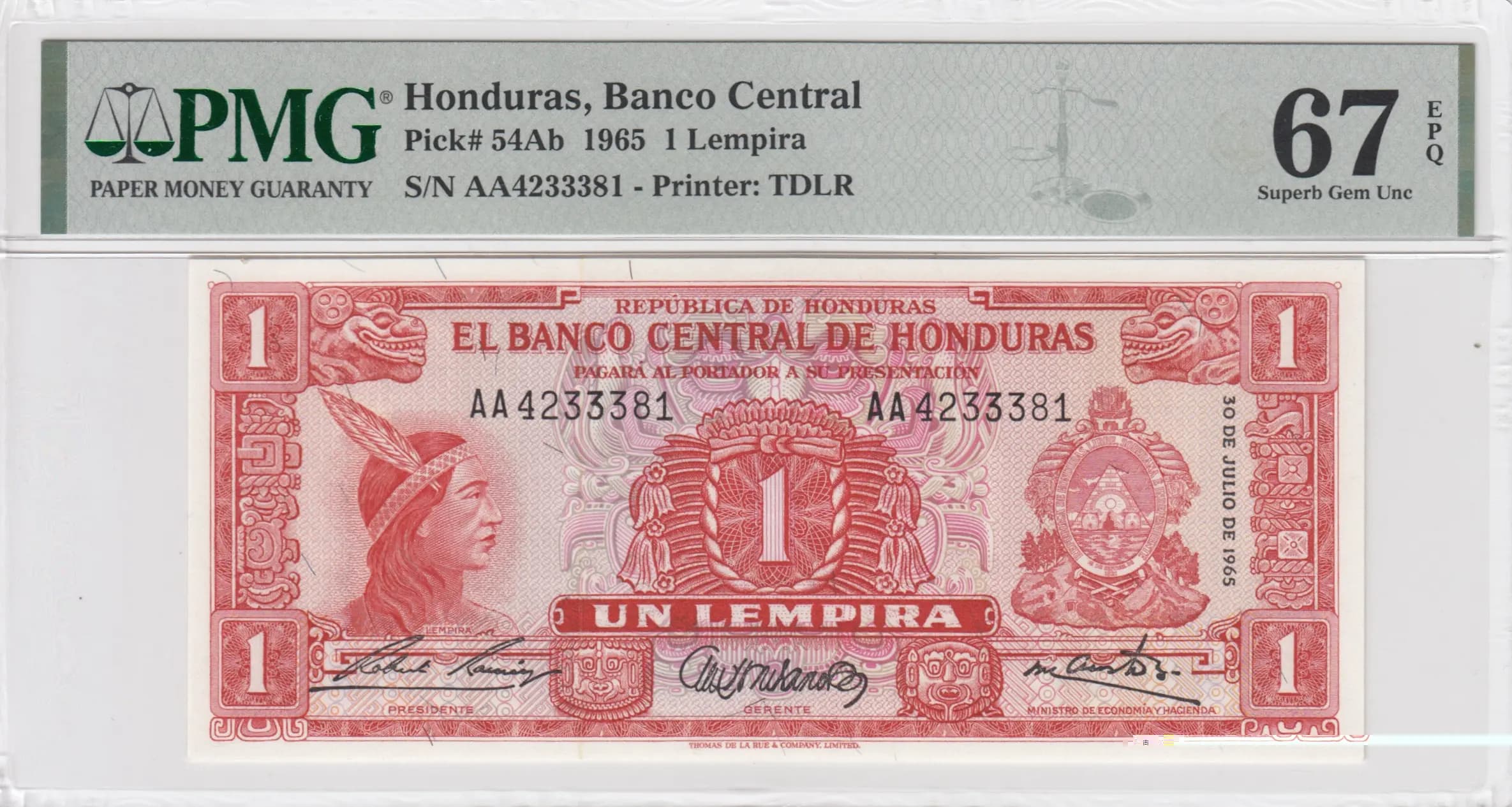
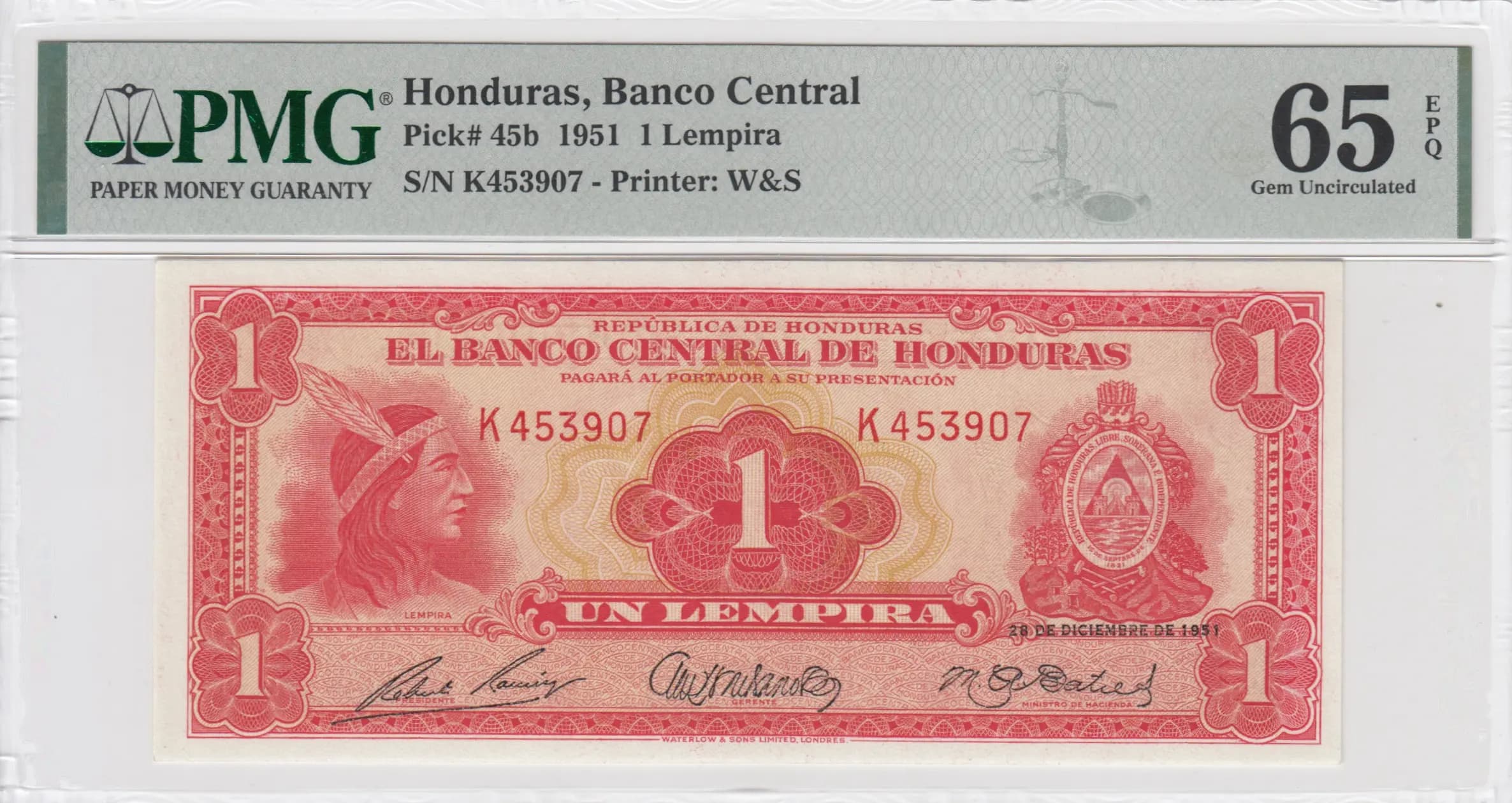
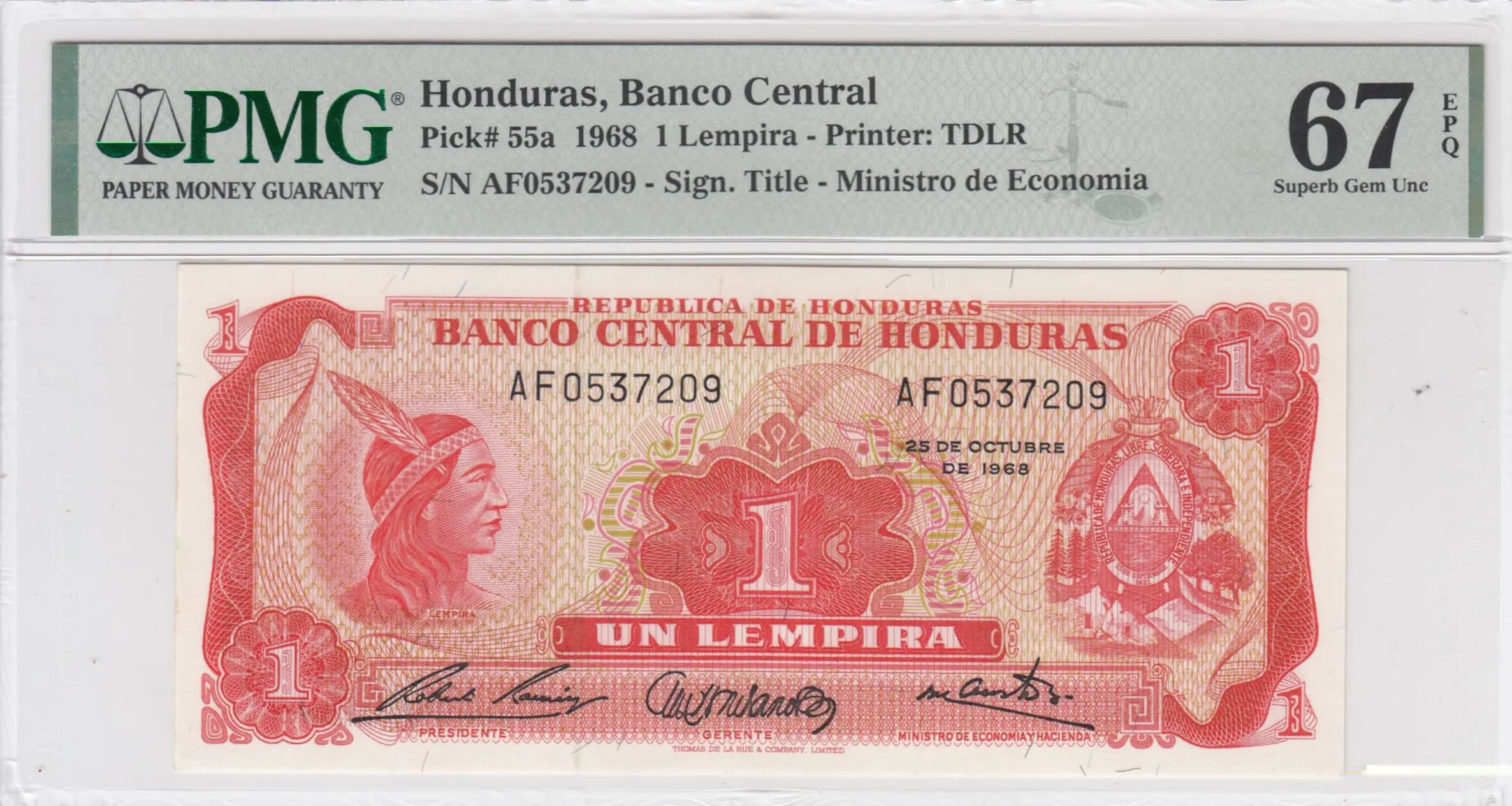
The obverse features a classical portrait in profile on the left side, wearing a feathered headdress and period dress, flanked by the national coat of arms at center and an ornamental heraldic seal on the right. The design is framed by elaborate intaglio borders incorporating Mayan-inspired geometric patterns and corner denomination markers. The reverse is dominated by a frontal representation of a Mayan idol with an elaborate ceremonial headdress, identified as the 'Dios del Maíz' (God of Corn—a central figure in Mesoamerican mythology). Symmetrical architectural columns and hieroglyphic-style decorative elements frame the central figure, with specific textual references to the Copán Ruins (one of the most significant Mayan archaeological sites located in Honduras) and Mayan sculptures. The color scheme throughout is predominantly red and coral tones with white and cream accents, creating a cohesive and visually striking design that celebrates Honduras's Pre-Columbian heritage.
FRONT SIDE: 'República de Honduras' (Republic of Honduras), 'El Banco Central de Honduras' (The Central Bank of Honduras), 'Pagará al Portador a la Presentación' (Will pay to bearer upon presentation), 'Un Lempira' (One Lempira), 'Presidente' (President), 'Gerente' (Manager), 'Ministro de Economía y Hacienda' (Minister of Economy and Finance), '1961 Febrero 1961' (February 1961), Serial number: W920666 (appears twice). BACK SIDE: 'Banco Central de Honduras' (Central Bank of Honduras), 'Dios del Maíz' (God of Corn), 'Ídolo Maya' (Mayan Idol), 'Un Lempira' (One Lempira), 'Esculturas Mayas' (Mayan Sculptures), 'Ruinas de Copán' (Copán Ruins), 'Thomas De La Rue & Company, Limited' (Printer attribution).
Intaglio printing (engraving) by Thomas De La Rue & Company, Limited, London—the renowned British security printer known for producing high-security banknotes. The visual analysis confirms the characteristic fine line work, elaborate decorative patterns, and sharp detail work typical of intaglio production. Multiple layers of intricate design elements and complex border work are hallmarks of this premium printing technique.
This specific note is cataloged as Pick P-54Aa, identified by the black serial number and modified design introduced in 1961. The PMG population report indicates two variants exist under the base Pick number P-54 (P-54a and P-54s), with P-54a being the standard variant represented here. The observed serial number W920666 and the February 1961 issue date are consistent with the regular issue variety. No significant overprints, errors, or notable deviations from the standard design are apparent in the visual analysis.