2 gourdes 1827
Market Prices
6 salesAbout This Note
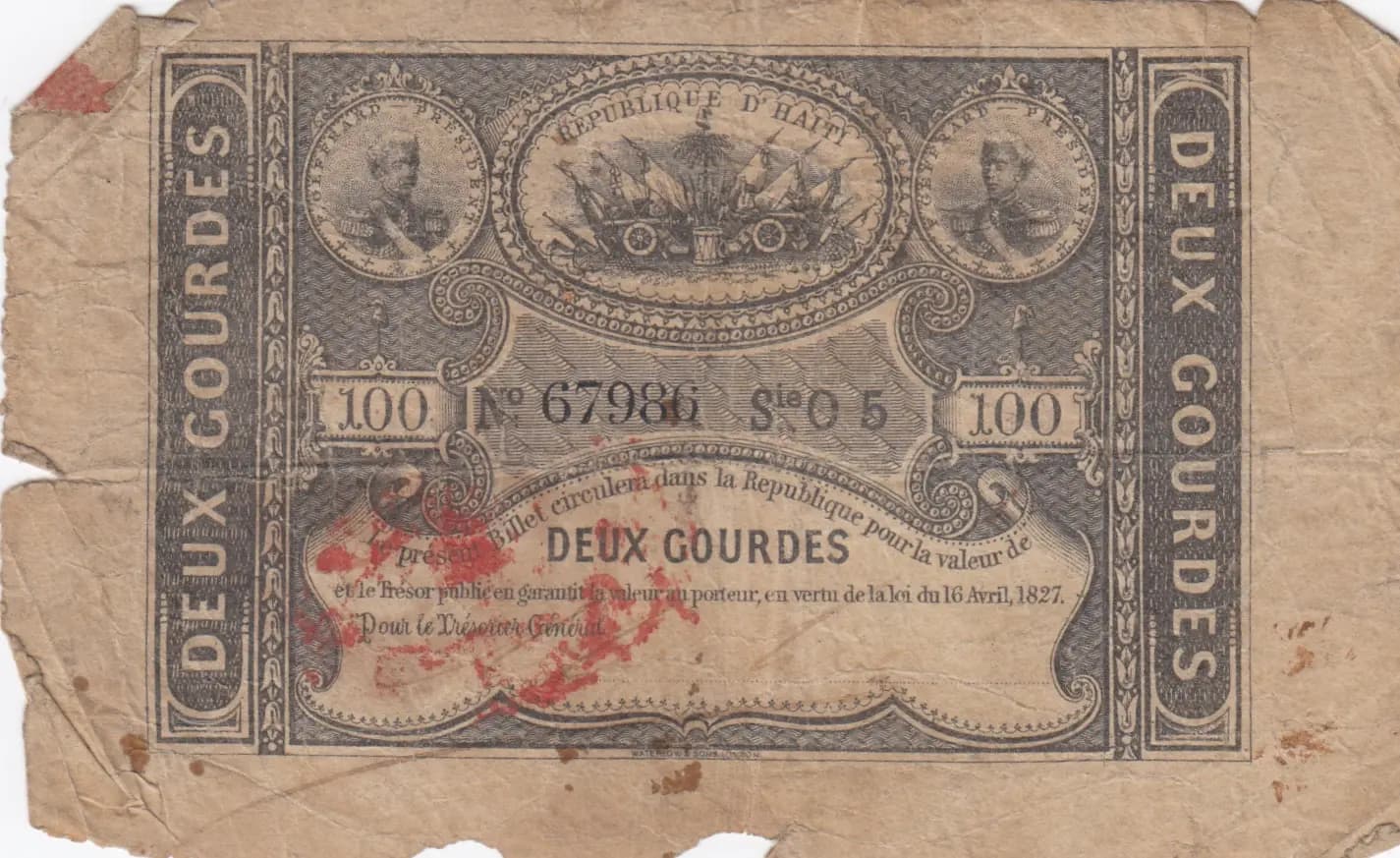
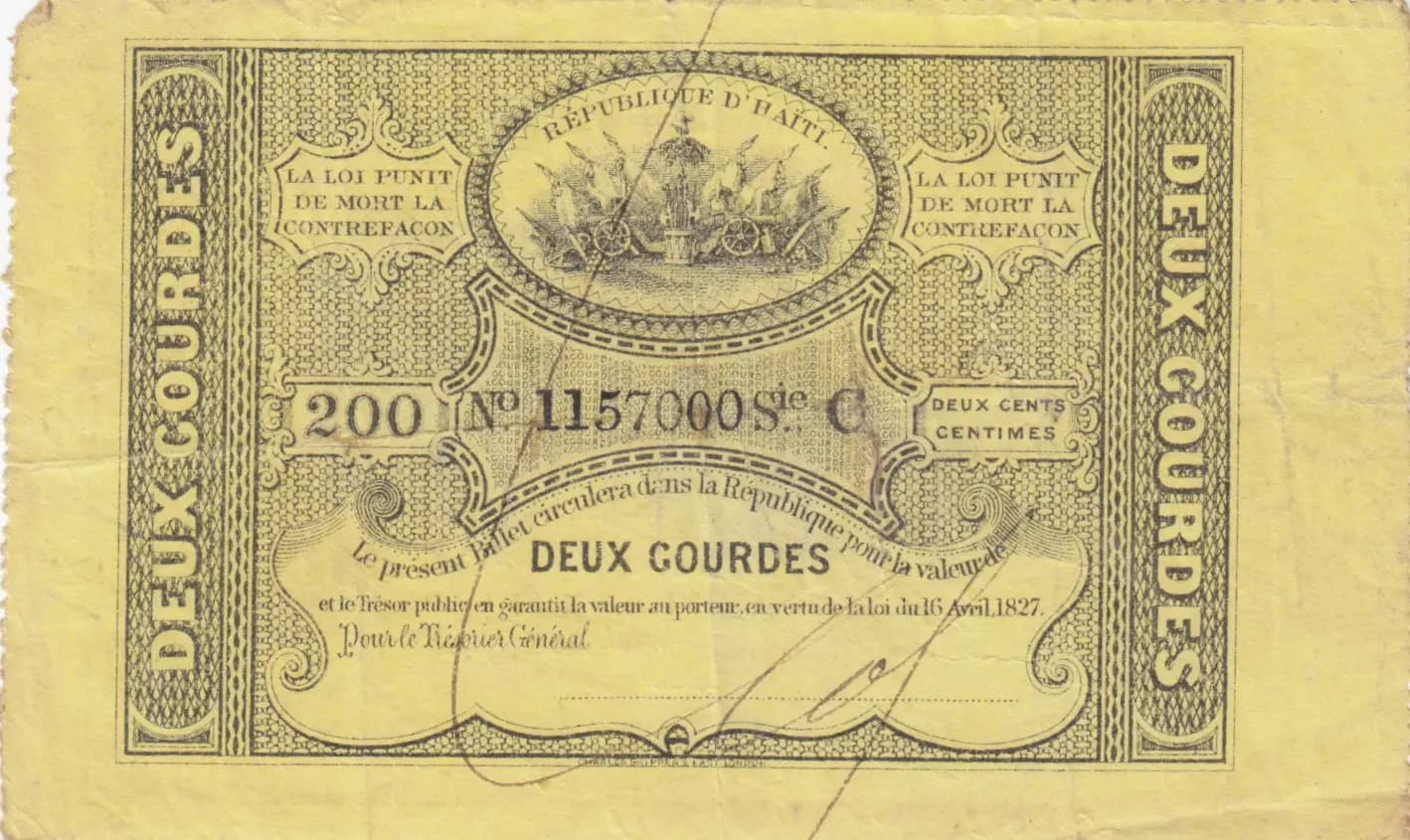
This is a scarce early Haitian 2 gourdes note from 1827, printed by Charles Skipper & East of England on cream-colored paper with black ornate engraving. The obverse features an impressive oval medallion depicting a fortified coastal settlement with ships and flags—likely representing Port-au-Prince or another key Haitian port—surrounded by elaborate decorative scrollwork and geometric patterns. The note displays significant age-related patina including yellowing, creasing, and spotting consistent with nearly two centuries of circulation, yet retains good structural integrity and legibility typical of VF grade specimens.
Common to Uncommon. While early Haitian currency is generally sought after by collectors, the eBay price tracking data indicates this note in F-VF condition sells consistently in the $29-$57 range with an average around $40-45, placing it well within the accessible price tier for collectors. The 2016 catalog values ($20 in F, $60 in EF) and consistent market activity across multiple sales suggest adequate supply in the secondary market. The note is not rare, though examples in higher grades or with exceptional provenance command premiums. The relatively robust print run and survival of multiple examples support a common-to-uncommon classification rather than scarce or rare.
Issued just over two decades after Haiti's independence from France (1804), this 1827 note represents the young republic's efforts to establish sovereign monetary authority and economic legitimacy. The fortified port city depicted in the central medallion symbolizes Haiti's strategic importance as a Caribbean trading hub and its defensive posture as the world's first Black republic. The stern warning inscribed on the note—'The law punishes counterfeiting with death'—reflects the serious measures Haiti took to protect its fledgling currency against fraud during a period of political instability and economic vulnerability.
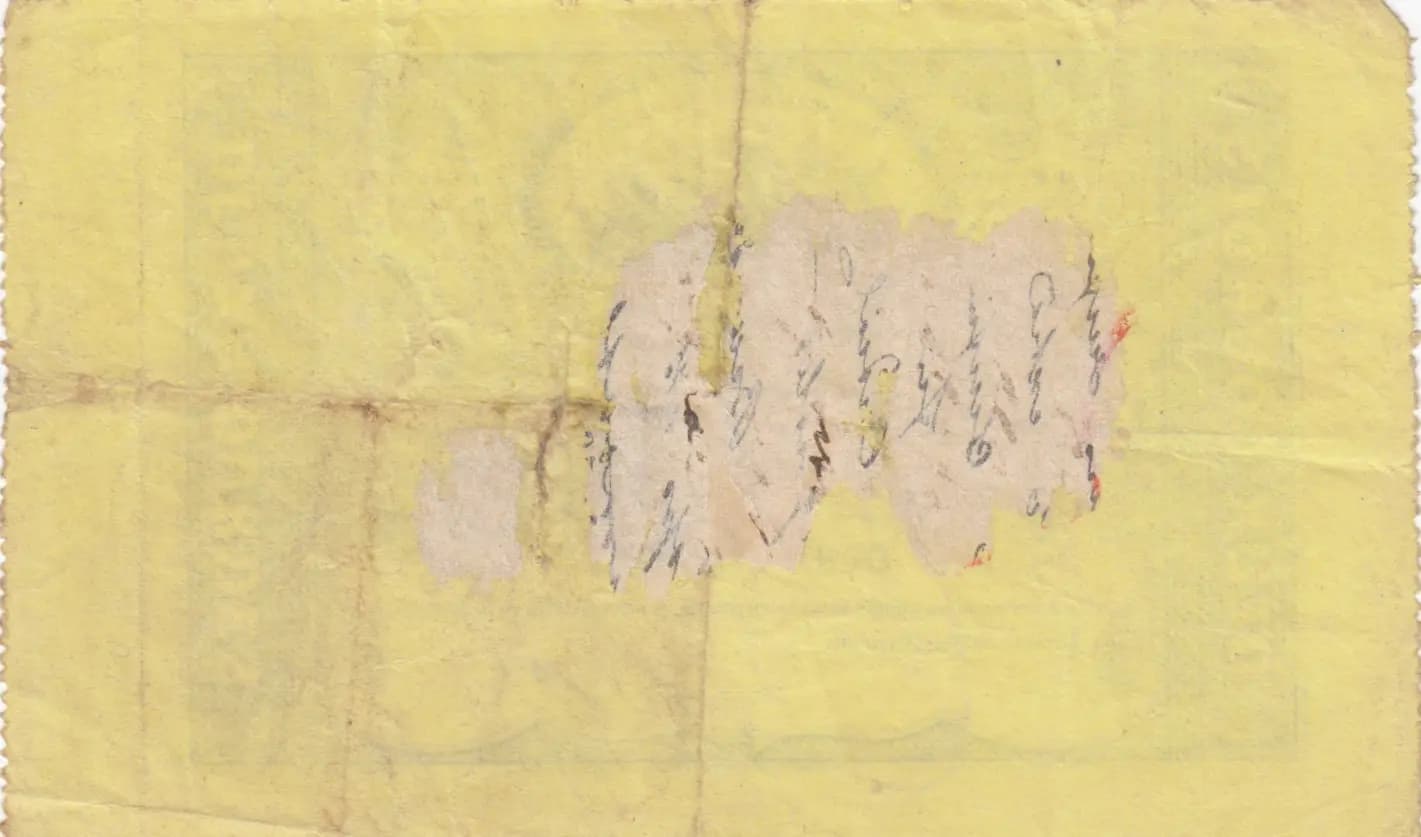
The obverse features a symmetrical, ornate rectangular border composed of fine scrollwork, floral motifs, and geometric spiral patterns that serve both aesthetic and security purposes. The dominant design element is a centrally-positioned oval medallion depicting a fortified port settlement with multiple buildings, fortification structures, sailing ships with flags, and coastal maritime imagery—this likely represents Haiti's principal port and economic center during the early republic period. The denomination is presented in two forms: numeric ('200' centimes) and written ('DEUX CENTS CENTIMES' and 'DEUX GOURDES'), with the legal text regarding treasury guarantee positioned below. The reverse is minimally printed, appearing largely blank save for handwritten notations typical of hand-signed or hand-endorsed historical currency. No individual portrait figures are present; instead, the heraldic emblem and architectural/maritime imagery serve as the nation's symbolic representation.
OBVERSE: 'REPUBLIQUE D'HAITI' (Republic of Haiti) / '200' (denomination in centimes) / 'DEUX CENTS CENTIMES' (Two hundred centimes) / 'DEUX GOURDES' (Two gourdes) / 'Le present billet circulera dans la République pour la valeur de' (This present bill will circulate in the Republic for the value of) / 'et le trésor public en garantit la valeur au porteur, en vertu de la loi du 16 Avril, 1827.' (and the public treasury guarantees its value to the bearer, by virtue of the law of April 16, 1827) / 'Pour le Receveur Général' (For the General Receiver) / 'LA LOI PUNIT DE MORT LA CONTREFACON' (The law punishes counterfeiting with death) / Serial number: 'No 1157000 s.e C'. REVERSE: Multiple lines of handwritten cursive script in French (content not clearly legible in provided image, likely endorsement or authentication marks).
Intaglio engraving (line engraving), characteristic of security currency printing of the early 19th century. The fine, detailed line work visible throughout the border, scrollwork, and medallion imagery is consistent with hand-engraved steel plate intaglio printing. Printer: Charles Skipper & East, London, England—a respected security printer of the period. The ornate border design and fine hatching patterns throughout the note indicate a single-pass black ink application on cream-colored paper, with possible hand-signing or endorsement on the reverse.
Series A-D noted in catalog references. The observed specimen carries serial number 1157000 with suffix 's.e C', indicating series C or later. Pick number P-33 is the standard listing for the 2 gourdes 1827 issue by Charles Skipper & East. A related but distinct variety (P-35) was printed by Waterlow for the same denomination and year. No major overprints, color variations, or signature varieties are evident in this specimen, suggesting it represents the standard circulation issue of this Pick number.