50 drachmai 1939
Market Prices
130 salesAbout This Note
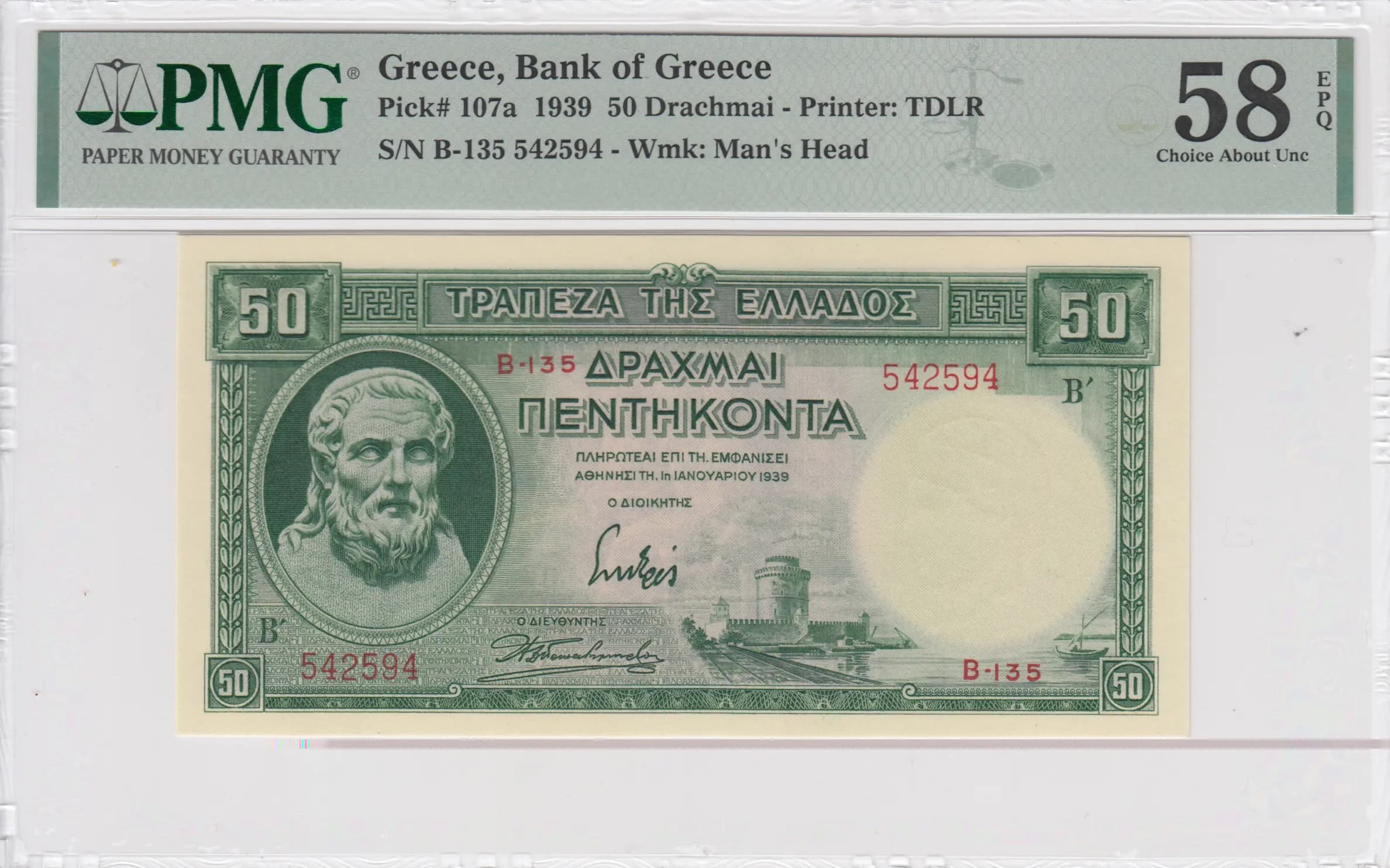
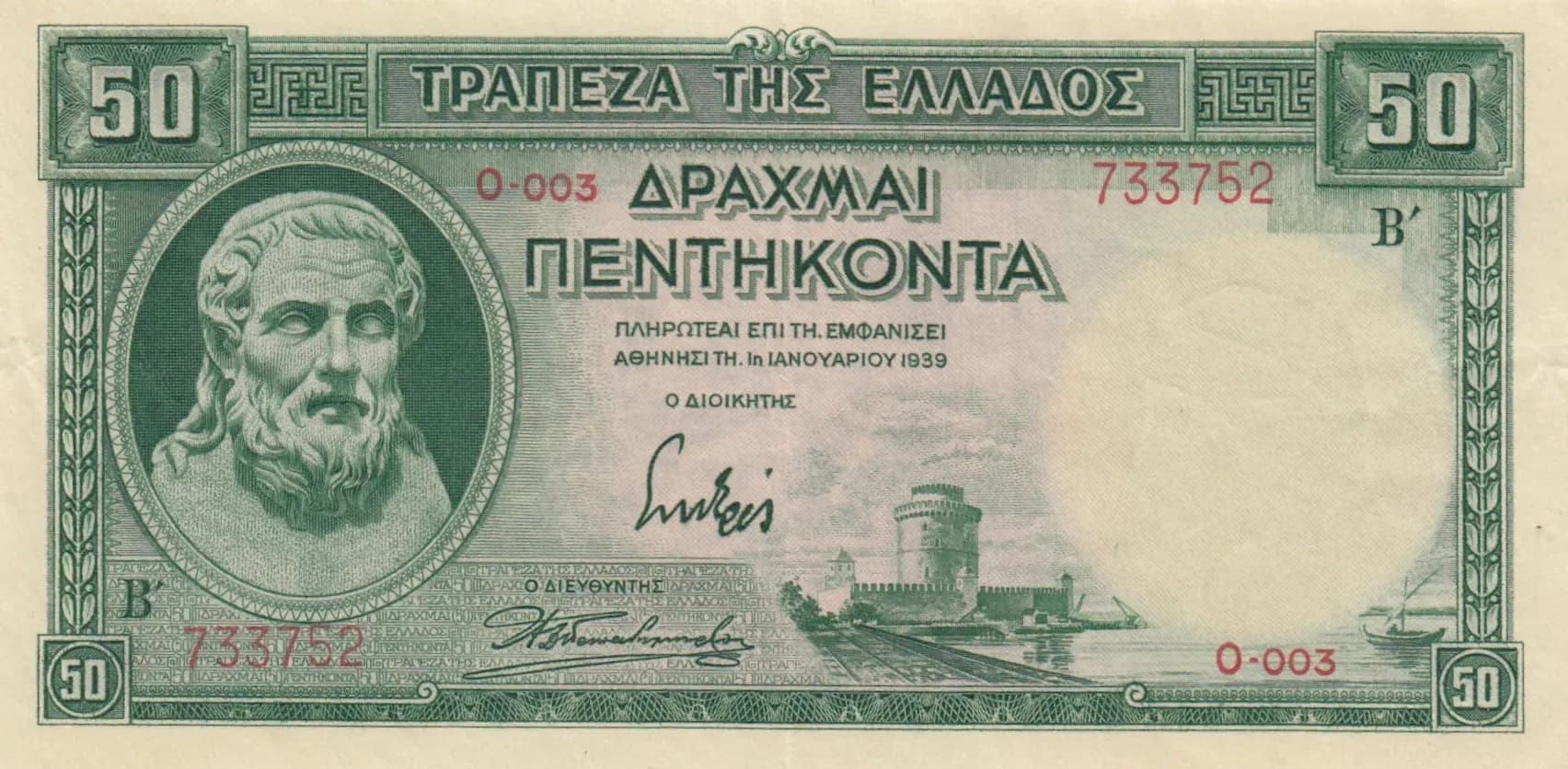
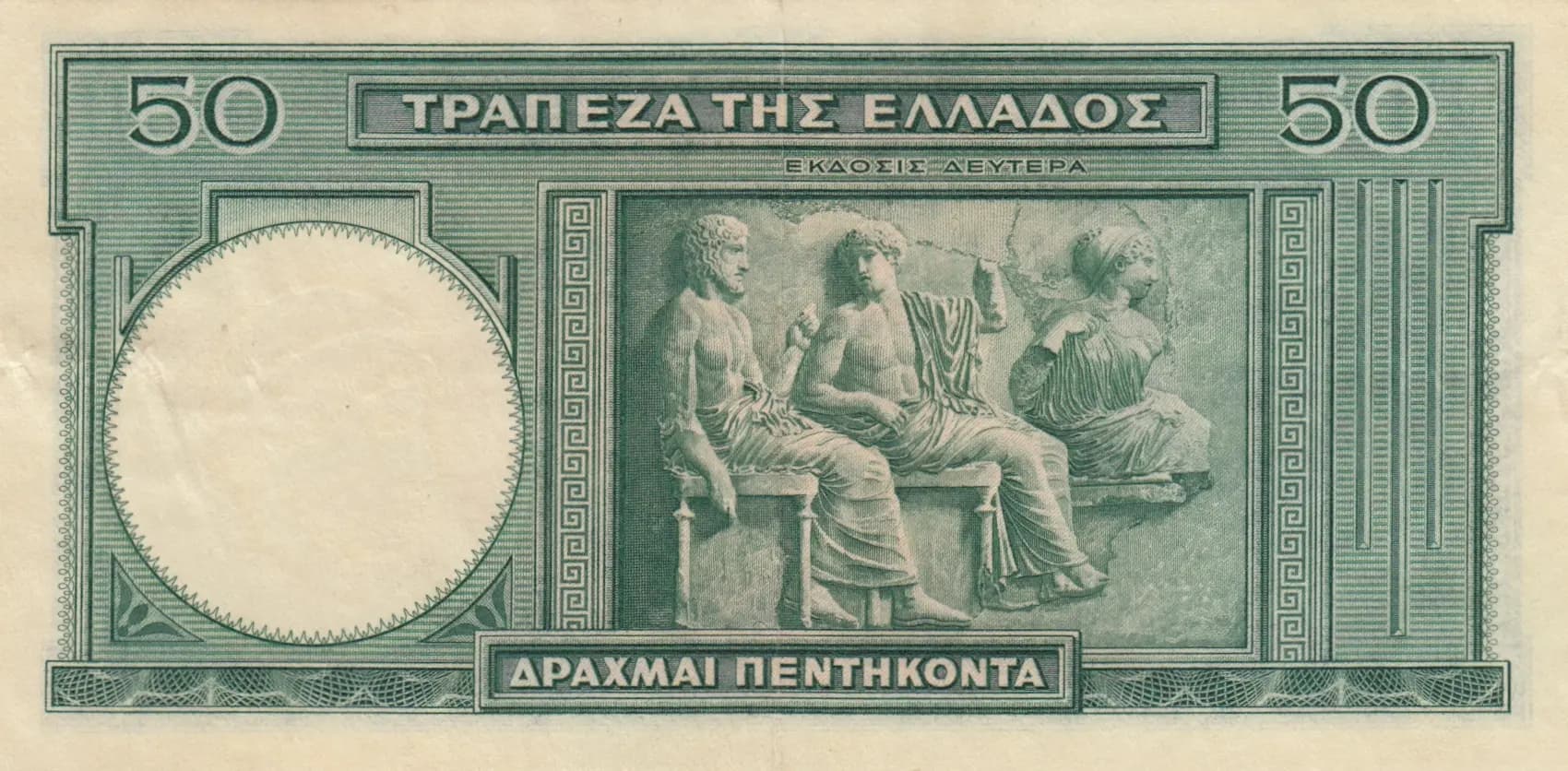
This Greece 50 Drachmai note from 1939 presents an exceptional example of interwar Greek currency design, depicting the classical heritage that defined the Bank of Greece's numismatic imagery during this period. The note exhibits remarkable preservation in VF condition, showcasing pristine green-toned printing with crisp engraved details, minimal circulation wear, and well-preserved borders featuring the distinctive Greek key patterns. The combination of the classical portrait on the obverse and the allegorical Parthenon frieze on the reverse makes this an attractive example of Greek classical revival imagery in banknote form.
Common. eBay market data shows this note in VF condition consistently selling in the $0.99–$4.25 range over multiple years, with no scarcity premium evident. While PMG-graded examples (particularly PMG 66–67) command significantly higher prices ($27–$87), the raw VF examples of this Pick number remain readily available and affordable. Print runs for the 1939 second issue were substantial, and survival rates are good. The note is collected but not scarce.
Issued in January 1939, this banknote represents Greece during a tumultuous interwar period, just months before Nazi occupation would reshape the nation. The design choices deliberately emphasize Greek classical heritage—featuring Hesiod, the ancient poet, and imagery derived from the Parthenon frieze—reflecting the Greek government's efforts to invoke national identity and stability through connection to antiquity. The Bank of Greece's 1939 second issue (ΕΚΔΟΣΙΣ ΔΕΥΤΕΡΑ) represented one of the final banknote series issued before the economic and political upheaval of World War II.
The obverse features a classical portrait of Hesiod, the ancient Greek poet (8th century BCE), rendered in the neoclassical style typical of Greek interwar currency. The portrait occupies an oval frame on the left side, surrounded by decorative wreath-like circles and laurel branch designs emphasizing Greek cultural heritage. The right side depicts the White Tower (Lefkos Pyrgos) of Thessaloniki, Greece's second-largest city, shown as a crenellated fortification near water with a small sailing vessel, symbolizing the city's maritime importance. The reverse features an engraved frieze derived from the Parthenon in Athens, depicting three classical draped figures representing Poseidon, Apollo, and Artemis in allegorical arrangement. The entire note employs the Greek key pattern (meander design) as a recurring security and decorative border motif, reinforcing classical Hellenic symbolism throughout. The denomination appears in multiple formats (numerals '50' and written 'ΠΕΝΤΗΚΟΝΤΑ').
FRONT SIDE: 'ΤΡΑΠΕΖΑ ΤΗΣ ΕΛΛΑΔΟΣ' (Bank of Greece); 'ΔΡΑΧΜΑΙ' and 'ΠΕΝΤΗΚΟΝΤΑ' (Fifty Drachmai); '50' (denomination); 'ΠΛΗΡΟΤΕΑΙ ΕΠΙ ΤΗ ΕΜΦΑΝΙΣΕΙ' (Payable on Presentation); 'ΑΘΗΝΗΣΙ ΤΗ Ι ΙΑΝΟΥΑΡΙΟΥ 1939' (Athens, January 1, 1939); 'Ο ΔΙΟΙΚΗΤΗΣ' (The Director); 'Ο ΔΙΕΥΘΥΝΤΗΣ' (The Manager); Serial numbers '0-003' and '733752'; 'Β'' (Second Issue designation). BACK SIDE: 'ΤΡΑΠΕΖΑ ΤΗΣ ΕΛΛΑΔΟΣ' (Bank of Greece); 'ΕΚΔΟΣΙΣ ΔΕΥΤΕΡΑ' (Second Issue); 'ΔΡΑΧΜΑΙ ΠΕΝΤΗΚΟΝΤΑ' (Fifty Drachmai); '50' (denomination).
Intaglio engraving, the standard security printing method for banknotes of this era. The fine line work visible throughout the note—particularly in the portrait details, the architectural rendering of the White Tower, the classical frieze figures, and the intricate Greek key border patterns—is characteristic of high-quality engraved banknote production. The PMG population data indicates the printer as TDLR (Thomas de la Rue), the renowned British security printing firm that produced many European banknotes during the interwar period. The sharp detail retention and precise registration of multiple color layers (green and cream/beige) confirm professional intaglio production standards.
This example represents the second issue (ΕΚΔΟΣΙΣ ΔΕΥΤΕΡΑ) of the 1939 50 Drachmai, as indicated by the designation on the reverse. The serial number prefix '0-003' with the serial number '733752' appears typical of the standard circulation format. The PMG population report confirms Pick-107cts as the catalogued variant for this printer designation. No overprints or unusual markings are evident, indicating this is a standard second-issue example without additional variety characteristics.