10 000 000 drachmai 1944
About This Note
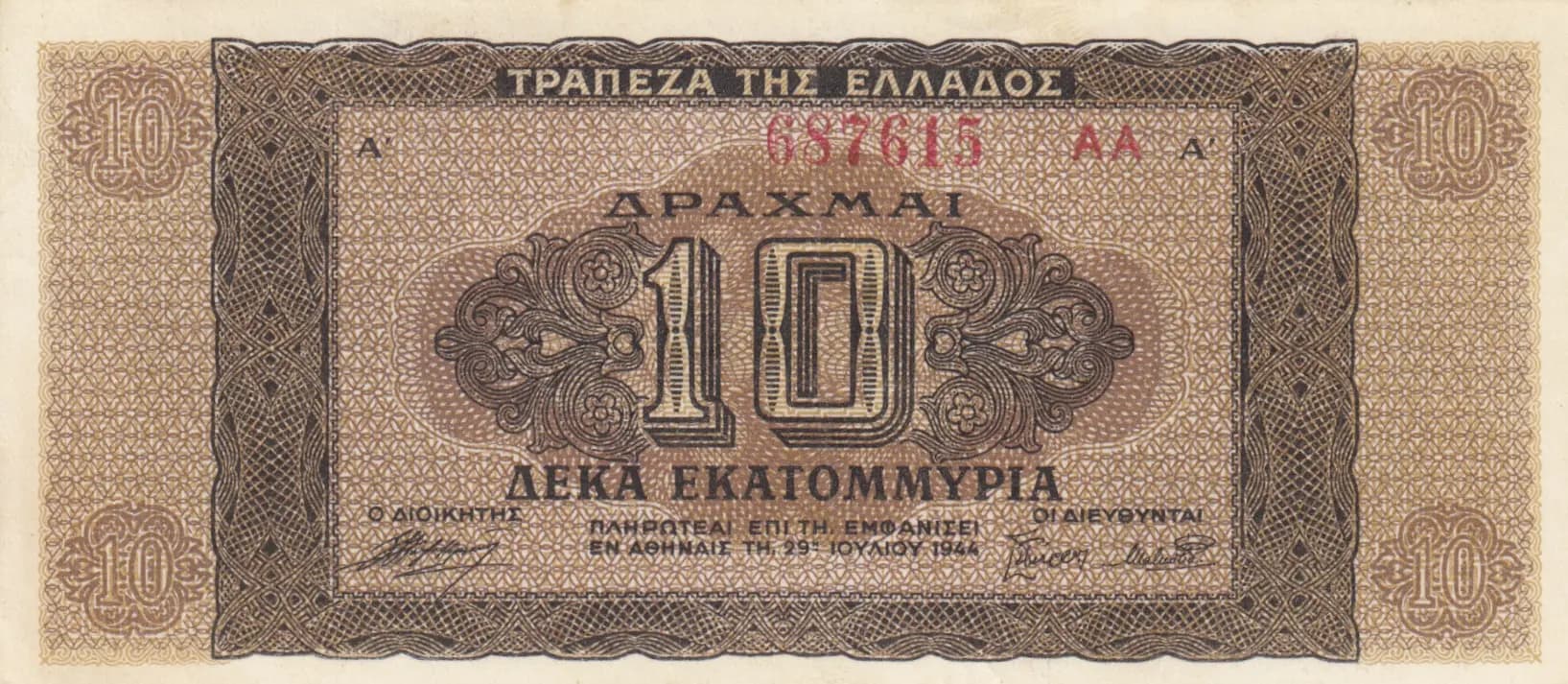
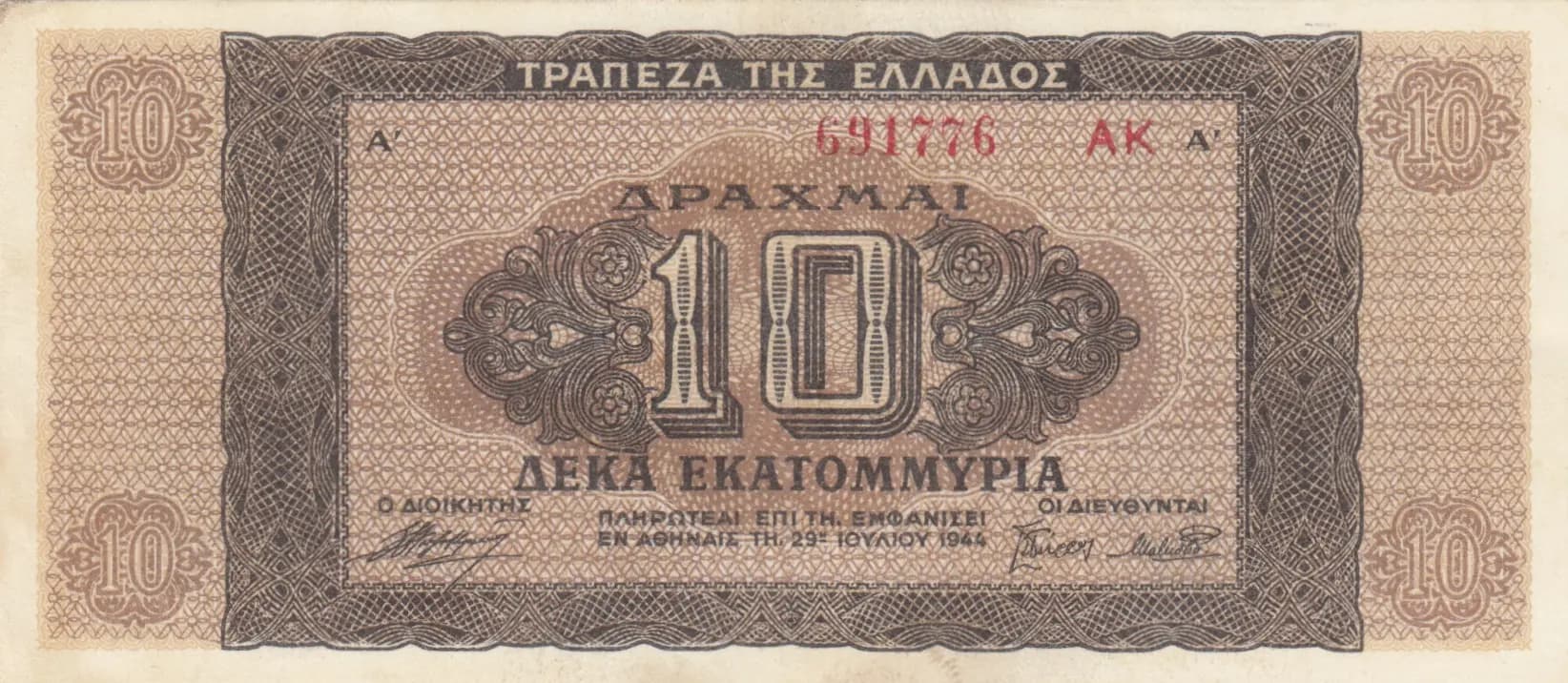
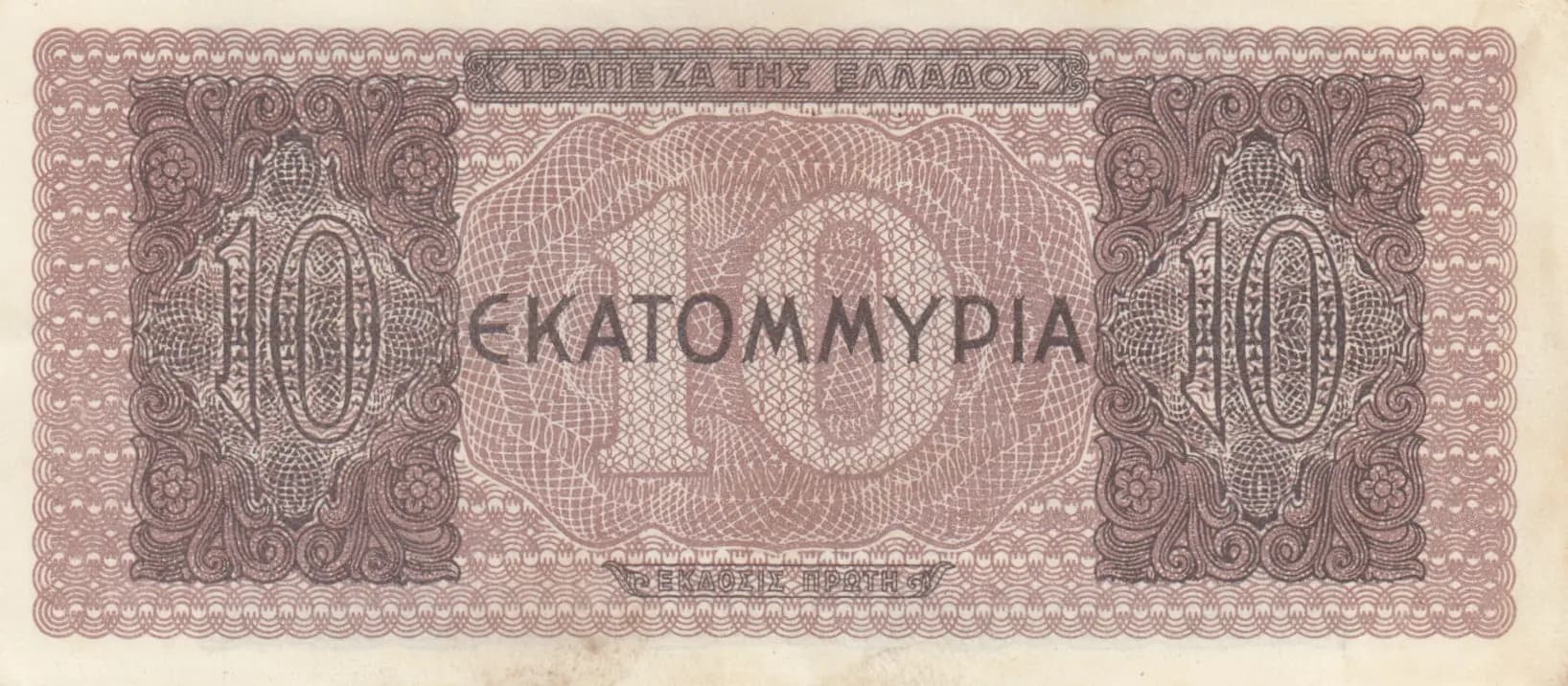
This is an exceptional example of the Greek Bank of Greece's 10,000,000 Drachmai emergency banknote issued during the Nazi occupation on 29 July 1944. The note displays crisp, vibrant printing with ornate geometric borders and numerals in both beige/tan and mauve/purple-gray colorways across its front and reverse sides. In AU condition with no visible wear, creases, or damage, this note represents an important artifact from Greece's hyperinflation period during World War II, when such denominations became necessary due to severe currency devaluation.
Common. This is a standard-issue banknote from the Bank of Greece's emergency currency series, produced in substantial quantities to meet the demands of hyperinflation during the 1944 occupation period. Multiple serial number ranges exist (as evidenced by the 'Α 641776 ΑΚ' prefix observed), indicating significant print runs. Such high-denomination notes from this emergency period were widely circulated and survived in moderate quantities. Notes from this series regularly appear in dealer inventories and auction markets at modest price points, confirming their common status despite historical significance.
Issued during Nazi occupation of Greece in 1944, this astronomical denomination reflects the severe hyperinflation that devastated the Greek economy during World War II. The Bank of Greece (Τράπεζα της Ελλάδος) continued issuing currency under occupation, with the eagle emblem and institutional inscriptions serving as symbols of Greek national identity and monetary authority maintained despite external control. The July 1944 date places this issue in the final months before Greece's liberation in October 1944, when such high denominations had become commonplace in daily transactions.
This banknote features the heraldic eagle of Greece as its central design element on the reverse, rendered with outstretched wings as the national emblem. The front displays an ornate cartouche framing the large numeral '10,' emphasizing the denomination through elaborate flourishing designs. The design employs comprehensive geometric and floral border patterns throughout, with repeating curved motifs and intricate line work creating visual security. The color scheme contrasts beige/tan and cream tones on the obverse with mauve/purple-gray on the reverse, typical of the period's multi-color intaglio printing. The eagle represents Greek sovereignty and national identity, while the austere yet ornate design reflects the formal banking tradition despite wartime circumstances.
FRONT SIDE: 'ΤΡΑΠΕΖΑ ΤΗΣ ΕΛΛΑΔΟΣ' (Bank of Greece) | 'ΔΡΑΧΜΑΙ' (Drachmai) | 'ΔΕΚΑ ΕΚΑΤΟΜΜΥΡΙΑ' (Ten Million) | 'Α 641776 ΑΚ' (Serial Number) | 'Ο ΔΙΟΙΚΗΤΗΣ' (The Governor) | 'ΕΝ ΑΘΗΝΑΙΣ, ΤΗ 29 ΙΟΥΛΙΟΥ 1944' (In Athens, 29 July 1944). BACK SIDE: 'ΤΡΑΠΕΖΗΣ ΤΗΣ ΕΛΛΑΔΟΣ' (Bank of Greece) | 'ΕΚΑΤΟΜΜΥΡΙΑ' (Million) | 'ΤΟ ΣΗΜΑ ΤΗΣ ΕΛΛΑΔΟΣ' (The Emblem of Greece).
Intaglio printing on high-quality bond paper, utilizing fine-line engraving techniques to create the complex geometric borders and moiré effects visible throughout. The intricate parallel line work in backgrounds and the precise rendering of the eagle emblem are characteristic of professional security printing. Multiple color application using traditional intaglio separation methods produced the distinct front (beige/brown) and reverse (mauve/purple) colorways. Anti-counterfeiting measures include the elaborate decorative borders, complex overlapping ornamental elements, and fine-line patterns designed to be difficult to reproduce with contemporary technology.
This specimen represents Pick-129b(2), the second identified variety of the 10,000,000 Drachmai denomination. Varieties may be distinguished by signature variants (The Governor's signature), serial number prefix sequences (this example shows prefix 'Α'), and minor design or printing detail variations. The specific date of 29 July 1944 and the governor's authorization signature should be examined to confirm precise variety classification. Serial number ranges and signature combinations are the primary identifiers for distinguishing varieties within this emergency issue.