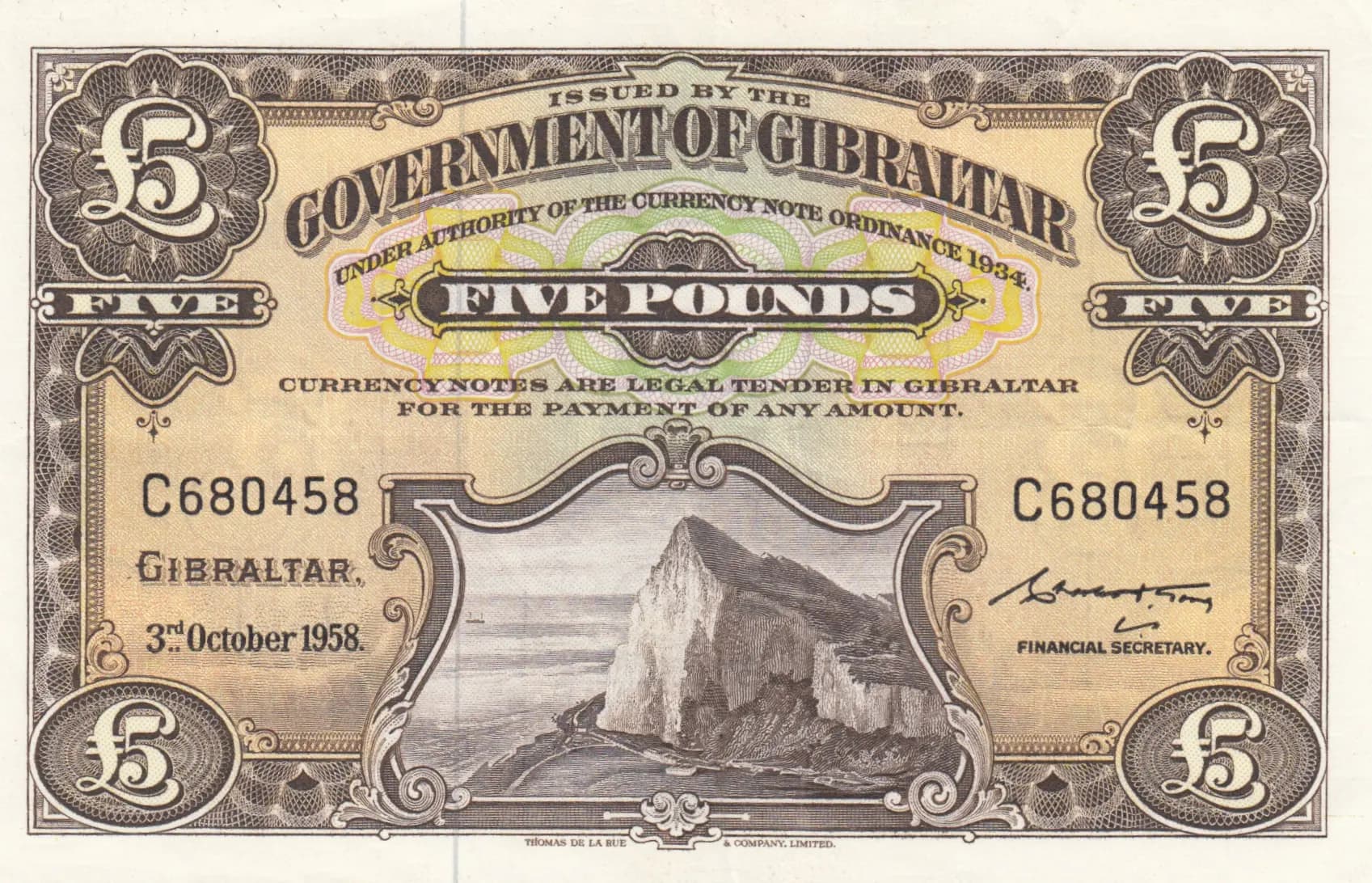
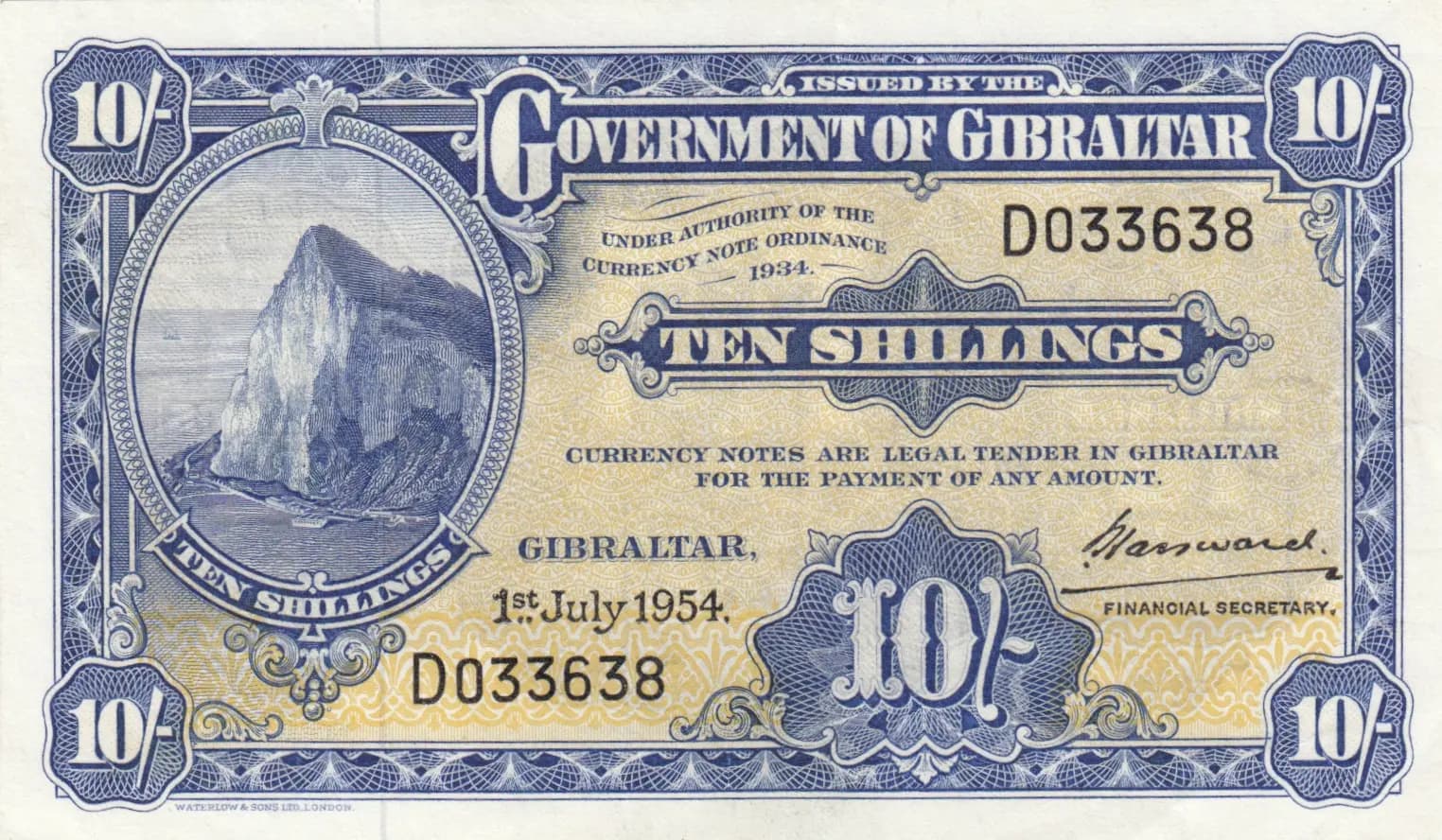
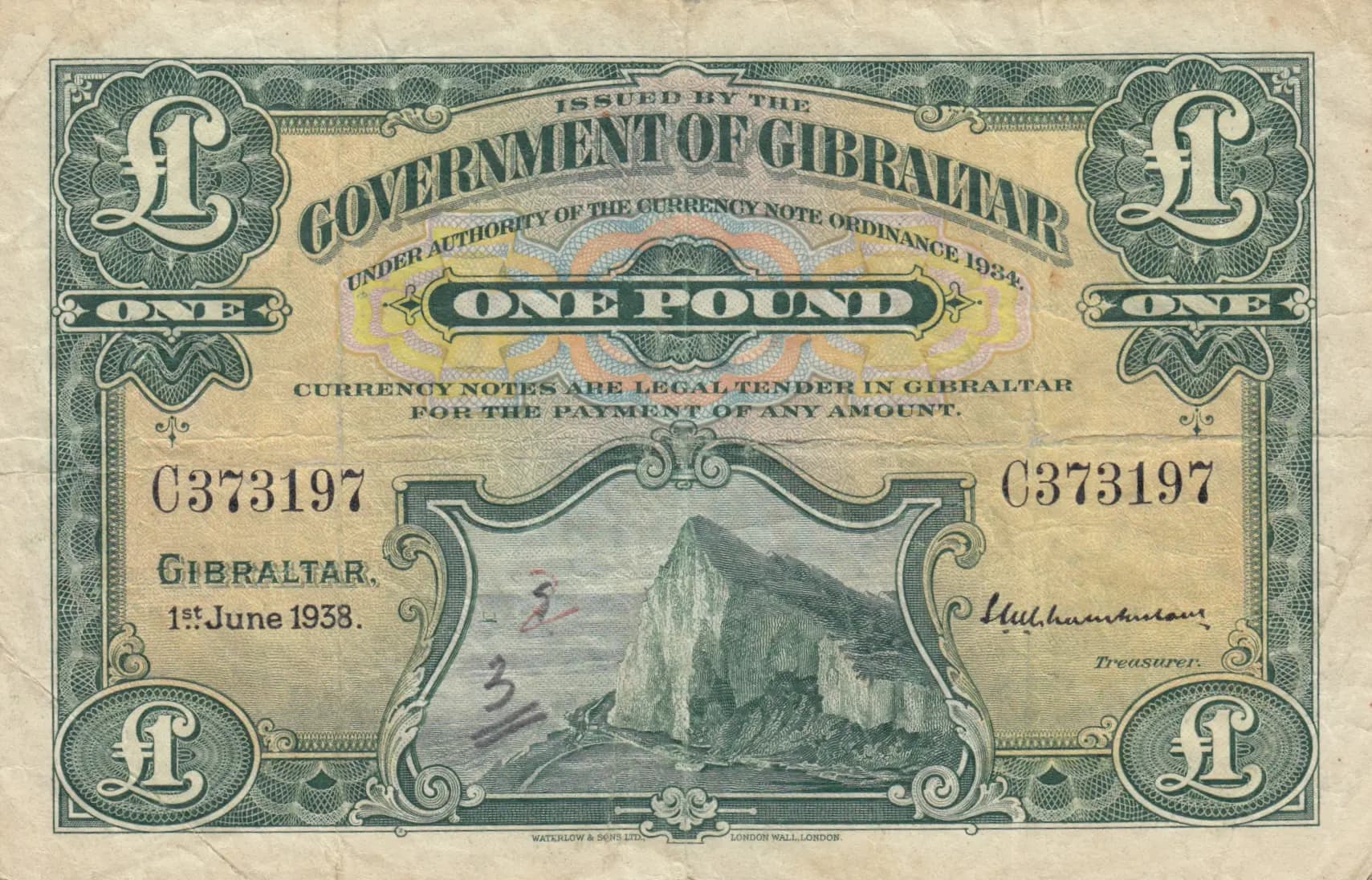
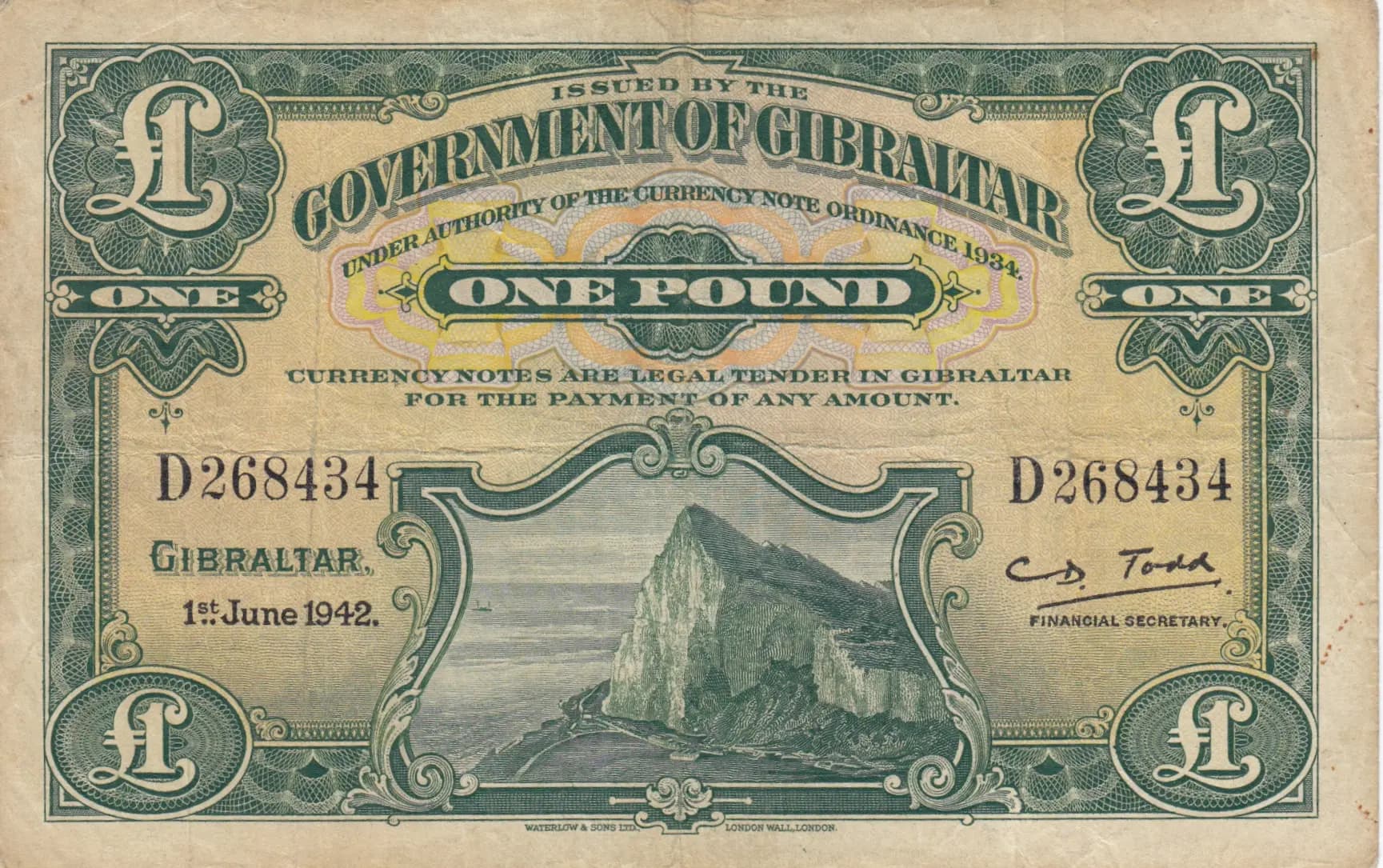
5 pounds 1942
Market Prices
About This Note
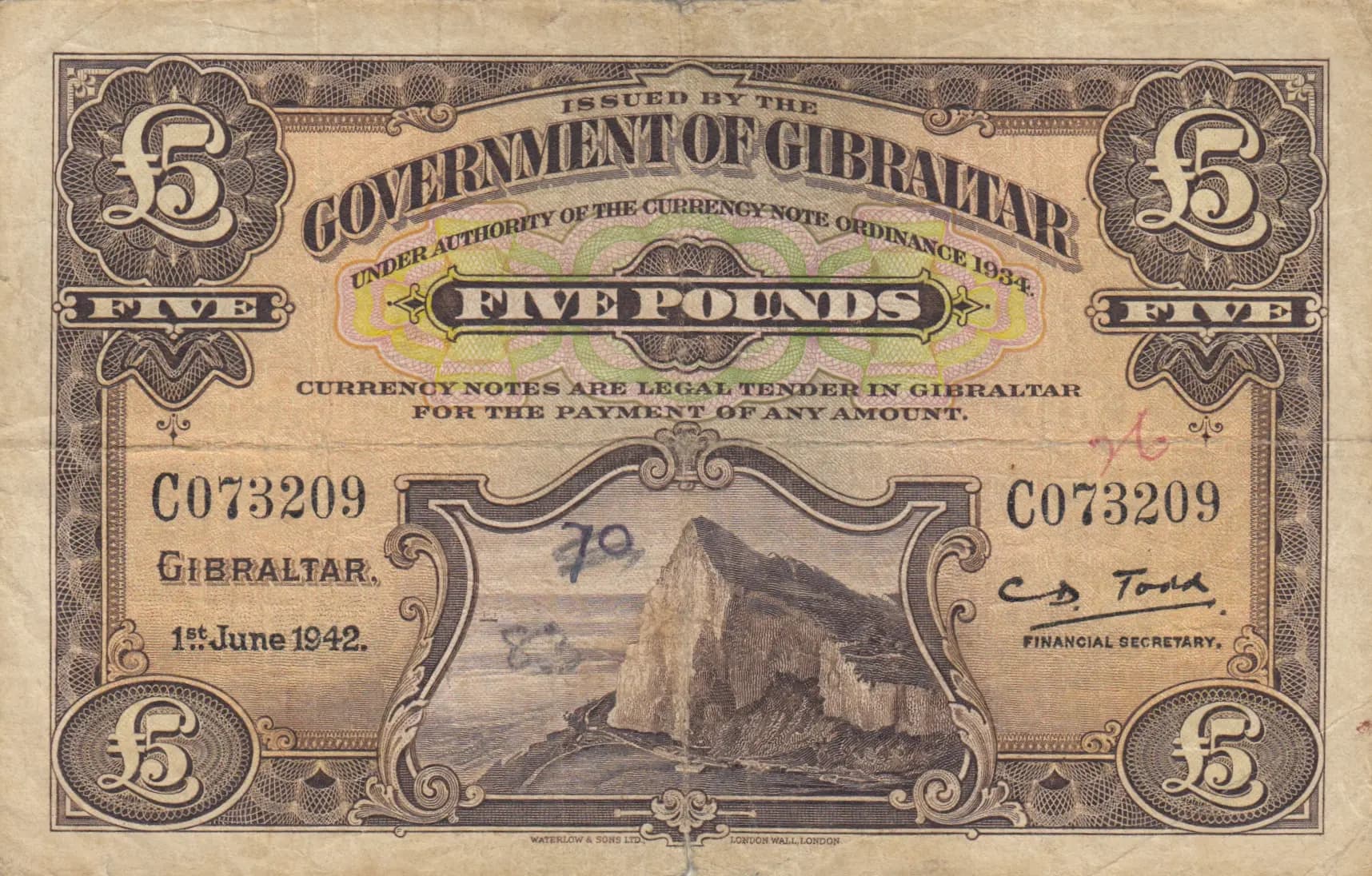
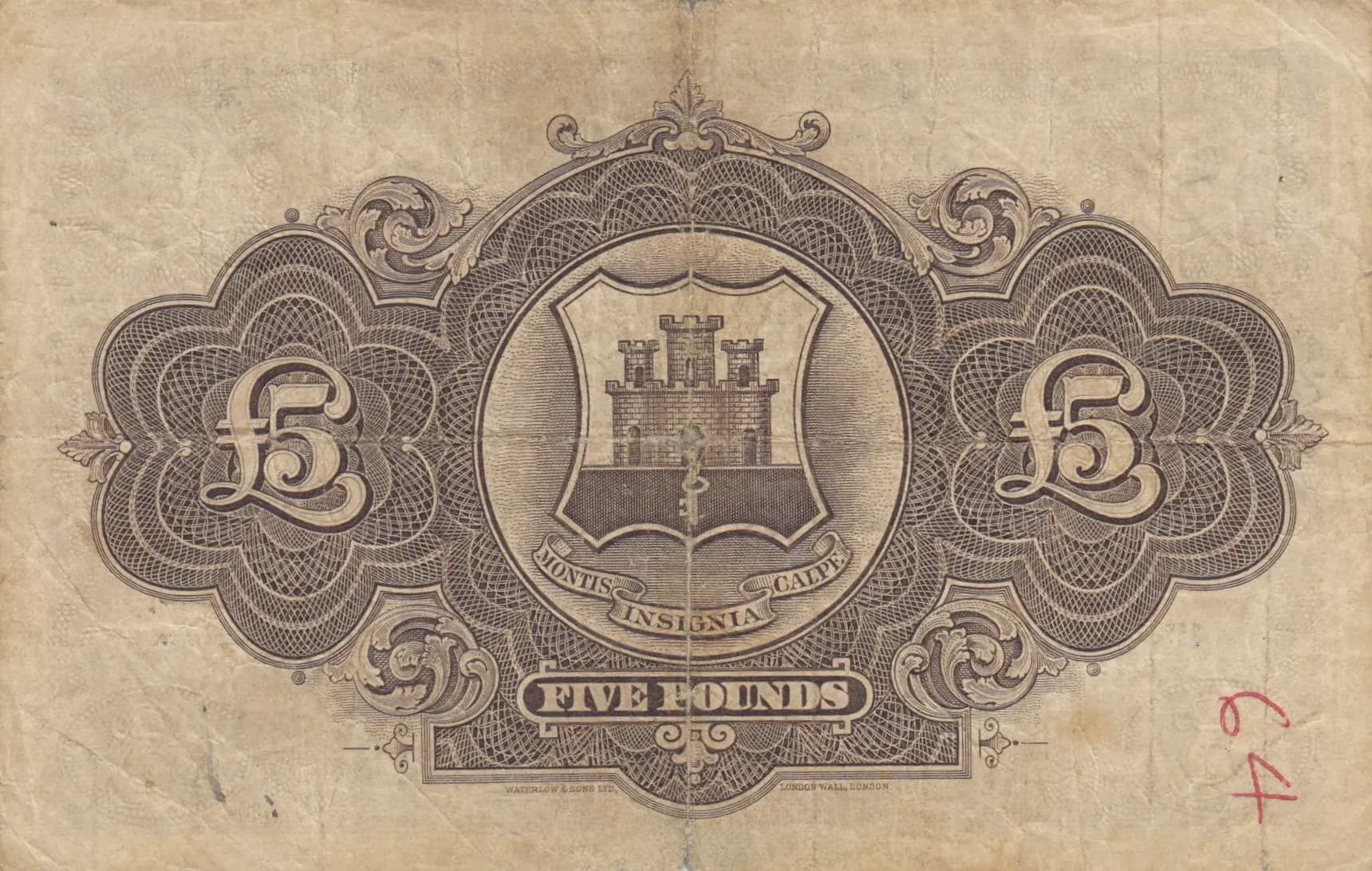
This VG-grade Gibraltar 5 Pounds note from 1942 represents an early wartime issue by the Government of Gibraltar under the Currency-Note Ordinance 1934. The note features the iconic Rock of Gibraltar as its obverse vignette with the Gibraltar coat of arms (featuring a three-towered castle) on the reverse, surrounded by ornate scrollwork typical of interwar British currency design. The specimen shows authentic age with foxing, creasing, and circulation wear, including a handwritten '79' marking and red notation, consistent with a note that saw actual use during WWII.
Common. This is a regular issue from an active currency authority with no indication of a small print run or limited circulation period. The 1942 date falls within the broader 1938-1958 issue period for this design. Secondary market pricing from eBay listings shows VG-grade notes trading in the $14-20 USD range, with UNC examples at $14-20 USD (outliers at higher prices likely reflect grading variations or market fluctuations), confirming this as a common note in the collector market despite its historical wartime issue date.
Issued on 1 June 1942 during World War II, this note reflects Gibraltar's status as a strategic British territory whose civilian population had been evacuated from the Rock due to wartime security concerns. The prominent depiction of the Rock of Gibraltar and the heraldic castle symbolizing Gibraltar's fortress role underscore the territory's military and strategic importance during this period. The Latin inscription 'Insignia Montis Calpe' (Emblem of Mount Calpe) references the ancient Roman name for the Rock, emphasizing Gibraltar's historical significance.
The obverse features a central landscape vignette of the Rock of Gibraltar rising prominently from water, flanked by ornate decorative scrollwork and corner ornaments displaying the numeral 5. The design employs fine engraving with intricate floral and foliate patterns throughout. The reverse displays the Gibraltar coat of arms—a shield containing a three-towered castle (representing the fortress of Gibraltar) with crenellated walls—set within an ornate heraldic frame with elaborate scrollwork. The color scheme throughout uses brown, tan, and beige tones with black line work and occasional green accents, typical of British currency printing of the interwar and WWII era. Both sides include fine crosshatching and detailed shading techniques characteristic of high-quality engraved banknote production.
FRONT: 'Issued by the Government of Gibraltar under authority of the Currency-Note Ordinance 1934.' / 'Five Pounds' / 'Currency Notes are legal tender in Gibraltar for the payment of any amount.' / Serial number: C073209 / Date: 1st June 1942 / 'Financial Secretary' (signature line). BACK: 'Insignia Montis Calpe' (Emblem of Mount Calpe, the ancient name for the Rock of Gibraltar) / 'Five Pounds'.
Intaglio engraving (raised line printing) executed by Waterlow & Sons, London (noted as 'W&S' in PMG records). The intricate fine line work, complex ornamentation, and detailed security patterns visible throughout the note are characteristic of Waterlow's high-quality engraved banknote production. The note features a Key Pattern watermark as identified in PMG population data.
This note is identified as Pick 16a based on catalog data. PMG records indicate three variants (P-16a, P-16b, P-16c) of this base Pick number, all printed by W&S (Waterlow & Sons) with Key Pattern watermark. The visual specimen bears serial number C073209 with the 'C' prefix and issue date of 1 June 1942. The specific variety designation (16a vs. 16b vs. 16c) would be determined by detailed comparison of signature types, printer marks, or other subtle design differences not fully distinguishable from the provided images alone, though the 1942 date and Waterlow printing are consistent with the catalogued series.