5 cedis 1973 specimen
Market Prices
4 salesAbout This Note
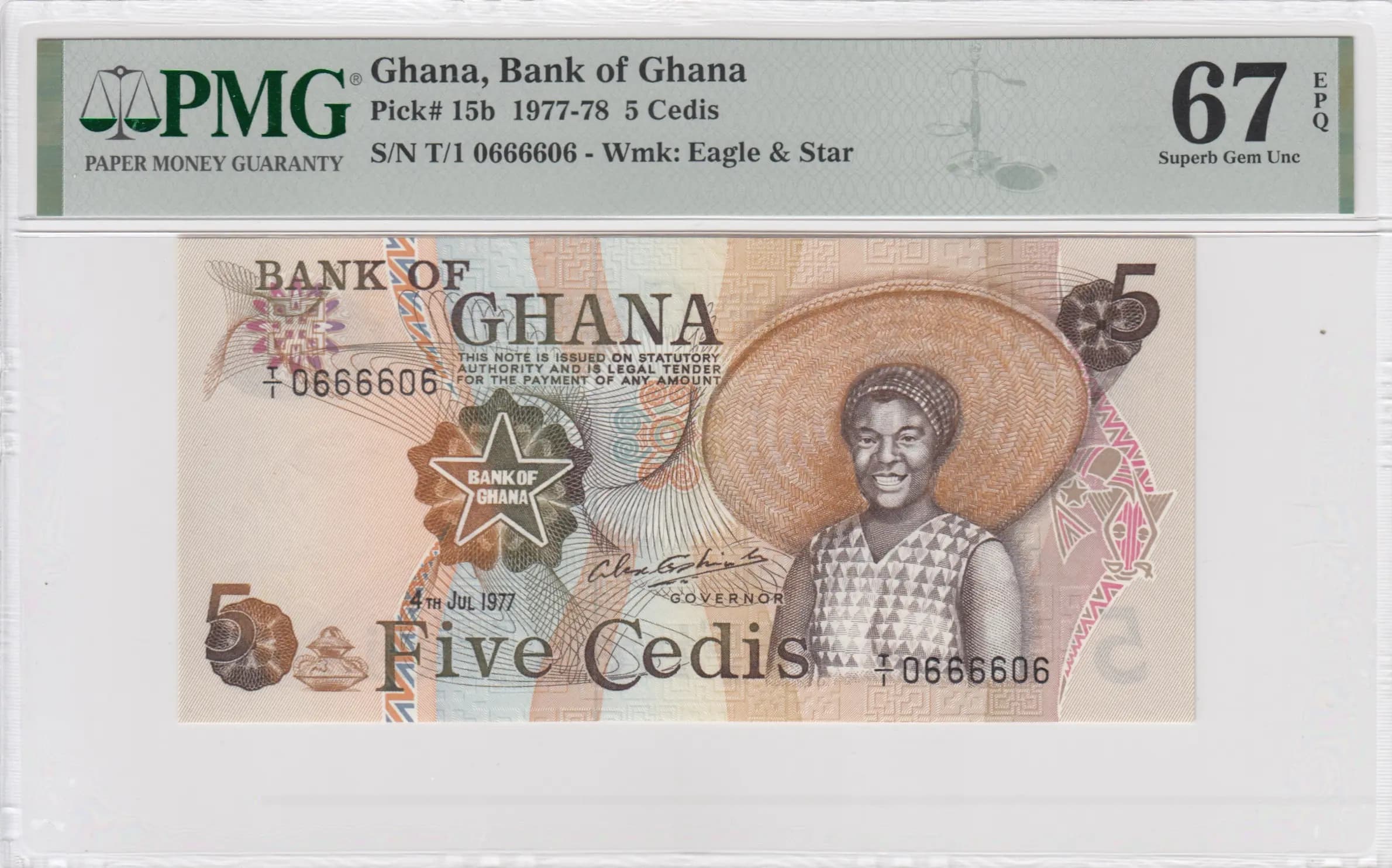
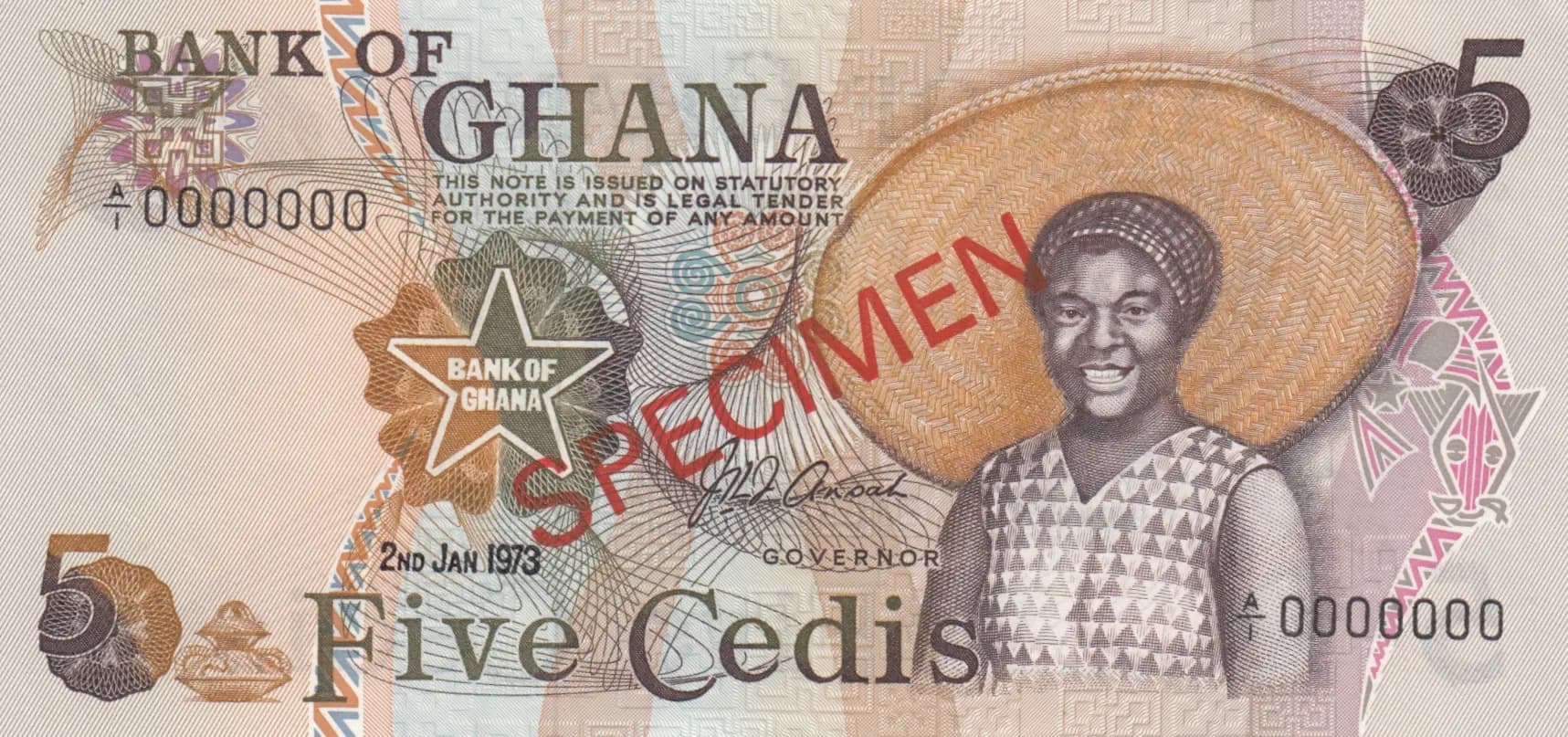
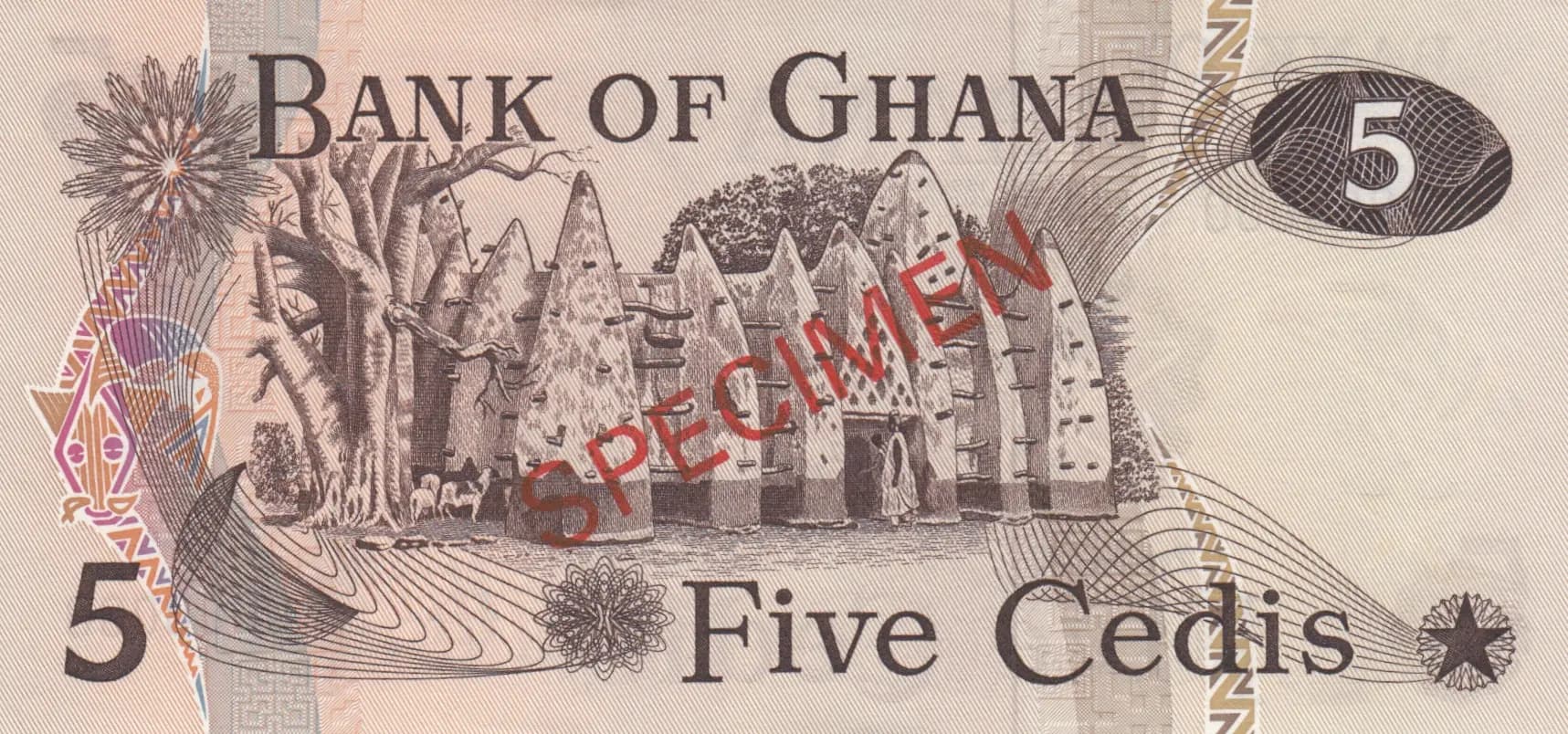
This is an uncirculated specimen note of the 1973 Ghana 5 cedis, issued by the Bank of Ghana on 2 January 1973. The note features a striking portrait of a woman in traditional Ghanaian dress with a large woven hat on the obverse, while the reverse displays a detailed engraving of a traditional Ghanaian fort or castle structure. As a specimen with red 'SPECIMEN' overprint and zero serial numbers (A 0000000), this note represents a non-circulating example distributed for official and institutional purposes, making it an interesting piece for collectors of African currency and specimen banknotes.
Common. While the eBay price tracking data shows a 2019 catalogue value of $9 USD for UNC specimens and past sales ranging from approximately $3 to $14.50, the consistent market pricing and multiple sales records indicate this is a standard circulation/specimen note from a major print run. Specimen notes of this era from Ghana are regularly available in the collector market, and this particular note shows no indicators of exceptional scarcity or limited production that would elevate it beyond common status.
This note was issued during Ghana's early post-colonial period, reflecting the nation's monetary sovereignty under the Bank of Ghana. The imagery—a woman in traditional Ghanaian kente cloth and a coastal fort structure—represents the country's cultural heritage and historical trading legacy. The 1973 series marks an important period in Ghana's numismatic history, following the earlier cedis releases and predating the currency reforms that would follow in subsequent decades.
The obverse features a portrait of a Ghanaian woman positioned at right, wearing traditional dress including a distinctive large woven hat (kente cloth pattern visible on her garment) and a warm smile. The background employs a beige and tan palette with multicolored underprint in browns, purples, and oranges, decorated with fine guilloche patterns and ornamental geometric designs throughout the borders and corners. The Bank of Ghana star emblem appears prominently on the left side with accompanying text and legal tender statement. The reverse depicts a detailed line-engraved illustration of a traditional Ghanaian fort or castle structure, featuring multiple cone-shaped turrets and crenellated walls characteristic of coastal trading forts. This architectural subject likely represents one of Ghana's historic coastal fortifications, such as Cape Coast Castle or Elmina Castle, reflecting the nation's colonial and trading heritage. The reverse maintains the same color scheme with additional decorative circular security features containing the denomination numeral and ornamental wave patterns.
Front side: 'BANK OF GHANA' (Bank of Ghana); 'THIS NOTE IS ISSUED ON STATUTORY AUTHORITY AND IS LEGAL TENDER FOR THE PAYMENT OF ANY AMOUNT' (This note is issued on statutory authority and is legal tender for the payment of any amount); '2ND JAN 1973' (2nd January 1973); 'GOVERNOR' (Governor); 'Five Cedis' (Five Cedis); '5' (denomination); 'SPECIMEN' (Specimen); 'A 0000000' (serial number format). Back side: 'BANK OF GHANA' (Bank of Ghana); '5' (denomination); 'Five Cedis' (Five Cedis); 'SPECIMEN' (Specimen).
The note exhibits characteristics of intaglio (engraved) printing, evidenced by the fine line guilloche patterns, detailed security threads visible in the design, and the high-quality line work of the architectural engraving on the reverse. According to PMG population data, this note was printed by TDLR (likely Thomas De La Rue & Company, a premier security printer). The multicolored underprint and ornamental security patterns typical of 1970s-era banknote production are visible throughout the design.
This is a specimen variety (P-15as per Pick catalog designation) as evidenced by the prominent red 'SPECIMEN' overprint visible diagonally across both sides of the note and the zero serial number (A 0000000) typical of non-circulating specimen examples. According to PMG records, variant P-15CS1 (printed by TDLR) and variant P-15b are documented for this Pick number. The specimen designation, combined with the date '2ND JAN 1973' on the obverse, identifies this as part of the inaugural 1973 issue by the Bank of Ghana under statutory authority.