2 cedis 1972 specimen
Market Prices
3 salesAbout This Note
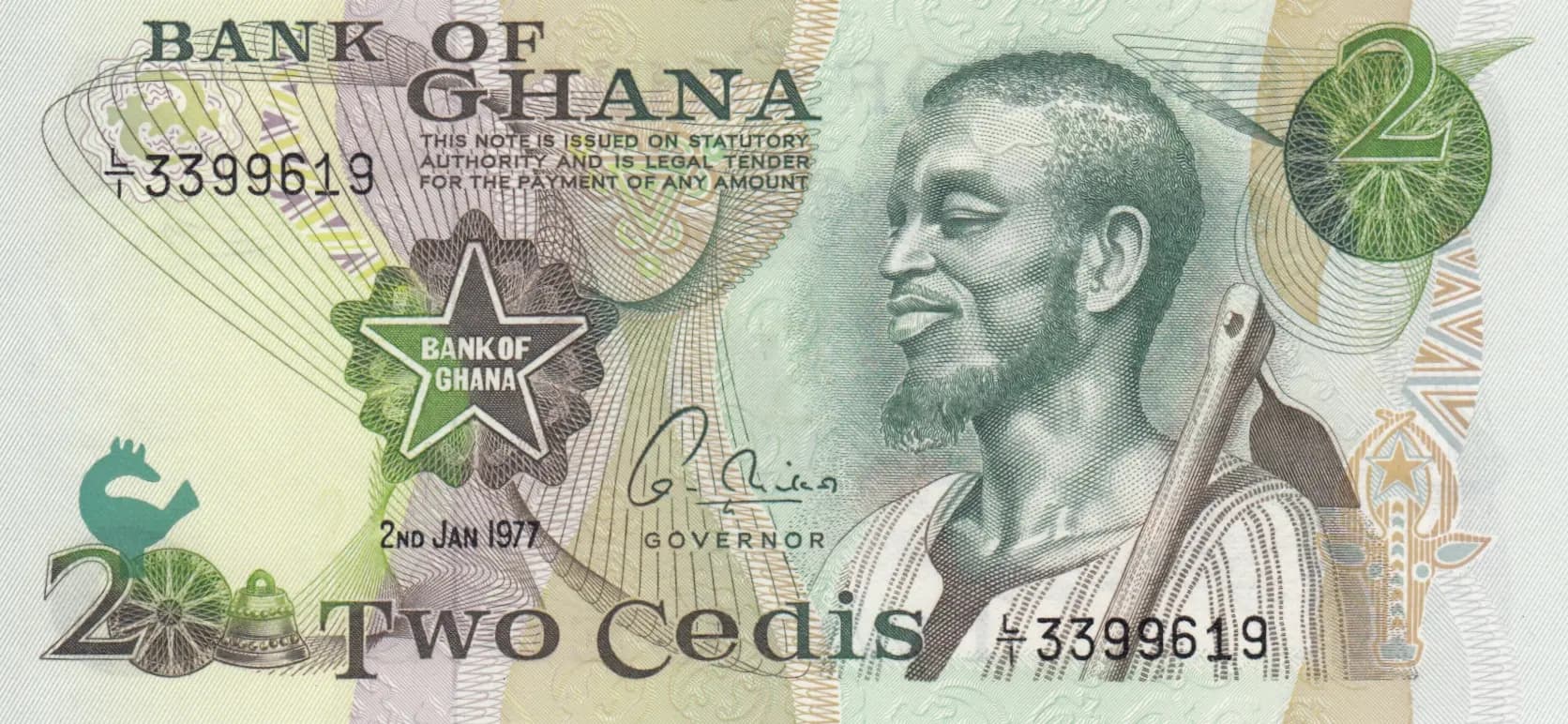
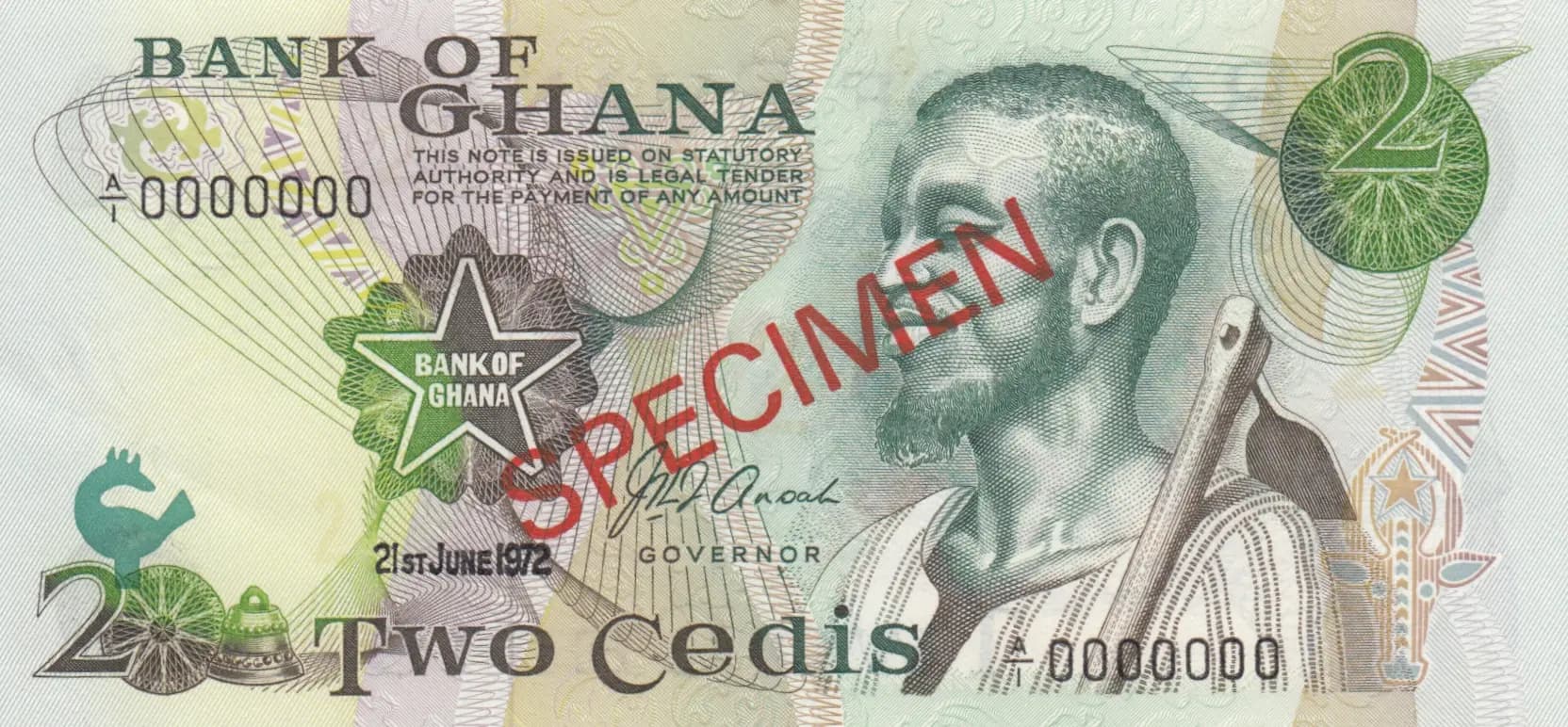
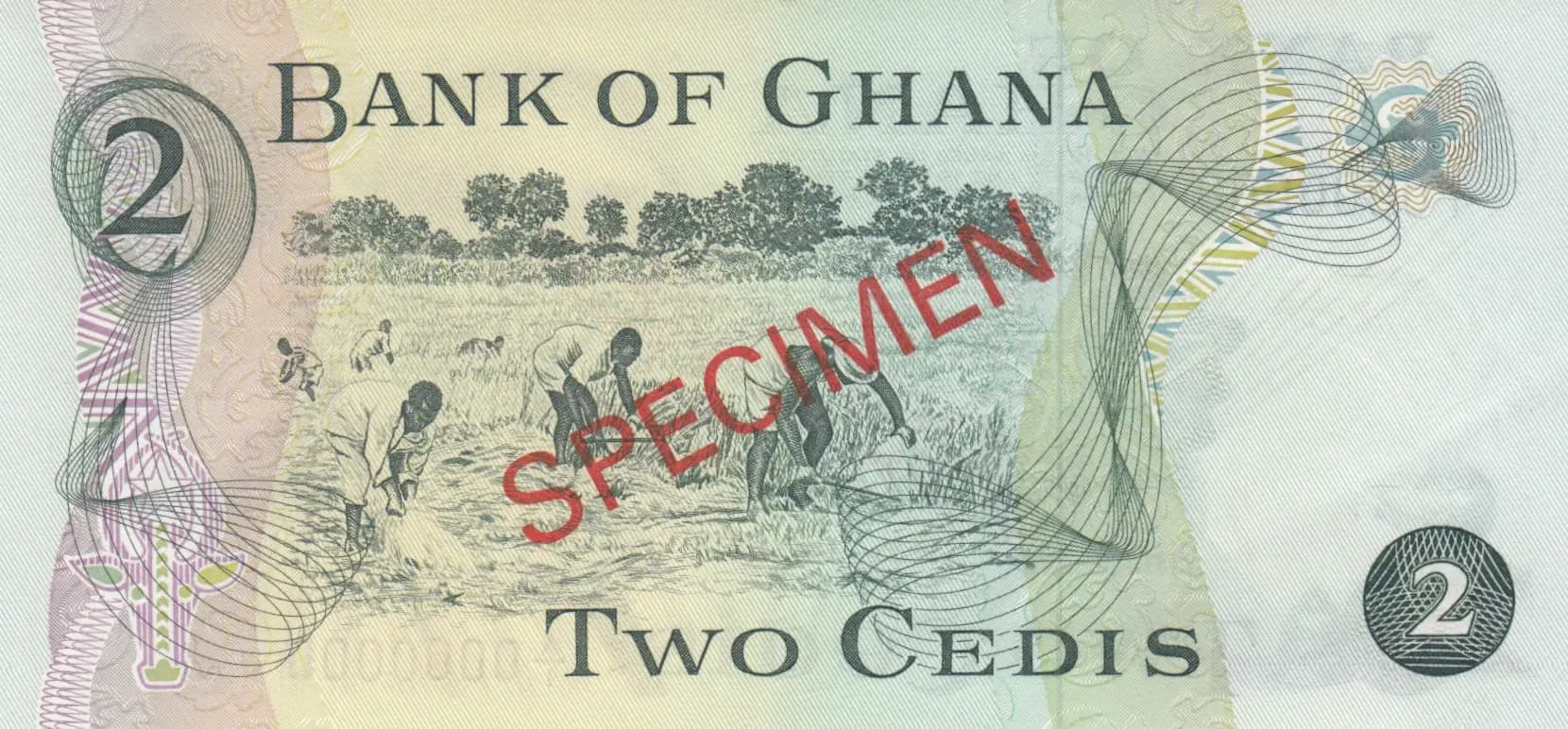
This is a 1972 Bank of Ghana 2 Cedis specimen note in pristine uncirculated condition, featuring a striking portrait of a bearded man in traditional dress on the obverse and a detailed agricultural scene on the reverse. The note displays the characteristic green and multicolored intaglio engraving of the era, with the prominent red 'SPECIMEN' overprint and serial numbers A 0000000, indicating this is an official specimen release rather than circulation currency. As a specimen note from Ghana's early post-independence period, it represents an important example of the nation's monetary design during the early years of the Bank of Ghana.
Common. The 1972 2 Cedis note (P-14a through P-14c variants) was a regular issue of the Bank of Ghana with substantial circulation. Market data from eBay shows multiple sales over recent years with modest prices ($1.25–$6.99 for circulated examples, $18 catalog value for UNC), indicating steady availability without scarcity premiums. Specimen notes are more specialized than circulation issues but remain regularly encountered in the numismatic market. No evidence of restricted print runs or short-lived issue periods supports a common classification.
This 2 Cedis note was issued on 21st June 1972, during a formative period for Ghana's independent monetary system following the country's 1957 independence from British rule. The obverse portrait depicts a young Ghanaian man, likely representing the nation's agricultural workforce, while the reverse illustrates rural fieldwork and harvesting—imagery that emphasizes Ghana's agrarian economy and the labor force central to post-colonial nation-building. The choice of these distinctly Ghanaian subjects reflects the Bank of Ghana's commitment to establishing a national identity through currency design that celebrated the country's people and primary economic activities.
The obverse features a dignified portrait of a young Ghanaian man shown in right-facing profile, depicted with short dark hair and a beard, wearing traditional draped clothing over one shoulder—representing the nation's cultural heritage. The portrait is rendered in green and black intaglio engraving and is positioned at the right side of the note. The background incorporates ornamental geometric designs including concentric circles and linear patterns in green, brown, and cream, with stylized botanical elements (possibly cocoa pods or native fruits) on the left side—referencing Ghana's agricultural wealth. Large numeral '2' denominations appear in circular frames at upper right and lower left. The reverse depicts a detailed rural agricultural landscape with multiple workers engaged in harvesting or field labor, set against cultivated fields and trees on the horizon, representing Ghana's farming economy. Ornamental geometric patterns with concentric circles frame the left edge in purple and green, while feathered or wave-like designs in green and blue appear on the right. The note includes the Bank of Ghana logo (five-pointed star within text circle) and features dual security measures with fine-line guilloche patterns throughout.
FRONT SIDE: 'BANK OF GHANA' (institution name); 'THIS NOTE IS ISSUED ON STATUTORY AUTHORITY AND IS LEGAL TENDER FOR THE PAYMENT OF ANY AMOUNT' (legal declaration); 'SPECIMEN' (designation, red overprint); '21st JUNE 1972' (issue date); 'GOVERNOR' (signature designation); 'TWO CEDIS' (denomination in words); 'A 0000000' (specimen serial numbers, appearing twice). BACK SIDE: 'BANK OF GHANA' (institution name); 'SPECIMEN' (designation, red overprint); 'TWO CEDIS' (denomination in words).
Intaglio (engraved) printing on multicolored underprint, characteristic of high-security banknote production from this era. The detailed line work, geometric guilloche patterns, and fine engraving visible in both the portraits and background designs are hallmarks of traditional intaglio methodology. The PMG catalog references TDLR as a known printer variant (P-14CS1), suggesting involvement of established security printers. The multicolor composition indicates careful registration of multiple printing passes.
This note is cataloged as Pick P-14as (specimen variant of the P-14 base note). The visual analysis confirms the specimen designation with the prominent red 'SPECIMEN' overprint and zero serial numbers (A 0000000). Known varieties for this Pick number include P-14CS1 (printer variant TDLR), P-14b (watermark variant showing Arms), and P-14c (alternative variant). The specimen overprint and serial number treatment distinguish this as an official issue specimen rather than a regular circulation note. The date '21st JUNE 1972' confirms the initial issue date for this series.