10 pfenig 1948
About This Note
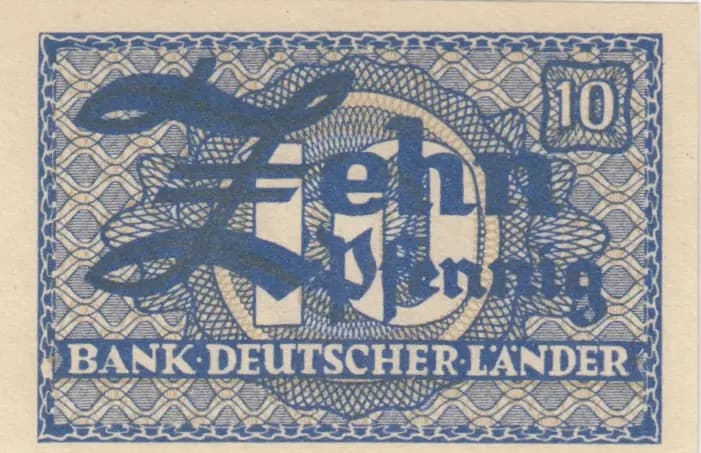
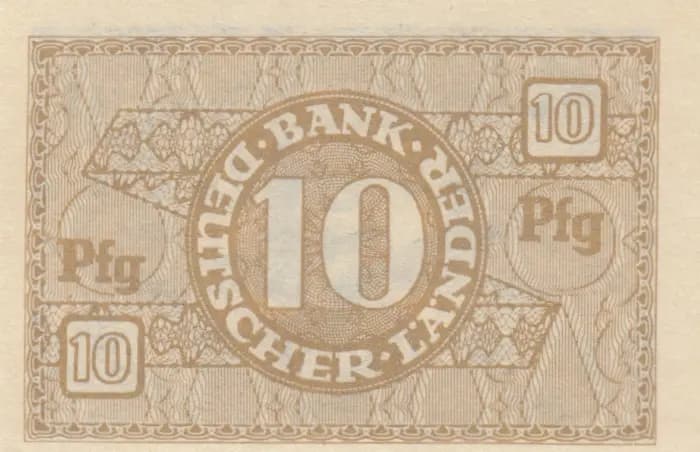
This is a pristine, uncirculated 10 pfenig banknote issued by the Bank Deutscher Länder in 1948, representing an important transitional currency during post-World War II German reconstruction. The note exhibits exceptional condition with no signs of wear, featuring an elegant design centered on an eagle motif rendered in blue and cream tones on the obverse, while the reverse displays a complementary tan and brown color scheme. The intricate fine-line engraving and decorative crosshatch patterns throughout demonstrate the high-quality security printing standards of the era.
Common. The 10 pfenig denomination from the 1948 Bank Deutscher Länder issue represents a standard, widely circulated small-denomination note from a major issuing authority with substantial print runs. While numismatically significant as an early post-war issue, the denomination and issuer ensure these notes were produced in large quantities. The uncirculated condition grade enhances individual specimen value but does not alter the overall commonality classification of this Pick number.
This note was issued during the critical period following Germany's defeat in World War II, when the Bank Deutscher Länder (Bank of German States) was established to manage currency in the three Western occupation zones. The eagle symbol, a traditional emblem of German authority, was carefully chosen to represent continuity and reconstruction while distancing the new currency from Nazi imagery. The 1948 date marks the emergence of the West German monetary system before the formation of the Federal Republic in 1949, making these notes significant artifacts of the Cold War's opening chapter.
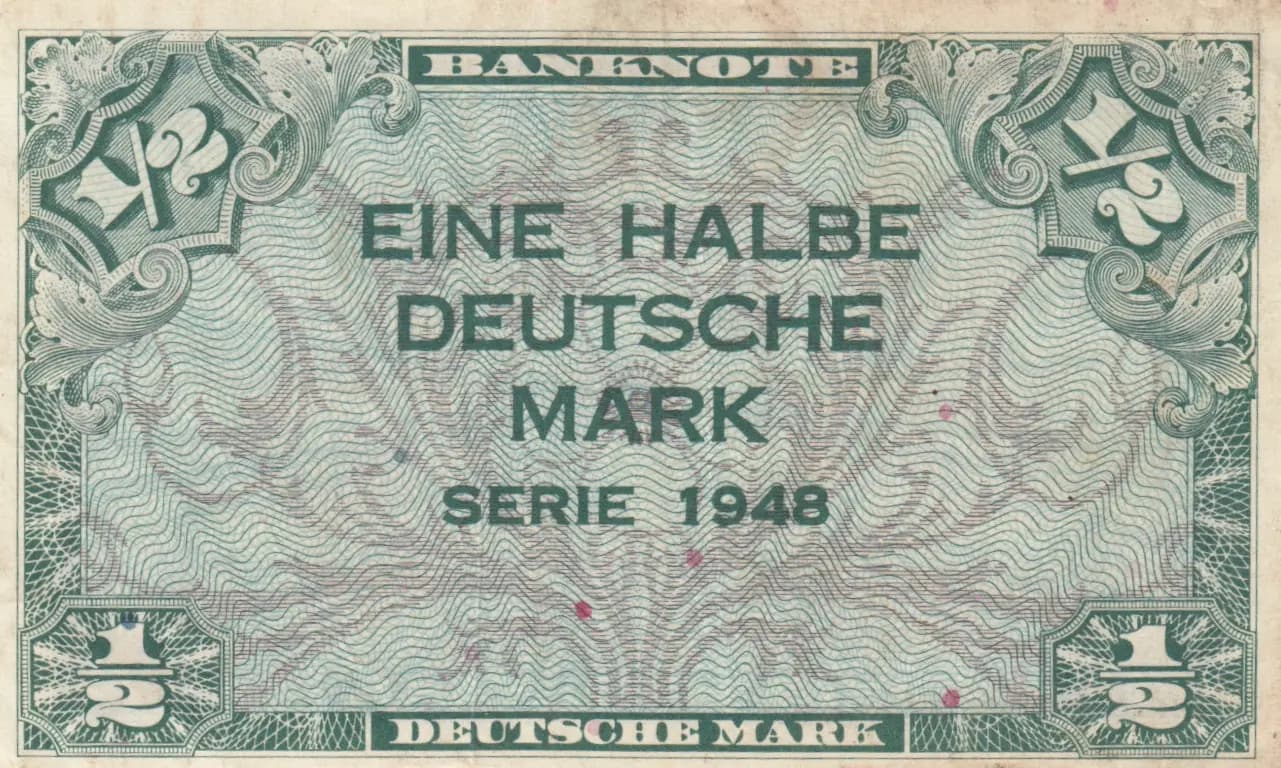
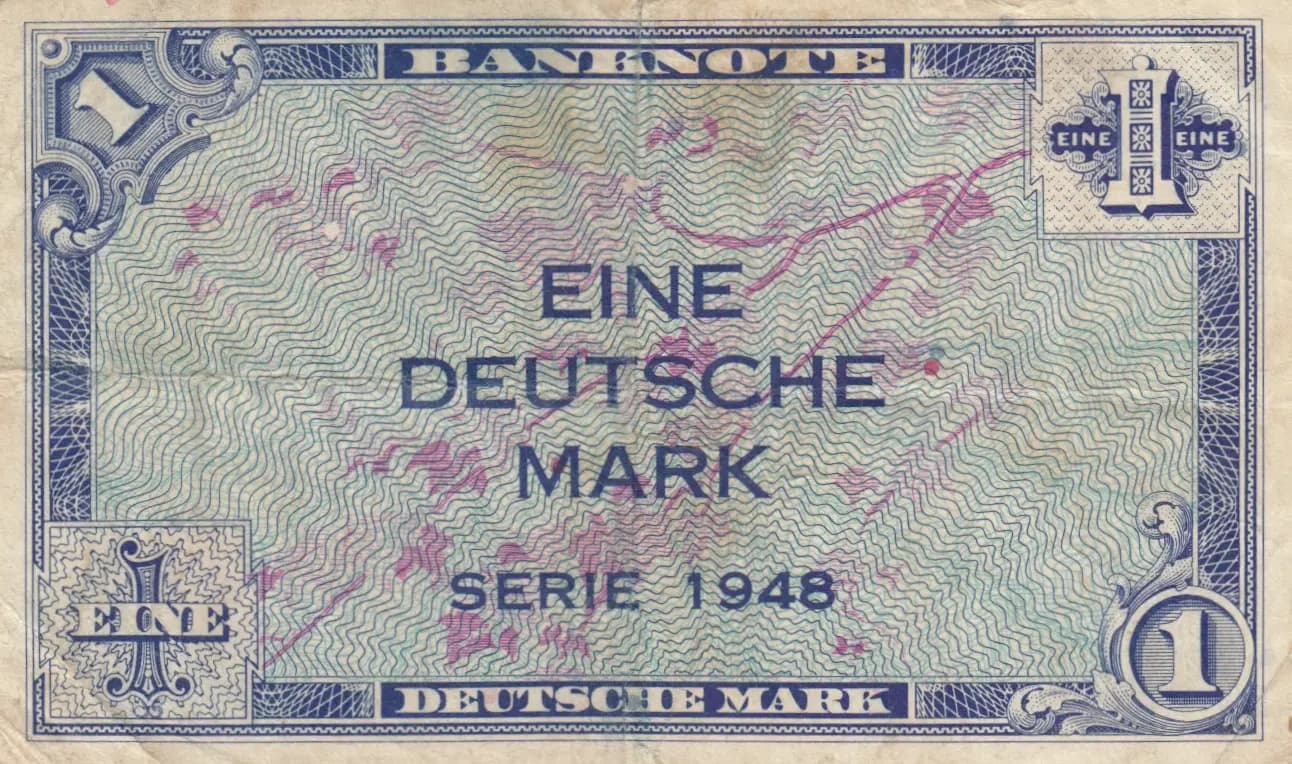
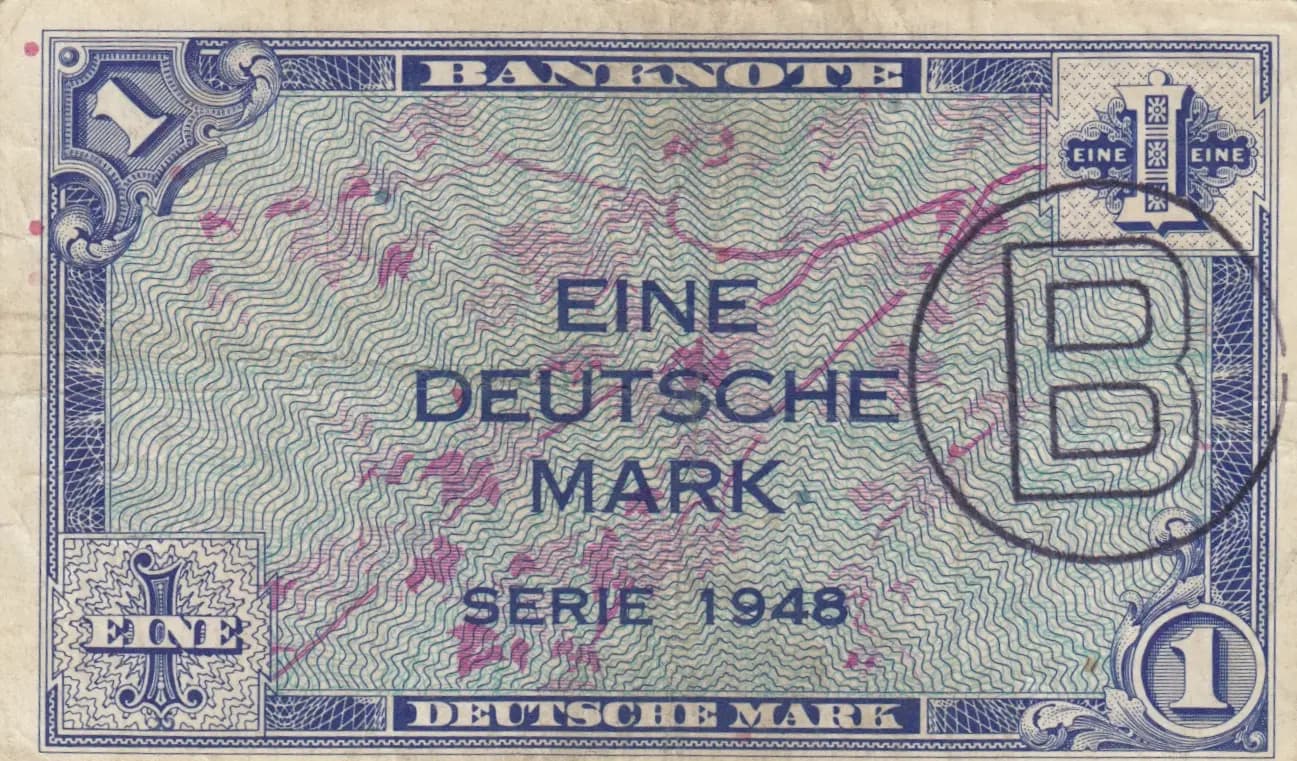
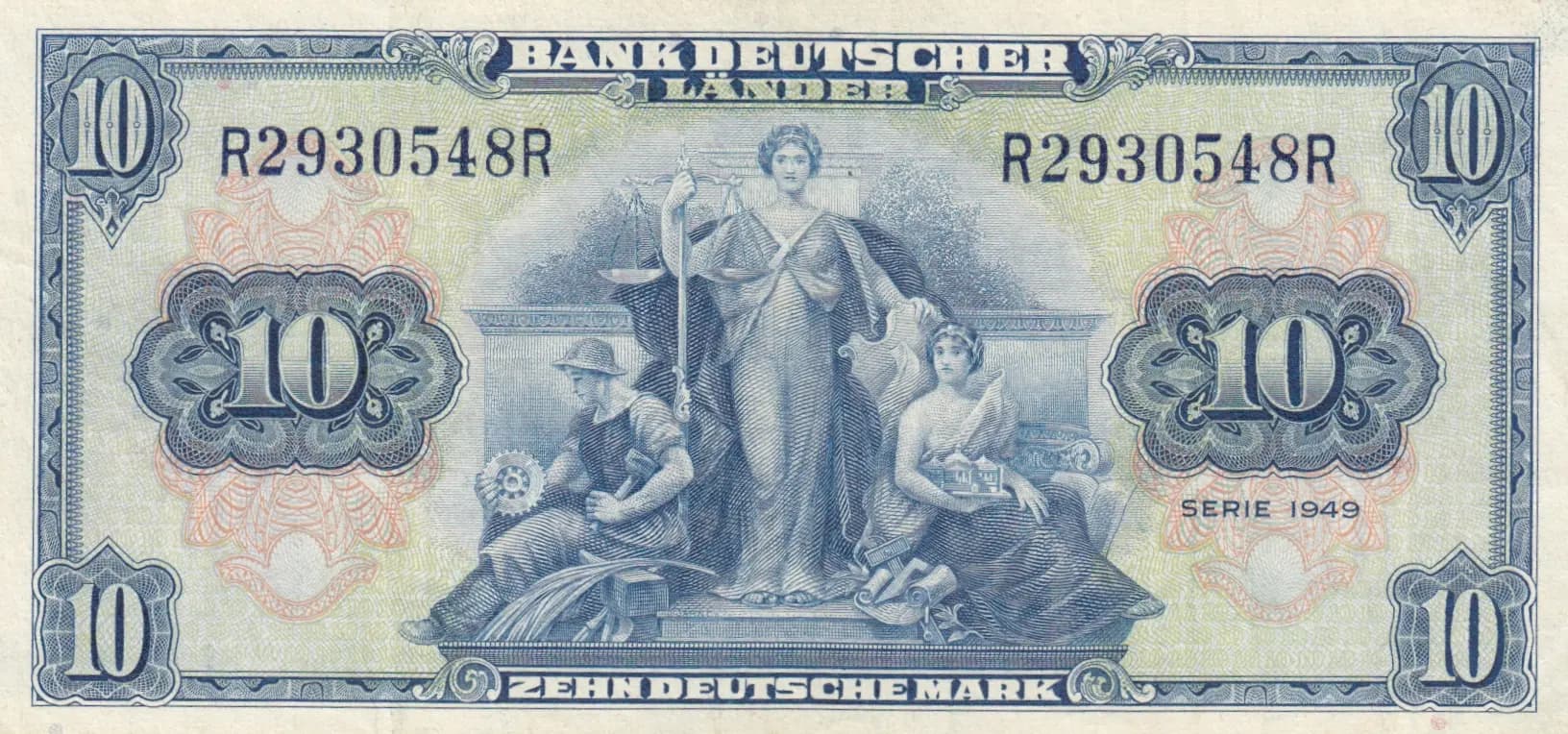
The obverse features a centered eagle with wings displayed in heraldic style, a classical symbol of German sovereignty, overlaid with large stylized numerals '10' for immediate denomination recognition. The design employs symmetric composition with elaborate decorative borders featuring repeating wave and geometric patterns rendered through fine-line engraving. The reverse presents a circular denomination seal prominently displaying '10 Pfg' in the center, surrounded by vertical line pattern engraving that creates visual texture and security depth. Corner elements reinforce the denomination marking. The color scheme—blue and cream on obverse, tan and brown on reverse—follows period chromatic printing conventions for this denomination range.
Front side: 'BANK DEUTSCHER LÄNDER' (Bank of German States); '10' (denomination marking). Back side: '10' and 'Pfg' (10 Pfennig - the currency denomination); 'BANK DEUTSCHER LÄNDER' repeated in segmented form (Bank of German States). All inscriptions are rendered in German language consistent with official monetary instruments of the period.
Intaglio engraving (copperplate/steel plate printing) as evidenced by the fine-line crosshatch patterns, intricate linear background designs, and precise geometric border work visible throughout both sides. The layered depth of the engraved patterns and security line work are characteristic of Bundesdruckerei (Federal Print Office) production standards for Bank Deutscher Länder notes of this period. The consistent impression quality and sharp denomination clarity indicate professional security printing using traditional intaglio presses.
Standard 1948 issue without observed overprints, security features variations, or signature varieties that would distinguish this as a special printing. The visual analysis reveals no date variants, printer marks, or serial number prefix anomalies that would indicate a specific scarce variety. This appears to be a typical example of the standard 10 pfenig Pick-12 issue from the initial Bank Deutscher Länder production run.