50 000 000 mark 1923
Market Prices
12 salesAbout This Note
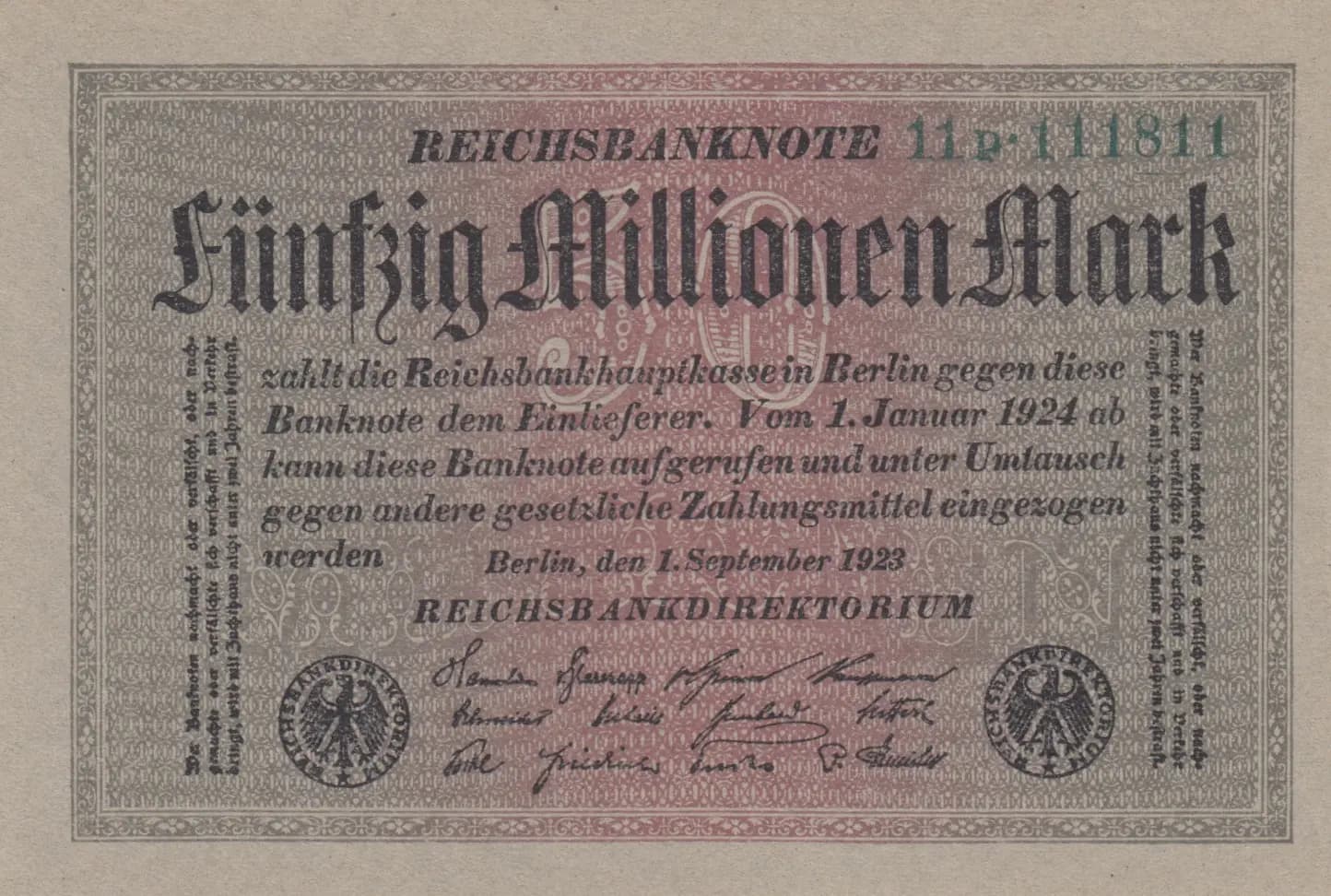
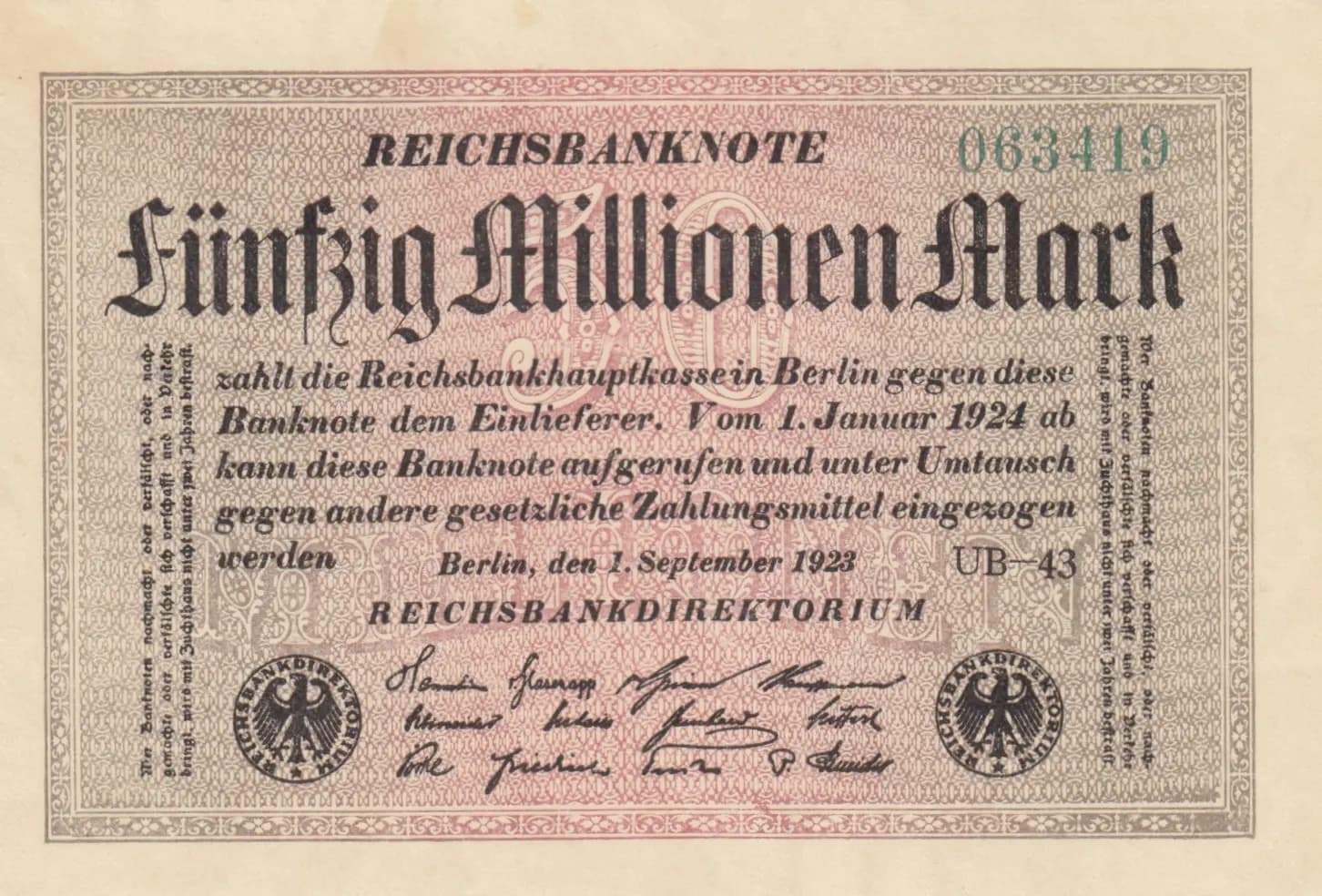
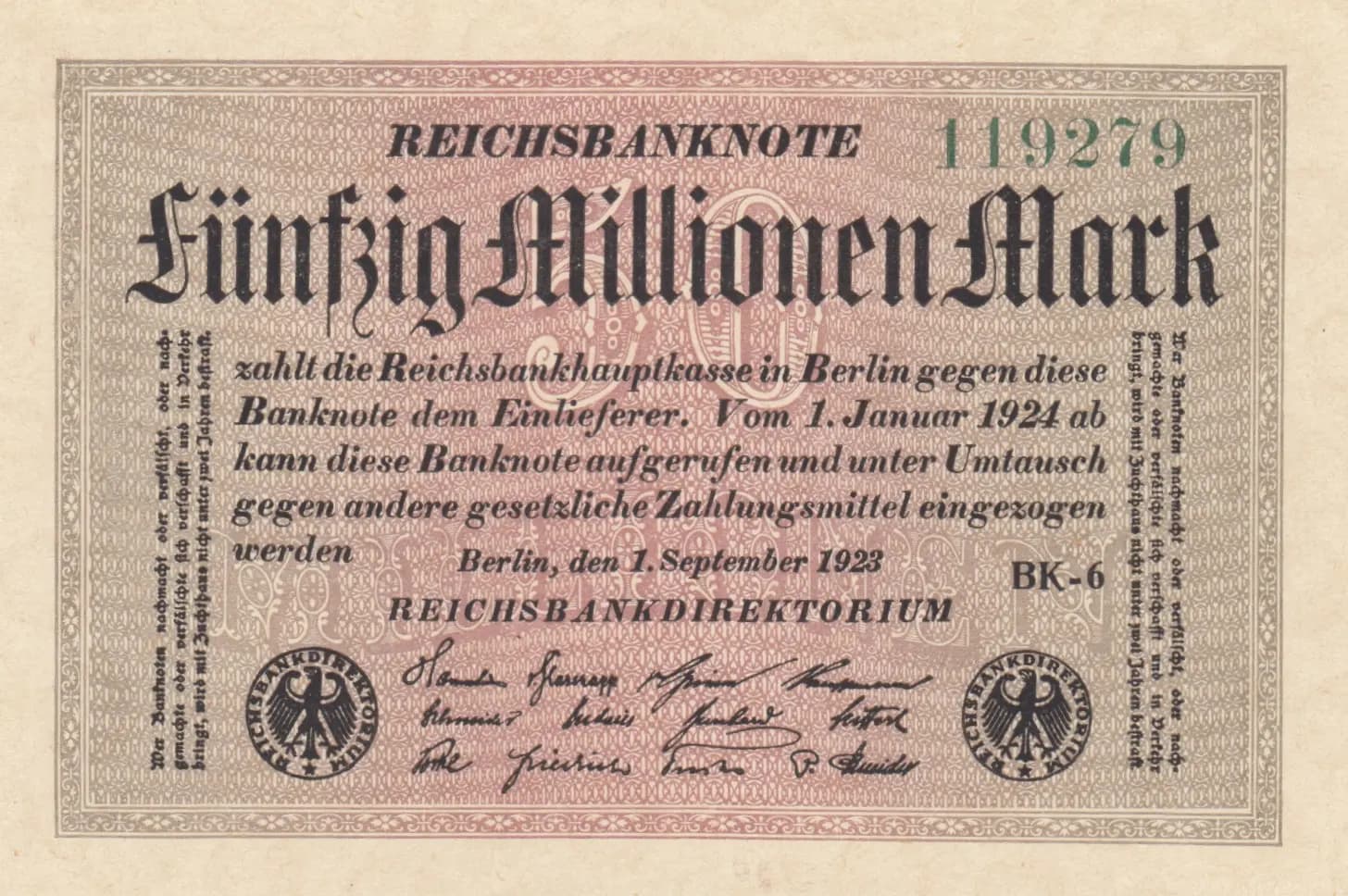
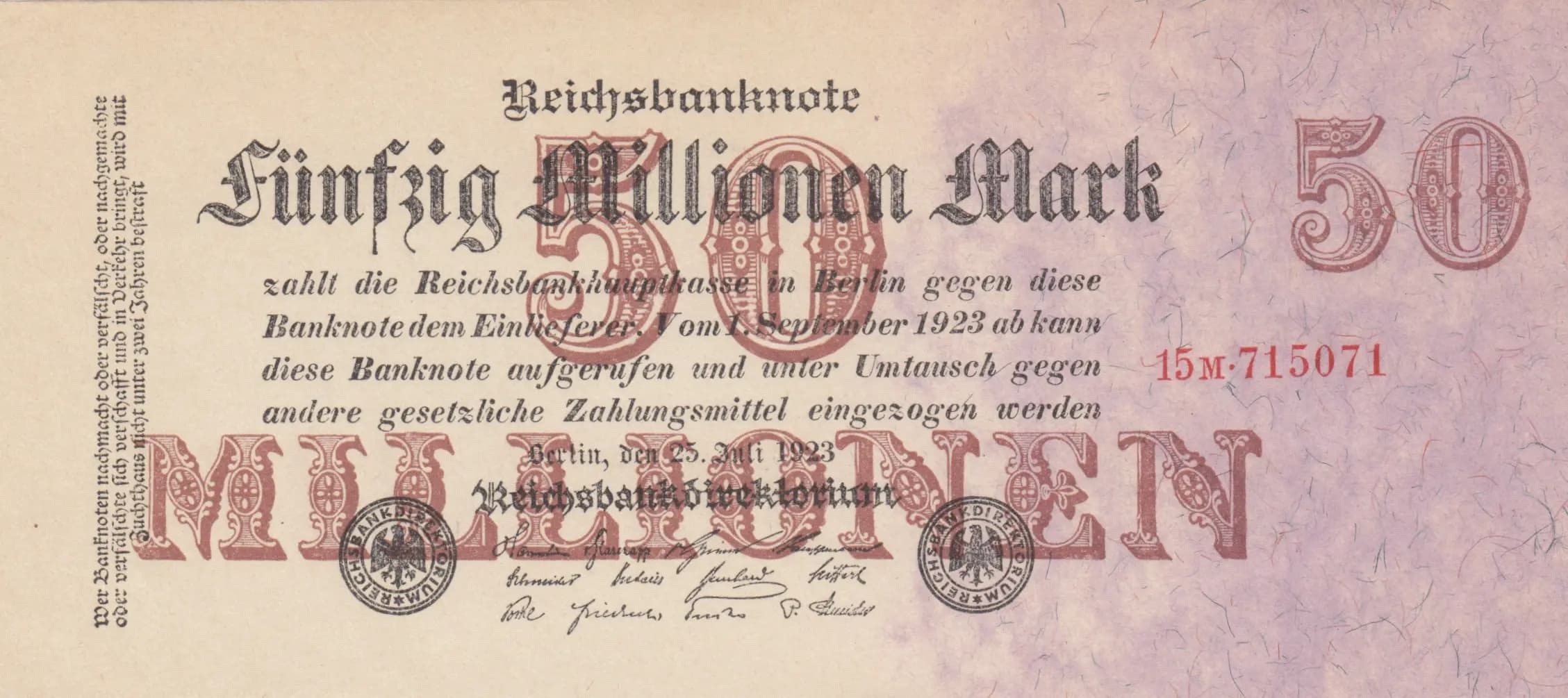
This 50 Million Mark Reichsbanknote from July 25, 1923 represents a fascinating artifact from Germany's hyperinflation crisis. The note displays the characteristic pink-mauve coloring typical of this denomination, with prominent Imperial Eagle seals and ornamental Germanic lettering, now showing age-appropriate patina and light creasing consistent with AU condition. As one of the extreme denomination notes issued during the final months of hyperinflation, this Pick-98b is a historically significant piece of early 20th-century financial turmoil.
Common. While hyperinflation-era high denomination notes hold collector interest, this Pick-98b remains abundant in the market. eBay transaction data shows consistent sales in the $1-10 range for raw notes in VF-AUNC condition over the past decade, with certified PMG examples commanding modest premiums ($20-44 for grades 58-65). Catalog values from 2016 list this note at only $3-10 across grades VG-UNC. Large print runs during the emergency issuances of summer 1923, combined with the survival of millions of these notes, ensure ready availability for collectors.
Issued during the acute phase of German hyperinflation in summer 1923, this 50 Million Mark note represents the Reichsbank's desperate attempt to maintain circulating currency as the value of the Mark collapsed. The redemption notice dated September 1923 printed on the obverse reflects the government's recognition that these notes would soon become worthless. The prominent Reichsadler (Imperial Eagle) seal symbolizes the authority of the Reichsbank attempting to stabilize the currency through this emergency issue.
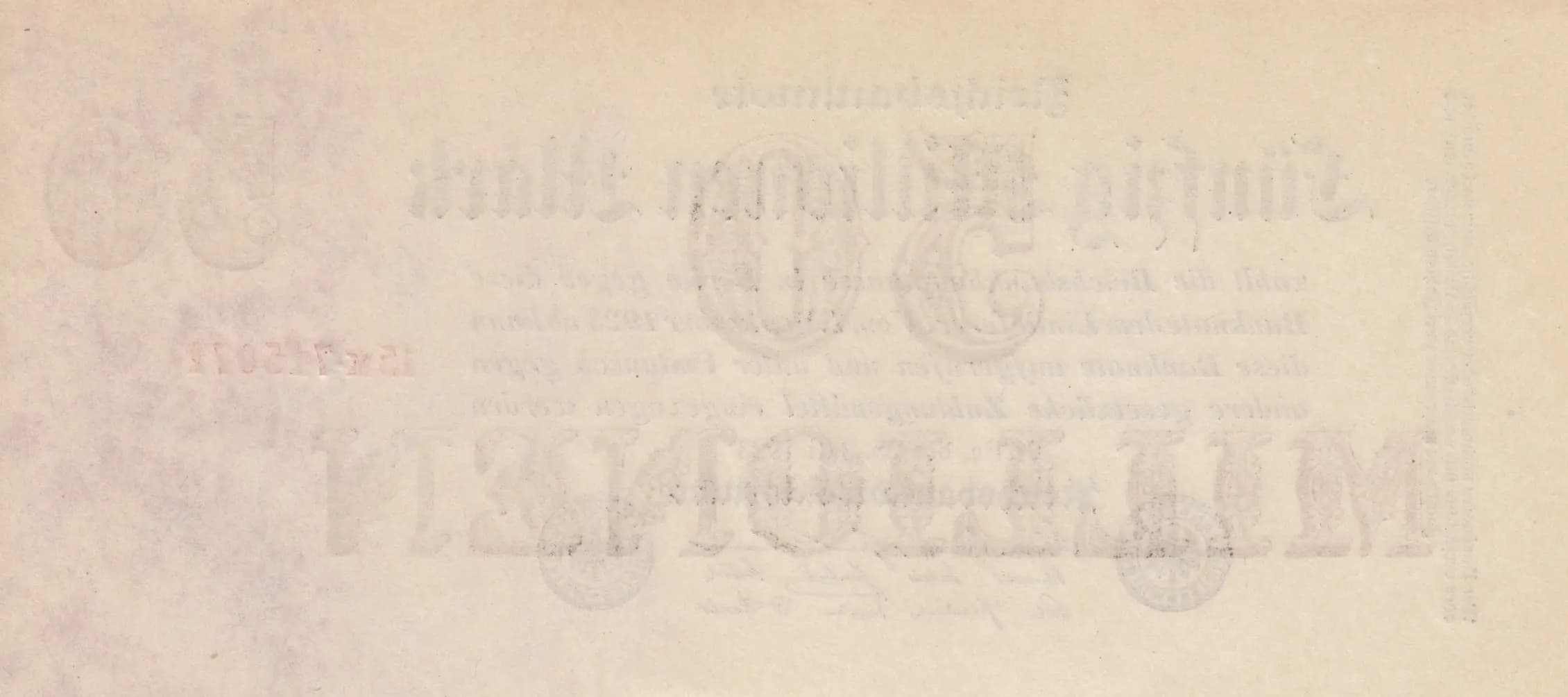
The obverse features a predominantly pink and mauve color scheme with black text and ornamental borders. Central to the design is the denomination 'Fünfzig Millionen Mark' rendered in large ornamental Germanic script. The Reichsadler (Imperial Eagle of the German Reich) appears twice—once on the left and once on the right side of the note, each within circular official seals, representing the Reichsbank's authority. The note includes fine ornamental line work and decorative frames typical of high-denomination emergency currency. The reverse side appears to have carried similar design elements but shows extreme age-related ink degradation, with only faint watermark impressions and seal outlines barely visible. No portraits appear on this emergency denomination issue, which instead emphasizes heraldic symbols and official seals.
FRONT: 'Reichsbanknote' (Reichsbank Note); 'Fünfzig Millionen Mark' (Fifty Million Mark); 'Die Reichsbankhauptkasse in Berlin zahlt gegen diese Banknote dem Einhänger. Vom September 1923 ab kann diese Banknote aufgerufen und unter Umtausch gegen andere gesetzliche Zahlungsmittel eingezogen werden' (The Reichsbank main office in Berlin pays the bearer against this banknote. From September 1923 onwards, this banknote can be called in and exchanged for other legal tender); 'Berlin, den 25. Juli 1923' (Berlin, July 25, 1923); Serial number: '15 M.715071'. BACK: Text present but too faint to reliably transcribe from the aged specimen.
Intaglio (recess) printing, the standard method for Reichsbank currency production during this period. The fine ornamental line work, decorative borders, and multiple color application visible on the note are consistent with intaglio production. The Reichsbank's primary security printer during 1923 was the Reichsdruckerei (German State Printing Office) in Berlin, though some emergency denominations may have involved secondary printers. The visible degradation of the reverse side ink suggests either lighter application of reverse printing or significant age-related ink migration typical of 1920s-era banknote paper stocks.
Pick-98b is the second variety of this denomination. The serial number observed (15 M.715071) falls within the standard range for 1923 issues. Known varieties for this denomination are distinguished primarily by signature combinations, serial number prefixes, and subtle design elements across the Pick-98a/b/c designations. This specimen's date (25.07.1923) and redemption clause referencing September 1923 are consistent with the cataloged Pick-98b issue. No unusual overprints or corrections are apparent from the visual analysis.