50 000 000 mark 1923
Market Prices
7 salesAbout This Note
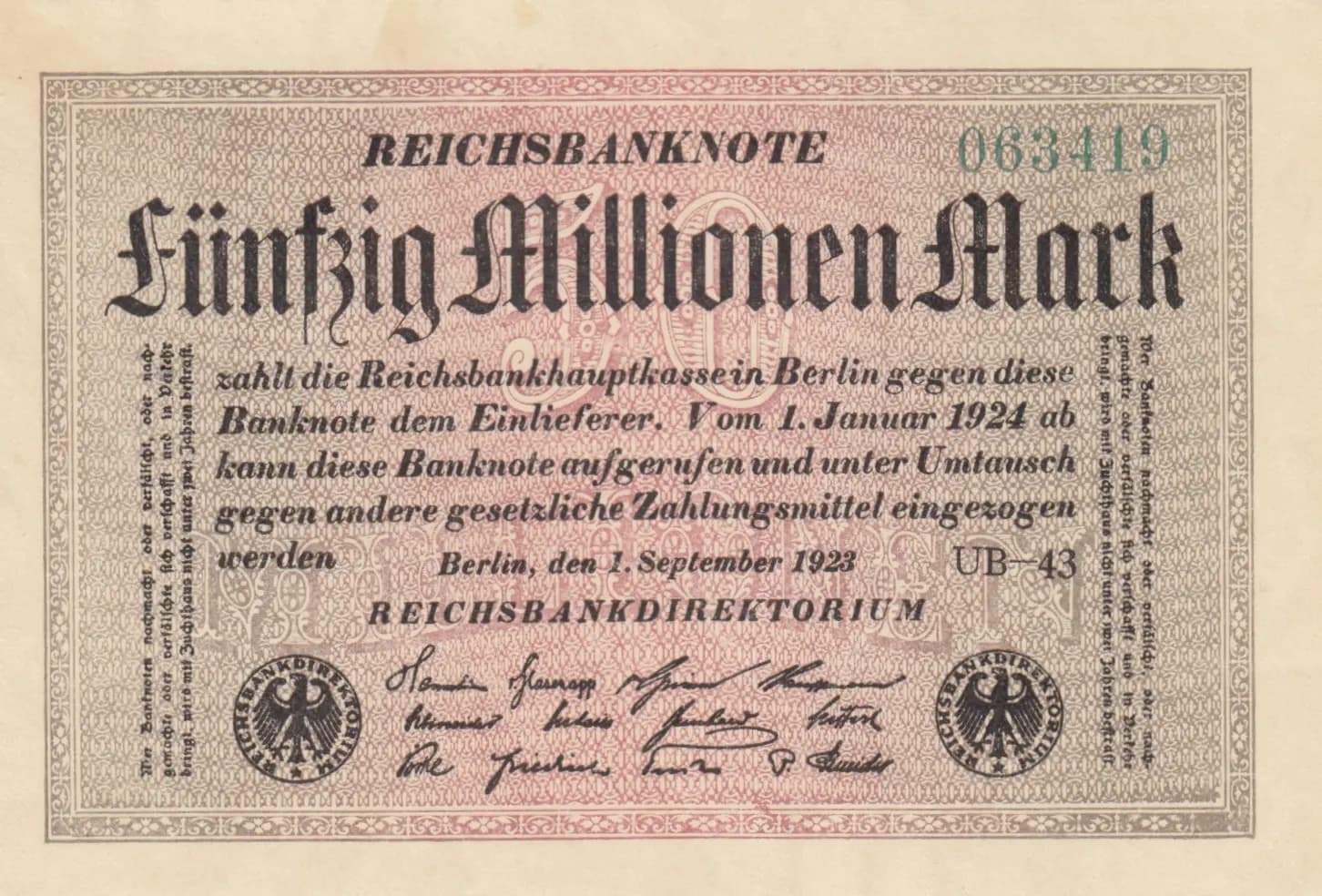
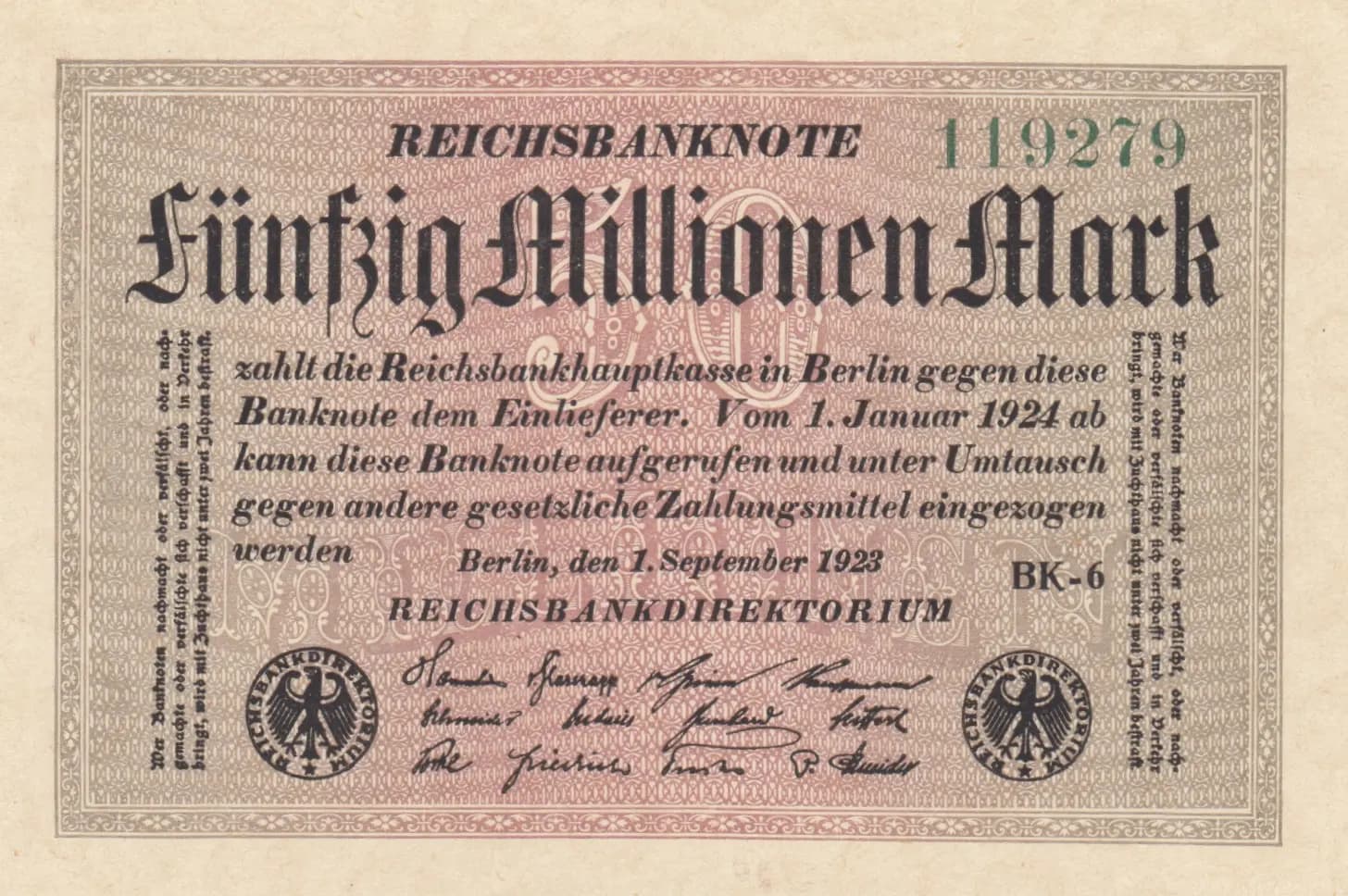
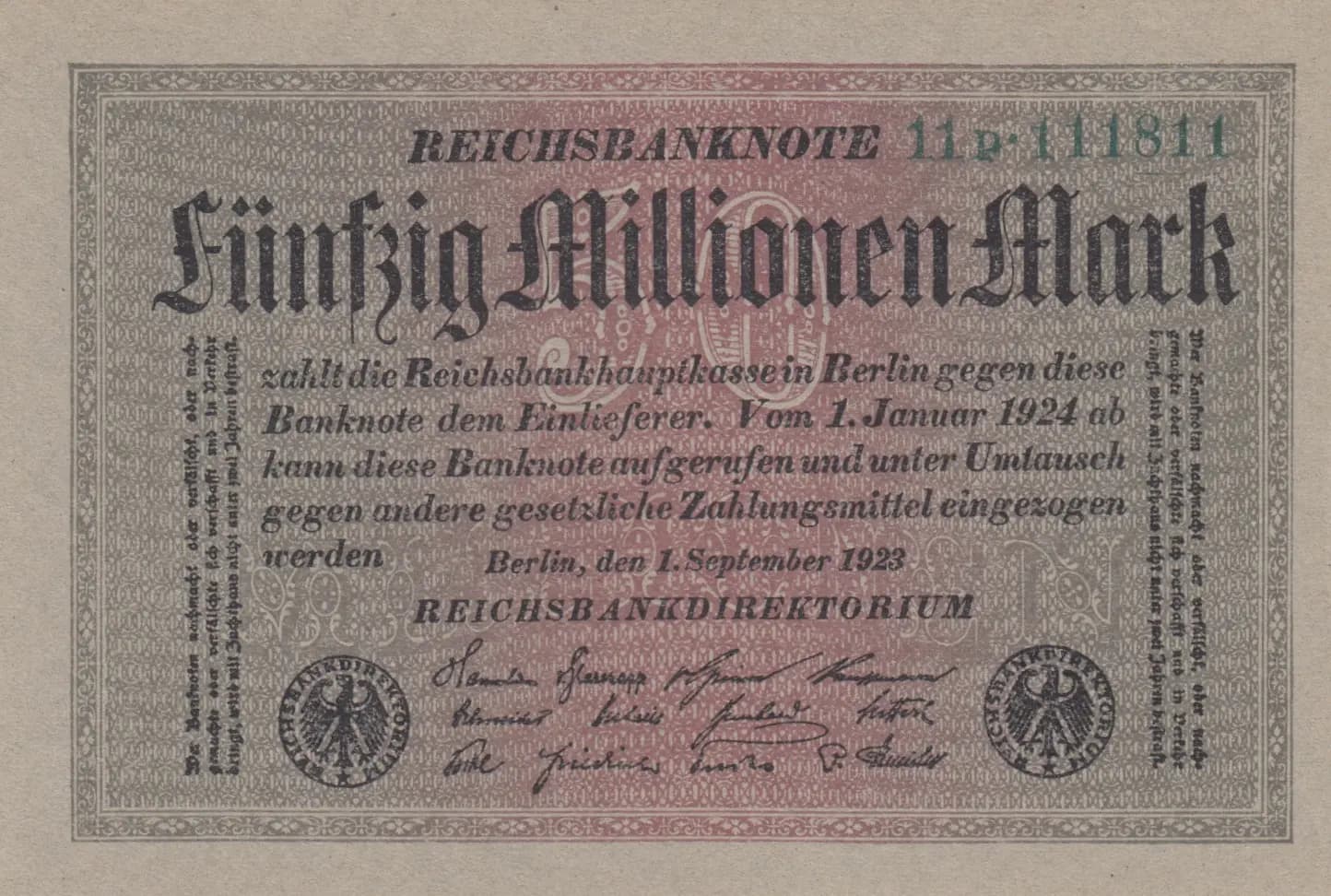
This German Reichsbanknote for 50 Million Mark from September 1, 1923 represents a classic example of Weimar hyperinflation currency, captured in nearly AU condition with minimal wear. The note displays the characteristic reddish-pink and gray color scheme with ornate Gothic typography and imperial eagle seals, featuring a uniface design with blank reverse. Despite its nearly century-old age, the note shows remarkable preservation with only expected foxing and aging discoloration, no tears or major creases, making it an excellent example for collectors of this dramatic period in German monetary history.
Common. The eBay price history provided shows consistent sales in the $0.69 to $3.00 range across multiple condition grades (VF to AUNC), with 2016 catalog values of $3–$10 depending on grade. These low market prices and frequent sales indicate substantial production and circulation of this note. The Reichsbank issued 50 Million Mark notes in large quantities during the hyperinflation emergency, making them readily available to collectors today despite their historical significance.
This note was issued during the final months of Germany's catastrophic hyperinflation crisis of 1923, when denomination values escalated exponentially as the Reichsmark collapsed. The September 1, 1923 date places it near the crisis's peak, just months before the introduction of the Rentenmark stabilized the currency in November. The imperial eagle seals and 'Reichsbankdirektorium' designation underscore the Reichsbank's attempt to maintain official authority and public confidence even as the currency's purchasing power evaporated, with the note itself bearing a redemption notice dated January 1, 1924—reflecting the temporary nature of these emergency issues.
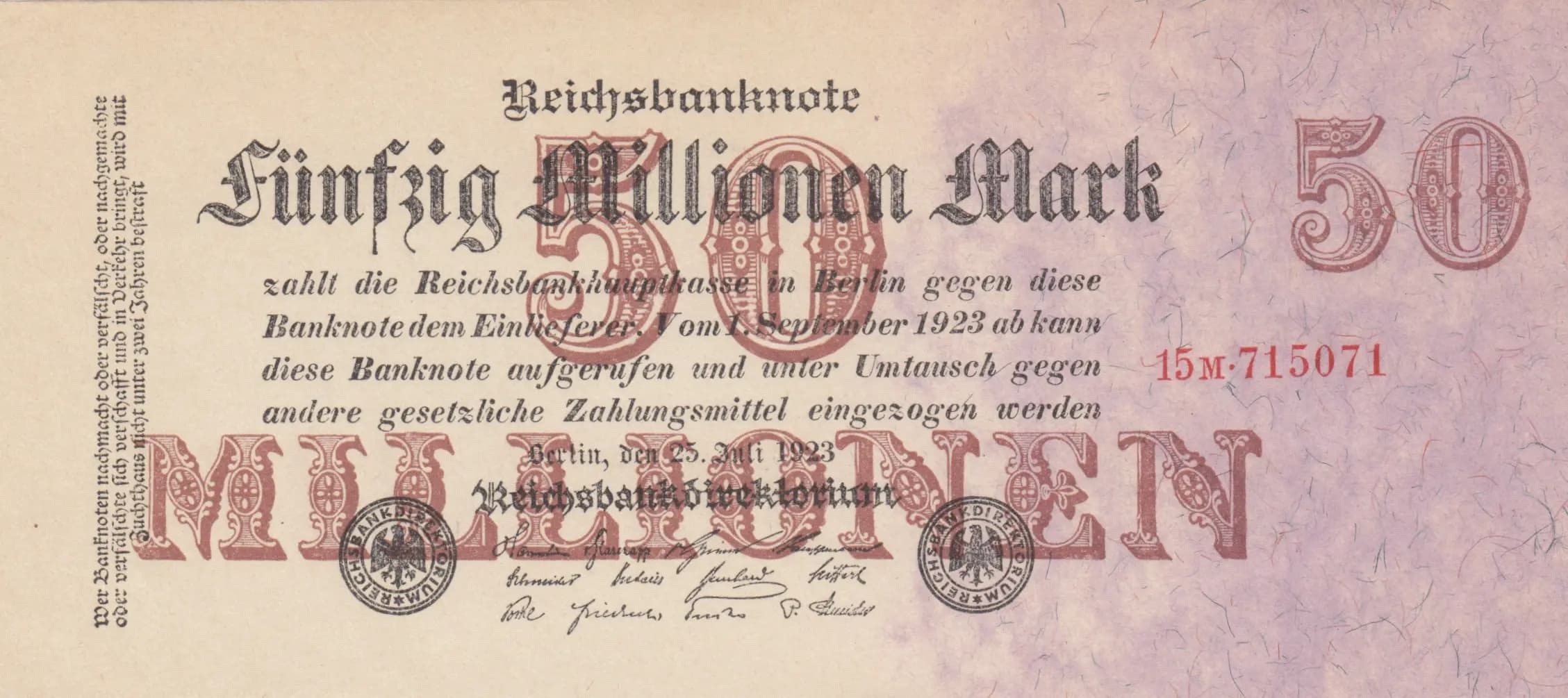
The obverse features a uniface design typical of emergency hyperinflation notes of 1923, with the denomination 'Fünfzig Millionen Mark' displayed in large, ornate Gothic script as the central design element. The note is framed by intricate decorative scrollwork borders and repeating geometric patterns forming the background security pattern. Two circular imperial eagle seals (the Reichsadler) are positioned at the lower left and right corners, representing state authority. Multiple official signatures appear at the bottom center above the 'REICHSBANKDIREKTORIUM' designation and issue date. The color scheme combines reddish-pink with gray and black inks on watermarked paper. No portraits or landmarks are depicted; the design relies entirely on heraldic symbols, typography, and geometric security patterns typical of emergency currency of this period.
FRONT SIDE: 'REICHSBANKNOTE' (Reichsbank Note) / 'Fünfzig Millionen Mark' (Fifty Million Mark) / 'zahldie Reichsbankhaupitkasse in Berlin gegen diese Banknote dem Einlieferer. Vom 1. Januar 1924 ab kann diese Banknote aufgerufen und unter Umtausch gegen andere gesetzliche Zahlungsmittel eingezogen werden' (The Reichsbank main treasury in Berlin will pay against this banknote to the bearer. From January 1, 1924, this banknote may be called in and exchanged for other legal tender) / 'Berlin, den 1. September 1923' (Berlin, September 1, 1923) / 'REICHSBANKDIREKTORIUM' (Reichsbank Directorate). BACK SIDE: Blank/Uniface.
Letterpress or intaglio printing with color separation (reddish-pink and gray overprints on gray base paper). The ornate borders, fine line patterns, and multiple signature lines are consistent with intaglio production methods employed by the German Imperial Printing Office (Reichsdruckerei) for Reichsbanknoten during the hyperinflation period. The watermark of small crucifera blossoms (Type D for Pick-109a) was integrated during paper manufacturing.
This note is cataloged as Pick-109a, distinguished by its Type D watermark (small crucifera blossoms). The PMG population report indicates three other varieties exist for this base denomination: Pick-109b (Type E watermark), Pick-109c (Type L watermark), and Pick-109e (Type M watermark). The watermark type is the primary distinguishing characteristic among these variants. The observed specimen shows the characteristic uniface design with no visible serial numbers or additional overprints that would indicate further sub-varieties. The date of September 1, 1923 and Reichsbankdirektorium signatures are standard for this Pick number.