100 mark 1920
Market Prices
12 salesAbout This Note
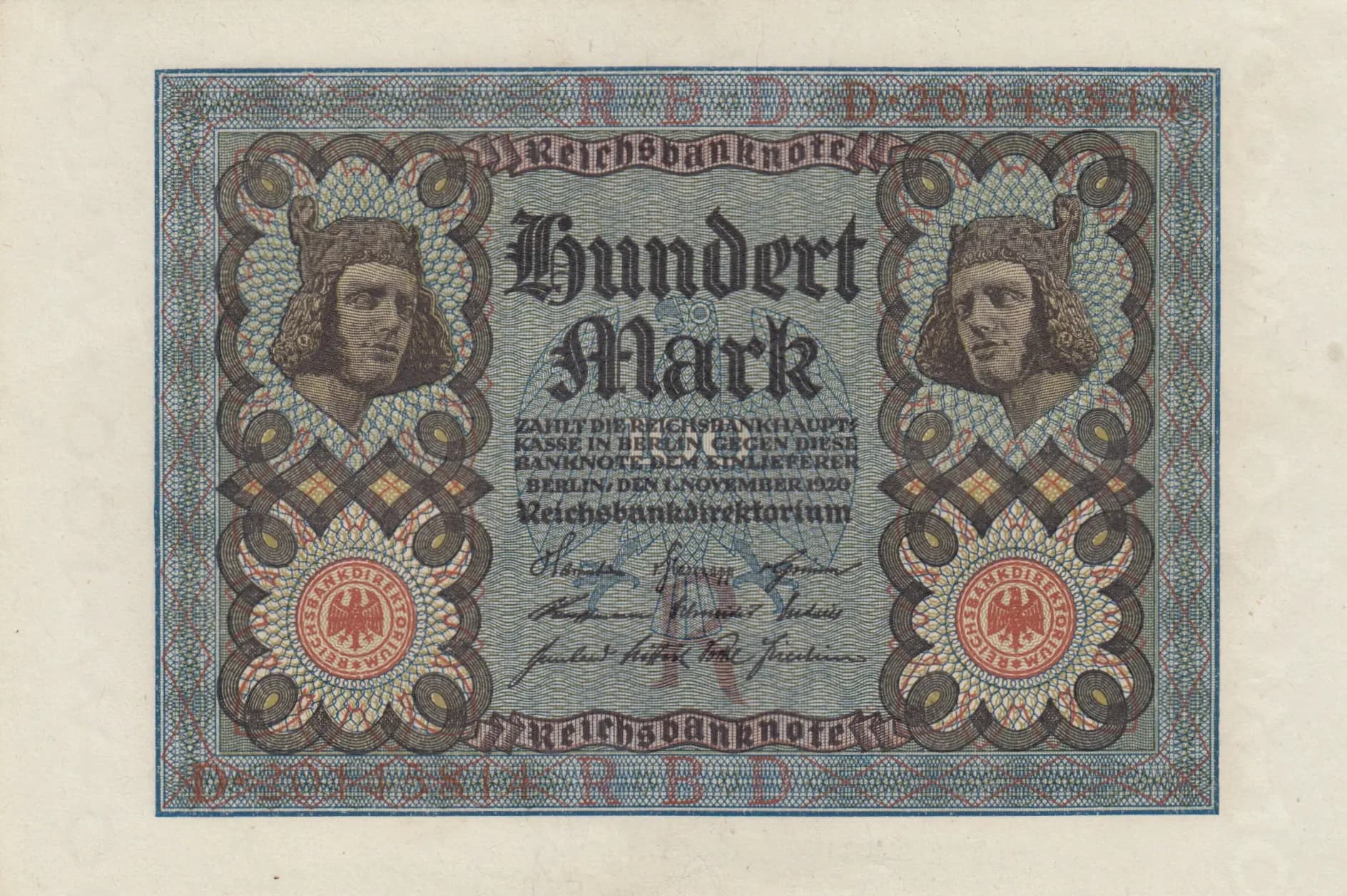
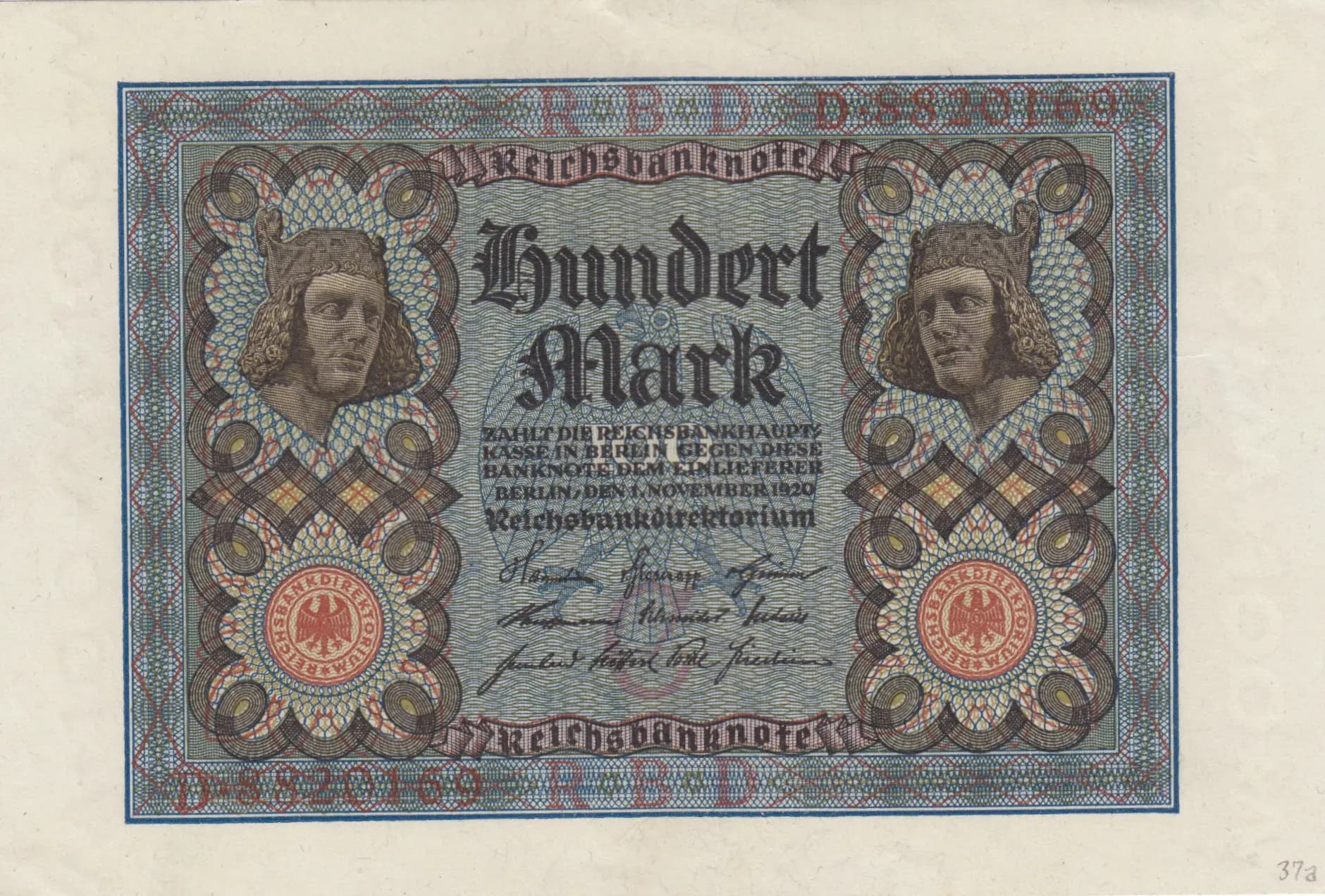
This German 100 Mark note from November 1, 1920 displays the iconic dual portrait design featuring historical figures in facing medallions, characteristic of Reichsbank currency from the early Weimar period. The note exhibits moderate circulation wear with visible creases, stains, and foxing consistent with AU (About Uncirculated) grade, though the visual analysis indicates more substantial aging and handling marks than typical AU specimens. The fine engraving detail remains largely intact, with the ornate borders and decorative scrollwork well-preserved despite signs of use.
Common. eBay price tracking data shows this note trading predominantly in the $0.29 to $3.75 range for circulated specimens, with even graded examples (PMG 66-67) selling for $39.50-$74. The 2016 catalog value for UNC is listed at $20. High historical print runs combined with widespread surviving examples and low secondary market prices indicate this is a readily available note for collectors. AU grade examples are particularly common and represent no significant premium.
Issued during the tumultuous early Weimar Republic, this 100 Mark note represents currency from a period of significant economic and political instability in Germany following World War I. The dual portrait medallions and imperial eagle seals reflect continuity with pre-war German design traditions, even as the fledgling Reichsbank attempted to establish credibility in post-imperial Germany. By 1920, hyperinflation was beginning to accelerate, making notes of this denomination increasingly important for daily commerce.
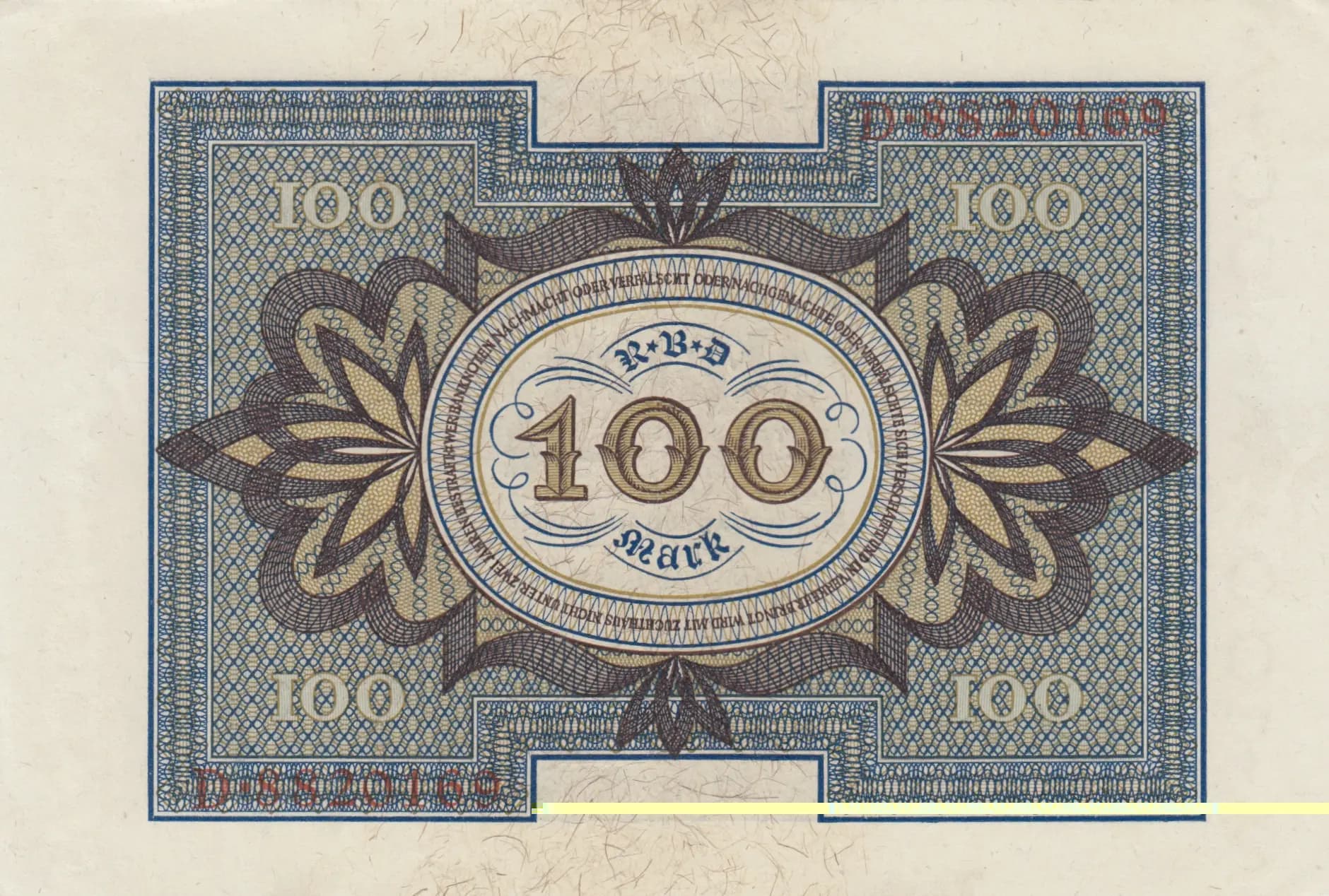
The obverse features two facing portrait medallions positioned left and right, depicting historical German figures with period-appropriate curled hair and clothing, framed within ornate circular designs. Red circular seals containing imperial eagles appear below each portrait, emphasizing state authority. The central area displays 'Hundert Mark' in large Gothic script with decorative scrollwork and wave patterns flanking the text. The reverse presents a dominant central circular medallion containing the large denomination '100' with 'Mark' text, surrounded by elaborate leaf and vine scrollwork in Art Nouveau style, with corner denomination indicators. The entire design is bounded by intricate geometric borders with fine dotted patterns throughout. Blue and brown inks dominate, applied over red and blue underprinting visible on the obverse.
Front side: 'Hundert Mark' (One Hundred Mark) — main denomination text in Gothic script. 'ZAHLT DIE REICHSBANKHAUPT KASSE IN BERLIN GEGEN DIESER LMTSCHRIFT DES INHABERS BERLIN, DEN 1. NOVEMBER 1920' (The Reichsbank main office in Berlin pays against this note to the bearer, Berlin, November 1, 1920). 'Reichsbankdirektorium' (Reichsbank Directorate). Back side: '100' (denomination numerals in all four corners), 'Mark' (currency denomination), 'RBB' (abbreviation for Reichsbank).
Classic intaglio (recess) engraving typical of German banknote production of the era. The fine line work visible in the border geometries, portrait medallions, and scrollwork patterns indicates professional security printing. The note likely employed the German security printer Reichsdruckerei or authorized contractors using traditional steel plate engraving with multi-color printing from separate plates for background underprinting and overprinting elements.
This specimen appears to be P-69a (standard 1920 November 1 issue) based on date and design elements. The visual analysis notes a 7-digit serial number visible on the obverse, typical of this series. Catalog data indicates P-69b exists as a variant, though specific distinguishing features of that variety are not detailed in provided references. Handwritten signatures are visible in the center of the obverse, consistent with contemporaneous Reichsbank authorization practices. The specific signature identification would require closer inspection of the signatures themselves, which the visual analysis did not specify by individual names.