10 000 mark 1922
Market Prices
96 salesAbout This Note
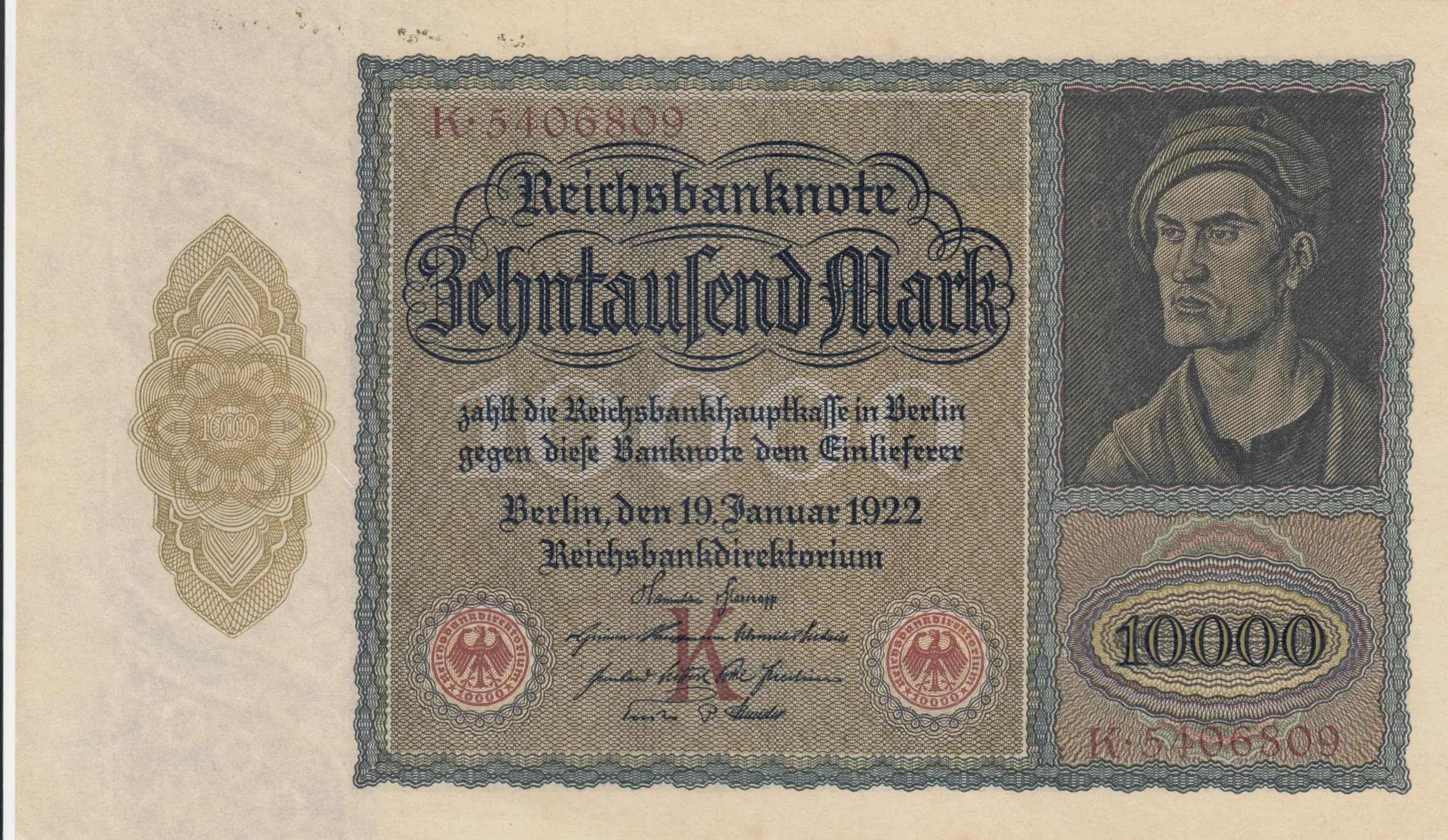
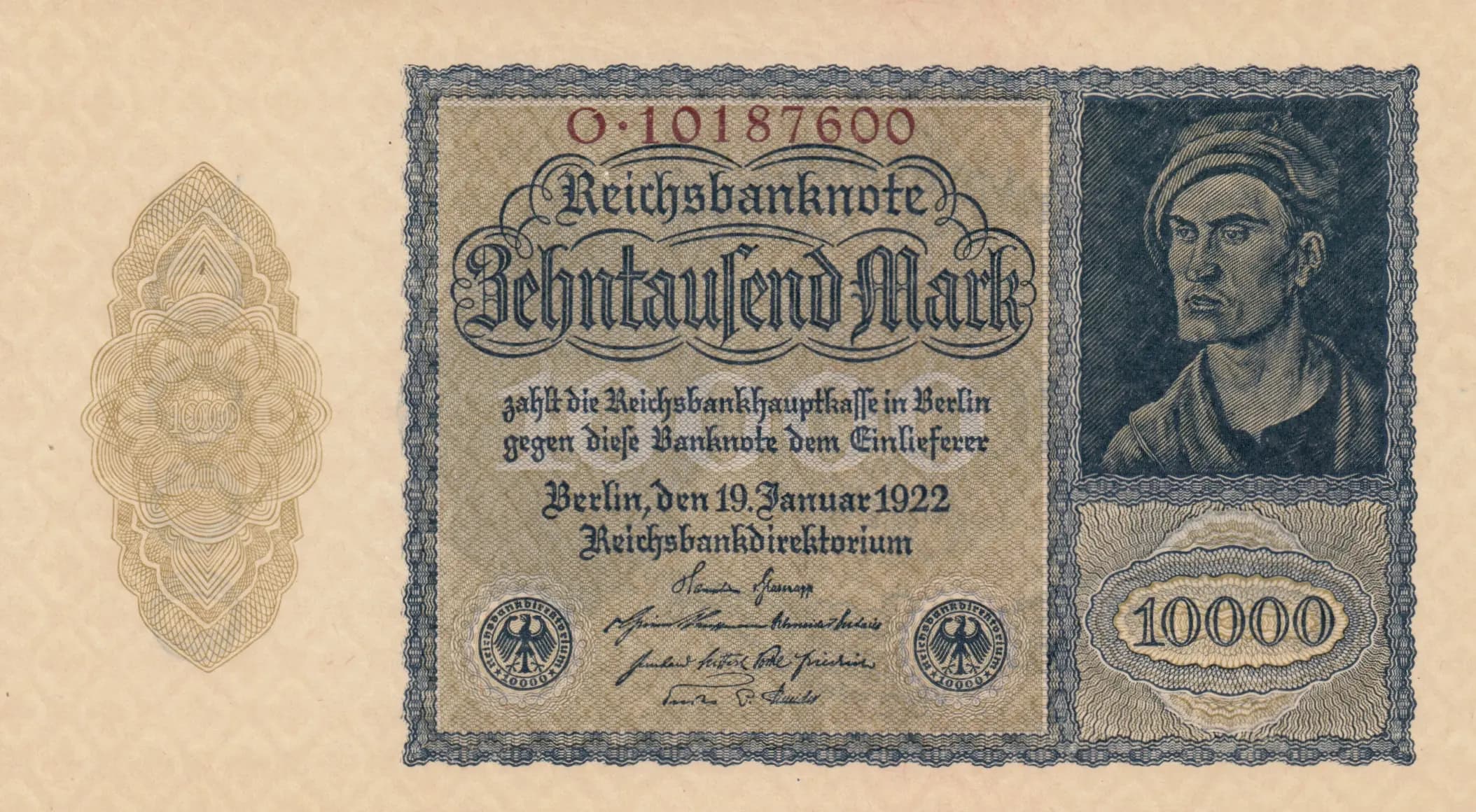
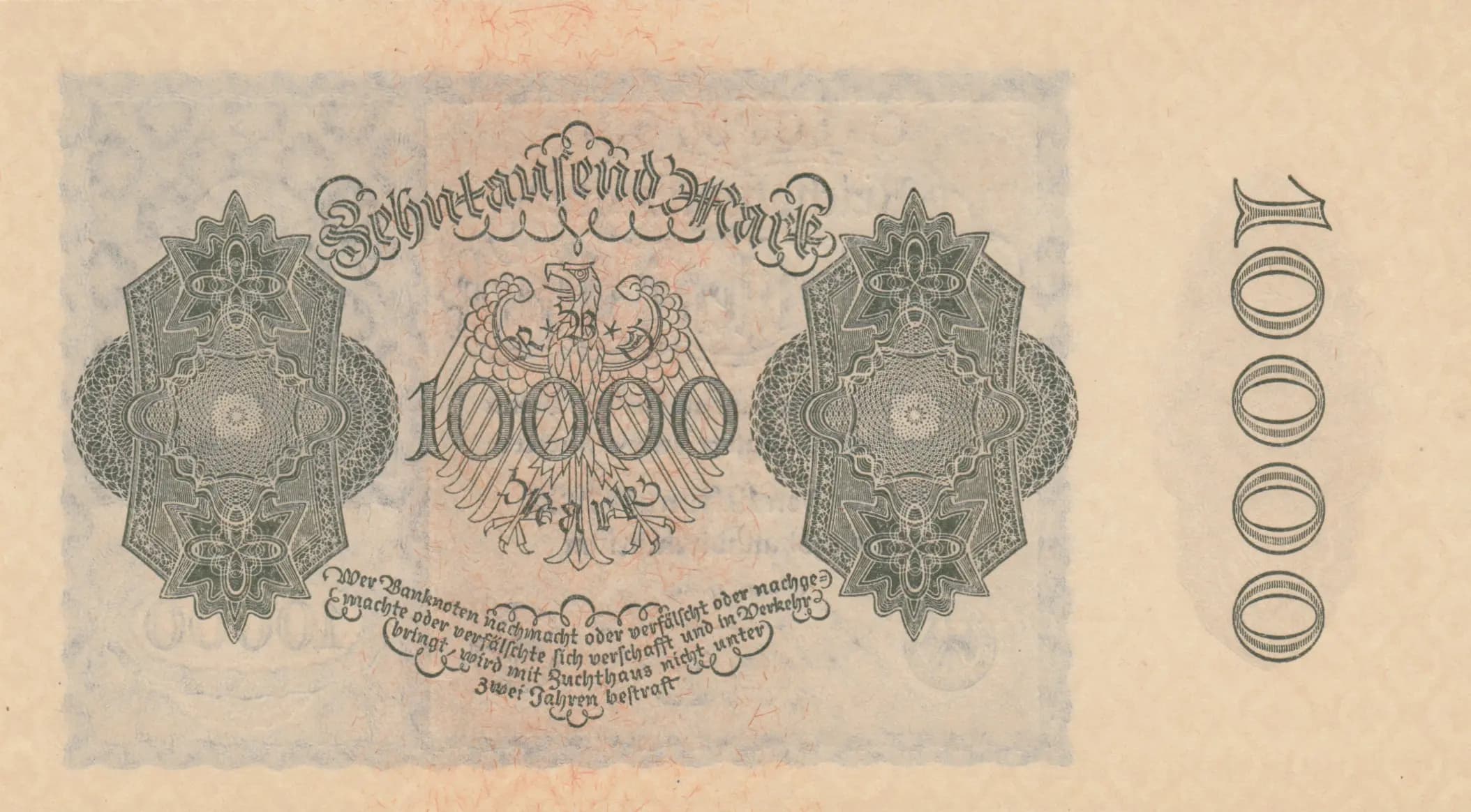
This is an exceptional example of the German Reichsbank 10,000 Mark note from January 19, 1922 (Pick P-72), presented in uncirculated condition with sharp printing and no visible wear. The note features an ornate Art Nouveau-influenced design with a portrait on the obverse and a crowned imperial eagle on the reverse, characteristic of the Weimar hyperinflation period. The excellent state of preservation and crisp engraving make this a desirable specimen for collectors of German inflation-era currency.
Common. Despite the historical significance of the 1922 hyperinflation period, the 10,000 Mark denomination was issued in large quantities and circulated extensively. eBay market data shows consistent sales across decades with typical prices ranging from $1-$10 for circulated examples and $20-$70 for PMG-graded UNC specimens, reflecting abundant supply. Current UNC specimens routinely appear in the market at modest valuations, with the 2016 catalog valuation of $20 for UNC consistent with common pricing patterns for this issue.
Issued during the early phase of German hyperinflation following World War I, this 10,000 Mark note represents the Reichsbank's response to rapidly escalating currency devaluation in the Weimar Republic. The prominent imperial eagle and references to the Reichstag on the reverse reflect the transitional political authority between the collapsed German Empire and the new democratic government. By 1922, denomination values had already begun their exponential climb toward the catastrophic inflation of 1923, making this note a tangible artifact of one of history's most dramatic monetary crises.
The obverse features a three-quarter portrait of a young bearded man positioned on the right side, styled after or directly copied from a work by Albrecht Dürer, reflecting the Renaissance revival popular in early 20th-century German design. The left side displays an elaborate vertical ornamental pattern with concentric geometric and teardrop designs. The center contains text in decorative Gothic script identifying the note as a Reichsbanknote and stating its value. Two circular seals bearing the German imperial eagle are positioned at the bottom. The reverse presents a more formal, symmetrical composition with a crowned imperial eagle and shield at center, flanked by two ornate heraldic shield designs containing eight-pointed stars and geometric patterns. Four circular security design elements run vertically along the right margin. The color scheme of tan, navy blue, black, and cream creates the distinctive appearance of this hyperinflation-era denomination.
FRONT: 'Reichsbanknote' (Reichsbank note); 'Zehntausend Mark' (Ten thousand Mark); 'gegen diese Banknote haftet die Reichsbankhautkasse in Berlin gegen diese Banknote dem Einlieferer' (The Reichsbank main office in Berlin is liable for this banknote against the depositor); 'Berlin, den 19.Januar 1922' (Berlin, January 19, 1922); 'Reichsbankdirektorium' (Reichsbank Directorate); Serial number 'O·10187600'; Denomination numeral '10000'. BACK: 'Reichsbanknote' (Reichsbank note); Denomination numeral '10000'; Legal text regarding Reichstag liability and regulatory provisions (partially obscured but relating to constitutional authority established December 1871).
This note was produced using intaglio engraving (copperplate printing), evidenced by the fine detailed line work, precise crosshatching in the portrait area, and intricate geometric patterns visible throughout both sides. The technique provides excellent detail reproduction and was standard for Reichsbank notes during this period. The complex ornamental designs and security patterns characteristic of this Pick number demonstrate the sophisticated engraving skill employed to create a note resistant to counterfeiting during a period of rapid currency proliferation.
This specimen carries the serial number O·10187600, issued January 19, 1922, with signatures of the Reichsbankdirektorium officials of that date. The note displays the '10000' denomination marking at the right margin of the obverse, distinguishing it from P-71 (which lacks this numeral). This is the primary regular issue variety of P-72. No overprints or special varieties are observed in this example. Collectors should note the distinction between P-70 (different back design), P-71 (similar obverse, different back, no '10000' at right), and P-72 (the cataloged example).