10 000 mark 1922
Market Prices
47 salesAbout This Note
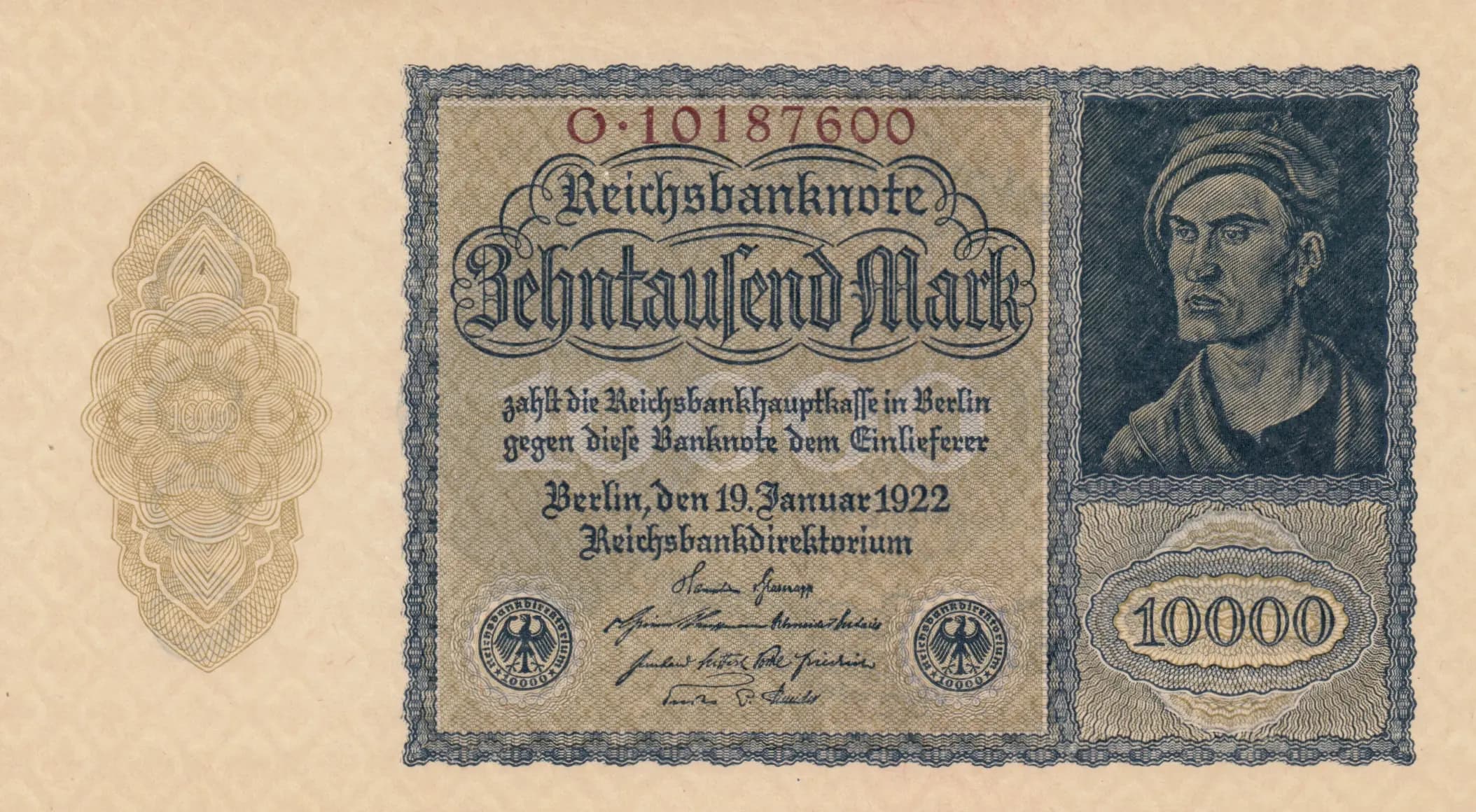
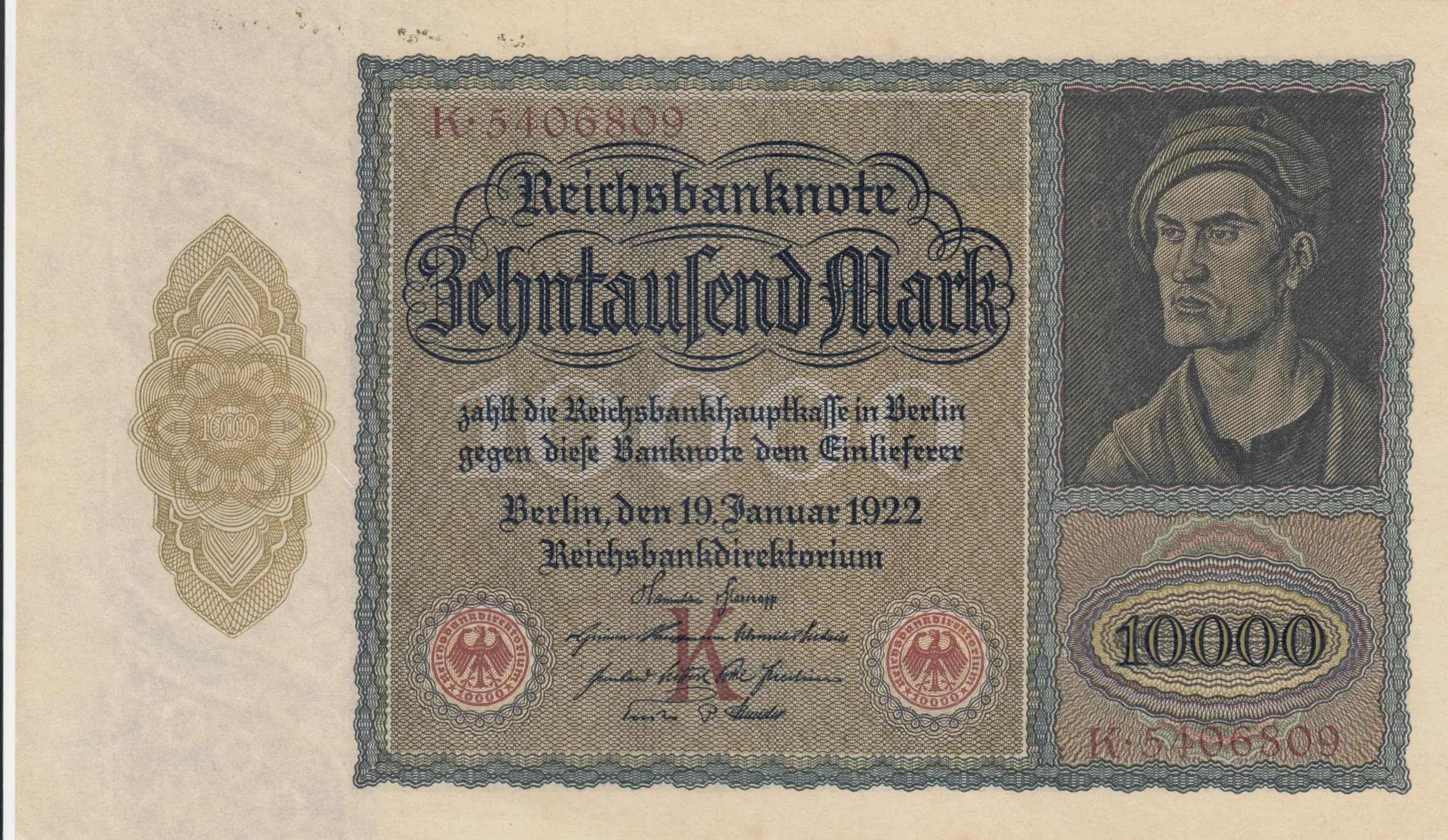
This German 10,000 Mark note from January 19, 1922, represents a fascinating specimen from the hyperinflation era of the Weimar Republic. The AU condition grade reflects well-preserved paper with light aging patina and minimal creasing, showing the intricate guilloché patterns and fine line engraving characteristic of Reichsbank currency. The note features exceptional security printing with two red imperial eagle seals and a beautifully rendered portrait on the obverse, making it a desirable example for collectors of early 20th-century German currency.
Common. This note is readily available in the collector market, as evidenced by consistent eBay transaction data showing regular sales at modest valuations. Recent eBay sales data indicates specimens in VF condition selling for $1.25-$10.55, with AU/UNC examples reaching $18-$21.50. The 2016 catalog value of $25 for UNC and $10 for VF further confirms this is a circulation-issue note with substantial surviving quantities. The high face value relative to later hyperinflation issues, combined with the relatively modest survival rate of 1922 notes, does not elevate rarity to uncommon status given current market activity.
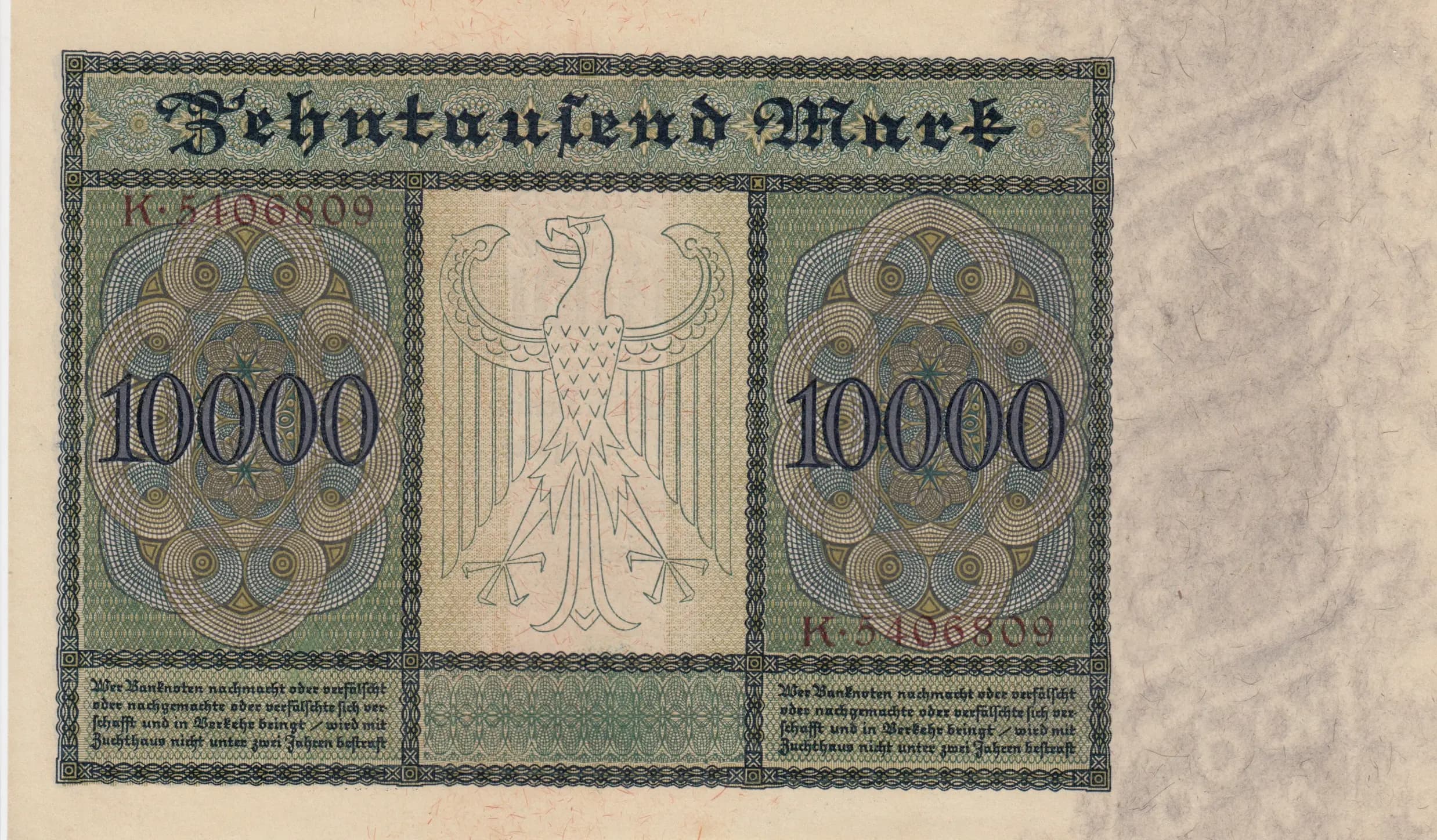
Issued during the Weimar Republic's early hyperinflation period, this 10,000 Mark note represents the Reichsbank's response to massive currency devaluation following World War I. The imperial eagle (Reichsadler) prominently featured on the reverse reflects continuity with German imperial traditions despite the republican government, while the dated inscription from January 1922 places it in the critical months before hyperinflation accelerated dramatically later that year. The ornate design and security features indicate the Reichsbank's attempt to maintain currency integrity during an economically turbulent period.
The obverse features a left-facing male portrait in the style of Albrecht Dürer's Renaissance engraving technique, positioned on the right side of the note. This portrait, rendered in fine line engraving with careful attention to facial features and period styling, reflects the Reichsbank's use of historical artistic references for currency design. The reverse displays the Reichsadler (Imperial German eagle) as the central element, depicted with spread wings and forward-facing head, flanked by ornamental circular panels containing concentric geometric guilloché patterns in green and gold tones. Both sides feature elaborate decorative borders with geometric and cross-hatching patterns. The note employs a cream/beige base color with green accent areas, black engraving lines, and gold highlights, creating a sophisticated multi-color security design typical of high-denomination Reichsbank issues.
FRONT: 'Reichsbanknote' (Reichsbank note) / 'Zehntausend Mark' (Ten thousand Mark) / '10000' (ten thousand) / 'zahlt die Reichsbankhauptkasse in Berlin gegen diese Banknote dem Einlieferer' (The Reichsbank main office in Berlin pays against this banknote to the person depositing it) / 'Berlin, den 19 Januar 1922' (Berlin, 19 January 1922) / 'Reichsbankdirektorium' (Reichsbank Board of Directors) — BACK: 'Schuldbulend Mark' (Debt-based Mark) / '10000' (ten thousand) / Legal redemption and circulation text (partially visible in fine print at bottom)
This note was produced using intaglio (relief engraving) printing, the standard security printing method for Reichsbank currency of this period. The fine line engraving visible in both the portrait and the imperial eagle, combined with the intricate guilloché background patterns and detailed geometric borders, are characteristic of intaglio production. The layered security features, including the red circular seals with eagle emblems and the complex cross-hatching backgrounds, required the precision and depth capabilities of intaglio printing. The Reichsbank employed Germany's leading security printers of the era for these high-denomination notes, though specific printer attribution for Pick 70 would require consultation of specialized German banknote printing records.
This note is Pick 70, issued on January 19, 1922, and should be distinguished from the closely related Pick 71 and Pick 72 varieties, which feature similar front designs but different reverse designs. The catalog remark specifically notes the eagle on the back in rectangular frame for notes similar on front. Serial number prefixes and signatures may vary among issued notes; detailed variety information would require examination of specific serial number sequences and signature combinations from this January 1922 printing. No major varieties (such as overprints or color variants) are indicated for Pick 70.