1 000 000 000 mark 1923
Market Prices
20 salesAbout This Note
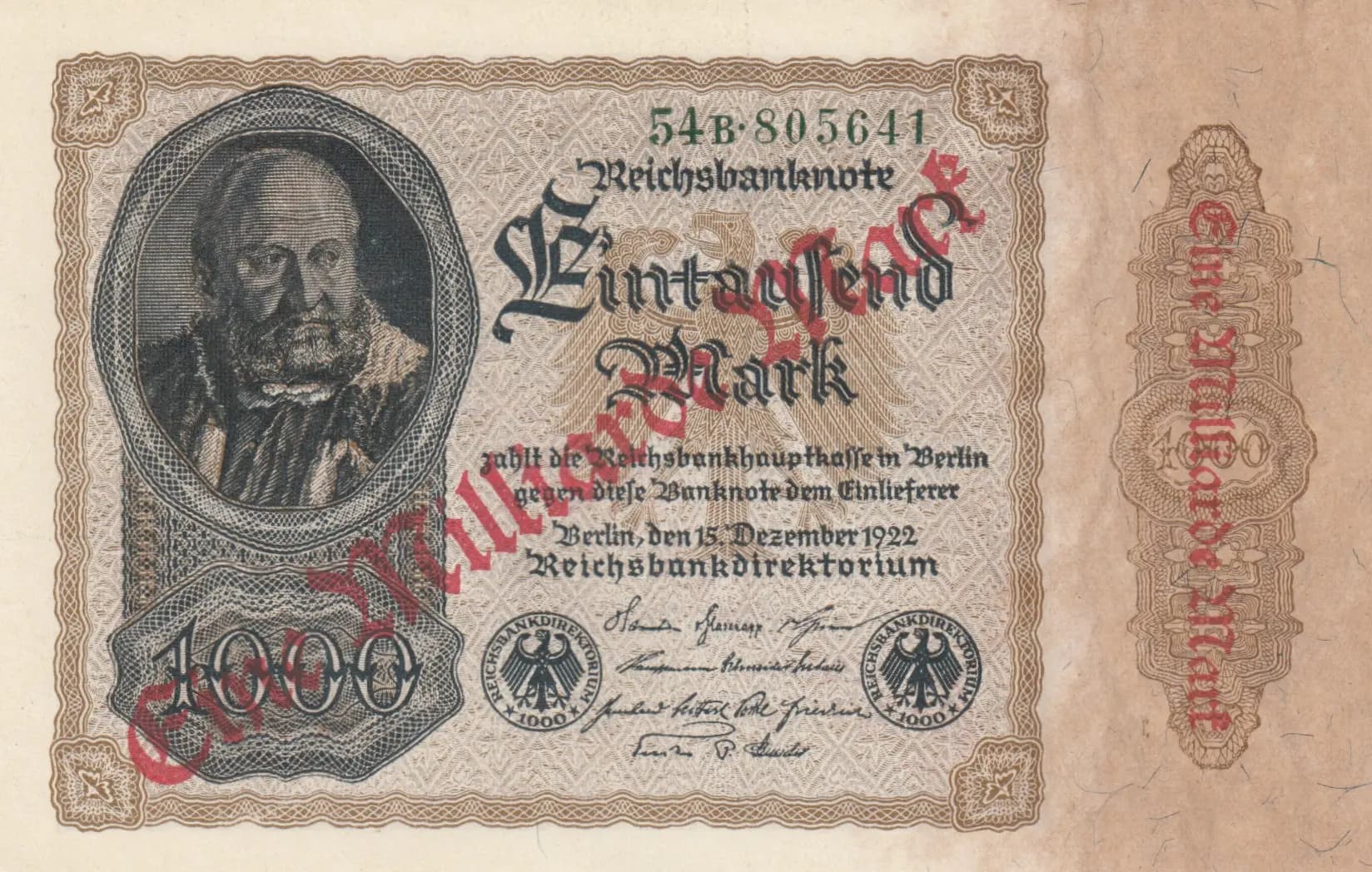
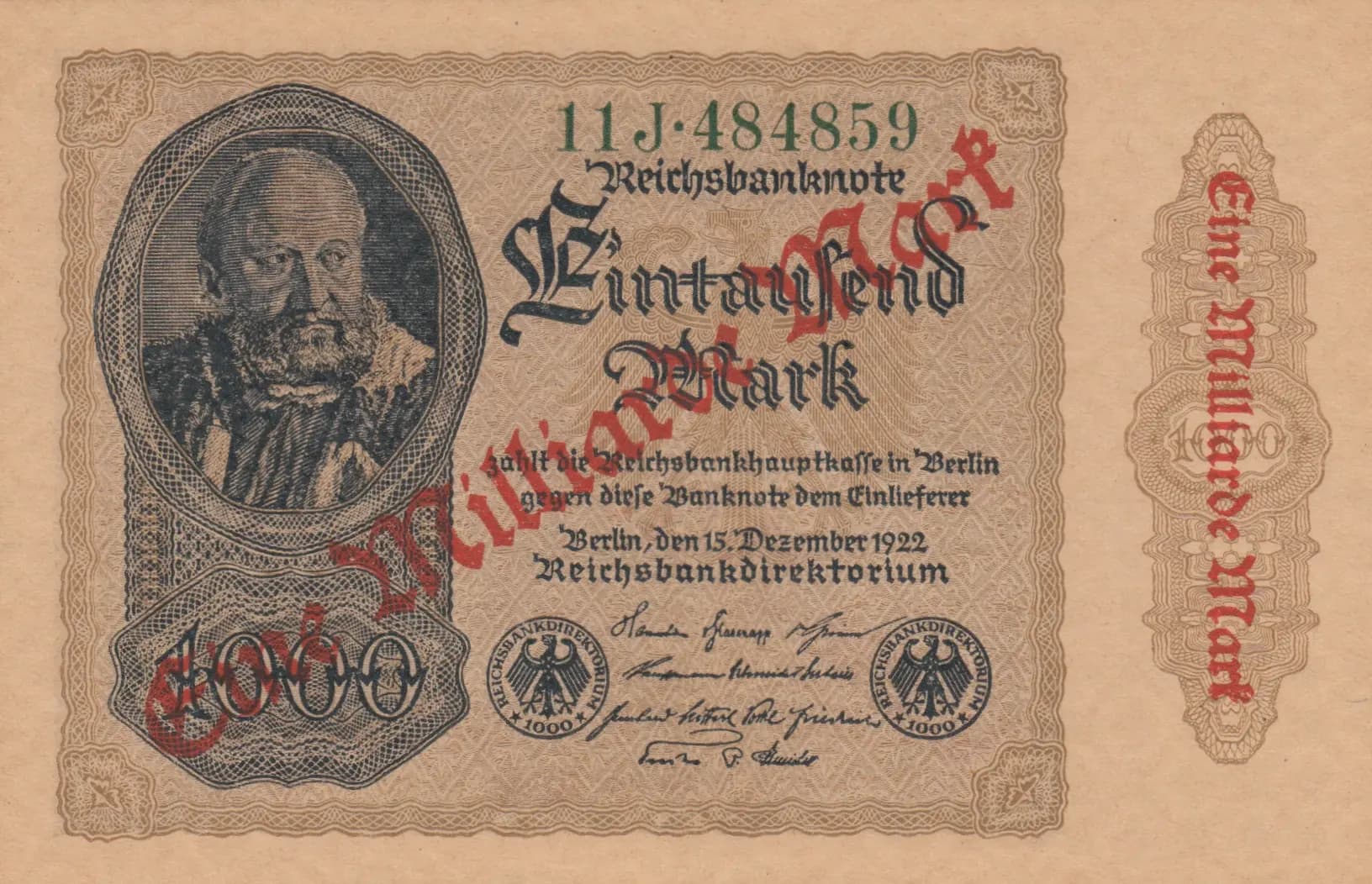
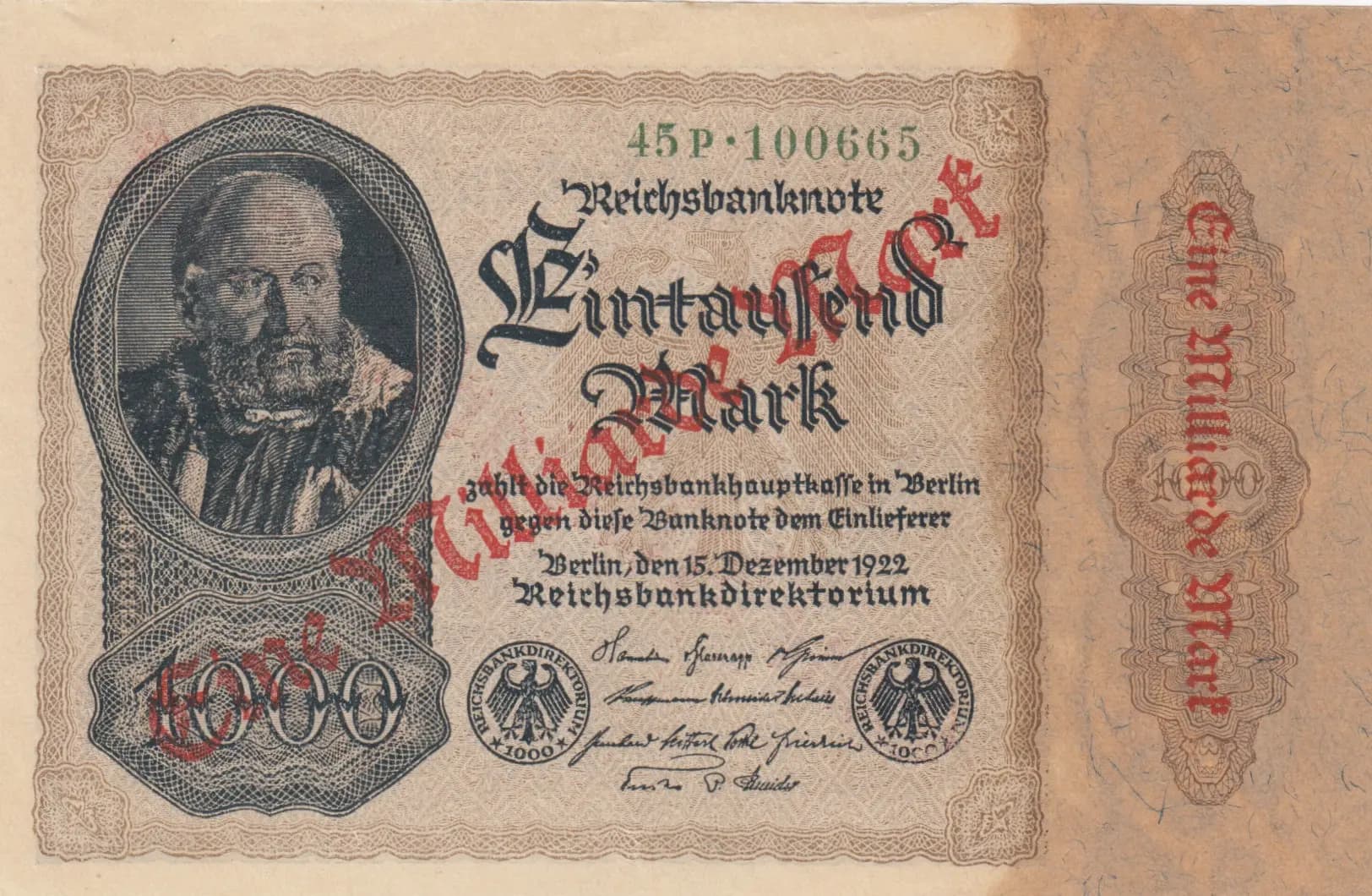
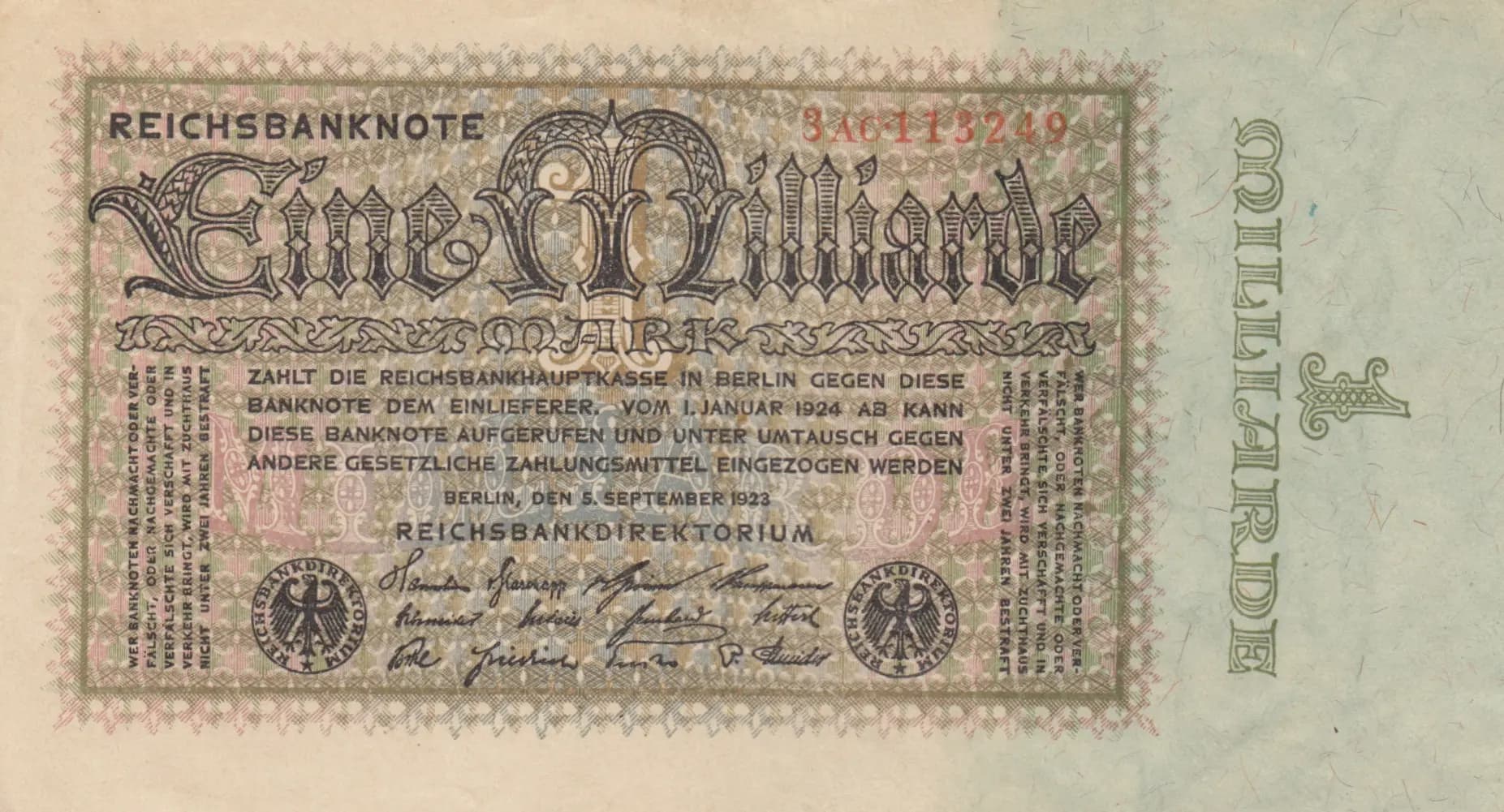
This is a German Reichsbanknote for 1 billion marks issued on September 5, 1923, during the peak of the Weimar hyperinflation crisis. The note displays elaborate Gothic typography with the denomination prominently featured in large numerals, flanked by ornamental borders and two Imperial Eagle seals. In AU condition, this example exhibits significant but expected age-related patina including creasing, foxing, and overall surface deterioration consistent with a century-old document, yet remains structurally sound without major tears or damage.
Common. This is one of the most widely circulated denominations from the Weimar hyperinflation period. The eBay price data provided shows consistent sales in the $1.99–$31 range across various grades from 2010–2023, with catalogue values (2016) listing UNC at $30. The high volume of surviving examples and modest market prices indicate no scarcity premium. While historically significant as an artifact of hyperinflation, millions of these notes were printed and survive today, making them readily available to collectors at affordable prices.
This note represents one of the most extreme examples of hyperinflation in modern history, issued by the Reichsbank during the final months of the Weimar Republic's monetary collapse in 1923. The dated inscription of September 5, 1923 places this note at the crescendo of the crisis, when the German mark had become virtually worthless—by November 1923, the exchange rate reached astronomical levels before the introduction of the Rentenmark stabilized the currency. The formal Reichsbankdirektorium declaration and redemption clause (effective January 1, 1924) reflect the desperate attempt to manage the crisis through currency recall and exchange, a monetary policy intervention that ultimately proved necessary to restore confidence in German currency.
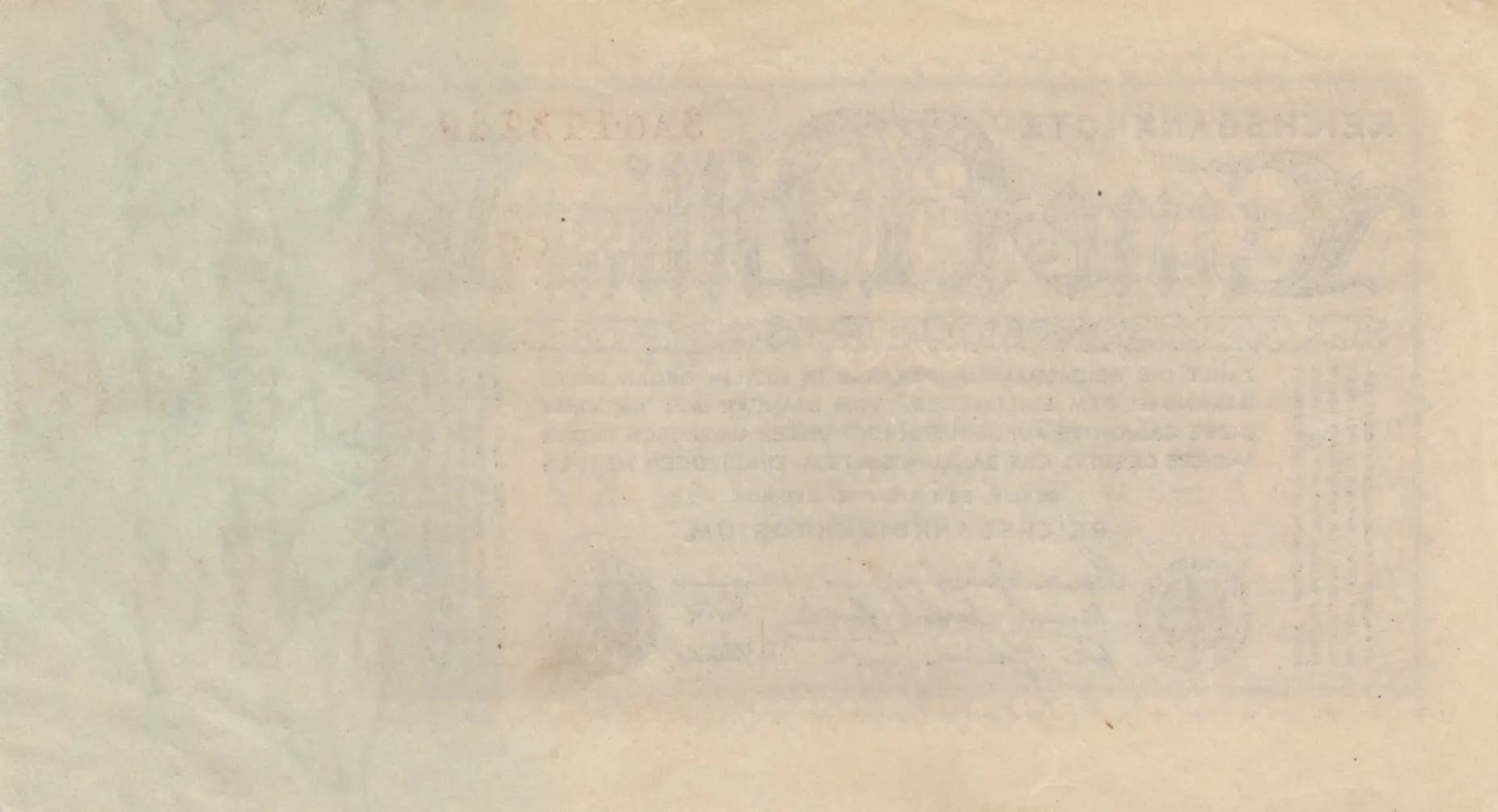
The front of this note features an elaborate design characteristic of high-denomination Weimar hyperinflation currency. The central design is dominated by large Gothic-style numerals '1000000000' positioned in the upper portion, with the denomination also spelled out in German ('Eine Milliarde'). Extensive ornamental flourishes and decorative border patterns frame the note's perimeter, reflecting the classical Reichsbank design aesthetic. Two circular seals featuring the Imperial Eagle (Reichsadler) are positioned at the bottom left and right corners, serving as official emblems of the Reichsbank's authority. The text block in the center contains the formal redemption declaration from the Reichsbankdirektorium, with handwritten signatures of authorized officials below. The color palette employs beige/cream as the primary background with green, black, pink/rose, and brown accents. The reverse appears largely blank or minimally printed, typical of many hyperinflation-era notes. No portraits or specific landmarks are depicted; the design relies entirely on typography, ornamental elements, and institutional seals for visual impact.
FRONT SIDE: 'REICHSBANKNOTE' (Reich Bank Note); 'Eine Milliarde' (One Billion); 'ZAHLT DIE REICHSBANKHAUPT KASSE IN BERLIN GEGEN DIESE BANKNOTE DEM EINLIEFERER, VOM I. JANUAR 1924 AB KANN DIESE BANKNOTE AUFGERUFEN UND UNTER UMTAUSCH GEGEN ANDERE GESETZLICHE ZAHLUNGSMITTEL EINGEZOGEN WERDEN' (The Reichsbank main office in Berlin pays against this banknote to the depositor. From January 1, 1924 onward, this banknote can be called in and exchanged for other legal tender); 'BERLIN, DEN 5. SEPTEMBER 1923' (Berlin, September 5, 1923); 'REICHSBANKDIREKTORIUM' (Reich Bank Directorate); Serial number: 8161119249. BACK SIDE: No clearly visible inscriptions observed in the visual analysis.
This note was produced using intaglio (copperplate/steel engraving) printing, the standard security printing method employed by the Reichsbank for its banknotes. Intaglio printing is evidenced by the fine line work visible throughout the ornamental borders, the precise reproduction of the Imperial Eagle seals, and the crisp definition of the Gothic numerals and text. The Reichsbank's primary security printers during this period included Giesecke & Devrient and other licensed German banknote printers. The multiple color application visible in the design (green, black, pink/rose tones) suggests multi-pass printing, a hallmark of the intaglio process used for German currency during this era.
This example bears the serial number 8161119249 and is dated September 5, 1923. Pick catalog number P-114 identifies this as the standard issue for the 1 billion mark denomination from this date. Known varieties for this type may include different signature combinations on the Reichsbankdirektorium declaration and potentially different serial number ranges or plate positions, but without additional comparative specimens or detailed variety catalogs (such as Rosenberg), specific variety attribution beyond the Pick number cannot be definitively established from the visual data alone. The handwritten signatures visible on this note would be the primary differentiator if multiple signature varieties exist for this denomination.