1 000 000 000 mark 1923
Market Prices
9 salesAbout This Note
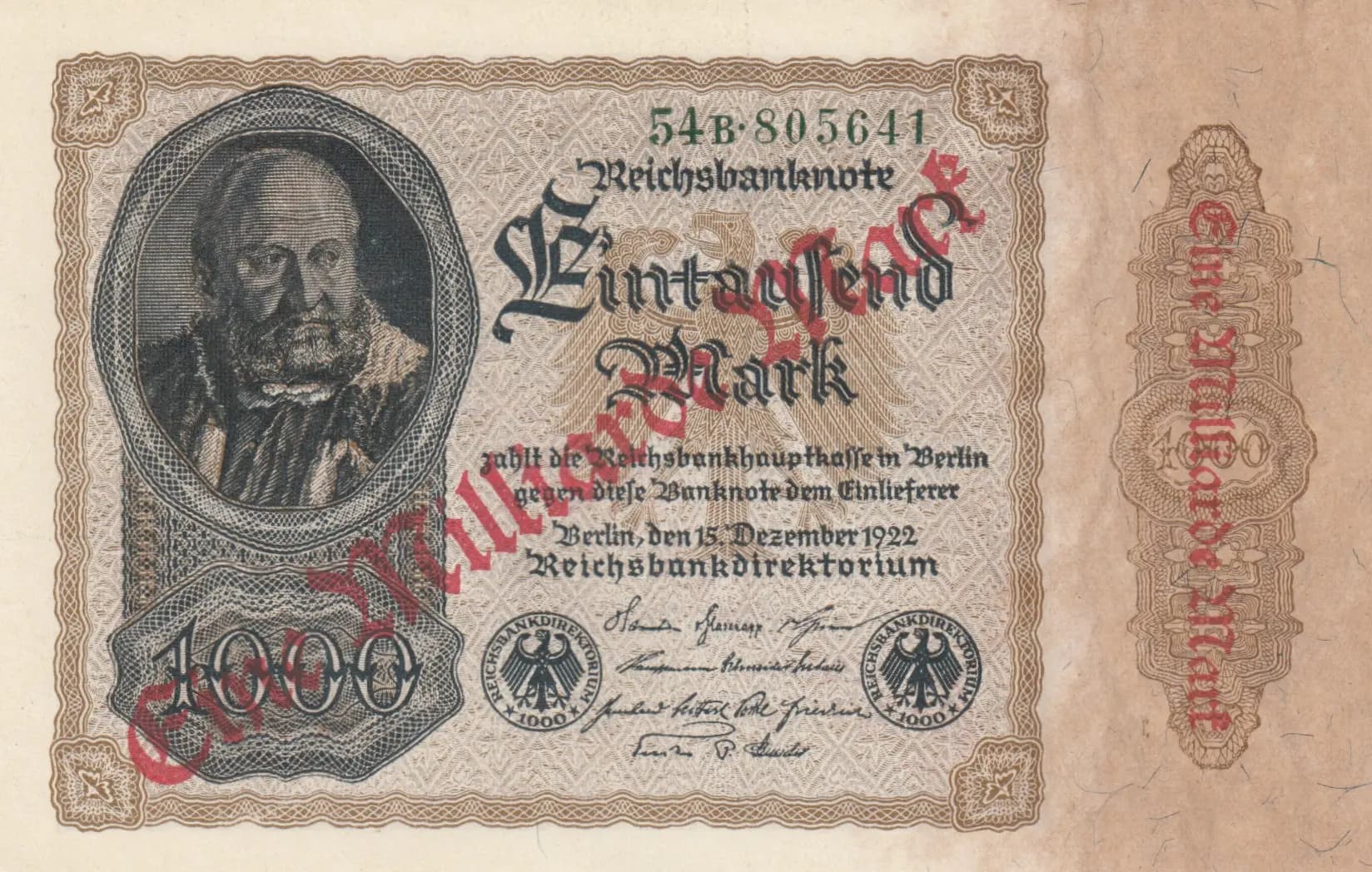
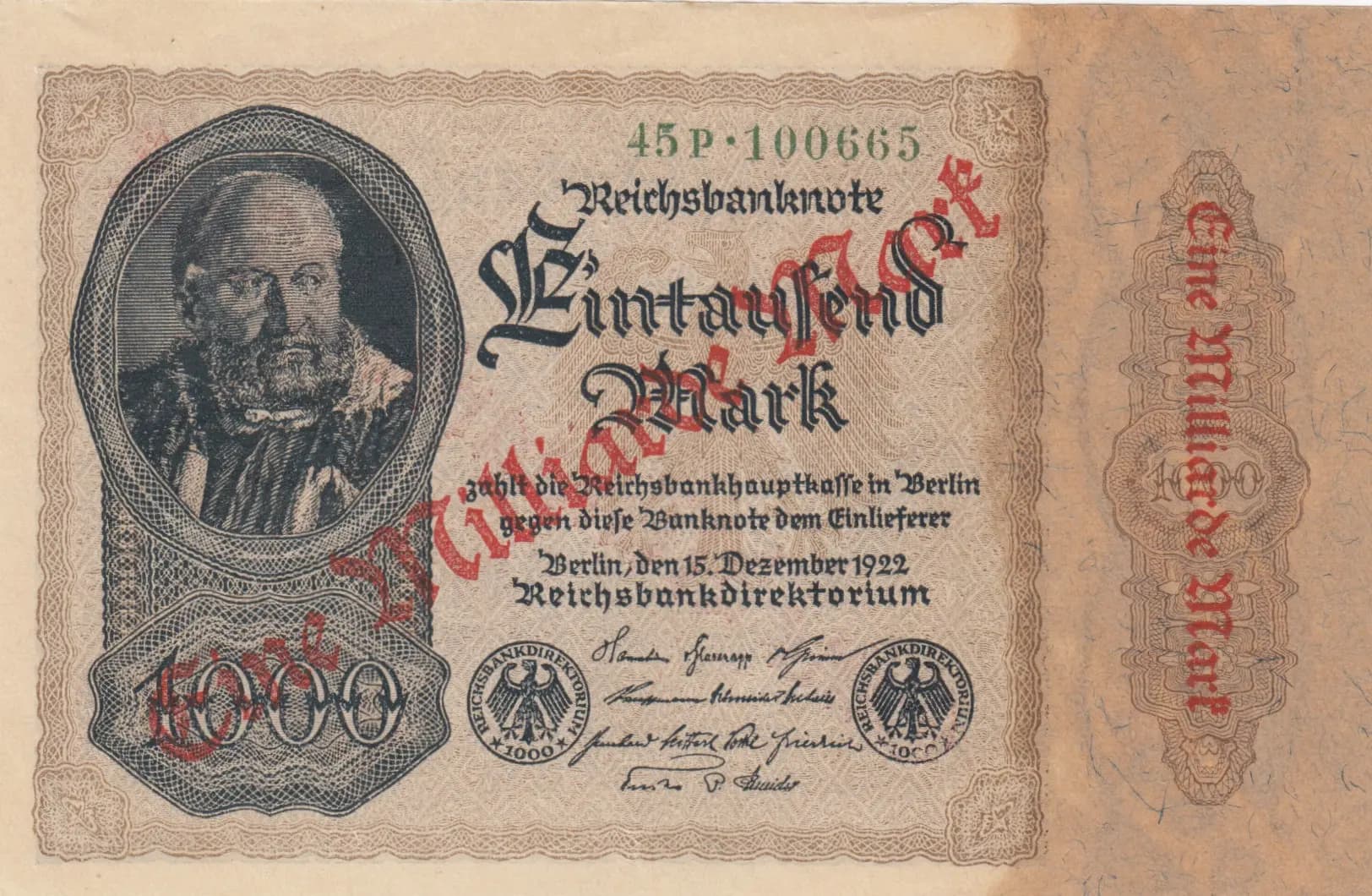
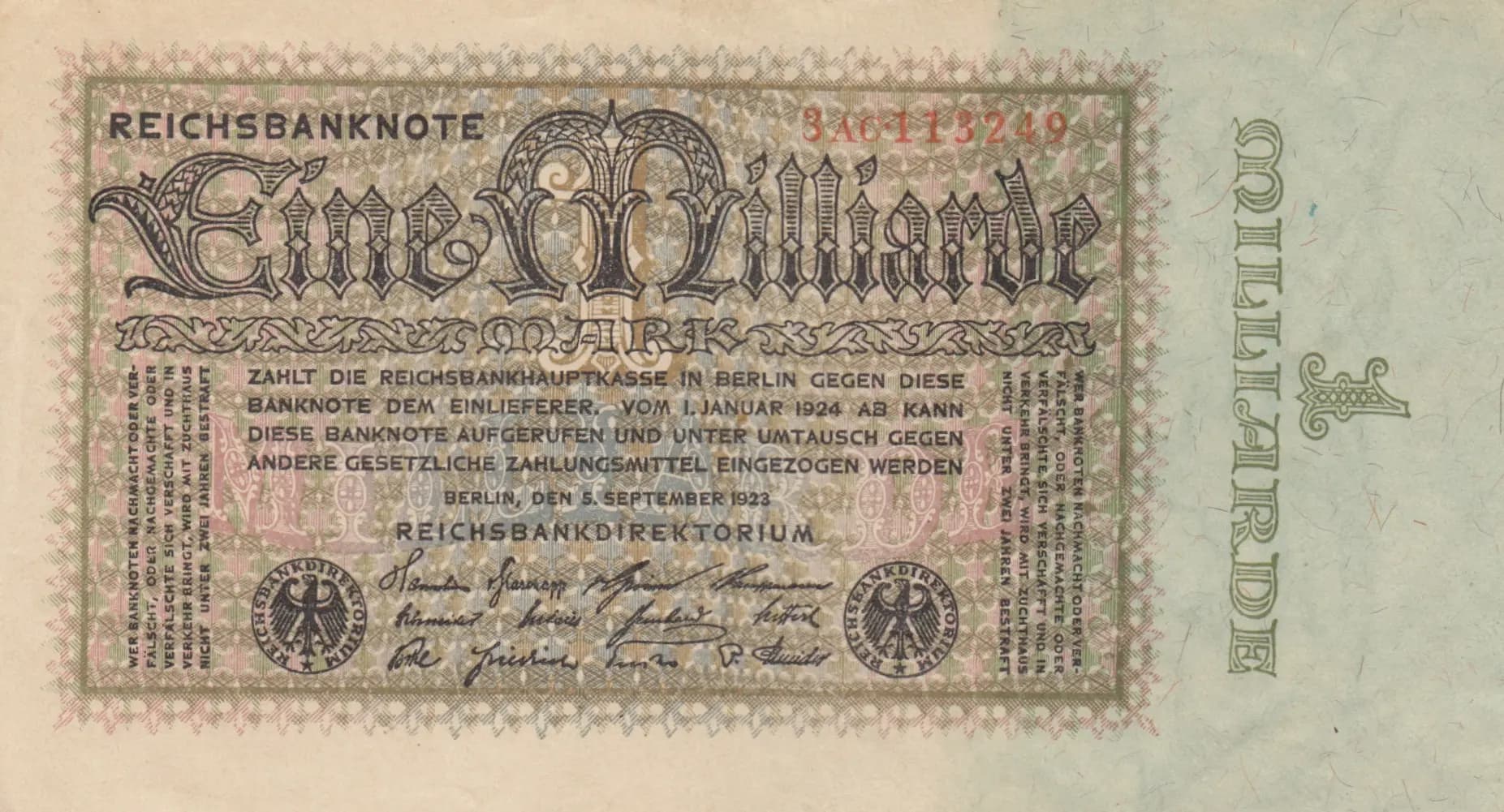
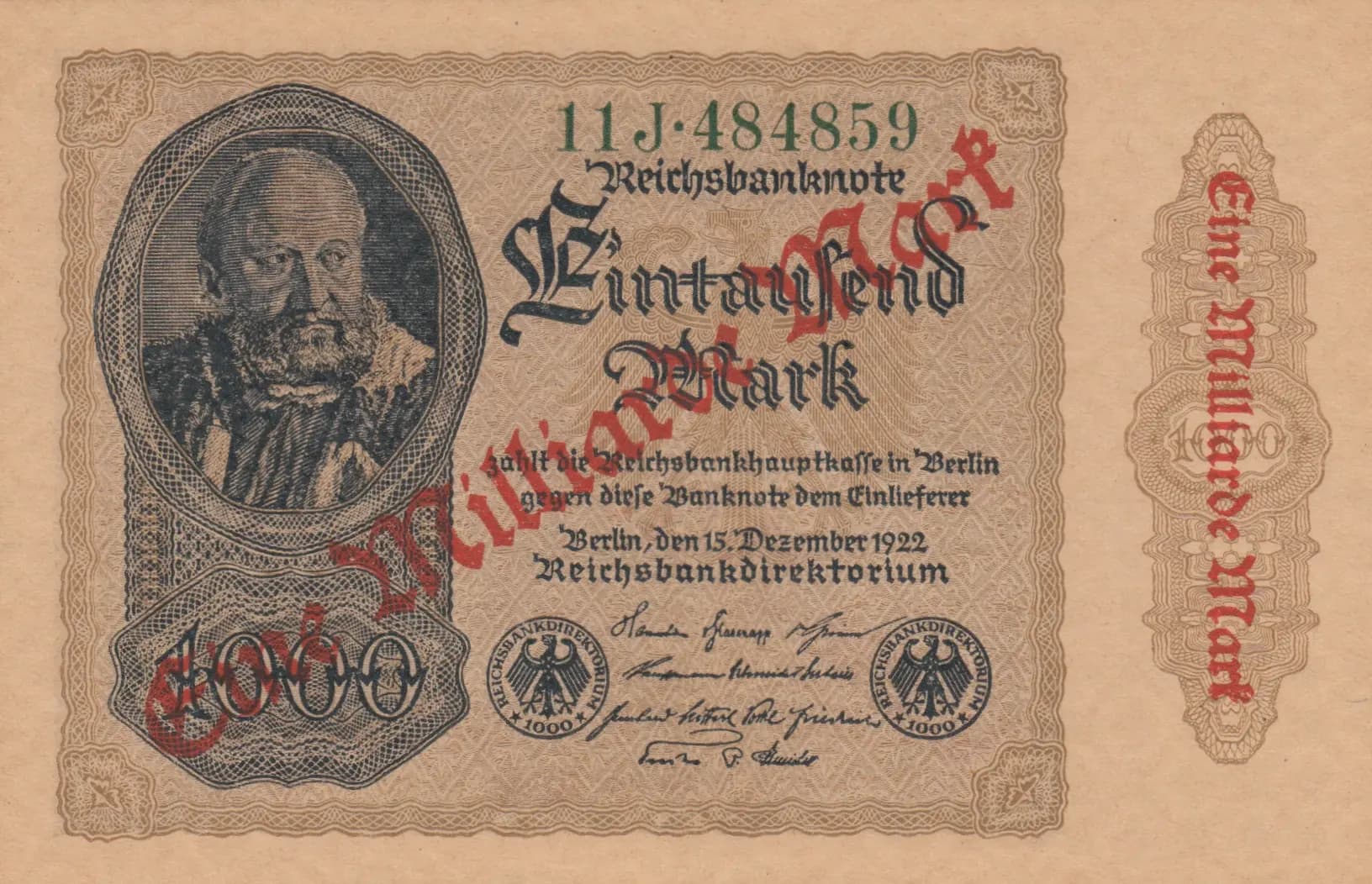
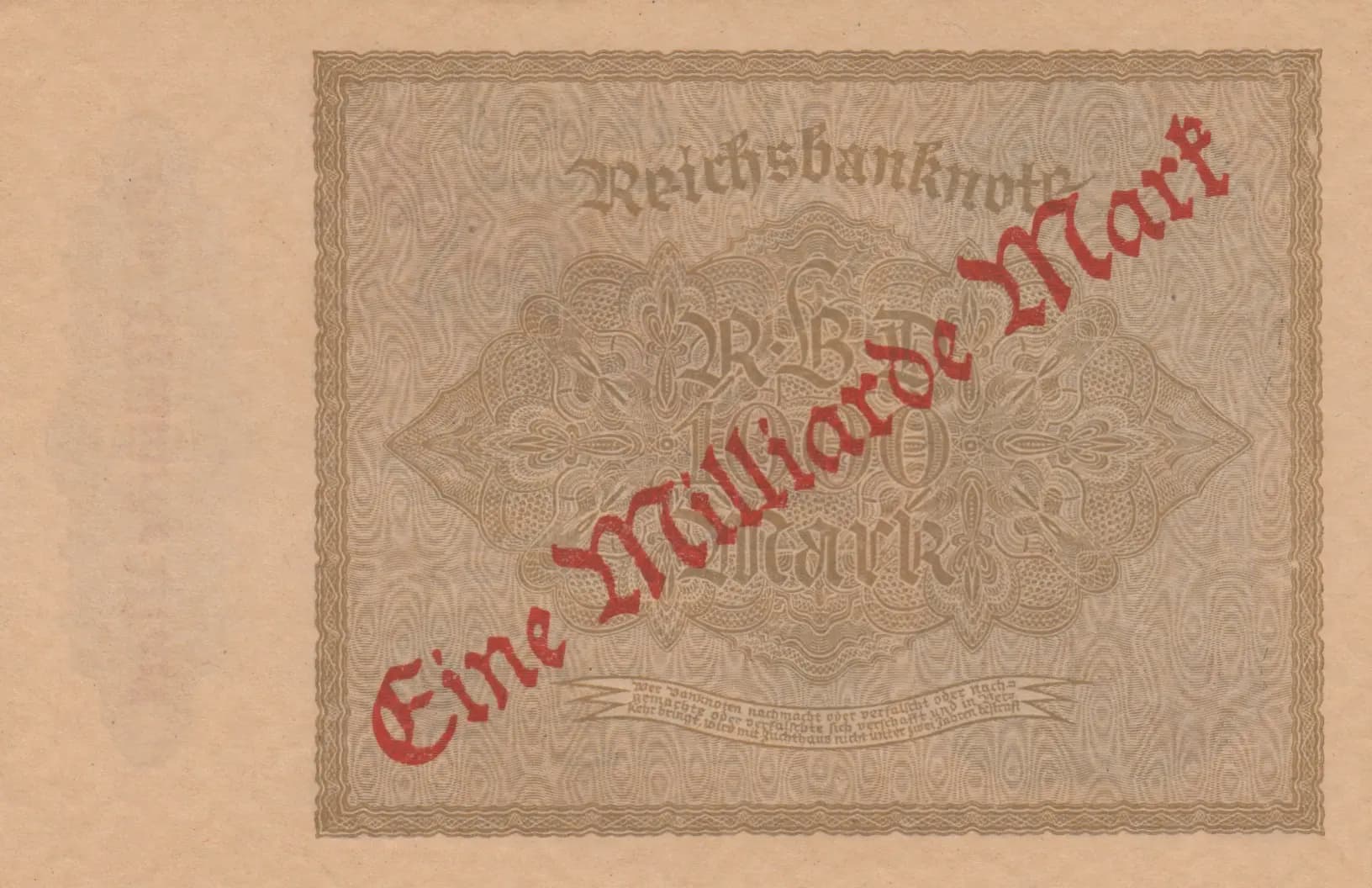
This is a German Reichsbank 1 Billion Mark note from 1923 (Pick P-113b), issued during the hyperinflation crisis. The note is graded AU and features a distinctive red diagonal overprint reading 'Eine Milliarde Mark' stamped over an original 1000 Mark denomination note, representing a revaluation. The front displays a bearded gentleman in an oval portrait frame with exceptional cross-hatched engraving detail, flanked by two imperial eagle seals, while the reverse showcases an ornate symmetrical design centered on the Reichsadler within a diamond medallion—all rendered in fine line work on aged tan/beige paper.
Common. This denomination and variety were produced in substantial quantities during the 1923 hyperinflation period and represent one of the most widely circulated German inflation notes. eBay market data confirms this assessment, with examples regularly selling in the $15–$36 range regardless of grade (PMG 58 to PMG 66), and catalogue values from 2016 placing even UNC examples at only $20. No indication of limited print runs, short-lived issuing authority, or recall status exists for this Pick number.
This note represents a critical artifact of Germany's 1923 hyperinflation, when the Reichsmark collapsed in value and the central bank was forced to issue ever-larger denominations. The red overprint denomination update ('Eine Milliarde Mark') stamped over the original 1000 Mark base demonstrates the rapid-fire revaluation cycles of this period. The date of December 15, 1922 on the original note with the September 1923 actual circulation marks the desperate monetary measures taken by the Reichsbankdirektorium to manage currency collapse.
The obverse features a left-facing portrait of a bearded gentleman in formal dress within an ornate oval frame, rendered through meticulous cross-hatching engraving—likely representing Mintmaster Jörg Herz as catalogued, designed by G. Penz. The design is framed by an elaborate geometric border with corner ornaments. Two prominent circular seals each containing the imperial eagle (Reichsadler) are positioned near the center-bottom. The denomination and issuer information are presented in Gothic script typical of Reichsbank notes. The reverse presents a highly symmetrical, purely decorative composition dominated by a central diamond-shaped medallion housing the Reichsadler, surrounded by repeating geometric and floral motifs in a classical ornamental pattern. Both sides bear the red diagonal overprint 'Eine Milliarde Mark,' a revaluation stamp applied to the original 1000 Mark note base.
Front Side: 'Reichsbanknote' (Imperial Bank Note); 'Eine Milliarde Mark' (One Billion Mark) [red overprint]; 'Zahlt die Reichsbankhautkasse in Berlin gegen diese Banknote dem Einlieferer' (The Reichsbank main office in Berlin pays the depositor of this banknote); 'Berlin, den 15. Dezember 1922' (Berlin, December 15, 1922); 'Reichsbankdirektorium' (Reichsbank Directorate); Serial number '11J.484859'; Denomination marker '4000'. Back Side: 'Reichsbanknote' (Imperial Bank Note); 'Eine Milliarde Mark' (One Billion Mark) [red overprint]; fine print text in rectangular frame at bottom [legal/payment terms, illegible in analysis].
This note employs classical intaglio (copperplate) engraving throughout, evidenced by the exceptional detail in the portrait's cross-hatching, the fine line work in borders, and the intricate geometric patterns on the reverse. The red overprint denomination was applied separately via lithography or letterpress, creating the distinct red diagonal stamp visible on both sides. The printer for Reichsbank notes of this series was typically Giesecke+Devrient or similar official German security printers, though specific attribution for P-113b is not definitively established in standard references.
This note is catalogued as P-113b, the 'b' variety designation indicating it is an overprinted version of the base 1000 Mark note (P-82) with the red 'Eine Milliarde Mark' revaluation stamp. The date signature 'Berlin, den 15. Dezember 1922' on the original plate reflects the initial authorization date, while actual circulation occurred in September 1923 during peak hyperinflation. Serial number 11J.484859 appears to be from a standard production run with no known special prefixes indicating rarity. Varieties of this note are primarily distinguished by watermark type (small crucifera blossoms noted), paper color (dark brown reported), and print run prefixes—all consistent with regular issue production.