5 francs 1942
Market Prices
41 salesAbout This Note
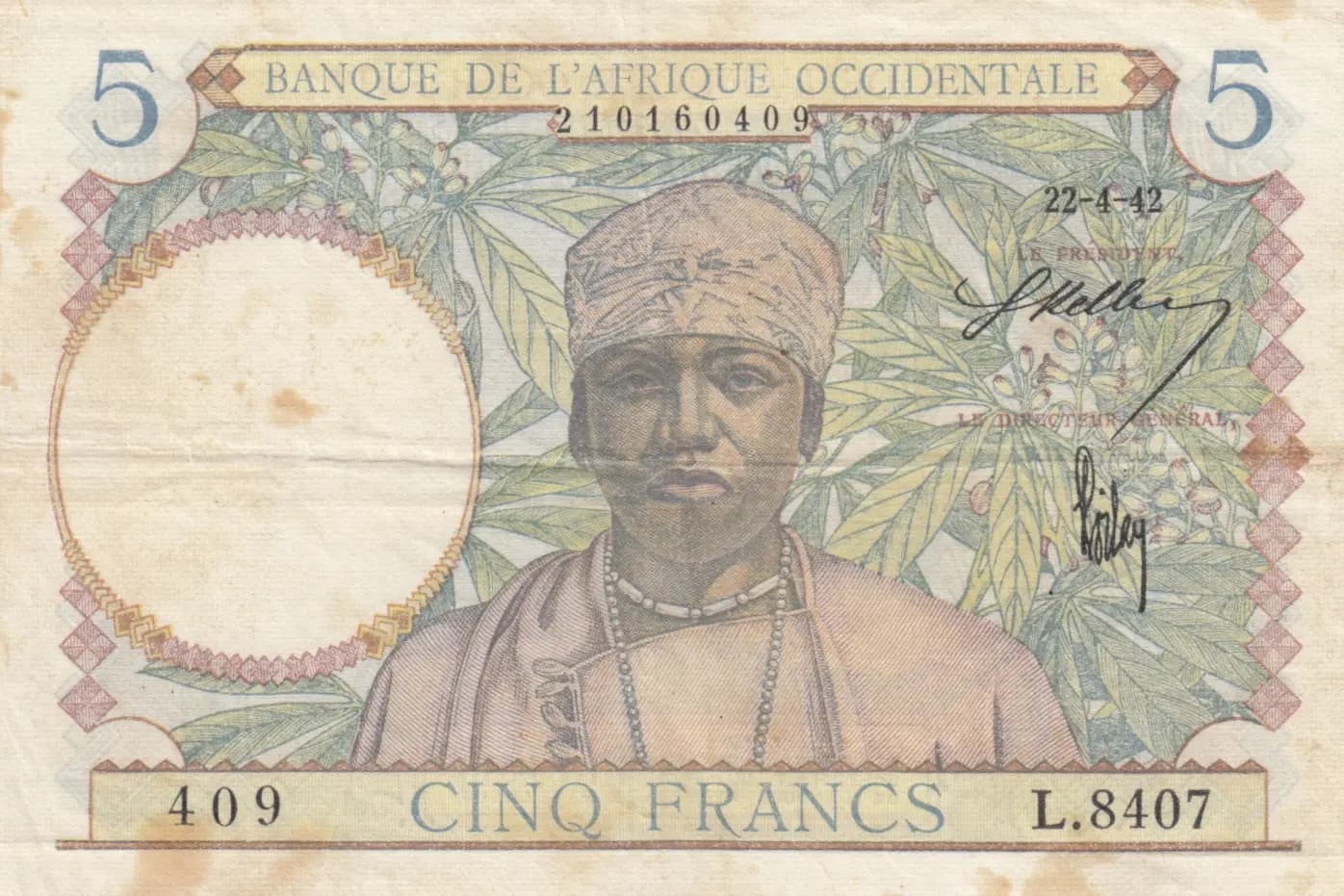
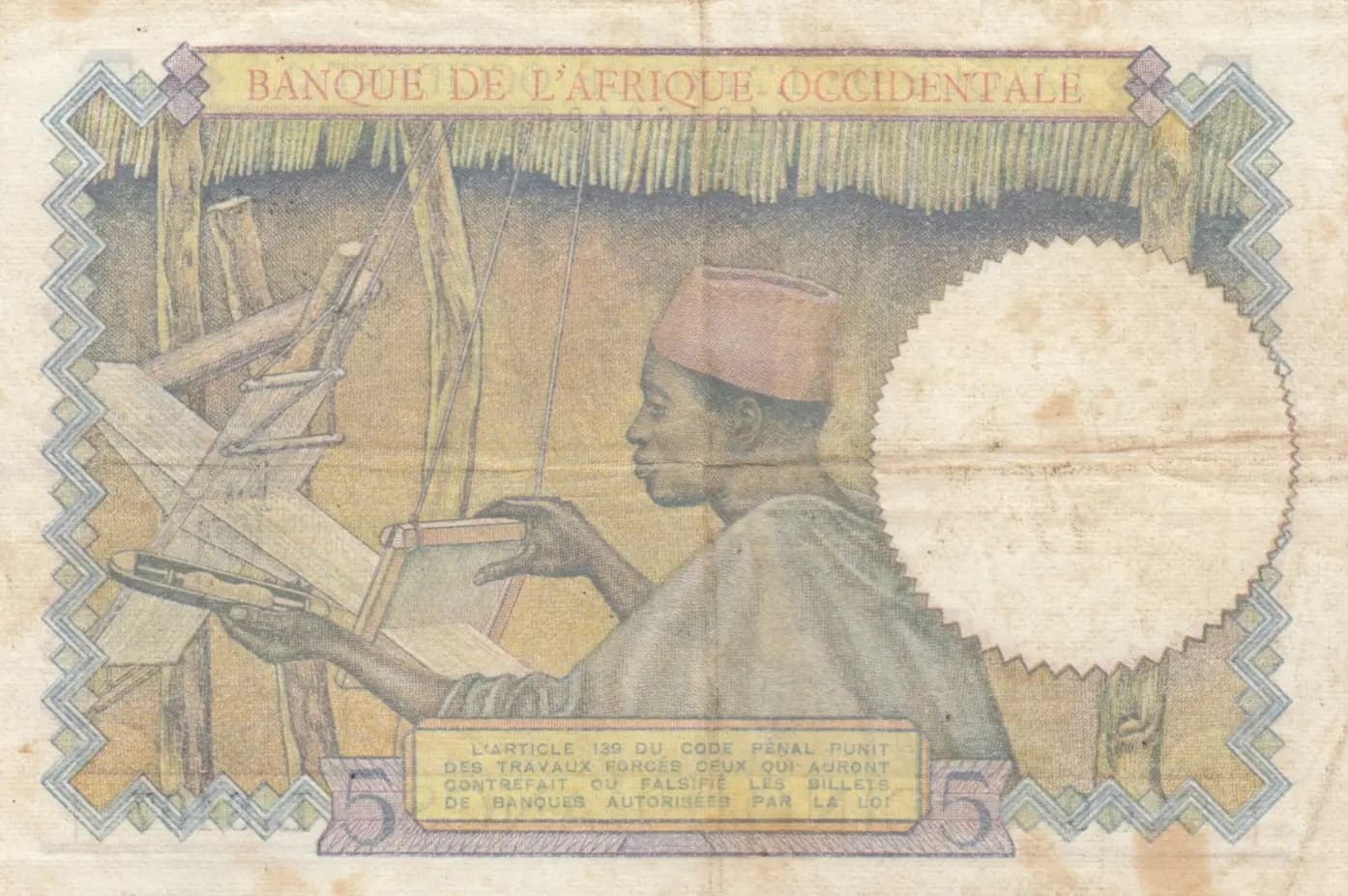
This is a French West Africa 5 Francs note from 1942, issued by the Banque de l'Afrique Occidentale, graded in Very Fine condition. The note features ethnographic imagery typical of colonial-era African currency, with portraits of African men engaged in traditional activities on both sides. Despite visible aging with foxing, staining, and creasing consistent with its 80+ year age, the note retains good structural integrity and readable inscriptions, making it a representative example of this important colonial currency series.
Common. The 5 Francs 1942 of French West Africa is a widely available banknote in the collector market. eBay pricing data shows consistent sales across multiple condition grades, with VF examples regularly selling in the $3-$10 range. Over a decade of transaction history (2010-2025) demonstrates steady availability without price appreciation, and catalog values remain modest ($8.50 for VF as of 2016). The large print run and the note's role as standard circulation currency ensure abundant survivor examples.
This 1942 banknote was issued during World War II, a period of significant upheaval in French West Africa. The Banque de l'Afrique Occidentale maintained currency operations despite the German occupation of mainland France, issuing notes that emphasized the colonial administration's control over the region. The ethnographic imagery—depicting traditional textile work and indigenous portraiture—reflects the paternalistic colonial perspective of the period, presenting African labor and culture as integral to the colonial economic system.
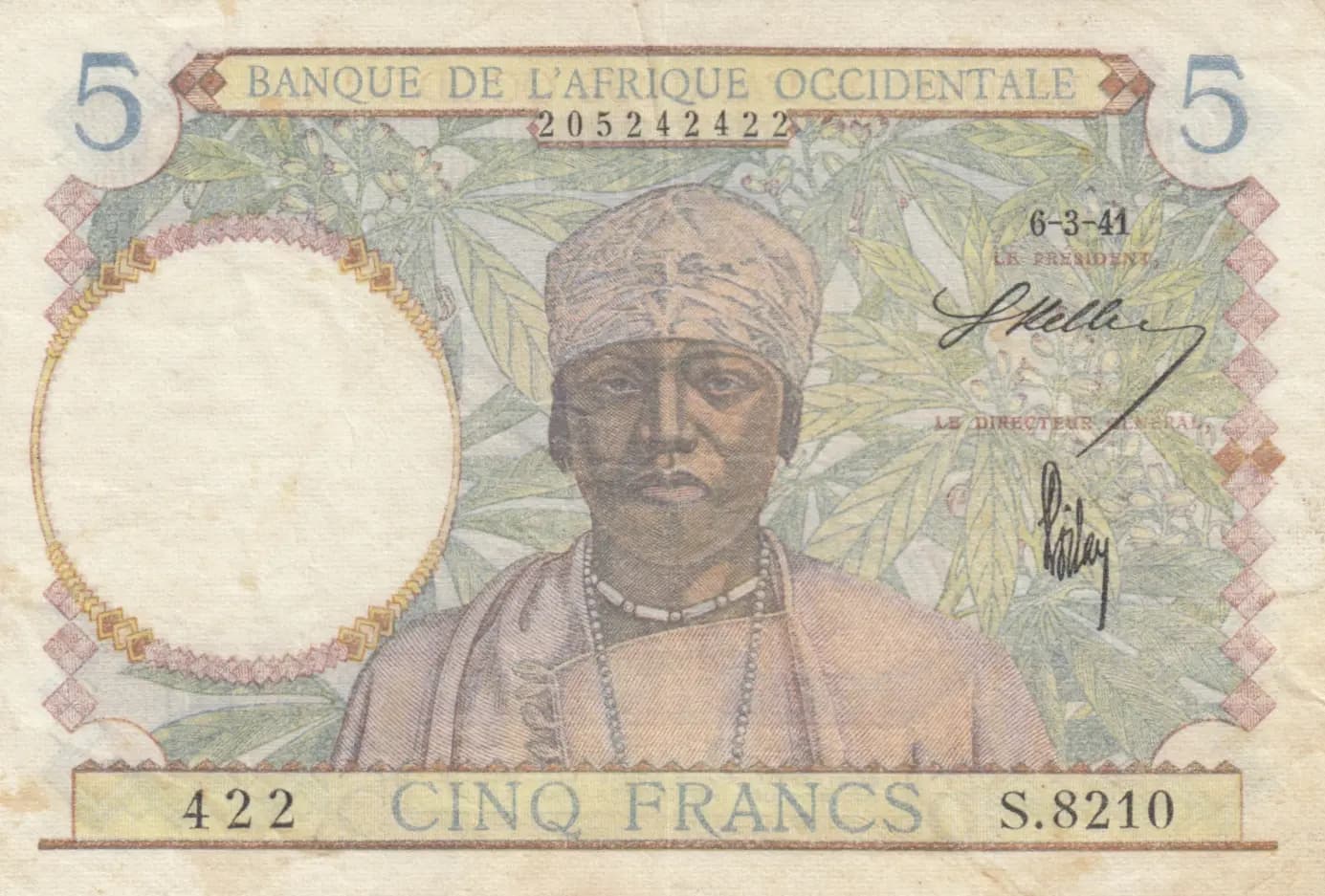
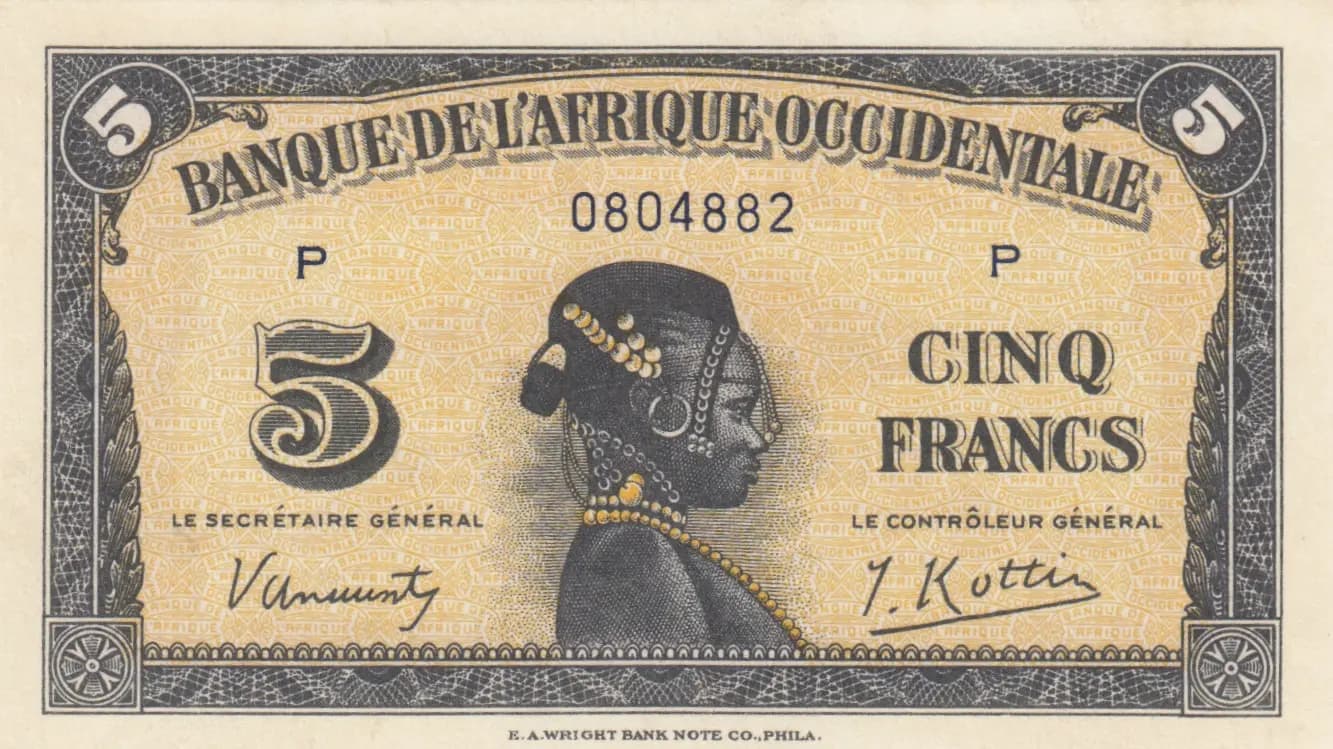
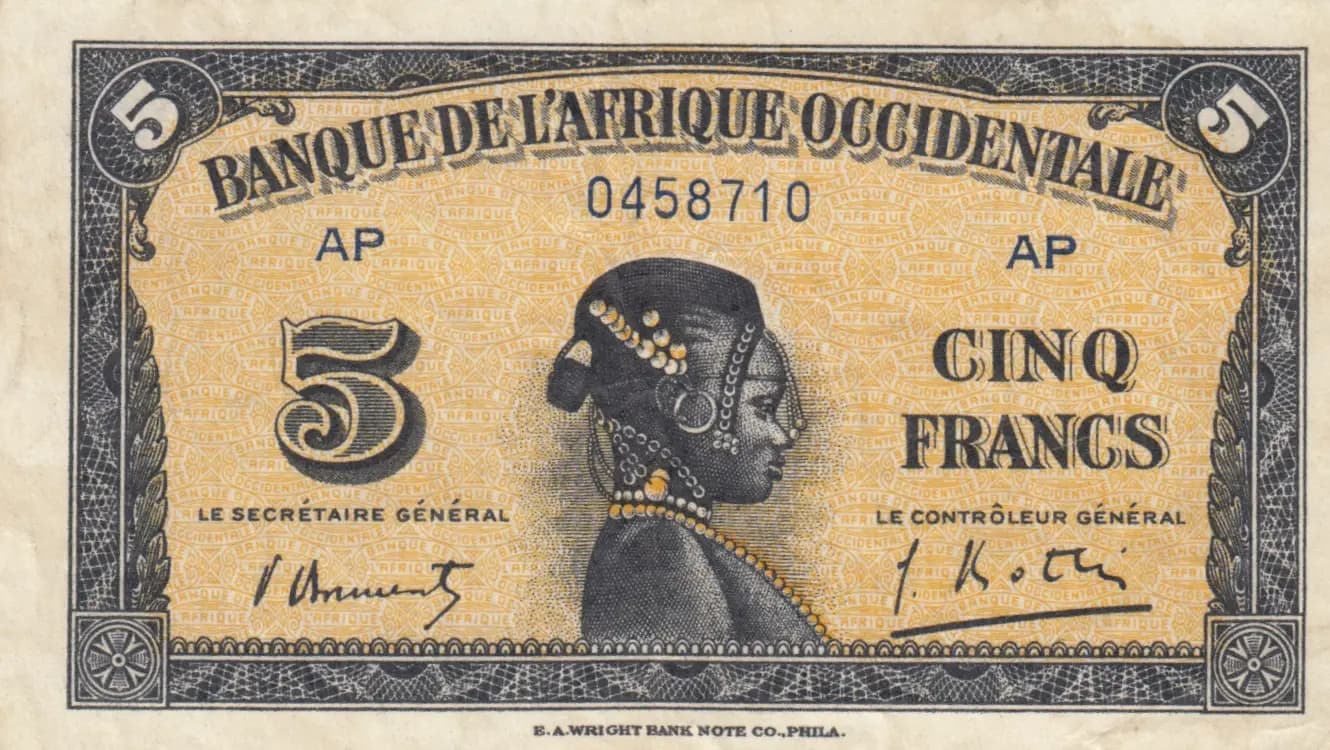
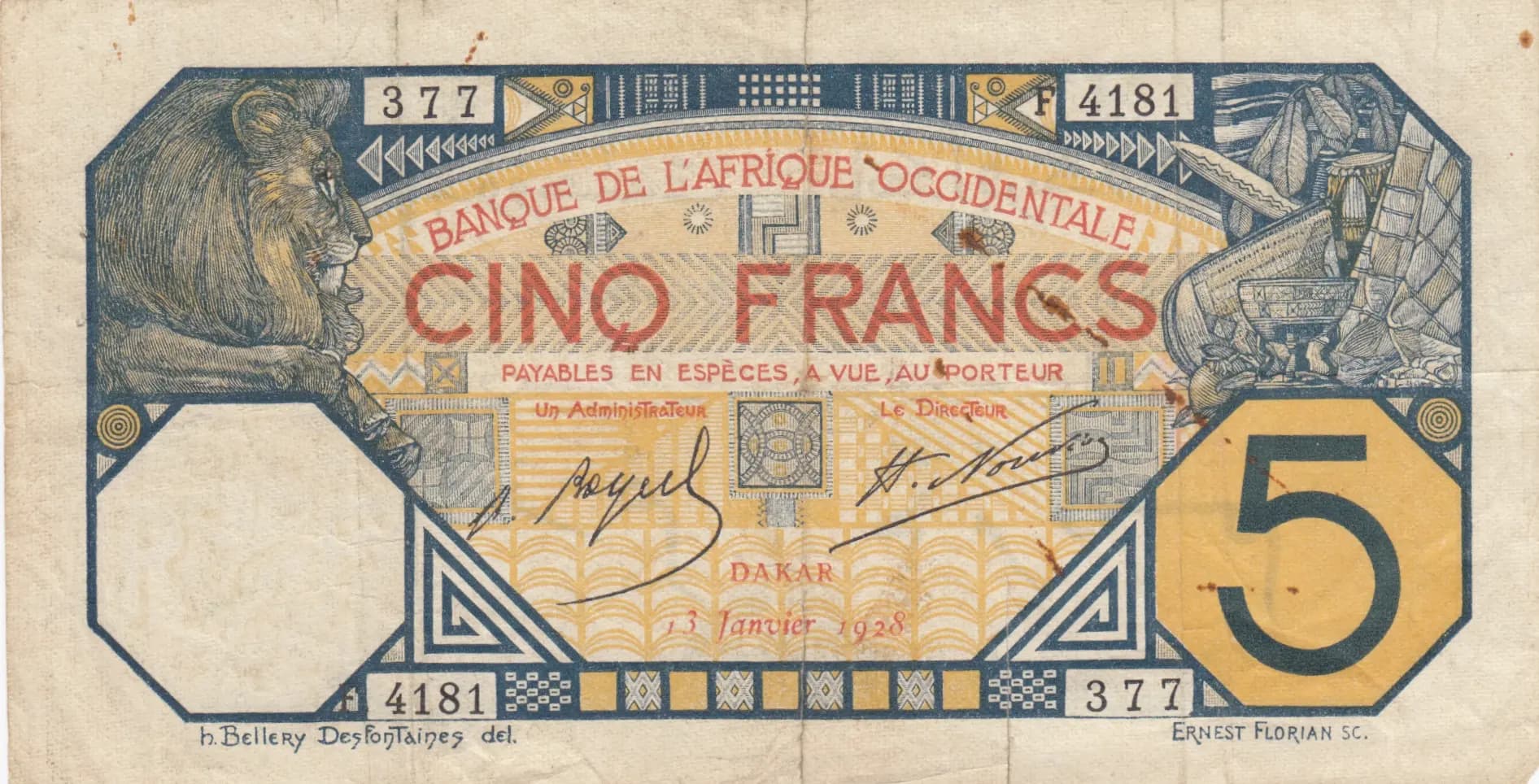
The note presents a two-sided ethnographic design typical of French West African currency. The obverse features a portrait of an African man wearing a light-colored turban and beaded necklace in profile, flanked by decorative tropical foliage including palm fronds rendered in greens and yellows. A large oval guilloche frame occupies the left side, a standard security feature of the series. The reverse depicts a man wearing a red/pink cap engaged in textile work at a wooden loom, shown in profile within an interior architectural setting with striped roof elements suggesting traditional construction. The reverse also features a large oval guilloche security frame on the right side. Both sides employ cream, green, brown, and pink tones with intricate geometric border patterns featuring chevron and diamond-shaped ornamental elements. The design reflects the colonial period's anthropological interest in depicting 'native' labor and craftsmanship.
FRONT: 'BANQUE DE L'AFRIQUE OCCIDENTALE' (Bank of West Africa); 'CINQ FRANCS' (Five Francs); Date: '22-4-42' (22 April 1942); Serial number elements: 'L.8407' and '210160409'. BACK: 'BANQUE DE L'AFRIQUE OCCIDENTALE' (Bank of West Africa); 'L'ARTICLE 139 DU CODE PÉNAL PUNIT DES TRAVAUX FORCÉS CEUX QUI AURAIENT CONTREFAIT OU FALSIFIÉ LES BILLETS DE BANQUES AUTORISÉS PAR LA LOI' (Article 139 of the Penal Code punishes with forced labor those who would have counterfeited or falsified the banknotes authorized by law); Denomination: '5'.
The note was produced using traditional intaglio (engraved) printing, evident from the fine line work, detailed portraiture, and the complexity of the geometric security patterns. The multi-color printing with precise color gradients and the crisp definition of the guilloche patterns are characteristic of high-security banknote production by established European security printers. For this Pick number (P-25), the note was printed by De La Rue or similar London-based security printers who supplied French colonial currency during this period.
This note (P-25) has a documented watermark variety showing a Man's Head. The Pick catalog identifies both a standard P-25 and a P-25s variant, both with the same watermark type. The serial number prefix 'L.8407' and the signature positions suggest this is from the standard P-25 variety. No overprints or significant printing varieties are apparent in this specimen. The date of 22 April 1942 falls within the normal issue period, with no evidence of emergency or special circulation markings.